Free tools Windows power users keep installed
One-click scans. No signup required.
Dil Se.. (1998) and Johnny Gaddaar (2007) are often grouped as films that underperformed but later gained critical standing. The “flop” label is not settled for Johnny Gaddaar: one retrospective uses it, while a later interview says it performed respectably in cinemas. Their case as “game-changers” is strongest as a critical argument about what mainstream Hindi films could do—not as proof that either film caused a measurable industry-wide shift.
Why the “flop” label needs qualification
A 2016 Scroll excerpt from critic Shubhra Gupta’s 50 Films That Changed Bollywood 1995–2015 groups the films under the “flops” framing. But a separate Scroll interview with director Sriram Raghavan and editor and associate director Pooja Ladha Surti says Johnny Gaddaar performed respectably in cinemas. Without audited box-office figures in these sources, its exact commercial classification remains unresolved.


The films’ later significance is clearer than any single verdict on their earnings. A 2023 retrospective by the British Film Institute says Dil Se.. did not win over audiences or critics at release, but its reputation grew over time. The “game-changer” case rests on how both films tested familiar conventions: one unsettled the romantic star vehicle with political and moral conflict; the other made suspense depend less on guessing who committed a crime than on watching what a known culprit would do.
Dil Se..: a romance interrupted by political reality
A romantic hero who cannot resolve the conflict
Dil Se.. places Shah Rukh Khan’s familiar romantic-hero persona inside a story shaped by political conflict and a journey into insurgency-hit northeastern India. The romance does not simply provide an escape from that setting. The BFI retrospective argues that political and moral stakes make the star’s romantic appeal less powerful than the conflict around him.
#1 Best Overall

- Movie Poster Title - The World's Fastest Indian Movie Poster Print
- Product Type - Movie Poster Masterprint
- Paper Size - 27 x 40
- Pop Culture Graphics bring Movie Memories to your Walls
- Premium Movie Poster Paper
That tension becomes sharper through Meghna. What first appears to be a difficult love story is upended when her mission is revealed as a plan to carry out a suicide attack. The revelation denies the audience an easy romantic resolution and makes the heroine’s political purpose central to the film’s meaning. Gupta’s retrospective argument treats the journey and Meghna’s departure from the conventional “goody-goody” heroine as significant; it is a critical reading of the film, not proof that this one story caused a broad change in Hindi cinema.
Songs as emotional and cinematic expression
The music is another part of the film’s lasting identity. The BFI notes that “Chaiyya Chaiyya” became a sensation and later appeared in Spike Lee’s Inside Man and an episode of CSI: Miami. It also describes A. R. Rahman’s score as drawing on Indian folk themes and other traditions. Many songs function as expressive dream sequences rather than realistic events unfolding in the plot, making music part of the film’s storytelling rather than a pause from it.
Rank #2
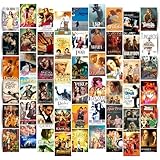
- Classic Films Sholay Era; 54 distinct Bollywood movie designs with no repeats across the set
- Sized A6 at 10 by 15 centimetres each; 54 mini prints laid out in 6 rows of 9 spanning about 90 by 90 centimetres
- Printed on 300 grams per square metre matte art card; unframed sheets that drop straight into a standard photo frame
- Self adhesive glue dots supplied; mounts like a wall sticker without nails and lifts away without marks
- Designed as posters for room aesthetic setups; portrait orientation suits bedroom; hostel and study room walls
The combination—star-led romance, political violence, an unsettling heroine and highly expressive music—helps explain why the film could be difficult for audiences at release yet gain esteem later. BFI writer Soham Gadre characterizes its challenge to audience identification this way: “It was a daring play with audience identification, but it would eventually earn the film the respect it always deserved.”
Johnny Gaddaar: suspense without a whodunit
The audience knows who is likely responsible
Johnny Gaddaar takes a different route to uncertainty. In a 2007 Rediff interview, Raghavan described it as a “suspense caper”: the audience knows early what has happened and who is likely responsible. As he put it, “It is unlike the quintessential thriller where someone is up to something and the audience is speculating. Johnny Gaddaar is the opposite of a thriller.” Instead of making the culprit a late reveal, the film builds its tension around criminal choices and their consequences.
What’s actually slowing this PC down?
Pick the symptom - the matching free tool is one click away.
Rank #3

- The World's Fastest Indian 27 x 40 Movie Poster - Style A
- Size is provided by the manufacturer and may not be exact
- Please enlarge the image in the listing before purchasing - The Amazon image in this listing is a digital scan of the poster that you will receive
- Packaged with care and shipped in sturdy reinforced packing material - Guaranteed Customer Satisfaction
- Movie Poster Art
That structure is part of its formal difference, not evidence by itself of a change across the industry. Raghavan also said the title pays homage to Vijay Anand and Johnny Mera Naam, placing the film in conversation with an earlier Hindi crime-thriller tradition even as it reshapes how suspense works.
Pulp characters and a darker use of songs
Gupta’s 2016 retrospective describes Johnny Gaddaar as a blend of crime caper, noir and pulp, with lowlife antiheroes rather than familiar heroic types. The film’s moral world is built around characters whose motives and conduct resist the reassuring clarity of conventional heroism.
Its songs likewise reflect a deliberate choice rather than a conventional song-and-dance set piece. Raghavan said he wanted short, dark songs that conveyed character attitude: “I needed dark songs to convey the attitude of my characters.” That intention supports the film’s distinctive tone, though it does not establish that later productions adopted the approach.
Independent reader supportYour contribution helps us test, update, and keep practical guides available for everyone.What makes them game-changers—and what that claim can mean
| Film | Convention it tests | How it does so | What the evidence supports |
|---|---|---|---|
| Dil Se.. (1998) | The romantic-star film and the idealized heroine | Places romance within political conflict, makes Meghna’s mission overturn the expected love story, and uses songs as expressive sequences. | The BFI says the film’s initial reception was weak and its reputation later grew; critics have argued for its formal and political significance. |
| Johnny Gaddaar (2007) | The whodunit thriller and the conventional hero | Lets viewers know early who is likely responsible, then draws suspense from a crime caper’s shifting choices; it foregrounds pulp and noir antiheroes. | Raghavan described this suspense design and his dark-song approach. A Scroll interview says the film performed respectably in cinemas, so “flop” is disputed. |
The comparison is about artistic choices and later critical interpretation, not a documented causal chain from either film to a new industry-wide norm. The available sources do not establish a measurable effect on Bollywood production, nor do they provide audited box-office totals for either title. Calling them game-changers is most defensible when it means they expanded the possibilities viewers and critics could recognize in mainstream Hindi cinema—not that the industry demonstrably changed course because of them.
Recommended Free Tools
Quick Recap
Product prices and availability are accurate as of the date/time indicated and are subject to change. Any price and availability information displayed on Amazon at the time of purchase will apply.




