What’s actually slowing this PC down?
Pick the symptom - the matching free tool is one click away.
“Best” is a judgment, not a title anyone can settle with a universal score. But if the standard is a comic strip that joins visual invention, emotional recognition, physical comedy and philosophical play, Calvin and Hobbes makes an unusually strong case. Bill Watterson turns an ordinary child’s days into adventures without losing the truth of childhood: its boredom, bravado, loneliness, delight and boundless capacity to imagine.
What makes a comic strip the best?
A defensible case needs more than popularity or nostalgia. Here, the criteria are comic craft, imaginative range, emotional recognition, visual invention and the ability to move between silliness and ideas without making either feel forced. By those measures, Calvin and Hobbes is not merely a collection of clever jokes. It is a remarkably complete account of how a child can experience the world.


The strip was created by Bill Watterson, syndicated by Universal Press Syndicate, and debuted on Nov. 18, 1985, according to Andrews McMeel Syndication. TIME reports that the final strip ran on Dec. 31, 1995. Its ten-year run gave Watterson room to build a world of recurring games and relationships, while the newspaper format still asked each daily strip to deliver its own moment of comedy.
Calvin’s imagination changes what the reader sees
Calvin’s imagination is not just a subject the strip talks about; it is a visual engine. An ordinary situation can become a jungle expedition, a science-fiction scenario or a confrontation with a snowball-wielding enemy. The reader sees the transformation on the page, then has to hold Calvin’s version of events alongside the ordinary one.
Do these 3 things before closing this tab:
1Scan for outdated or missing drivers - takes under a minute2Clear out junk files and repair common Windows errors3Fix the driver behind crashes, sound loss and screen glitches#1 Best Overall
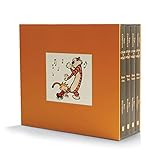
- Andrews McMeel Publishing
- Join Calvin and Hobbes on all their adventures in this four-volume collection of every comic strip from the comic strip’s eleven year history (1985 to1996).
- It is durable and long lasting
That double vision makes the jokes richer. Calvin’s play can be thrilling on its own terms, while the mundane details around it keep the scene grounded in a child’s life. TIME describes Watterson’s experimentation with artistic styles and the richly rendered imagined settings. It also notes that he pushed against conventional limits on Sunday comic layouts, using the space to shape larger scenes and landscapes (TIME, “Calvin and Hobbes First Met 30 Years Ago”).
The result is a strip in which drawing does more than illustrate dialogue. Scale, composition and shifts in style help create the imaginative experience. Calvin’s inner world can feel vast without requiring the reader to forget that he is a child playing in a familiar setting.
Everyday childhood is the foundation for the fantasy
The adventures work because the strip never needs to make Calvin exceptional in the usual heroic sense. He is a six-year-old with family routines, school obligations, squabbles and play. The publisher’s description of the first collection places snowball fights and time travel beside philosophical musings, describing humor rooted in childhood (Andrews McMeel Publishing).
Rank #2
That mixture is the point. A snowball fight can be a grand campaign in Calvin’s mind and a childish scuffle in the adult world. The gap between those readings produces comedy, but it also captures a genuine feature of childhood: ordinary events can feel momentous because a child invests them with meaning.
Calvin is not an idealized child. He can be selfish, boastful, scared, perceptive or suddenly reflective. Those qualities do not cancel one another out. They make him feel like a person rather than a vehicle for a single joke or lesson.
Hobbes makes friendship both funny and tender
Hobbes is a tiger companion who can appear as a stuffed animal to others and as a witty, active friend to Calvin. The strip does not need to resolve that difference into one definitive explanation. Its comedy depends on the contrast, while its emotional force depends on taking Calvin’s experience seriously.
For Calvin, Hobbes is not simply a prop in an imaginary game. He is a companion with his own perspective, capable of teasing, resisting and sharing the adventure. The reader can recognize the ordinary toy and still understand why the friendship matters. That ambiguity lets the strip speak at once to adult awareness and to the felt reality of a child’s private world.
Watterson described the work as being about “private realities, the magic of imagination, and the specialness of certain friendships,” as quoted by TIME from The Calvin and Hobbes Tenth Anniversary Book (TIME). That statement supports one reading of the strip, but Hobbes’s precise status remains something the comic lets readers experience rather than settle.
It can be slapstick and philosophical in the same breath
The strip’s range is not a choice between jokes and ideas. Calvin’s schemes, complaints and games can open onto questions about rules, responsibility, meaning or how people see the world. The publisher’s description explicitly pairs physical comedy and time travel with philosophical musings (Andrews McMeel Publishing).
That philosophical element works best because the voice remains recognizably Calvin’s. The strip does not turn him into a miniature adult delivering polished wisdom. His thoughts can be incisive, absurd, self-serving or unfinished. The humor survives the ideas, and the ideas gain texture from the fact that they come from a child still learning how to live with them.
Watterson’s independence shaped the strip’s identity
Watterson’s approach to popularity offers context, not proof that the strip is great. In a 1989 interview with The Comics Journal, he said, “Really, I don’t understand it, since I never set out to make Calvin and Hobbes a popular strip” (The Comics Journal). The comment is a useful reminder that the work was not simply engineered around the familiar expectations of a mass-market comic.
His choices about commercialization also became part of the strip’s public identity. TIME reports that Watterson refused character licensing because he felt that reducing the work to merchandise could violate its spirit, which he associated with imagination and friendship (TIME). That was his stated view; it should not be confused with evidence that licensing decisions alone make the comic artistically superior.
Watterson also spoke sharply about the business pressures around syndication. In a speech about cartooning, he described ethical decisions “masquerading as simple business decisions” and called a syndicate a “bloodsucking corporate parasite” (speech text hosted by MIT). The deliberately pointed language is Watterson’s rhetoric, not a neutral description of the syndicator. It does, however, show how strongly he regarded creative control as an artistic issue.
Independent reader supportYour contribution helps us test, update, and keep practical guides available for everyone.Where should a new reader start?
For a first taste, start with the first Calvin and Hobbes collection. Its publisher description offers a representative sense of the strip’s range, from snowball fights and time travel to philosophical musings (Andrews McMeel Publishing).
For the complete run, Andrews McMeel Publishing describes The Complete Calvin and Hobbes as a four-volume paperback edition containing every published strip from 1985 to 1995, along with introductory and supplemental material (publisher’s edition page). The syndicator says the collection appeared in 2005 (Andrews McMeel Syndication).
Readers interested in Watterson’s creative choices rather than a full sequence of strips can look to Exploring Calvin and Hobbes: An Exhibition Catalogue. Its publisher says it includes an extensive interview about his inspirations, philosophies and process (Andrews McMeel Publishing).
Free tools Windows power users keep installed
One-click scans. No signup required.
So, is it the best comic strip in the world?
There is no objective world ranking established by these facts, and artistic greatness cannot be reduced to a single score. The stronger answer is an argument: Calvin and Hobbes earns the superlative when “best” means a strip that makes form, fantasy, humor, character and feeling reinforce one another.
Its drawings let imagination alter the world; its domestic grounding keeps that invention recognizable; its comedy makes room for thought; and Calvin and Hobbes’s friendship gives the whole thing an emotional center. Those qualities make the claim persuasive—even for a reader who would choose another strip as a personal favorite.
Quick Recap
Product prices and availability are accurate as of the date/time indicated and are subject to change. Any price and availability information displayed on Amazon at the time of purchase will apply.




