A. R. Rahman’s Hindi-language Rangeela soundtrack is often called radical, but that is a critical judgment, not a measurable fact. The case for it rests on Rahman’s own description of an “international feel” shaped around Indian melody, his view that it sounded unlike Hindi or Tamil film music of the time, and the striking variety across its songs, instrumental theme and remix.
Which Rangeela soundtrack is this?
This is the Hindi-language soundtrack to Ram Gopal Varma’s 1995 film, not the separately listed Tamil-language soundtrack, which has a different track list. Apple Music lists the Hindi album as released May 14, 1995, with nine songs and a total runtime of 46 minutes; Amazon Music India also lists nine songs and 46 minutes. These are catalog details, not independent proof of a launch event. Apple Music’s Hindi album listing and Amazon Music India’s catalog listing identify the release and sequence.


Apple Music displays the following sequence and credits for the Hindi album. Catalog spellings, runtimes and credit formatting can vary slightly, so the entries below follow that listing. Apple Music’s album page also lists a separate Tamil soundtrack.
| Track | Vocal credit | Runtime |
|---|---|---|
| “Hai Rama” | Hariharan and Swarnalatha | 6:47 |
| “Kya Kare Kya Na Kare” | Udit Narayan | 5:43 |
| “Mangta Hai Kya” | A. R. Rahman and Shwetha Shetty | 6:46 |
| “Pyaar Yeh Jaane Kaise” | Suresh Wadkar and Kavita Krishnamurthy | 4:59 |
| “Rangeela Re” | Asha Bhosle and Aditya Narayan | 5:34 |
| “Spirit of Rangeela (Instrumental)” | Instrumental | 3:00 |
| “Tanha Tanha Yahan Pe Jeena” | Asha Bhosle | 5:36 |
| “Yaaron Sun Lo Zara” | Udit Narayan and Chitra | 5:54 |
| “Hai Rama (Remix)” | Hariharan and Swarnalatha | 2:36 |
What makes Rangeela’s soundtrack sound different?
Rahman’s own account gives a more useful starting point than a broad label such as “world music.” In an interview excerpt attributed to Nasreen Munni Kabir’s A. R. Rahman: The Spirit of Music, he said the approach combined an international feel in its melodies and rhythms with Indian melody. He also said it did not sound like the Hindi or Tamil film soundtracks of the period. Those are his retrospective characterizations, not a claim that the album abandoned Indian idioms or that every listener heard it the same way. Rahmaniac’s reproduced interview excerpt attributes these remarks to Kabir’s book.
Quick wins for a faster PC:
Fix the driver behind crashes, sound loss and screen glitchesFind Drivers →Clear out junk files and repair common Windows errorsFree Scan →The album makes that contrast audible through shifts in texture and energy rather than one uniform sonic formula. Apple Music’s editorial notes describe swirling textures and a murmur-to-roar dynamic in “Hai Rama” and “Pyaar Yeh Jaane Kaise”; they call the instrumental “Spirit of Rangeela” rhythmic and orchestral, and characterize “Tanha Tanha” and “Rangeela Re” as propulsive. These are listening descriptions from the platform, not production credits. Apple Music’s editorial notes offer the accompanying track commentary.
The vocal lineup adds another kind of contrast. Asha Bhosle leads both “Rangeela Re” and “Tanha Tanha,” while the other songs pair or feature singers including Hariharan, Swarnalatha, Udit Narayan, Kavita Krishnamurthy, Suresh Wadkar, Chitra and Shwetha Shetty. The sequence moves between solo and duet voices, romantic songs and more propulsive numbers, then makes room for an instrumental before returning to a remix of “Hai Rama.” The result is a soundtrack whose identity comes partly from how its pieces differ from one another.
Rank #2
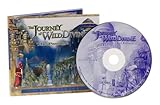
- The music from the game on CD.
- Practice your game skills by listening to the music when you don't have a computer handy.
- Featuring music by Grammy-nominated artists, including Nawang Khechog, Jeff Pevar, David Darling and Carolyn Fazio.
- Other featured musicians include Chris Berry, Samite, Snatam Kaur, Therese Schroeder-Sheker and the Wild Divine Band.
How Rahman explained the album’s mood
In a 1996 Filmfare interview reproduced by Rahmaniac, Rahman named “Tanha Tanha,” “Mangta Hai” and “Hai Rama” among the Rangeela songs he held especially close. He recalled an intensely romantic sound and said the team had spent nearly a year immersed in the score, aiming to reflect change and youthful energy. He also explained that the pan flute in “Tanha Tanha” was meant to suggest peace and harmony with nature. Rahmaniac’s reproduced 1996 interview provides this account.
That intention offers a way to hear “Tanha Tanha” beyond its forward motion: the pan flute gives the song a contrasting, nature-oriented color within a brisker arrangement. Rahman also referred to using the instrument in “Dil Hai Chhota Sa,” linking the timbre across songs without making them interchangeable. The interview excerpt on the pan flute reproduces his description.
Rank #3
Why call it one of Rahman’s most radical soundtracks?
“Radical” works here as an argument about the album’s distinctiveness, not as an objective ranking. Rahman said he was trying to bring together international melodic and rhythmic character with Indian melody, and that the result stood apart from the Hindi and Tamil soundtracks around it. The album’s changing textures, contrasting vocal performances, instrumental interlude and remix support that reading: it does not rely on one sound or mood to carry all nine tracks.
Rahman also reflected that it was only after Rangeela in 1995 that he began to understand what Hindi cinema wanted from his music. That remark frames the album as a turning point in his own account of working in Hindi films; it does not, by itself, prove a universal change in Indian film music. The strongest case for the soundtrack’s lasting reputation is therefore specific: it joins an unusually varied sequence to a sound Rahman himself described as both internationally inflected and rooted in Indian melody. The excerpt attributed to Kabir’s book reproduces his reflection on that transition.
Quick Recap
Best Value
Rank #4
Product prices and availability are accurate as of the date/time indicated and are subject to change. Any price and availability information displayed on Amazon at the time of purchase will apply.




