Windows Errors? Fix Them Before They Spread
Repair common Windows errors and clear accumulated junk for a smoother, more stable PC - no reinstall needed.Free scan · no reinstallOutdated Drivers Are Slowing You Down
One free scan finds every outdated or missing driver and matches the right update for your exact hardware.Free scan · exact hardware match“Hindustani Musalman” was written and performed by Hussain Haidry, an Indore-born poet, lyricist and screenwriter. He described it as a personal reflection on the experiences that shaped his identity—not a statement about Muslims as a whole.
Who wrote and performed “Hindustani Musalman”?
Hussain Haidry is the poet and performer behind “Hindustani Musalman.” The recitation was recorded at a Kommune performing-arts event in Mumbai. Kommune shared the video on Facebook on 10 February 2017, and Scroll reported that more than 2,000 Facebook users had shared it within a week. Scroll’s 2017 account described the poem’s rapid circulation and Haidry’s explanation of its meaning.

A later figure needs a date attached: Mid-Day reported more than 600,000 views for the recitation in a June 2018 profile. That is a count reported at the time, not a current total. Mid-Day’s profile also gives biographical context.
What does the poem mean to Haidry?
Haidry called the poem “a personal journey of seeking identity” in an interview with Hindustan Times. He told Scroll that each line applied to him alone, not to Muslims generally. His point was that a religious identity did not encompass all the places, experiences and cultural influences that had shaped his personality.
#1 Best Overall

- Immerse yourself in the world of spoken words with our design, perfect for poetry slam enthusiasts and poets. It captures the essence of slam poetry, reflecting the passion and power of performing art and the beauty of poetic expression.
- A tribute to authors and poetry lovers, this design is ideal for National Poetry Month, poetry readings, or as a poetry slam outfit. It celebrates the art of poetry writing, bringing the emotion and depth of poems to life.
- Hardcover journal with 240 line-ruled pages (120 sheets)
- Built-in elastic closure and ribbon bookmark
- Includes an expandable inner storage pocket and a pen holder
He also rejected reading the poem as a protest or a message about what others should think. As he put it to Scroll, “until one breaks the monotony of one’s perspective, how will one know who the person in front of one is?” In that account, “Hindustani” refers to the country’s cultural diversity, not hardline nationalism. Hindustan Times’ interview likewise presents the poem as an account of personal identity.
How did Haidry come to write it?
Both Scroll and Hindustan Times trace the poem’s opening lines to Haidry’s journey from Kolkata toward Bhutan. Scroll’s report says he was waiting to set out and heard the azaan one morning; Hindustan Times describes him as travelling. Haidry said the poem was initially different, that he lost the diary where he had written it, and that he rewrote it months later for a Kommune video.
Rank #2
Why the poem is more than an easy slogan
The poem draws on different aspects of religious and cultural life. Scroll’s short excerpt, for example, pairs the Gita with an Urdu newspaper; its reported opening asks, “Main kaisa musalman hoon bhai?” (“What kind of a Muslim am I, brother?”), and its reported ending is “Main Hindustani Musalman hoon” (“I’m a Hindustani Muslim”).
But Haidry also told Scroll that the poem includes difficult references to Babri Masjid, urban divisions, riots and a bloodstained kurta. Its account of cultural plurality therefore sits alongside violence and boundaries; reducing it to a feel-good slogan would leave out part of what Haidry said it contains. The excerpt and translations above are limited to the phrases reproduced by Scroll; they do not substitute for a complete authorized text or performance transcript.
Recommended Free Tools
Quick Recap
Best Value

- Some Things Only Poetry Can Say - This is for people who love reading poetry and poems. Great for poets create poetry or who write literary pieces like a poem. This is for authors, writers, poets and literary writers who are creators of a written work.
- This is for poets who write poems with rhymes in lines or stanzas. Great for lovers of poetic forms like sonnet and ode. Perfect for lovers of genres like narrative, lyric, epic, satirical, elegy, verse fable, dramatic, speculative, prose, and slam poetry.
- Hardcover journal with 240 line-ruled pages (120 sheets)
- Built-in elastic closure and ribbon bookmark
- Includes an expandable inner storage pocket and a pen holder
Rank #4
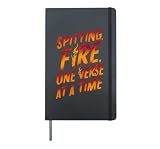
- Immerse yourself in the world of spoken words with our design, perfect for poetry slam enthusiasts and poets. It captures the essence of slam poetry, reflecting the passion and power of performing art and the beauty of poetic expression.
- A tribute to authors and poetry lovers, this design is ideal for National Poetry Month, poetry readings, or as a poetry slam outfit. It celebrates the art of poetry writing, bringing the emotion and depth of poems to life.
- Hardcover journal with 240 line-ruled pages (120 sheets)
- Built-in elastic closure and ribbon bookmark
- Includes an expandable inner storage pocket and a pen holder
Product prices and availability are accurate as of the date/time indicated and are subject to change. Any price and availability information displayed on Amazon at the time of purchase will apply.