Arthur Chu became known to most viewers as the Jeopardy! contestant who won 11 consecutive games in 2014 before finishing third in the next one. TIME reported his total winnings at $297,200 in a March 13, 2014 article. What followed was a turn to writing and public commentary on nerd culture, exclusion and online life, which the 2018 documentary Who Is Arthur Chu? follows. This article separates three kinds of evidence: the game record, Chu’s own account of what came afterward, and the filmmakers’ framing of his story. Each supports different claims.
The run that made him famous
Chu won 11 games in a row and then lost in the twelfth, finishing third. The figures that matter most for the record are the win count and the total winnings. TIME’s March 13, 2014 report puts those winnings at $297,200. These are contemporaneous reporting on the games, so they are the part of his story least shaped by how Chu later remembered it.

Playing off the sequence
Most contestants work down a category in order. Chu moved among categories, looking for Daily Doubles and trying to keep opponents off balance. That choice departed from the sequential play many viewers expected, and it is the main reason his games drew attention beyond the usual fan audience. Describing his own style, Chu framed the board-jumping as a way to control the game’s rhythm rather than as a trick.
Why viewers reacted so strongly
Chu’s most considered explanation appears in a first-person essay for The Guardian, published February 25, 2014. He wrote that he did not fully understand why the reaction had happened, but that one factor he considered central was the audience’s ambivalence toward disruption:
#1 Best Overall
“I don’t fully understand why it’s happened, but one factor I think is central to it is that in Jeopardy and everywhere else, people claim to be upset by something that shakes things up and introduces conflict and controversy but they also crave it, they’re drawn to it.”
In the same account he described how the reaction produced a public character, with competing projections about who he was. That is Chu’s description of the attention, not an independent measure of what viewers thought.
How he prepared
Chu told Mental Floss in a 2014 interview that once he learned he would appear, he studied televised episodes, online discussions and the Jeopardy! Archive. He also said he looked at wagering theory and scripted some decisions in advance so he could concentrate on the choices that mattered most. Treat these as his own description of his method. The interview records how he prepared; it does not test whether that preparation improved his results.
Rank #2

- OFFICIAL HISTORY CHANNEL TRIVIA GAME: Created in partnership with The HISTORY Channel, the trusted destination for historical storytelling. Test your knowledge and challenge friends and family with questions inspired by history, culture, science, and more
- OVER 2,000 TRIVIA QUESTIONS: Packed with thousands of questions spanning human history and the pursuit of trivial knowledge—from ancient civilizations and famous figures to science, sports, geography, and modern events.
- FIVE DIVERSE TRIVIA CATEGORIES - Includes questions across Arts & Culture, Sports & Recreation, Science & Technology, Geography & Landmarks, and People & Events so every player has a chance to shine.
- PERFECT FOR FAMILY GAME NIGHT: Fun for adults, teens, and families who love learning and friendly competition. Great for game nights, gatherings, dinner parties, and social trivia challenges.
- GREAT GIFT FOR DADS & TRIVIA LOVERS - A thoughtful and unique gift for dads, history buffs, trivia fans, and lifelong learners. Perfect for Father’s Day, birthdays, holidays, and family celebrations.
The Forrest Bounce
In a May 20, 2015 interview with Flipboard, Chu described learning about the Forrest Bounce, a method associated with an earlier contestant, Chuck Forrest. He said he weighed its advantages and drawbacks before deciding how to use it. The appeal, in his telling, was that opponents could not predict which category he would pick next.
From game show to commentary
Chu has said he used the visibility from the show to publish writing on nerd culture, exclusion and online life. He has also said that television exposure helped people pay attention to a blogging and commentary practice he already had. The label that followed him is one he has addressed directly. In a December 1, 2014 interview with TechCrunch, he said:
“I’m ‘the Jeopardy! guy’ — that’s how most people know me, anyway.”
Rank #3
Sale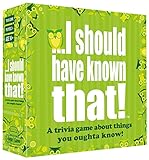 I should have known that! - A Trivia Game About Things You Oughta Know, Green
- Package Quantity :1
- In contrast to traditional trivia formats, you don't receive points for answering questions correctly. Instead, points are subtracted for every incorrect answer!
- Contains 110 cards with more than 400 questions about things that you should know
- An addictively entertaining trivia game where it will only be a matter of time before you hear yourself say ahhh!... I should have known that!
The line captures the tension of the period: a commentator whose most widely recognised identity came from a single run of games.
Gamergate, harassment and the Felicia Day essay
Chu has said he cared about exclusion in geek communities, including the exclusion of women, people of color and LGBT people. In a first-person essay for Salon, published October 30, 2014, he described the doxxing of Felicia Day as the point at which harassment became personal to him. Both accounts are Chu’s own. They explain why he engaged with these issues, but they are not a neutral history of Gamergate, and one interview or essay cannot stand in for that wider record.
Do these 3 things before closing this tab:
1Fix the driver behind crashes, sound loss and screen glitches2Repair Windows errors before they cause bigger problems3Scan for outdated or missing drivers - takes under a minuteNothing in this section is a prevalence figure for online harassment. The story here is one commentator’s documented experience and his explanations of it.
Rank #4
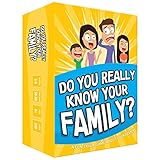
- Get ready for the best family game night as you laugh and learn new things about each other with this fun card game.
- See who really knows the family best as you answer fun questions about each other while sparking interesting conversations.
- Create hilarious family memories as you compete and perform silly challenges together.
- Super easy to learn and play - a perfect game for families with kids 8 and up, teens and adults.
The documentary’s framing
In a November 29, 2018 interview with We Are Moving Stories, the filmmakers presented the film as following Chu’s path through viral celebrity and online commentary. The emphasis on harassment is their interpretation of that path. It is a deliberate focus, not a complete or neutral account of online harassment, and it should be weighed as a filmmaking choice.
The same interview listed Vudu, Prime Video, Kanopy and Vimeo on demand as places to watch at that time. Those listings are from 2018 and may have changed. Check the platforms directly before deciding to watch.
Reading the record
The three kinds of evidence carry different weight. Use the table below to judge a claim about Chu by its source.
Recommended Free Tools
| Perspective | Sources and dates | What it supports | Limits |
|---|---|---|---|
| Game outcomes | TIME, March 13, 2014 | The 11-game run, the third-place finish and total winnings | Reports results only; says nothing about his reasoning |
| Chu’s own account | The Guardian, February 25, 2014; Mental Floss, 2014; TechCrunch, December 1, 2014; Salon, October 30, 2014; Flipboard, May 20, 2015 | His explanations of the audience reaction, his preparation, his commentary and why harassment affected him | Self-description, not independently verified; each interview covers only part of the story |
| Filmmakers’ framing | We Are Moving Stories, November 29, 2018 | How the documentary is pitched and the platforms it listed then | An interpretation of Chu’s path; availability is dated |
Read together, the sources give a clear outline: a record-setting run, a public reaction Chu attributes to the audience’s appetite for controversy, and a later career built on commentary about who gets included in online culture. They do not give a full account of the wider events Chu wrote about, or an independent assessment of his claims.
Quick Recap
Product prices and availability are accurate as of the date/time indicated and are subject to change. Any price and availability information displayed on Amazon at the time of purchase will apply.




