Outdated Drivers Are Slowing You Down
One free scan finds every outdated or missing driver and matches the right update for your exact hardware.Free scan · exact hardware matchPC Slower Than It Used to Be?
A free scan shows the junk files, broken settings and background clutter dragging Windows down - then fixes them in one click.Free scan · Windows 10 & 11Before Hazbin Hotel became an Amazon Prime Video breakout and Helluva Boss dominated YouTube’s adult animation space, both shows emerged from the same fiercely independent creative origin. They were conceived by animator and illustrator Vivienne Medrano, known online as VivziePop, whose early web presence and animation shorts cultivated a massive fanbase long before either series was formally greenlit. That shared DNA is why the two shows feel immediately connected, even as they’ve grown into very different beasts.
Medrano developed Hazbin Hotel first, launching its pilot on YouTube in 2019 as a proof-of-concept for a larger, serialized musical dramedy set in Hell. Its viral success laid the foundation for a larger universe, both narratively and commercially, attracting A24 and eventually leading to a full-scale studio-backed production. In contrast, Helluva Boss was designed from the outset as a creator-controlled web series, produced independently through Medrano’s studio, SpindleHorse Toons.
The Creative Core of the Hellaverse
SpindleHorse became the engine that allowed the so-called Hellaverse to exist in multiple forms at once. While Hazbin Hotel transitioned into a traditional studio pipeline with network oversight and long production cycles, Helluva Boss remained agile, episodic, and deeply rooted in internet culture. Together, they represent two parallel paths born from the same creator: one a polished, serialized prestige series, the other a fast-moving, irreverent sandbox that keeps the universe alive between major releases.
Same Hell, Different Corners: How the Two Shows Coexist in One Universe
At a glance, Hazbin Hotel and Helluva Boss look like two sides of the same chaotic coin, sharing a visual style, demonic hierarchy, and a very specific brand of profanity-forward humor. Canonically, they do exist in the same version of Hell, governed by the same rules and populated by overlapping species of sinners, imps, and higher demons. The key difference is where they choose to point the camera.
#1 Best Overall

- 【Material】: Made of soft plush material, the inner layer is PP cotton.
- [Exquisite sewing treatment]: The edge of the plush toy is well sewn, so the doll toy is not easy to disassemble, it is very durable and long-lasting.
- 【Easy to Clean】:These TV series figure plush toys have bright colors, easy to clean materials, so it is very simple and convenient to clean.
- 【Occasion】:Whether you want to decorate your room or bring a touch of plush into your everyday life, this plush is a versatile item that can be used as a decorative piece or a comforting companion.
- 【Perfect Gift】: This stuffed animal plush is so cute to surprise your friends, families and kids. It will be used as a gift for Christmas, Thanksgiving and birthdays, or you can use it as your own gift. Very suitable for display and collection
Two Perspectives on the Same Afterlife
Hazbin Hotel is firmly centered in Pentagram City, Hell’s overcrowded urban core, where sinner demons are trapped after death and locked into an endless cycle of violence and overpopulation. Its story is concerned with systemic problems: redemption, power structures, and whether Hell itself can change. That big-picture focus gives the show its operatic tone and serialized stakes.
Helluva Boss, on the other hand, mostly operates on the fringes. It follows the I.M.P. crew, native-born hellspawn who can freely move between Hell and the human world through magical means. Their day-to-day misadventures function less as a moral thesis and more as a character-driven workplace comedy with occasional emotional gut punches.
Shared Lore, Minimal Overlap
Despite fan hopes, the two shows deliberately avoid direct crossover storytelling. Characters from Hazbin Hotel do not appear in Helluva Boss in any meaningful way, and vice versa, beyond background references or Easter eggs. This separation is intentional, preserving each show’s narrative integrity while avoiding continuity conflicts.
Part of that divide is practical. Hazbin Hotel’s transition to a studio-backed production places its characters and storylines under different legal and production constraints. Helluva Boss, remaining fully independent, has far more freedom to improvise, respond to fan feedback, and release episodes on an irregular but flexible schedule.
What’s actually slowing this PC down?
Pick the symptom - the matching free tool is one click away.
Different Tones, Same Moral Playground
Tonally, the shows are built to do different kinds of work. Hazbin Hotel leans into musical spectacle and long-form character arcs, using redemption as a sincere, if messy, emotional engine. Its Hell is cruel, but the show constantly asks whether cruelty is inevitable.
Helluva Boss is more anarchic and personal, focusing on dysfunctional relationships, class divides within Hell, and the emotional fallout of immortality. When it gets serious, it does so suddenly and without the theatrical framing Hazbin prefers, making its darker moments feel uncomfortably intimate rather than grand.
A Universe Designed to Stretch
Together, the two series demonstrate how a shared universe doesn’t require constant crossover to feel alive. Hazbin Hotel defines the mythos and themes, while Helluva Boss stress-tests that world through smaller, stranger stories. They coexist not as competing narratives, but as complementary lenses, each exploring different corners of the same infernal sandbox without stepping on the other’s toes.
Core Premises Compared: Redemption at the Hazbin Hotel vs. Assassination-for-Hire in Helluva Boss
At their foundations, Hazbin Hotel and Helluva Boss are built around radically different narrative engines. One asks whether Hell can be rehabilitated from the inside. The other assumes Hell is irredeemable and figures out how to make a living within it.
Free tools Windows power users keep installed
One-click scans. No signup required.
Hazbin Hotel: A Musical Gamble on Redemption
Hazbin Hotel centers on Charlie Morningstar’s wildly optimistic belief that sinners can be redeemed rather than endlessly exterminated. Her solution is the Hazbin Hotel itself, a rehabilitation space designed to prove that even Hell’s worst residents can change if given structure, compassion, and a second chance.
This premise gives the series a clear moral thesis and a long-term narrative goal. Every character arc, musical number, and power struggle feeds into the question of whether redemption is possible in a system designed to deny it. The stakes are existential, political, and emotional all at once.
Because of that, Hazbin Hotel is inherently serialized. Progress is slow, setbacks are devastating, and character growth matters in a way that accumulates episode to episode rather than resetting the status quo.
Helluva Boss: Making Rent in a Broken Afterlife
Helluva Boss operates on a far more cynical, street-level premise. The series follows I.M.P., a small assassination business that travels to the human world to kill targets on behalf of Hell’s clients. Survival, not salvation, is the name of the game.
Do these 3 things before closing this tab:
1Fix the driver behind crashes, sound loss and screen glitches2Clear out junk files and repair common Windows errors3Scan for outdated or missing drivers - takes under a minuteThis setup lends itself to episodic chaos and dark comedy. Each job introduces a new scenario, while character drama unfolds sideways through relationships, betrayals, and personal insecurities rather than a single overarching mission to fix Hell itself.
Rank #2

- YOUTOOZ HAZBIN HOTEL COLLECTION: Collectible 9-inch plush featuring Alastor from Hazbin Hotel, recreated in the signature Youtooz plush style
Importantly, Helluva Boss never pretends its characters are trying to be better people in a cosmic sense. Their growth is intimate and messy, focused on love, jealousy, trauma, and self-worth rather than moral absolution.
Big Ideas vs. Personal Consequences
The contrast between the two premises defines how each show feels to watch. Hazbin Hotel frames Hell as a system that might be challenged, even reformed, through idealism and sacrifice. Helluva Boss treats Hell as a permanent condition, one its characters have learned to exploit, endure, or emotionally collapse under.
That distinction explains why Hazbin Hotel often feels operatic and thematic, while Helluva Boss feels raw and immediate. One reaches upward, asking if damnation can be undone. The other looks inward, asking how anyone keeps going when it cannot.
Tone and Genre Split: Musical Broadway Chaos vs. Workplace Sitcom Ultraviolence
If Hazbin Hotel and Helluva Boss share a universe, they could not feel more different on a moment-to-moment level. Their tones diverge so sharply that it often surprises new viewers to learn they’re canonically connected at all. That split is deliberate, rooted in genre, pacing, and what each series wants its audience to feel when the credits roll.
Hazbin Hotel’s Operatic, Musical-Driven Melodrama
Hazbin Hotel is structured like a Broadway musical filtered through adult animation. Songs are not just stylistic flourishes; they are narrative engines that externalize inner conflict, power struggles, and ideological clashes. Characters sing when emotions become too large for dialogue, pushing the story forward through spectacle and sincerity.
That musicality gives Hazbin Hotel a heightened, theatrical tone. Emotions are maximalist, villains are grandiose, and even comedy is staged with rhythm and choreography in mind. The show wants to overwhelm you, emotionally and visually, in service of its redemption narrative.
The result is a series that feels prestige-oriented and carefully paced. Episodes build toward big moments rather than rapid-fire punchlines, and tonal whiplash is intentional rather than chaotic. When Hazbin Hotel gets dark or tragic, it lingers there.
Helluva Boss and the Anatomy of a Violent Workplace Sitcom
Helluva Boss, by contrast, plays like a warped adult sitcom drenched in ultraviolence. Its core structure is episodic, built around jobs, misunderstandings, and dysfunctional office dynamics rather than ideological quests. Violence lands as slapstick, profanity flies freely, and jokes often arrive faster than the viewer can process them.
The show’s humor thrives on shock, timing, and escalation. Death is frequent, cruel, and absurd, rarely carrying cosmic weight unless it directly affects the characters’ personal lives. This gives Helluva Boss a looser, more improvisational feel, even when episodes pivot into unexpectedly emotional territory.
Crucially, Helluva Boss is comfortable resetting the board. Characters grow, but the world itself does not demand progress or reform. That freedom allows the series to swing wildly between raunchy comedy, romantic drama, and brutal emotional honesty without ever needing to resolve Hell as a concept.
Why the Tone Gap Matters
This tonal split is why the two shows can coexist without stepping on each other. Hazbin Hotel handles myth, ideology, and systemic questions through operatic storytelling, while Helluva Boss zooms in on how individuals survive inside that same broken system. One treats Hell as a stage for moral reckoning; the other treats it as a workplace from hell that still requires teamwork and rent money.
Quick wins for a faster PC:
Clear out junk files and repair common Windows errorsFree Scan →Fix the driver behind crashes, sound loss and screen glitchesFind Drivers →Repair Windows errors before they cause bigger problemsFix Now →For viewers, the difference clarifies expectations. Hazbin Hotel asks for emotional investment and patience, rewarding it with payoff and transformation. Helluva Boss offers immediacy, catharsis, and character-driven chaos, often within the span of a single episode.
Together, they form a tonal ecosystem rather than a competition. The contrast is not a flaw but a design choice, allowing Vivienne Medrano’s universe to stretch across genres without diluting its identity.
Rank #3

- Various Cartoon Characters Stickers: There are 50PCS different Cartoon Characters stickers. They are all made of PVC vinyl waterproof stickers, high-definition patterns and bright colors. All decals are in the range of 2-3inches size
- Widely Used: Use these cute stickers or cool stickers to decorate your items. Such as scrapbook journal guitar skateboard phone case computer laptop water bottles stickers, and anything else to play your imagination
- High Qualit: The aesthetic stickers bulk has the function of sun protection and waterproof, it is safe and non-toxic, and is not easy to tear. If it's not needed, they are easily removable/reusable and not leave sticky residue
- How To Use: Get your Stickers, Clean the surface, Sticker on, then use your imagination to create works now
- Satisfactory Customer Service:If you have any unhappiness about this purchase, please do not hesitate to contact us,we promise solve for you within 24h
Characters and Power Levels: Royal Demons, Imps, and Why the Casts Rarely Overlap
While Hazbin Hotel and Helluva Boss share a version of Hell, they operate on very different rungs of its social and supernatural hierarchy. That divide is most visible in their characters, who are built to inhabit separate layers of power, privilege, and narrative consequence. The result is a shared universe where crossovers are technically possible, but thematically discouraged.
Hazbin Hotel Lives Among Hell’s Elite
Hazbin Hotel centers on demons who matter on a cosmic scale. Charlie Morningstar is literal royalty, the daughter of Lucifer, and her inner circle includes figures tied directly to Hell’s political, spiritual, and mythological machinery. Even characters who lack raw power, like Angel Dust, are significant because they are sinners trapped in Hell’s eternal ecosystem.
The Tool Desk
Outbyte PC Repair FREERepair Windows errors before they cause bigger problemsFix Now →Outbyte Driver Updater FREEFix the driver behind crashes, sound loss and screen glitchesFind Drivers →These characters exist under the shadow of the Exterminations, the annual purges that give Hazbin its existential stakes. Power in this show is about permanence and consequence: who can be erased, who can’t, and who has the authority to challenge the system itself. Every major character is, in some way, entangled with Hell’s long-term balance.
Helluva Boss Stays in the Lower Circles
Helluva Boss deliberately keeps its cast grounded at the bottom of Hell’s food chain. Blitzo, Moxxie, Millie, and Loona are imps and hellhounds, hellborn species with limited power and virtually no political influence. They are not subject to Extermination in the same way sinners are, which immediately changes the stakes of their world.
Their problems are personal rather than cosmic: money, relationships, professional incompetence, and emotional baggage. Even when violence escalates to absurd levels, the universe does not pause to judge their actions. Helluva Boss treats power as situational and often comedic, not mythic.
Royal Exceptions Don’t Change the Rule
Characters like Stolas blur the line but don’t erase it. As a Goetia demon, Stolas outranks nearly everyone in Helluva Boss, yet he exists there to highlight imbalance, not bridge shows. His presence emphasizes how small IMP really is, reinforcing the workplace-sitcom dynamic rather than elevating the series into Hazbin territory.
Recommended Free Tools
Importantly, Stolas does not pull Hazbin Hotel characters into Helluva Boss, nor does his status invite crossover politics. His role is intimate, messy, and personal, keeping the focus on relationships instead of rulership or reform.
Why Crossovers Would Break the Balance
Letting the casts mix freely would undermine both shows. Hazbin Hotel characters carry narrative gravity that would flatten Helluva Boss’s fast, joke-driven pacing. Conversely, dropping IMP into Hazbin’s story would trivialize a plot built around redemption, genocide, and moral absolution.
The separation preserves tone, stakes, and internal logic. Hell is vast enough for both stories to coexist without collision, and the power gap ensures that each series stays true to its purpose.
A Shared Universe, Not a Shared Spotlight
The rare references and background connections are intentional worldbuilding rewards, not invitations to merge narratives. Hazbin Hotel tells the story of Hell’s future, while Helluva Boss explores how people survive its present. Their characters rarely overlap because they are not meant to solve the same problems, or even ask the same questions.
In that sense, the power imbalance is not a limitation but a design principle. It allows Vivienne Medrano’s universe to feel layered, lived-in, and expansive without forcing every story to revolve around the same demons.
Production and Distribution Models: Indie YouTube Phenomenon vs. Prime Video Series
That separation of tone and narrative is reinforced behind the scenes. Hazbin Hotel and Helluva Boss may share a creator and universe, but they exist in fundamentally different production ecosystems. How they are made, funded, and released shapes not only their look and pacing, but also how fans engage with them.
Helluva Boss: Creator-Driven and Platform-Free
Helluva Boss is a rare modern success story of independent animation thriving on YouTube. Produced by SpindleHorse Toons and funded largely through merchandise sales, Patreon support, and ad revenue, the series operates without a traditional network or streaming partner. That independence allows episodes to drop on an irregular schedule, often months apart, with quality prioritized over consistency.
Rank #4
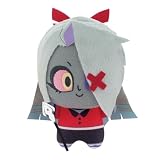
- Bandai Spirits Banpresto is proud to announce their newest release Mascot plush vol.1 Vaggie from Hazbin Hotel!
- Standing at approximately 4.3" tall, Vaggie is huggable plushes that can be taken anywhere with their included plastic hook
- Be sure to collect this and enhance your display with other incredible Banpresto items!
- The product box will have a Bandai Namco warning label, which is proof that you are purchasing an officially licensed product
This model gives Vivienne Medrano and her team near-total creative freedom. Jokes can be sharper, episodes can be shorter or longer as needed, and story arcs can pivot based on audience response. The tradeoff is scale: Helluva Boss is made with a smaller budget per episode, and every release is an event rather than a season-long rollout.
Hazbin Hotel: From Viral Pilot to Prime Video Prestige
Hazbin Hotel followed a very different path. After its pilot went viral on YouTube in 2019, the project was picked up by A24 and later ordered to series by Amazon Prime Video. That transition moved Hazbin into a traditional television production pipeline, complete with structured seasons, studio oversight, and union-scale voice acting and animation budgets.
The Prime Video model brings consistency and reach. Episodes release in coordinated batches, marketing is global, and the animation quality remains uniformly high across a full season. In exchange, Hazbin operates within clearer production constraints, balancing creator vision with the expectations of a major streaming platform.
Budget, Scope, and Visual Ambition
The difference in funding is visible on screen. Hazbin Hotel’s environments are denser, its musical numbers more elaborate, and its action sequences staged with cinematic polish. The show is built to sustain long-form arcs and emotional payoffs across multiple episodes.
Helluva Boss, by contrast, leans into efficiency and style. Its animation is expressive and energetic, often favoring speed and comedic timing over spectacle. The result feels looser and more spontaneous, matching its workplace-comedy tone and episodic storytelling.
The Tool Desk
Outbyte PC Repair FREERepair Windows errors before they cause bigger problemsFix Now →Outbyte Driver Updater FREEScan for outdated or missing drivers - takes under a minuteDriver Scan →Release Strategy and Fan Culture
Distribution also affects how fans experience each series. Helluva Boss episodes arrive like surprise drops, immediately dominating social media discourse and meme culture. The comments section becomes part of the text, with fans dissecting character moments in real time.
Hazbin Hotel’s Prime Video release encourages binge-watching and broader mainstream discovery. Discussions tend to focus on season arcs, character growth, and thematic analysis rather than individual episode surprises. Both approaches foster passionate fandoms, but they operate on different rhythms.
Canon Control and Creative Boundaries
Perhaps most importantly, the production divide helps preserve canon clarity. Hazbin Hotel, as a Prime Video series, functions as the flagship narrative with clearly defined rules and long-term stakes. Helluva Boss, while canon to the same universe, is designed to be accessible without requiring knowledge of Hazbin’s plot.
Keeping them on separate platforms prevents narrative obligation. Viewers do not need to watch both shows to understand either one, and the creative teams can explore different corners of Hell without logistical or contractual entanglement. The production models don’t just reflect the shows’ differences; they actively protect them.
Canon, Continuity, and Crossovers: What’s Connected, What’s Separate, and Why It Matters
At first glance, Hazbin Hotel and Helluva Boss look like two sides of the same chaotic coin. They share a creator in Vivienne Medrano, a visual language, and a version of Hell that feels instantly recognizable. But canon is where their relationship becomes more carefully managed than fans might expect.
One Universe, Two Lanes
Both series take place in the same Hellaverse, operating under the same broad cosmology. Angels, demons, Hellborn royalty, and the annual Extermination are part of the shared rulebook. References to locations, social hierarchies, and background lore line up cleanly across both shows.
Where they diverge is focus. Hazbin Hotel centers on sinners, human souls damned to Hell and trapped within the Pride Ring. Helluva Boss follows Hellborn demons, characters native to Hell who can travel between rings and even visit Earth, instantly setting different narrative rules.
Canon Rules That Shape Storytelling
These distinctions are not cosmetic; they actively govern what stories each show can tell. Hazbin’s characters are bound by the moral weight of redemption and the threat of permanent death. Helluva Boss characters operate with far fewer existential constraints, allowing for globe-trotting assassinations and episodic chaos.
PC Slower Than It Used to Be?
A free scan shows the junk files, broken settings and background clutter dragging Windows down - then fixes them in one click.Free scan · Windows 10 & 11Outdated Drivers Are Slowing You Down
One free scan finds every outdated or missing driver and matches the right update for your exact hardware.Free scan · exact hardware matchBest Value

- 【Material】: Made of soft plush material, the inner layer is PP cotton.
- [Exquisite sewing treatment]: The edge of the plush toy is well sewn, so the doll toy is not easy to disassemble, it is very durable and long-lasting.
- 【Easy to Clean】:These TV series figure plush toys have bright colors, easy to clean materials, so it is very simple and convenient to clean.
- 【Occasion】:Whether you want to decorate your room or bring a touch of plush into your everyday life, this plush is a versatile item that can be used as a decorative piece or a comforting companion.
- 【Perfect Gift】: This stuffed animal plush is so cute to surprise your friends, families and kids. It will be used as a gift for Christmas, Thanksgiving and birthdays, or you can use it as your own gift. Very suitable for display and collection
That separation explains why major crossovers have never happened on-screen. Sinners like Charlie or Alastor have no reason, and no ability, to intersect with I.M.P.’s business model. The canon isn’t blocking fun; it’s preserving internal logic.
Easter Eggs, Not Team-Ups
Fans will notice visual nods and background references sprinkled throughout both series. Posters, silhouettes, and offhand mentions reward attentive viewers without creating required homework. These moments confirm the shared universe while stopping short of merging storylines.
Importantly, these are one-way acknowledgments rather than narrative dependencies. You can catch every Helluva Boss episode without knowing who Charlie Morningstar is, and Hazbin Hotel never pauses to explain I.M.P.’s latest job. The shows coexist, but they do not lean on each other.
Rights, Platforms, and Creative Firewalls
There is also a real-world reason the canon stays cleanly divided. Hazbin Hotel is produced and distributed through Prime Video, while Helluva Boss remains an independent YouTube series under Medrano’s direct control. Mixing characters across those lines introduces legal and contractual complexity that benefits no one.
What’s actually slowing this PC down?
Pick the symptom - the matching free tool is one click away.
Instead, Medrano has treated Hazbin as the flagship narrative with tightly controlled continuity, while Helluva Boss remains a flexible sandbox. The result is a shared universe without crossover fatigue, where each show protects its identity while enriching the larger mythology.
Which Show Is for You? How Hazbin Hotel and Helluva Boss Serve Different Audiences
At a glance, Hazbin Hotel and Helluva Boss share a visual style, a creator, and a hellish sense of humor. In practice, they aim for different emotional beats, viewing habits, and levels of investment. Choosing between them often comes down to what kind of animated experience you want right now.
If You Want a Serialized Story With Emotional Payoff
Hazbin Hotel is built for viewers who enjoy long-form storytelling and character arcs that evolve over time. It leans heavily into musical numbers, thematic progression, and ensemble drama, rewarding attention and emotional buy-in. This is a show designed to be watched in order, discussed episode by episode, and revisited for character nuance.
If you like adult animation that mixes Broadway energy with moral stakes and polished production, Hazbin is the clear pick. It plays more like a prestige animated series than a traditional web cartoon, and it expects its audience to engage with its world seriously, even when the jokes get outrageous.
Quick wins for a faster PC:
Clear out junk files and repair common Windows errorsFree Scan →Scan for outdated or missing drivers - takes under a minuteDriver Scan →Repair Windows errors before they cause bigger problemsFix Now →If You Want Fast, Funny, and Flexible Viewing
Helluva Boss caters to viewers who prefer episodic storytelling and sharp, immediate comedy. Episodes are easier to jump into, often self-contained, and less concerned with long-term consequences. While character development exists, it never overshadows the show’s core appeal: chaotic missions, explosive humor, and rapid-fire banter.
This makes Helluva Boss ideal for casual viewing or repeat watches. You can drop in for a single episode, enjoy the ride, and leave without feeling like you missed essential lore homework.
Tone, Content, and Comedy Thresholds
Both series are unapologetically adult, but they deploy their edge differently. Hazbin Hotel balances vulgar humor with sincerity, often undercutting jokes with genuine emotion or thematic intent. Helluva Boss pushes harder into shock comedy, violence, and sexual humor, frequently prioritizing laughs over reflection.
Neither approach is better, just different. One asks you to feel something alongside the chaos, while the other dares you to keep up with it.
Access, Availability, and Commitment Level
Practical considerations matter too. Hazbin Hotel’s Prime Video release positions it as a mainstream streaming series with a defined season structure and higher production polish. Helluva Boss remains free, immediate, and creator-driven on YouTube, preserving a rawness that many fans actively prefer.
Together, they represent two ends of the modern animation spectrum: platform-backed prestige and independent creative freedom. Watching both offers a fuller picture of what Vivienne Medrano’s universe can be, but each stands confidently on its own terms.
In the end, Hazbin Hotel and Helluva Boss are not competing versions of the same idea. They are complementary expressions of a shared world, shaped by different goals, formats, and audiences. Whether you want a grand, musical redemption story or a gleefully unhinged trip through Hell’s gig economy, there’s room for both, and that balance is exactly what makes the universe work.
Quick Recap
Product prices and availability are accurate as of the date/time indicated and are subject to change. Any price and availability information displayed on Amazon at the time of purchase will apply.