Recommended Free Tools
“Second literary life” is Urvashi Bahuguna’s description of Jhumpa Lahiri’s turn from the English-language fiction that first brought her prominence toward writing in Italian and translating literature. In Bahuguna’s 2017 profile, that change is less a clean break with Lahiri’s earlier subjects than a deliberate embrace of linguistic difficulty, experimentation and reinvention.
What does “a second literary life” mean?
The phrase comes from Urvashi Bahuguna’s Scroll.in profile, published on July 11, 2017, for Lahiri’s 50th birthday. It is the profile’s interpretive framing, not a formal title Lahiri gave to a distinct career phase. Bahuguna uses it to describe a change in Lahiri’s literary practice: moving away from writing fiction in English and beginning to write in Italian, while also translating work from Italian into English.



That shift matters because the language change meant taking on the position of a learner again. Bahuguna describes Lahiri as having felt constrained by English and presents Italian as a chosen challenge—a way to experiment and find freedom through difficulty. The profile’s account draws on interviews it cites; the underlying interviews are not independently available here, so this motivation is best understood as Bahuguna’s account rather than as a separately verified statement.
How did Lahiri’s earlier work establish her literary identity?
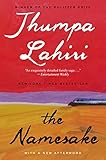
Bahuguna’s profile traces Lahiri’s early prominence through four English-language books: the short-story collections Interpreter of Maladies and Unaccustomed Earth, and the novels The Namesake and The Lowland. The profile associates this fiction with Indian American experience, immigrant identity and generational differences.
#1 Best Overall
Those subjects shaped how readers encountered Lahiri’s fiction, but they should not be treated as a complete description of everything she wrote—or as themes she definitively left behind when she began working in Italian. The profile establishes a change in language and practice, not a total break in subject matter.
What changed when she began writing in Italian?
In the profile’s comparison, English is the language in which Lahiri had built a celebrated career, while Italian offered the uncertainty and effort of starting anew. The contrast is therefore not simply between two languages; it is also between an established literary position and a more experimental one.
Bahuguna interprets the change as a movement from writing about physical alienation toward reinvention. That is the article’s critical reading of Lahiri’s turn, not an objective measure of her work or proof that alienation disappeared from it. The value of the framing is that it connects the language change to the experience of making oneself anew as a writer.
Which books show this transition?
Bahuguna points to writing, memoir and translation to illustrate the change. The works below are examples named in her 2017 profile, not a complete account of Lahiri’s later career.
Rank #3
| Work | What it shows in Bahuguna’s account |
|---|---|
| In Other Words | An Italian-language memoir translated into English by Ann Goldstein. |
| The Clothing of Books | Written in Italian and translated into English by Lahiri’s husband, Alberto Vourvoulias-Bush, according to the profile. |
| Domenico Starnone’s Ties | A 2017 translation by Lahiri, illustrating her translation work alongside her own writing. |
Together, these examples make “second literary life” concrete: it describes not only writing in a new language but also working across languages through translation. They do not establish the full scope of Lahiri’s subsequent work.
Independent reader supportYour contribution helps us test, update, and keep practical guides available for everyone.Where should a new reader start?
A reader interested in the contrast Bahuguna describes could begin with one book from each side of the shift. Interpreter of Maladies or The Namesake offers an entry into the English-language fiction associated with Lahiri’s early prominence; In Other Words offers a route into the Italian-language turn through its English translation. The profile also names Unaccustomed Earth, The Lowland and The Clothing of Books as useful points of reference.
Rank #4
For the history and interpretation of the phrase itself, see Urvashi Bahuguna’s Scroll.in profile, published July 11, 2017. Its account is a dated journalistic profile, so it should not be read as a current bibliography or a statement about Lahiri’s present projects.
Quick Recap
Best Value
Product prices and availability are accurate as of the date/time indicated and are subject to change. Any price and availability information displayed on Amazon at the time of purchase will apply.
Quick wins for a faster PC:
Clear out junk files and repair common Windows errorsFree Scan →Fix the driver behind crashes, sound loss and screen glitchesFind Drivers →



