The Evil Dead became one of the best-known films associated with Britain’s early-1980s “video nasties” controversy. But it was not subject to one continuous ban: cinema cuts, home-video classification and an obscenity prosecution were separate episodes. In 1985, prosecutors offered no evidence in the case, and the film was removed from the Director of Public Prosecutions’ list.
Why did The Evil Dead become controversial?
Sam Raimi’s The Evil Dead drew attention in the United Kingdom during a campaign against violent horror films released on home video. With videocassette recorders becoming more common, campaigners and prosecutors focused on whether some videos could be considered obscene under the Obscene Publications Act 1959. The film became a prominent title in press coverage of that dispute.
| # | Preview | Product | Price | |
|---|---|---|---|---|
| 1 |
![The Evil Dead (Special Bonus Features / 1981) [4K UHD + Blu-ray] [Region Free]](https://m.media-amazon.com/images/I/51FJwa3+jqL._SL160_.jpg)
|
The Evil Dead (Special Bonus Features / 1981) [4K UHD + Blu-ray] [Region Free] | $44.99 | Buy on Amazon |
| 2 |

|
The Evil Dead 45th Anniversary (4K Ultra HD + Digital SteelBook) - 4K + Blu-ray + Digital | $39.99 | Buy on Amazon |
| 3 |
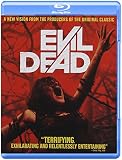
|
Evil Dead | $11.64 | Buy on Amazon |
| 4 |

|
Evil Dead Rise (Blu-ray) | $9.99 | Buy on Amazon |
| 5 |
![Evil Dead 2 [Blu-ray + Digital HD]](https://m.media-amazon.com/images/I/51kLPb9x6OL._SL160_.jpg)
|
Evil Dead 2 [Blu-ray + Digital HD] | $17.99 | Buy on Amazon |
The controversy was not simply about whether the film was frightening or offensive. It involved distinct questions: what version was submitted for cinema or video classification, whether cuts were required, and whether a video could be prosecuted as obscene. Those processes had different outcomes at different times.
What did “video nasty” mean?
“Video nasty” was used broadly in news and public debate for violent horror videos. It also had a narrower meaning: a title included on the Director of Public Prosecutions’ list of videos considered for prosecution under obscenity law. The list changed over time and was not assembled consistently, so the phrase in a headline does not by itself establish a film’s precise legal status. The BFI explains this distinction in its account of the campaign: BFI: Video nasties.
What’s actually slowing this PC down?
Pick the symptom - the matching free tool is one click away.
#1 Best Overall
- Classic horror film directed by Sam Raimi presented in stunning 4K Ultra HD.
- Includes both 4K UHD and Blu-ray discs for flexible viewing options.
- Enhanced picture and audio quality for a superior home cinema experience.
- Region Free release compatible with 4K UHD and Blu-ray players worldwide.
- Essential addition for horror collectors and fans of cult cinema.
The Evil Dead was repeatedly discussed as a leading example of the controversy. That prominence helps explain why people remember it as “banned,” but the shorthand blurs together public campaigning, classification decisions and legal proceedings.
What happened in the 1985 court case?
In 1985, a prosecution involving the film reached Snaresbrook Crown Court. At the start of an expected five-day trial, prosecutors offered no evidence. The Guardian’s contemporary report says the judge criticized the case and the DPP’s handling of earlier proceedings: The Guardian’s report on the case. The BFI records that the distributors successfully argued that the film was not obscene and that the DPP removed it from the list that year: BFI: Video nasties.
Rank #2
- Bruce Campbell stars in this legendary film that unleashed an army of primitive screwheads upon the world and changed the face of horror forever. Directed by Sam Raimi.
This was not a jury acquittal of director Sam Raimi personally. The case ended when prosecutors offered no evidence, and the film’s removal from the DPP list followed in 1985. Those details matter because “Raimi was acquitted” and “the film was banned until 1990” suggest a different, simpler legal history than the records support.
Was the film banned, cut or classified differently?
The answer depends on the date, medium and version. A cinema certificate, a home-video classification and an obscenity-list entry are not interchangeable. BBFC records show separate submissions rather than one enduring status for every release.
Free tools Windows power users keep installed
One-click scans. No signup required.
Rank #3
- Five friends have found the mysterious and fiercely powerful Book of the Dead which releases a violent demon on a bloodthirsty quest to possess them all.
| Date and medium | Record or outcome | What it does—and does not—show |
|---|---|---|
| 1982 cinema submission | BBFC record lists a version running 84 minutes 37 seconds, marked as having cuts or alterations. | A cinema classification record for that submission, not a ruling on every later video version. BBFC film record |
| 1983 cinema version, as described in a 2002 retrospective | The Guardian reports a cinema cut of 49 seconds. | A retrospective account of a particular cut; it should not be collapsed into the BBFC’s separate submission entries. The Guardian retrospective |
| 1985 obscenity proceedings | Prosecutors offered no evidence; the BFI says the DPP removed the film from its list that year. | A legal-prosecution and list outcome, not a general statement that all versions were certified uncut. |
| 1990 home-video version, as described by the Guardian | The retrospective says a version required 1 minute 6 seconds of cuts. | A reported video classification for that version, not proof that all releases remained unavailable until then. The Guardian retrospective |
| 2001 video/DVD classification, as described by the Guardian | The retrospective describes an uncut 18 classification. | A later home-media classification; it does not retroactively describe the earlier submissions. The Guardian retrospective |
| 2018 cinema submission | BBFC lists an 85-minute 23-second version with advice for strong bloody violence and a scene of sexual violence. | A later cinema record for a distinct submission. BBFC film record |
The BBFC archive also includes later home-entertainment entries, including records from 2010. Since classification decisions attach to submissions and versions, the most accurate way to answer “Was it banned?” is to identify the medium and date rather than assign a timeless label to the film. Consult the BBFC record for its version-specific entries.
What content prompted concern?
The BBFC’s current record flags strong bloody violence and a scene of sexual violence. Its content description includes stabbing, decapitation, eye-gouging and sexual violence involving a tree. The BFI notes that much of the film’s violence is presented with a tongue-in-cheek or slapstick quality, but distinguishes the tree-assault scene from that comic tone. It also reports that Raimi later acknowledged that the scene went too far: BFI: Video nasties.
Rank #4
That context should not be used to dismiss the scene’s sexual violence or its potential impact on viewers. A film can mix horror and dark comedy while containing material that remains disturbing.
Independent reader supportYour contribution helps us test, update, and keep practical guides available for everyone.Was The Evil Dead banned outside the UK?
The documented controversy described here is UK-focused. These accounts do not establish a reliable country-by-country history of bans or prosecutions, so they cannot support a claim that the film was banned worldwide—or that the UK story applies elsewhere. A claim about another country needs evidence for that country, version and period.
Quick wins for a faster PC:
Fix the driver behind crashes, sound loss and screen glitchesFind Drivers →Clear out junk files and repair common Windows errorsFree Scan →Scan for outdated or missing drivers - takes under a minuteDriver Scan →Quick Recap
Best Value
- Ash, the sole survivor of The Evil Dead, returns to the same isolated cabin deep in the woods with his girlfriend, Linda. The two discover a mysterious tape recorder and hear the voice of Professor Knoby reciting passages from the Necronomicon, or Book of the Dead. Little do they know that the professor's words are powerful enough to invoke a spell that unleashes the spirit of evil alive in the re
How to read the controversy accurately
- Use “video nasty” carefully: it could be a broad press label or refer specifically to inclusion on the DPP list.
- Keep cinema and home-video classification records separate, and attach dates and runtimes to the versions they describe.
- Describe the 1985 case as ending after prosecutors offered no evidence; do not call it a personal acquittal of Raimi.
- When discussing the film’s content, distinguish its often comic violence from the scene of sexual violence.
Product prices and availability are accurate as of the date/time indicated and are subject to change. Any price and availability information displayed on Amazon at the time of purchase will apply.




