The Tool Desk
Outbyte PC Repair FREEClear out junk files and repair common Windows errorsFree Scan →Outbyte Driver Updater FREEScan for outdated or missing drivers - takes under a minuteDriver Scan →Reverb is the continuous, fading sound created when reflections follow a direct sound. In music, it can make a recording feel as if it occupies a room, hall, or other imagined space—or add depth and width without changing the performance itself.
How reverb works
When a sound is made in a physical space, it reaches the listener directly first. It then reflects off nearby surfaces, followed by further reflections. Those reflections gradually lose energy. Because many arrive close together, the ear usually blends them into a continuous fade rather than hearing separate echoes. Yamaha’s PA Beginners Guide and iZotope’s overview of reverb describe this reflection-based effect.
Digital reverb imitates aspects of that behavior. Ableton’s Live 12 manual describes real reverberation as reflections shaped by absorptive materials, and its digital effect as using filters and modulated delay lines.
Early reflections and the tail
The first reflections are called early reflections; the later, sustained fade is the reverb tail. Together, they help convey the impression of a space. Decay time describes how long the reverberation persists. Yamaha’s guide calls this reverb time or RT60 in its discussion, but controls and terminology differ across effects, and no single setting suits every source or song.
#1 Best Overall

- Controls: Decay, Tone, Mix
- Modes: Hall, Spring, Plate
- Power Requirements: 100mA minimum
What reverb does to music
Reverb can place a sound in an imagined environment, add a sense of spatial depth and width, or make a close recording feel more distant or spacious. The effect may come from the room in which a performance was recorded, from a physical reverb device, or from digital processing. Yamaha’s introductory guide discusses the effect’s role in adding spatial depth and width.
The intended space and amount are musical choices, not fixed rules. If a recording already has enough natural ambience, adding more may not help. A long or heavy tail can run into the next note or phrase and make the sound less distinct, especially when musical events happen quickly. Yamaha recommends adding the effect gradually and keeping the original sound clear in its guide to understanding and using reverb.
Rank #2

- Made in Kansas City USA
- An extremely versatile unit that allows you to achieve any reverberation effect, all the way from small room sounds to nearly endless washes of ambiance
- The EQ lets you perfectly adjust for a bright or dark texture to the reverb's overall tone
- The Pre-Delay knob allows you to select a short delay before the reverb begins. This lets you explore effects ranging between slap-like singing in the shower sounds and spacey spring-like sounds
- Runs on 9V DC Negative Center power and consumes 74mA
Common reverb types
Type names are useful clues about the space or mechanism an effect evokes, not guarantees of identical sound from every device or plug-in. Digital effects may model or combine characteristics.
| Type | What it evokes | Typical listening impression |
|---|---|---|
| Room | A smaller acoustic space | Nearby space and generally a shorter decay than a hall |
| Hall | A large performance or concert hall | A spacious response, commonly with a longer decay |
| Stage | A space smaller than a hall | An intermediate space; availability and implementation vary by equipment |
| Chamber | A reflective chamber used to create and capture reverberation | A distinct production approach that digital effects can simulate |
| Plate | A physical metal sheet set vibrating by a transducer, with pickups capturing the vibration | Often used on vocals; descriptions such as warm or bright depend on the design and processing |
| Spring | One or more springs excited by a transducer and captured by another pickup | A mechanical-sounding character often used as a creative effect |
Yamaha’s PA guide and iZotope’s reverb explainer describe these common categories and their origins.
What’s actually slowing this PC down?
Pick the symptom - the matching free tool is one click away.
Rank #3
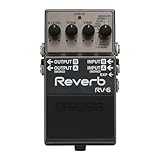
- Compact and Versatile Design: Compact and versatile reverb pedal with rich, expansive sound that enhances your guitar tone
- Simple and Intuitive Controls: Dial in sophisticated, top-level reverb tones quickly with simple controls for immediate sound shaping
- Studio-Grade Sound Quality: Newly developed studio-grade algorithms powered by cutting-edge BOSS technology deliver professional reverb effects
- Eight Diverse Sound Modes: Eight sound modes provide a diverse range of ready-to-play reverb effects for various musical styles
- Modern Reverb Textures: Shimmer, Dynamic, and Delay+Reverb modes deliver lush, immersive textures sought by modern players
Algorithmic and convolution reverb
These labels describe how some digital reverbs generate their sound, rather than the size of a space. According to Yamaha’s guide, algorithmic reverbs use mathematical models of spaces, while convolution reverbs use impulse responses captured from actual spaces. Yamaha notes that algorithmic designs can offer more adjustable parameters and lower CPU demand, while convolution draws on captured responses. Those are distinctions in the cited guide, not a guarantee about every current plug-in or computer, and neither approach is automatically better for every musical use.
Independent reader supportYour contribution helps us test, update, and keep practical guides available for everyone.Choosing and using reverb
Start with the sound you want: a subtle sense of nearby space, a larger hall-like impression, or a more conspicuous effect. Listen to the reverb tail in relation to the next note or phrase. If it blurs the source or carries too far into what follows, reduce the amount or shorten the decay. If natural ambience already provides the space the recording needs, extra reverb may be unnecessary.
Rank #4
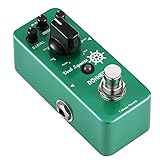
- [7-Mode Effects]: Room, Hall, Church, Spring, Plate, Studio and Mod
- [Digital Circuit Design]: True bypass design delivers a transparent tone
- [Durable]: Whole Aluminium-alloy, Classic, stable and strong
- [Easy to Use]: LED indicator shows the working state
- [Pedal-board Friendly]: Mini size, easy to go
Reverb can be introduced through a physical device or digital processing; the recording itself may also capture a room’s natural reflections. Hardware pedals are one possible route for adding the effect, but the best type and setting depend on the instrument, performance, and musical goal. There is no universal “right” reverb setting.
Quick Recap
Best Value

- Dual Effects Design: Digital Delay and Plate Reverb 2 effects combined in 1 guitar effects pedal for versatile sound options, compact dimensions for easy integration into pedalboards
- Extended Delay Time: Maximum 2000ms Delay Time with Reverb featuring large schedulable Decay parameter for customizable sound control
- Live Performance Features: Trail and Tap Tempo function helps musicians maintain timing and rhythm during live shows
- Buffer Bypass Circuit: Special Design Buffer Bypass Circuit keeps the sound pristine and maintains signal integrity on the guitar pedal
- Independent Signal Control: Digital style delay effect with dry signal and wet signal independent adjustment for precise tone shaping
Product prices and availability are accurate as of the date/time indicated and are subject to change. Any price and availability information displayed on Amazon at the time of purchase will apply.
Recommended Free Tools




