National Moon Day is observed on July 20, the anniversary of Apollo 11’s first crewed Moon landing in 1969. The United Nations General Assembly formally calls the observance International Moon Day; NASA’s public science page uses National Moon Day.
What is National Moon Day?
National Moon Day is a July 20 observance commemorating the first human landing on the Moon. NASA uses the name “National Moon Day” on its Moon science page. The United Nations General Assembly established an international observance called “International Moon Day” in resolution 76/76 in 2021.
The UN designation is the formal international observance. The sources cited here do not establish National Moon Day as a separate U.S. statutory holiday.
Why is it celebrated on July 20?
Apollo 11 landed on the Moon on July 20, 1969. NASA’s Apollo 11 mission account identifies Neil Armstrong and Buzz Aldrin as the first people to walk on the lunar surface; Michael Collins remained in orbit around the Moon.
#1 Best Overall

- Globe diam. 20 cm (c. 7.9 inches), Base width 16.4 cm (c. 6.4 inches), Height 30 cm (c. 11.8 inches)
- Moon Globe Lamp
- Night Light, Touch Switch
The date of the observance marks that landing anniversary. The UN resolution declares July 20 International Moon Day “to observe each year at the international level the anniversary of the first landing by humans on the Moon on 20 July 1969 as part of the Apollo 11 lunar mission.”
Why celebrate beyond Apollo 11?
Apollo 11 is the reason for the date, but the UN’s stated purpose looks beyond a single mission or country. Resolution 76/76 calls for taking into consideration the achievements of all states in exploring the Moon and raising public awareness about sustainable lunar exploration and utilization.
Rank #2

- Great way for students to learn about the moon and the Apollo 11 mission
- This special edition National Geographic Moon Globe has a rechargeable LED device with long lasting LED bulbs
- 750 Moon topographic locations
- Includes impact craters, mountain ranges, highlands, seas, rays
That makes July 20 an occasion both to remember a milestone in human spaceflight and to consider how lunar exploration is pursued and used in the future.
Quick Recap
Rank #4
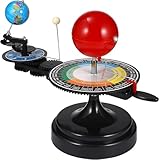
- 【Solar System】: DIY your own sun earth moon orbital rotation model with this creative kit. Seasonal plate that shows the names, order, and dates of the four seasons and the twenty-four solar terms in the traditional Chinese calendar. night, seasons, solar eclipse, lunar eclipse and moon phases .
- 【Usage Scenarios】: Great for Geology & Earth Sciences Teaching, School project also Great gift for your children over 6 years old, it cultivates children's interest in space science. Earth orbiting around the sun, and moon orbiting around the earth showing planetary orbit.
- 【To Demonstrate Seasons and Solar and Lunar Eclipses】: 1)Rotate the Earth to show how the Earth's rotation and orbit around the Sun create seasons; 2)To demonstrate a solar eclipse, move the Moon between the Earth and the Sun, blocking the Sun's light and casting a shadow on the Earth; 3)To demonstrate a lunar eclipse, move the Moon into the Earth's shadow, creating a tint on the Moon.
- 【Easy to Assemble 】: Updated Instruction 1)Wrench the connecting nut to the seasonal plate; 2) Insert the axe to the slot, put the two screws to the corresponding holes, then tighten the screws; 3) Get the “solar system” aligned correctly: Set the handle with the pointer on the summer solstice, adjust the position of the Earth so that the sun shines directly on its Tropic of Cancer; 4)Assemble the gears upper and underneath with the black peg;Put the sun’s metal wire in the hole on the lever.
- 【Size Information】100% brand new and high quality. Size(LxWxH): Approx. 38 x 20 x 28 cm / 15.20 x 7.87 x 11.02 inch.
Rank #3
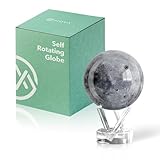
- Realistic Lunar Detail with Cratered Surface — A faithful recreation of the Moon’s rugged topography, this design shows lunar craters, valleys, and maria as seen from Earth’s orbit.
- Solar-Powered Motion – No Wires or Batteries — This MOVA Globe rotates continuously using only ambient light and the Earth’s magnetic field. No fuss, no noise, no cables.
- Compact Display Piece with Stunning Presence — At 4.5 inches across, it fits perfectly on desks, nightstands, or bookshelves. A small globe that sparks big conversation.
- Premium Build with Seamless Movement — A fluid-suspended inner globe rotates within a clear acrylic outer shell, offering a smooth, almost magical visual experience.
- Inspire Curiosity and Wonder — Perfect for stargazers, space buffs, students, and science enthusiasts. A gift that celebrates Earth’s constant lunar companion.
How can you mark National Moon Day?
- Learn about Apollo 11 through NASA’s mission history and Moon education resources, including NASA Space Place’s Moon guide.
- Look for a July 20 program at a local museum, planetarium, or library; schedules vary by year and location.
- Explore public events and learning activities when NASA announces them. For the 55th anniversary in July 2024, NASA documented in-person, virtual, and other public engagement activities. These were anniversary-specific examples, not a recurring annual schedule; see NASA’s 2024 announcement and JPL’s anniversary education resources.
National Moon Day at a glance
| Question | Answer |
|---|---|
| When is it? | July 20 each year. |
| What does the date mark? | Apollo 11’s first crewed lunar landing on July 20, 1969. |
| What are the names used? | NASA’s public science page uses “National Moon Day”; the UN General Assembly designation is “International Moon Day.” |
| What is the UN observance for? | Recognizing achievements by all states in lunar exploration and raising awareness of sustainable Moon exploration and utilization. |
Product prices and availability are accurate as of the date/time indicated and are subject to change. Any price and availability information displayed on Amazon at the time of purchase will apply.
Do these 3 things before closing this tab:
1Repair Windows errors before they cause bigger problems2Fix the driver behind crashes, sound loss and screen glitches3Clear out junk files and repair common Windows errors