Outdated Drivers Are Slowing You Down
One free scan finds every outdated or missing driver and matches the right update for your exact hardware.Free scan · exact hardware matchPC Slower Than It Used to Be?
A free scan shows the junk files, broken settings and background clutter dragging Windows down - then fixes them in one click.Free scan · Windows 10 & 11Capitalism is an economic system in which private individuals and organizations own productive assets, invest them in businesses, and seek profit by selling goods or services. Markets and prices help coordinate those decisions. Its familiar features include private ownership, profit-seeking, capital investment, wage labor, and market exchange—but economies differ in how these operate and how governments regulate them.
What defines capitalism?
Capitalism is about how production is owned and organized, not simply about whether people buy and sell things. Trade has existed in many kinds of societies. In a capitalist system, private owners and firms make many decisions about productive property and investment, while markets help connect producers, workers, and buyers.
| # | Preview | Product | Price | |
|---|---|---|---|---|
| 1 |

|
Capitalism: A Global History | $27.06 | Buy on Amazon |
| 2 |

|
Capitalism For All: Inclusive Economics and the Future-Proofing of America | $14.82 | Buy on Amazon |
| 3 |
|
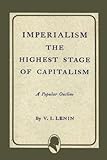
Imperialism the Highest Stage of Capitalism | $5.15 | Buy on Amazon |
| 4 |

|
Capitalism and Freedom | $11.48 | Buy on Amazon |
| 5 |
|
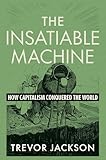
The Insatiable Machine: How Capitalism Conquered the World | $31.68 | Buy on Amazon |
The International Monetary Fund’s introductory account describes private control of assets such as factories, mines, and railroads; workers receiving money wages; owners seeking returns; and prices directing capital and labor toward competing uses. OpenStax gives a related classroom definition: private ownership and the incentive to make profit through a business selling goods or services in a market. These are useful working definitions, though scholars do not agree on a single definition that settles every case.
What are the key features of capitalism?
Private ownership of productive assets
Individuals, partnerships, or companies can own property used to produce goods and services, such as buildings, equipment, and businesses. Ownership carries rights to make decisions about those assets and, within applicable laws, to benefit from their use.
Quick wins for a faster PC:
Scan for outdated or missing drivers - takes under a minuteDriver Scan →Repair Windows errors before they cause bigger problemsFix Now →Fix the driver behind crashes, sound loss and screen glitchesFind Drivers →#1 Best Overall
Profit-seeking and investment
A firm typically aims to earn more revenue than it spends. Owners may commit money or other property to a business in the expectation that it will produce something people will buy. The possibility of profit can encourage investment and production; the possibility of loss also means that investment is not guaranteed to pay off.
Wage labor
Many people work for employers in exchange for money wages. This is a recurring feature of capitalist economies, though work arrangements vary and not every producer is an employee: self-employment and family businesses also exist.
Markets and prices
Buyers and sellers exchange goods and services in markets. Prices can signal what buyers are willing to pay and help businesses compare competing uses for labor, materials, and investment. They do not, by themselves, ensure that everyone can afford what they need or that markets remain competitive.
Does capitalism mean government stays out of the economy?
No. Capitalism does not require an absence of government. Public institutions establish and enforce rules about ownership and exchange, and governments may regulate businesses, provide services, or intervene in markets. The IMF’s overview specifically notes the importance of policy choices that protect competition: concentrated ownership can weaken competitive pressure.
Rank #3
As a result, capitalist economies can differ substantially in their laws, public services, regulation, and degree of market competition. Private ownership and market exchange are central to common definitions, but they do not prescribe one fixed relationship between government and business.
When did capitalism begin?
There is no universally agreed birthday for capitalism, in part because the answer depends on what a definition treats as essential. Encyclopaedia Britannica places the origins of capitalism as an economic system in the 16th century. It separately identifies Adam Smith’s 18th-century treatise The Wealth of Nations as an influential work in the development of modern capitalist theory. The emergence of an economic system and the later formulation of influential theory are different historical questions, not a single starting date.
Rank #4
Why do explanations of capitalism differ?
Different accounts emphasize different questions. The IMF’s institutional explanation foregrounds ownership, profit, wage labor, prices, and the role of competition. The Stanford Encyclopedia of Philosophy’s discussion of Marxian analysis focuses on the division between owners of the means of production and workers who sell their labor power, as well as the central role of wage labor and market exchange.
These lenses describe overlapping arrangements but interpret their significance differently. An institutional account helps explain how economic decisions and markets are organized; a Marxian account draws attention to ownership and the relationship between employers and workers. Neither short overview represents every debate about capitalism.
Best Value
How can capitalism be compared with other economic systems?
Rather than treating real economies as pure, all-or-nothing types, compare them across several questions:
- Ownership: Who owns businesses and other productive assets—private individuals or organizations, public institutions, or a mixture?
- Coordination: Are production and investment decisions made mainly by private actors responding to markets, or directed mainly through public planning?
- Prices: How much do market prices guide decisions about goods, labor, and investment?
- Work: How common is wage employment, compared with self-employment or other arrangements?
- Government’s role: How does public authority regulate, provide, or supplement market activity?
These questions make it easier to describe mixed and varied economies without assuming that every country fits neatly into one category.
What Adam Smith’s famous quotation does—and does not—mean
The IMF’s 2015 article quotes Adam Smith: “It is not from the benevolence of the butcher, the brewer, or the baker that we expect our dinner, but from their regard to their own interest.” The line illustrates how people’s pursuit of their own interests can contribute to exchange. It is not a complete definition of capitalism, nor does it establish that self-interest alone determines economic outcomes.
Quick Recap
Sources and further reading
- International Monetary Fund, “What Is Capitalism? – Back to Basics” (June 2015)
- OpenStax, “18.1 Economic Systems – Introduction to Sociology 3e”
- Stanford Encyclopedia of Philosophy, “Capitalism”
- Encyclopaedia Britannica, “Capitalism | Definition, Characteristics, History, & Criticism”
Product prices and availability are accurate as of the date/time indicated and are subject to change. Any price and availability information displayed on Amazon at the time of purchase will apply.