Quick wins for a faster PC:
Clear out junk files and repair common Windows errorsFree Scan →Fix the driver behind crashes, sound loss and screen glitchesFind Drivers →Repair Windows errors before they cause bigger problemsFix Now →A fugue is a piece of music built around a short melody called a subject: one voice introduces it, and other voices imitate it, usually at different pitches. Listen for that recurring idea as the musical lines enter and interact. The opening entries form an exposition; after that, the composer can develop the material in many ways, so a fugue does not follow one fixed section plan.
How a fugue works
A fugue is a way of organizing contrapuntal music: several independent melodic lines sound together, while a recurring subject gives the piece a point of reference. The subject typically begins alone. A second voice then enters with an imitation called the answer, while the first voice may continue with another line. Further voices enter in turn.


The word “voice” means an independent musical line, not necessarily a human singer. A fugue can be written for instruments, voices, or a combination of forces.
The subject and answer
The subject is the main melodic idea that returns throughout the fugue. The answer is generally the second statement, commonly placed at a fourth or fifth relationship to the subject. A real answer follows the subject’s intervals closely; a tonal answer adjusts one or more intervals where needed to keep the music anchored in its key. These are ways of handling the relationship, not separate steps every fugue must follow.
Do these 3 things before closing this tab:
1Repair Windows errors before they cause bigger problems2Fix the driver behind crashes, sound loss and screen glitches3Clear out junk files and repair common Windows errors#1 Best Overall
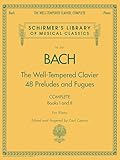
- 256 Pages
- Editor: Carl Czerny
- Composer: Johann Sebastian Bach
- Publisher : G. Schirmer
- Softcover
The exposition
The exposition is the opening sequence in which the voices enter successively with the subject or answer. In many fugues, the entries alternate between the tonic—the home key—and the dominant, a closely related tonal center. Once each voice has taken its turn in the opening presentation, the exposition is complete.
Countersubjects and episodes
A countersubject is a recurring melody designed to sound against the subject. It may accompany later subject entries, adding another recognizable line to the texture. An episode is an intervening passage between subject entries. Episodes often develop short motives from the subject or countersubject and may move the music through other keys.
Rank #2

- Piano Solo
- Pages: 84
- Instrumentation: Piano
- Instrumentation: Piano/Keyboard
What happens after the exposition?
There is no universal sequence of sections after the exposition. A fugue may return to its subject in different voices and keys, insert episodes, or reshape the subject. Some use only a few of these possibilities; others use several. Their presence is not a checklist that defines whether a piece is a fugue.
Ways the subject can change
- Inversion: the subject’s intervals turn in the opposite direction.
- Augmentation: its notes are lengthened; diminution shortens them.
- Retrograde: its melodic order is presented backwards.
- Stretto: a new subject entry begins before the previous one has finished, making the entries overlap.
These techniques let a composer make the same musical idea sound new, more urgent, or more tightly woven into the surrounding lines.
The Tool Desk
Outbyte Driver Updater FREEFix the driver behind crashes, sound loss and screen glitchesFind Drivers →Outbyte PC Repair FREERepair Windows errors before they cause bigger problemsFix Now →How to recognize a fugue while listening
- Catch the first statement. Listen for a distinctive melody presented clearly by one instrument or voice.
- Follow its return. Notice when another line takes up a similar melody at a different pitch. That imitation is the clearest clue.
- Keep tracking the idea as the texture fills in. The first line may continue while new voices enter, so the subject can be harder to hear once several melodies are sounding together.
- Listen for contrasts between entries. Passages without a full subject statement may still draw on its smaller motives; these can be episodes rather than entirely new material.
- Notice overlap, but do not require it. If a new entry starts before the preceding statement ends, the fugue is using stretto. Many fugues do not need to use it.
A score can make the entries easier to trace: the same subject appears in different parts, which may be labeled soprano, alto, tenor, and bass in a four-voice example. Listening without a score is still enough to start following the subject.
Why Bach is famous for fugues
Johann Sebastian Bach is a central model for the fugue because works such as The Well-Tempered Clavier and The Art of the Fugue demonstrate how a recurring subject can sustain elaborate contrapuntal music. But Bach did not invent the fugue, and the technique did not end with the Baroque era.
The fugue grew from earlier imitative practices, including the sixteenth-century ricercare, which UCSB identifies as an important precursor. Over time, the fugue became more tightly organized around fewer subjects and their imitation. Later composers including Samuel Barber, Béla Bartók, Paul Hindemith, Dmitri Shostakovich, and Igor Stravinsky also wrote fugues.
Independent reader supportYour contribution helps us test, update, and keep practical guides available for everyone.Three examples to listen to
Bach: “Little” Fugue in G Minor, BWV 578
This solo-organ fugue is a practical starting point. A CUNY Pressbooks listening guide traces the subject through soprano, alto, tenor, and bass entries, and points out the countersubject and episodes. The page dates the work to circa 1709, not to an exact year.
Best Value

- Piano Solo
- Pages: 124
- Instrumentation: Piano
- Instrumentation: Piano/Keyboard
Bach: The Art of the Fugue
Listen for how subject and countersubject interact across the work. It offers a way to hear fugue as sustained development of musical ideas, rather than simply a sequence of entrances.
Shostakovich: Fugue No. 5 in D major
The University of Iowa’s listening guidance draws attention to a stretto near the end. Follow the subject as entries begin to overlap; the effect is one possibility within fugue, not a requirement for every example.
Quick Recap
Sources and further listening guidance
- CUNY Pressbooks: “The Fugue” — an introduction and guided listening example of BWV 578.
- University of Iowa Pressbooks: “Fugue” — discussion of structure, techniques, history, and later examples.
- UCSB Department of Music: “Fugue: Brief Historical Background” — the fugue’s historical development and the ricercare precursor.
- Berliner Philharmoniker: “The fascinating world of the fugue” — listening orientation and Bach’s Art of the Fugue.
- W. W. Norton: “The Fugue and Its Devices” — definitions and contrapuntal techniques.
- San Francisco Bach Choir: “What Is a Fugue?” — an accessible explanation of entries, episodes, stretto, and related terms.
Product prices and availability are accurate as of the date/time indicated and are subject to change. Any price and availability information displayed on Amazon at the time of purchase will apply.




