Free tools Windows power users keep installed
One-click scans. No signup required.
There is no single established outcome: it depends on the folklore tradition or fictional setting. Some Balkan legends describe a child of a vampire and a human, often called a dhampir, but that does not establish a universal account of conception, pregnancy, or birth. Vampires are folkloric and fictional, so there is no real-world medical outcome or probability.
What does folklore say about a vampire-human child?
Some South Slavic and Balkan traditions include offspring associated with vampire-human parentage. The term dhampir is used for such a child in accounts of Balkan folklore; it is not a universal label across every culture or story. A 2024 study traces how vampire narratives and their interpretations have changed across regions and literary traditions, cautioning against treating them as one fixed mythology (Humanities and Social Sciences Communications, 2024).


Folklore accounts also reflect the beliefs and social circumstances of the communities that told them. An academic article discusses stories in which pregnancies were attributed to deceased husbands believed to have become vampires, as well as legends involving men who posed as vampires (“Monster as a Superhero”). These are reports of folklore and social history, not evidence of supernatural conception.
Does folklore explain what happens during the pregnancy?
No consistent account of conception mechanics, gestation, pregnancy risks, or birth follows from the existence of a vampire-human offspring figure. Those details should not be inferred from the word dhampir or from one regional legend. Scholarship on vampire origins likewise places Western narratives in relation to particular Balkan and Carpathian traditions rather than a single universal canon (University of Virginia thesis, “Sacrifice, scapegoat, vampire: the social and religious origins of the Bulgarian folkloric vampire”).
What’s actually slowing this PC down?
Pick the symptom - the matching free tool is one click away.
#1 Best Overall
What happens in modern vampire fiction?
Modern books, films, and games can set their own rules. A tabletop role-playing supplement, for example, presents multiple possible dhampir origins rather than one obligatory explanation (“Dhampir Origins” preview). That illustrates the freedom a fictional setting has; it does not establish a rule shared by other works.
To answer for a particular story, check that work’s canon. The relevant questions are:
- Can vampires reproduce in that setting?
- Which parent is human or vampire, and who carries the pregnancy?
- Is the pregnancy viable, and does the setting describe risks or changes to either parent?
- What traits does the child inherit, and is the child mortal, supernatural, or something else?
Without a named work or tradition, none of those outcomes can be stated as the definitive answer.
Independent reader supportYour contribution helps us test, update, and keep practical guides available for everyone.Is there a real-world medical answer?
No. Vampires and dhampirs belong to folklore and fiction; the cited sources do not establish a real biological mechanism, outcome, or probability for a vampire-human pregnancy.
Quick Recap
Best Value

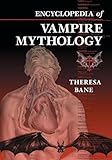
- Used Book in Good Condition
Rank #4

- Product Details: Paperback - 852 Pages
- Publisher: Visible Ink Press; 1994)
- Language: English
- ISBN-10: 1578590760, ISBN-13: 978-1578590766,
- ASIN: 157859281X, Product Dimensions: 9.2 x 7 x 2.1 inches, Shipping Weight: 3.3 pounds
Product prices and availability are accurate as of the date/time indicated and are subject to change. Any price and availability information displayed on Amazon at the time of purchase will apply.




