The Tool Desk
Outbyte Driver Updater FREEFix the driver behind crashes, sound loss and screen glitchesFind Drivers →Outbyte PC Repair FREERepair Windows errors before they cause bigger problemsFix Now →Arcadian drops viewers into a world that has already ended, offering no comforting prologue or detailed explanation for how civilization collapsed. Humanity survives in scattered rural pockets, clinging to farmland, makeshift technology, and strict routines dictated by daylight. The film’s opening makes it clear that whatever destroyed the old world is less important than what stalks the new one after sunset.
The monsters matter because they are the invisible architecture shaping daily life. Every rule the characters follow, from sealing doors to avoiding the night at all costs, exists because of these creatures. Arcadian is less interested in spectacle than in tension, using absence and anticipation to define its post-apocalyptic mood, and the monsters become a constant pressure rather than a constant presence.
| # | Preview | Product | Price | |
|---|---|---|---|---|
| 1 |
|
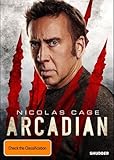
Arcadian | Nicolas Cage | Region 4 (Australia) | $30.81 | Buy on Amazon |
| 2 |

|
Fafner - Arcadian Project (Vol. 1) | $9.97 | Buy on Amazon |
| 3 |
![Fafner - Arcadian Project (Vol. 1) + Series Box [DVD]](https://m.media-amazon.com/images/I/51H8Z86YWRL._SL160_.jpg)
|
Fafner - Arcadian Project (Vol. 1) + Series Box [DVD] | $75.97 | Buy on Amazon |
| 4 |
![蒼穹のファフナー Arcadian project 02 [DVD]](https://m.media-amazon.com/images/I/51GW3FZWQ4L._SL160_.jpg)
|
蒼穹のファフナー Arcadian project 02 [DVD] | $58.33 | Buy on Amazon |
| 5 |
![Arcadian [DVD]](https://m.media-amazon.com/images/I/51sICme3SDL._SL160_.jpg)
|
Arcadian [DVD] | $12.79 | Buy on Amazon |
By grounding its horror in routine survival, the film positions the creatures as both predators and symbols. They are the embodiment of an unknown future humanity cannot tame or fully understand, reinforcing the film’s themes of isolation and generational fear. Understanding the world of Arcadian is essential to understanding its monsters, because they are not intruders in this landscape; they are the reason the landscape exists in its current, fragile form.
First Encounters: How the Creatures Are Introduced and Why They Terrify
Arcadian understands that fear is most potent before it has a face. The film’s first encounters with the creatures are indirect, filtered through routines, warnings, and the rigid structure of daylight survival. Long before the audience sees anything monstrous, the threat is communicated through behavior: doors are reinforced, windows are sealed, and nightfall is treated like an approaching natural disaster.
#1 Best Overall
- Nicolas Cage, DVD Movies, DVD TV Shows
This approach places viewers in the same psychological position as the characters. We learn to fear the dark not because of what we see, but because of what everyone else refuses to explain. By the time the creatures make their presence felt, the tension has already been carefully engineered.
Nightfall as a Trigger, Not a Setting
The creatures are inseparable from the coming of night, and Arcadian uses this relationship to devastating effect. Dusk is framed as a deadline, with scenes emphasizing the frantic need to finish chores, secure livestock, and get indoors before the light disappears. Darkness is not atmospheric here; it is procedural, marking the moment when the rules of survival abruptly change.
When the creatures finally announce themselves, it is through sound rather than image. Scraping, clicking, and inhuman movement ripple through the darkness outside the walls, suggesting intelligence and coordination without revealing anatomy. The monsters are terrifying because they feel methodical, as if they understand the structures meant to keep them out.
The Power of Partial Visibility
Arcadian’s early creature reveals are deliberately incomplete. Limbs flash through shadows, silhouettes distort against moonlit fields, and brief, chaotic glimpses replace any clean introduction. The film resists the urge to clarify what these beings are, allowing the audience’s imagination to fill in the gaps.
Recommended Free Tools
This fragmented presentation reinforces the idea that humans are no longer dominant observers in this world. The creatures are not performing for the camera; they are operating according to their own logic. By denying viewers a clear look, the film keeps the monsters unknowable, turning every encounter into an exercise in dread rather than spectacle.
Rules Established Through Fear
Perhaps most unsettling is how quickly the film establishes that these encounters follow rules the characters have already learned the hard way. The creatures do not attack randomly or impulsively; they respond to sound, movement, and vulnerability. Every mistake carries the implication of past failures, suggesting a long history of trial and error that the audience is only now witnessing.
These early encounters frame the monsters as environmental threats rather than traditional villains. They are less like invaders and more like apex predators perfectly adapted to a world humanity no longer controls. The terror comes not from sudden violence alone, but from the realization that survival depends on absolute obedience to rules that can never fully guarantee safety.
Anatomy of the Monsters: Physical Design, Movement, and Unnatural Traits
Once Arcadian allows slightly longer glimpses of its creatures, their physical design feels less like a single species and more like a collision of biological wrongness. These are not cleanly defined movie monsters with a clear silhouette or iconic face. Instead, they appear cobbled together from familiar animal traits, stretched and rearranged into something that no longer fits natural categories.
The effect is deeply unsettling because the monsters feel evolved rather than invented. They look like the result of adaptation pushed too far, bodies reshaped by a world where humanity is no longer the dominant force.
Distorted Anatomy and Fragmented Forms
The creatures’ bodies appear elongated and asymmetrical, with limbs that bend or extend at unnatural angles. Their skeletal structure suggests flexibility over strength, allowing them to squeeze, climb, and contort in ways that defy human expectations of anatomy. Faces, when briefly visible, are either obscured or underdeveloped, reinforcing the idea that sight is not their primary sense.
This lack of a recognizable facial identity removes any possibility of emotional projection. There is no expression to read, no eyes to meet in a traditional cinematic way. The monsters feel less like characters and more like biological systems designed purely for survival and predation.
Movement That Defies Human Rhythm
What truly separates the monsters from standard creature-feature antagonists is how they move. Their locomotion is erratic, rapid, and often insect-like, blending crawling, skittering, and sudden bursts of speed. They do not move with the weight or rhythm of mammals, making their approach difficult to predict.
Quick wins for a faster PC:
Scan for outdated or missing drivers - takes under a minuteDriver Scan →Clear out junk files and repair common Windows errorsFree Scan →This irregular motion destabilizes both the characters and the audience. The creatures never seem to follow a straight line or a consistent pace, which makes traditional defensive strategies feel useless. The world no longer obeys familiar physical rules, and the monsters exploit that disorientation relentlessly.
Sensory Adaptations and Predatory Intelligence
Arcadian emphasizes that these beings are acutely sensitive to sound and vibration. Their clicking, scraping vocalizations suggest a form of echolocation or communicative signaling rather than simple noise. These sounds feel functional, a way of mapping space, coordinating attacks, or testing for weakness.
Crucially, the monsters display an unsettling level of intelligence. They probe defenses, retreat when necessary, and return with adjusted tactics. This is not mindless aggression; it is learned behavior, shaped by repeated encounters with human survivors and reinforced by success.
Unnatural Traits and the Horror of Adaptation
Beyond their physical form, the monsters possess traits that feel fundamentally unnatural, even within the film’s post-apocalyptic logic. They seem capable of enduring injuries that would incapacitate normal organisms, suggesting altered pain responses or regenerative resilience. Their persistence gives the impression that survival has stripped away anything nonessential, leaving behind only function.
Do these 3 things before closing this tab:
1Scan for outdated or missing drivers - takes under a minute2Clear out junk files and repair common Windows errors3Fix the driver behind crashes, sound loss and screen glitchesThese qualities reinforce Arcadian’s central thematic fear: not invasion, but replacement. The monsters are horrifying not because they are alien, but because they feel like what the world produces once humanity is no longer at its center. Their anatomy is the visual proof of a planet that has adapted to new rules, leaving humans fragile, temporary, and profoundly outmatched.
Rules of Survival: Behavior Patterns, Strengths, and Vulnerabilities
If Arcadian’s monsters feel overwhelming, it’s because the film quietly establishes a set of rules that favor them at nearly every turn. Survival is less about fighting back and more about understanding how these creatures operate within the world they now dominate. The tension comes from realizing that these rules are never fully explained, only learned through costly mistakes.
When and How They Hunt
The monsters are most active under conditions that limit human perception, particularly at night or in enclosed spaces. Darkness amplifies their advantage, neutralizing sight and forcing characters to rely on sound, which the creatures themselves weaponize. This makes even silence feel dangerous, as any movement risks detection.
Their attacks are rarely immediate. Instead, they stalk, test boundaries, and wait for moments of vulnerability. This patient, methodical approach suggests a predator that understands human fear and exploits hesitation rather than brute force alone.
Free tools Windows power users keep installed
One-click scans. No signup required.
Strength Through Numbers and Coordination
Individually, the monsters are lethal; together, they are nearly unstoppable. Arcadian implies a hive-like awareness, or at least a shared responsiveness, where one creature’s discovery quickly becomes a collective threat. They converge with terrifying speed, turning small mistakes into fatal outcomes.
This coordination reinforces the film’s sense of inevitability. Once the monsters are aware of a location, escape becomes increasingly unlikely. Survival depends not on holding ground, but on avoiding notice altogether.
Physical Advantages and Environmental Mastery
The creatures’ bodies seem purpose-built for the ruined world they inhabit. Their ability to climb, contort, and move through tight spaces renders traditional shelter unreliable. Walls, doors, and elevated positions offer only temporary safety.
They also demonstrate a resistance to injury that undermines conventional weapons. Blows that would disable or kill a human barely slow them down, suggesting either a different biological makeup or an evolved indifference to pain. This forces characters to rely on avoidance rather than confrontation.
Limits, Weaknesses, and the Cost of Knowledge
Despite their dominance, the monsters are not invincible. Arcadian hints that they rely heavily on sensory input, particularly sound and vibration, which can be manipulated or disrupted. Stillness, restraint, and controlled movement become essential survival tactics.
However, learning these vulnerabilities comes at a steep price. Each insight is earned through loss, reinforcing the film’s bleak worldview. Knowledge does not restore balance; it merely delays extinction, emphasizing that in Arcadian, survival is temporary, conditional, and always on borrowed time.
What Are They? In-Universe Theories About the Monsters’ Origins
Arcadian deliberately avoids definitive answers about where its monsters come from, but the film offers enough environmental clues and behavioral patterns to invite speculation. Rather than presenting a single origin story, it layers multiple in-universe possibilities, each reinforcing the world’s sense of collapse and uncertainty. The ambiguity feels intentional, mirroring how survivors understand their reality only in fragments.
Post-Collapse Evolution: Humanity’s Unintended Heirs
One prevailing theory is that the monsters are the result of rapid post-apocalyptic evolution. With human civilization reduced to scattered enclaves, the natural order may have recalibrated violently, favoring creatures capable of hunting humans as prey. Their adaptability, coordination, and resilience suggest an organism that thrived precisely because humanity fell.
Windows Errors? Fix Them Before They Spread
Repair common Windows errors and clear accumulated junk for a smoother, more stable PC - no reinstall needed.Free scan · no reinstallOutdated Drivers Are Slowing You Down
One free scan finds every outdated or missing driver and matches the right update for your exact hardware.Free scan · exact hardware matchThis interpretation frames the monsters not as invaders, but as successors. They are what happens when the world no longer belongs to people. In Arcadian, survival is no longer a human default; it is a temporary exception.
Mutated Remnants of the Old World
Another possibility is that the creatures are products of humanity’s last mistakes. Environmental collapse, chemical contamination, or failed bioengineering experiments may have accelerated mutation in existing species, producing something both familiar and deeply wrong. Their vaguely mammalian movement and predatory instincts hint at roots in the known world, distorted beyond recognition.
This theory aligns with the film’s quiet emphasis on abandoned infrastructure and ruined landscapes. The monsters feel like consequences rather than accidents. They are not supernatural, but they are unnatural, shaped by a civilization that poisoned its own ecosystem.
Something Ancient, Awakened by Absence
Arcadian also leaves room for a more unsettling idea: that the monsters predate humanity altogether. With human noise, light, and expansion gone, something ancient may have resurfaced, reclaiming territory it once lost. Their sensitivity to sound and movement suggests creatures adapted to a world without constant human interference.
What’s actually slowing this PC down?
Pick the symptom - the matching free tool is one click away.
This interpretation casts humanity as a brief interruption rather than the central force of history. The apocalypse did not create the monsters; it simply removed the barriers that kept them hidden. In that sense, Arcadian becomes a story about reversion, not transformation.
Predators Defined by Scarcity, Not Malice
Regardless of their origin, the monsters’ behavior suggests they are not driven by cruelty or intelligence in a human sense. They hunt because the world is empty, resources are scarce, and survival demands efficiency. Their coordination feels instinctual rather than strategic, shaped by necessity rather than ideology.
This reframes them as forces of nature rather than villains. They do not hate humanity; they simply do not need it. That emotional indifference is what makes them terrifying, reinforcing Arcadian’s central idea that the universe does not care who survives, only who adapts.
Creature Feature Lineage: Horror and Sci‑Fi Influences Behind the Design
Arcadian’s monsters feel original, but they are clearly speaking a cinematic language shaped by decades of creature features and post-apocalyptic science fiction. Their design pulls from familiar horror DNA while deliberately withholding enough information to keep them unsettlingly undefined. That balance places them firmly within a tradition where suggestion is more powerful than spectacle.
Echoes of A Quiet Place and Sound-Driven Predators
The most immediate point of reference is A Quiet Place, particularly in how sound governs survival. Like Krasinski’s creatures, Arcadian’s monsters weaponize silence, turning everyday noise into a death sentence. The emphasis on listening rather than seeing shifts tension inward, forcing both characters and viewers to anticipate danger rather than react to it.
Where Arcadian diverges is in restraint. The creatures are not built around a single, easily readable gimmick. Their sensitivity to sound feels less like a narrative rule and more like an evolved trait, reinforcing the sense that they belong to this broken ecosystem rather than existing solely to drive set pieces.
Post-Apocalyptic Horror in the Vein of The Descent and The Road
Visually and tonally, the monsters also recall the subterranean dread of The Descent. Their movements are animalistic, abrupt, and spatially disorienting, often emerging from darkness rather than charging directly into frame. This creates a sense of claustrophobia even in open landscapes, as if nowhere is truly safe once night falls.
There is also a clear kinship with The Road, not in creature design but in philosophy. The monsters function less as antagonists and more as environmental hazards, much like starvation or exposure. They are part of a world that no longer supports human life, emphasizing endurance over heroism.
Classic Creature Features Stripped of Spectacle
Arcadian quietly nods to older creature features by embracing simplicity. There is little interest in elaborate mythology, scientific exposition, or visible transformation sequences. Like the monsters in early siege-style horror, their threat lies in repetition and inevitability rather than escalation.
This stripped-down approach makes them feel closer to animals than movie monsters. They do not posture, communicate, or taunt. They arrive, test defenses, retreat, and return, mimicking real predatory behavior in a way that feels grounded despite the film’s heightened reality.
Design as Absence: Fear Through Partial Revelation
Perhaps the most significant influence comes from films that understand the power of not showing everything. Arcadian follows the lineage of Jaws and It Comes at Night, using framing, sound, and negative space to define the monsters as much as their physical traits. Limbs, silhouettes, and fleeting movement do more work than full-body reveals ever could.
This visual ambiguity reinforces the film’s themes of isolation and uncertainty. The monsters are never fully knowable, just as the future of this world remains unclear. By denying viewers complete understanding, Arcadian ensures that fear lingers beyond individual scenes, embedded in the very fabric of its ruined landscape.
Symbolism and Subtext: What the Monsters Represent in Arcadian
Arcadian’s creatures are deliberately resistant to literal explanation, and that resistance is the point. Rather than functioning as a puzzle to be solved, they operate as symbolic pressure points within the film’s bleak emotional landscape. Their presence externalizes the invisible forces already eroding this world: fear, scarcity, and the slow collapse of trust.
The Monsters as Environmental Collapse Made Flesh
At their most fundamental level, the creatures represent a world that has turned against human survival. They are not invaders arriving with intent or ideology, but byproducts of an environment that no longer sustains civilization. Like poisoned soil or irradiated air, they are simply part of the new ecosystem.
This is why the film treats them less like villains and more like natural disasters. The characters don’t talk about defeating the monsters, only avoiding them, adapting to them, and surviving another night. In Arcadian, the true horror is not being hunted, but realizing there is no path back to safety.
Predators Without Malice, Fear Without Meaning
Unlike traditional horror antagonists, these monsters lack personality or motive. They do not punish moral failings, seek dominance, or exhibit cruelty for its own sake. Their violence is mechanical, instinctual, and indifferent.
The Tool Desk
Outbyte Driver Updater FREEFix the driver behind crashes, sound loss and screen glitchesFind Drivers →Outbyte PC Repair FREERepair Windows errors before they cause bigger problemsFix Now →Best Value
- Arcadian [DVD]
That indifference is crucial to the film’s existential tone. The monsters reflect a universe that no longer acknowledges human importance, where death arrives without reason or narrative payoff. Survival becomes an act of persistence rather than purpose, echoing the film’s broader meditation on living after meaning has eroded.
Manifestations of Parental Fear and Inherited Trauma
Viewed through the lens of Nicolas Cage’s performance, the creatures also embody parental anxiety in a world without guarantees. Every nocturnal attack mirrors the fear of failing to protect one’s children against forces that cannot be reasoned with or controlled. The monsters are what happens when responsibility collides with inevitability.
This framing gives the horror an intimate weight. The threat isn’t just physical annihilation, but the emotional toll of raising children in a reality defined by constant vigilance. The monsters become symbols of inherited trauma, dangers passed down alongside survival skills and warnings.
The Fear of the Unseen Future
Perhaps most powerfully, the monsters represent the unknown future itself. Their obscured origins, unclear biology, and inconsistent behavior mirror the characters’ inability to plan beyond immediate survival. Tomorrow is as unreadable as the darkness beyond the perimeter.
Recommended Free Tools
By refusing to explain where the creatures come from or what they ultimately want, Arcadian aligns them with anxiety rather than mythology. They are the embodiment of a future that cannot be understood, only endured. In that sense, the monsters are not anomalies within the story’s world, but its most honest expression of what that world has become.
Why Arcadian’s Creatures Feel So Distinct in Modern Post‑Apocalyptic Horror
What ultimately sets Arcadian apart is not just that its monsters are frightening, but that they feel unmoored from familiar genre logic. They do not slot neatly into zombies, mutants, or alien invaders, and the film resists any impulse to define them into comfortingly recognizable categories. That refusal gives the creatures a lingering unease, the sense that they belong to a broken ecosystem rather than a traditional horror taxonomy.
Design Rooted in Absence Rather Than Excess
Visually, Arcadian’s monsters feel engineered around what we don’t see as much as what we do. Their silhouettes are jagged and animalistic, but never fully legible, often obscured by darkness, movement, or framing that denies the audience a clean look. This partial visibility keeps them in a state of constant becoming, creatures defined by motion and threat rather than anatomy.
Unlike the hyper-detailed creatures of many modern creature features, these designs avoid spectacle. The lack of clear facial expression or identifiable sensory organs strips them of individuality. What remains is a mass of hunger and momentum, reinforcing the film’s bleak worldview.
Windows Errors? Fix Them Before They Spread
Repair common Windows errors and clear accumulated junk for a smoother, more stable PC - no reinstall needed.Free scan · no reinstallCrashes, No Sound, or Screen Glitches?
Random freezes, missing sound and display glitches usually trace back to one bad driver. Find and replace yours safely.Free scan · under a minuteRules That Feel Learned, Not Explained
Arcadian establishes its monsters through behavior rather than exposition. The audience learns when they emerge, how they respond to sound or light, and what boundaries might hold them back purely through survival routines. This approach mirrors how the characters themselves understand the world: not through knowledge, but through trial, loss, and adaptation.
These unwritten rules give the creatures credibility. They feel like a force that has existed long enough to shape human behavior, rather than a plot device introduced for momentary tension. Survival becomes a matter of reading patterns, not defeating an enemy.
Evolutionary Horror Instead of Apocalyptic Fantasy
One of the film’s most unsettling implications is that these monsters may not be invaders at all. Their integration into the environment suggests a form of post-collapse evolution, something that arose naturally once human systems failed. Whether they are mutated remnants of the old world or something newly born from it matters less than the idea that nature has moved on.
This evolutionary framing separates Arcadian from apocalypse stories rooted in punishment or spectacle. The world didn’t end in fire or judgment; it simply adapted in ways that no longer prioritize human survival. The monsters are not symbols of humanity’s sins, but evidence of its obsolescence.
Do these 3 things before closing this tab:
1Fix the driver behind crashes, sound loss and screen glitches2Repair Windows errors before they cause bigger problems3Scan for outdated or missing drivers - takes under a minuteA Horror That Resists Catharsis
Perhaps the most distinctive quality of Arcadian’s creatures is that they offer no release. There is no final confrontation, no mastery of the threat, no moment where understanding grants control. Even small victories feel temporary, underscored by the knowledge that the rules can shift at any time.
That lack of catharsis reinforces the film’s emotional weight. Fear is not something to overcome, only something to live alongside. The monsters persist because the world that created them persists.
In the end, Arcadian’s creatures feel distinct because they are not designed to be solved. They exist at the intersection of environmental collapse, parental dread, and existential uncertainty, functioning less as antagonists than as conditions of life. By denying clear answers and familiar archetypes, the film transforms its monsters into a reflection of modern anxieties, making them linger long after the screen goes dark.
Quick Recap
Product prices and availability are accurate as of the date/time indicated and are subject to change. Any price and availability information displayed on Amazon at the time of purchase will apply.




