What’s actually slowing this PC down?
Pick the symptom - the matching free tool is one click away.
The sight of Voltron’s official logo isn’t just a piece of branding—it’s a signal flare. With cameras now rolling and a polished emblem unveiled, the long-gestating reboot has finally shifted from fan speculation to physical reality. For a franchise that helped define Saturday morning sci‑fi for an entire generation, that transition carries real weight.
Logos matter because they communicate intent before a single frame is released, and this one leans hard into legacy while promising modern scale. Its sharper lines and metallic authority suggest a film aiming for mythic seriousness rather than nostalgic camp, aligning with the kind of blockbuster language audiences now expect from tentpole adaptations. The timing is equally telling: revealing the logo as production begins sends a clear message that Voltron is being positioned as an event, not a soft relaunch.
| # | Preview | Product | Price | |
|---|---|---|---|---|
| 1 |
|
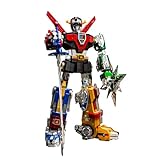
Toynami Voltron 40th Anniversary 13-Inch Action Figure | $327.79 | Buy on Amazon |
| 2 |

|
Voltron Classic Combining Green Lion Action Figure | $36.28 | Buy on Amazon |
| 3 |

|
Voltron Classic Combining Red Lion Action Figure | $43.22 | Buy on Amazon |
| 4 |

|
Voltron Classic Black Lion by Playmates Toys | $34.88 | Buy on Amazon |
That confidence is mirrored in Henry Cavill’s involvement, which reframes expectations around the reboot’s tone and ambition. Cavill has become synonymous with physically imposing, lore-heavy franchises, from Superman to Geralt of Rivia, and his presence signals a Voltron that takes its world-building seriously. Combined with the logo reveal and the start of filming, the message is unmistakable: this isn’t just about reviving a robot—it’s about reasserting Voltron as a cinematic force built for today’s blockbuster landscape.
Breaking Down the Official Voltron Logo: Visual Clues to Tone, Scale, and Mythology
At first glance, the newly unveiled Voltron logo feels less like a retro callback and more like a declaration of intent. It trades the bright, animated simplicity of earlier incarnations for a heavier, more industrial aesthetic that immediately reads as cinematic. This is a logo designed to sit comfortably alongside modern sci‑fi epics, signaling that the reboot is aiming high in both scope and seriousness.
#1 Best Overall
A Harder Edge for a More Mythic Voltron
The sharp angles and steel‑forged texture evoke ancient armor as much as futuristic machinery, an intentional fusion that mirrors Voltron’s core identity. Voltron has always existed at the intersection of myth and mecha, and this logo leans into that duality with confidence. It suggests a story that treats the robot less as a toyetic icon and more as a legendary construct, something earned through trials rather than simply assembled.
There’s also a sense of weight embedded in the design. The logo feels massive, almost immovable, hinting that scale will be a defining feature of the film’s action and world-building. This isn’t just about five lions combining; it’s about the cosmic significance of that union and the consequences that come with wielding such power.
Modern Blockbuster Language Without Erasing the Past
Importantly, the logo doesn’t abandon Voltron’s visual DNA. The typography still carries echoes of the classic emblem, ensuring longtime fans can instantly recognize it. What’s changed is the refinement, smoothing out the Saturday morning edges in favor of a look that aligns with contemporary franchise filmmaking.
This balance feels deliberate, especially given Henry Cavill’s involvement. Cavill’s recent roles have thrived on dense mythology and earnest world-building, and the logo appears calibrated to match that sensibility. It promises a Voltron that respects its roots while embracing the kind of grounded grandeur that today’s audiences expect from a theatrical reboot.
What the Logo Reveals About the Film’s Ambition
Releasing the logo at the start of filming isn’t just a marketing beat; it’s a tone-setter. The design communicates that Voltron is being treated as a long-term franchise play, one that values iconography as much as spectacle. In an era where visual branding often doubles as narrative shorthand, this emblem tells fans to expect lore, scale, and seriousness in equal measure.
More than anything, the logo frames Voltron as myth in the making rather than nostalgia on repeat. It positions the reboot as a foundational chapter, the kind that introduces a universe with confidence and leaves room for expansion. Paired with Cavill’s star power and the momentum of production, it’s a clear sign that Voltron is gearing up to reclaim its place among modern sci‑fi heavyweights.
Cameras Are Rolling: What the Start of Filming Signals About the Production Timeline
With principal photography officially underway, Voltron has crossed the most meaningful threshold any reboot can. Development chatter has given way to tangible progress, signaling that the project has moved beyond concept art and script drafts into full-scale execution. For fans tracking the reboot’s long road to the screen, this is the moment where speculation finally meets reality.
The timing of the shoot also suggests a production operating with confidence rather than caution. Studios rarely roll cameras on effects-heavy tentpoles without a locked creative vision, especially when launching a potential franchise. Voltron beginning production now implies that the filmmakers, cast, and studio are aligned on tone, scope, and long-term goals.
PC Slower Than It Used to Be?
A free scan shows the junk files, broken settings and background clutter dragging Windows down - then fixes them in one click.Free scan · Windows 10 & 11Outdated Drivers Are Slowing You Down
One free scan finds every outdated or missing driver and matches the right update for your exact hardware.Free scan · exact hardware matchA Calculated Schedule for a Visual Effects Powerhouse
Voltron is, by design, a VFX-intensive property, and starting filming now points to an extended post-production window. Expect a shoot focused heavily on performance, scale reference, and practical elements that will later be augmented by digital environments and, of course, the lions themselves. This kind of pipeline mirrors how modern sci‑fi epics are built, prioritizing polish over speed.
That approach typically places a film like Voltron on a release track 18 to 24 months out, depending on visual complexity and franchise expectations. The early start allows room for iterative effects work, test screenings, and the kind of refinement needed to introduce a new cinematic universe. In other words, this isn’t being rushed to chase a trend; it’s being positioned to last.
Henry Cavill’s Presence Anchors the Production
Henry Cavill’s involvement adds another layer of significance to the start of filming. Cavill has become synonymous with physically demanding, lore-heavy roles, and his projects tend to require substantial prep and production discipline. Cameras rolling now means his version of the character is no longer theoretical; it’s actively shaping the film’s identity on set.
This moment also aligns neatly with Cavill’s broader career trajectory. Following years defined by iconic but often turbulent franchises, Voltron represents a chance to help ground a new mythology from day one. The start of filming underscores that this isn’t a cameo-driven nostalgia play but a performance-forward reboot designed to give its lead room to define the saga.
Quick wins for a faster PC:
Repair Windows errors before they cause bigger problemsFix Now →Fix the driver behind crashes, sound loss and screen glitchesFind Drivers →Clear out junk files and repair common Windows errorsFree Scan →From Announcement to Execution
In the modern franchise landscape, many reboots stall between announcement and action. Voltron avoiding that fate is perhaps the most encouraging signal yet. Between the logo reveal and cameras officially rolling, the project is demonstrating momentum that goes beyond marketing optics.
For longtime fans and industry watchers alike, the start of filming reframes Voltron as an active contender in the next wave of sci‑fi blockbusters. It marks the point where legacy, ambition, and execution finally converge, and where the reboot begins proving what kind of giant it intends to be.
Rank #2
- Combines with the other legendary lions to form a 16" Voltron!
- Includes missile firing projectile launcher!
- Includes jaw blade and beam emitter!
- Her Royal Highness, Princess Allura of planet Arus, became pilot of the Blue Lion, the right leg of Voltron!
Henry Cavill and Voltron: How His Casting Shapes Expectations for the Reboot
Henry Cavill’s casting immediately reframes Voltron from a nostalgic revival into a serious blockbuster proposition. This is an actor whose presence signals scale, commitment, and a willingness to treat genre material with operatic weight rather than irony. For a property rooted in larger-than-life heroism, that alignment feels intentional rather than coincidental.
Cavill doesn’t just headline franchises; he often becomes their tonal north star. His involvement suggests a Voltron that leans into earnestness, mythic stakes, and physicality instead of undercutting its own spectacle. In an era where reboots often hedge with humor, that choice alone sets expectations higher.
Free tools Windows power users keep installed
One-click scans. No signup required.
A Career Built on Myth, Muscle, and Lore
From Superman to Geralt of Rivia, Cavill has carved out a niche as Hollywood’s go-to steward for lore-heavy worlds. He approaches these roles with a fan’s reverence and a producer’s understanding of what franchise audiences demand. That combination matters for Voltron, a series whose appeal has always rested on sincerity and scale rather than satire.
His track record also suggests a production willing to meet him halfway. Projects built around Cavill tend to emphasize physical preparation, practical elements, and world-building detail, all of which align with what a live-action Voltron needs to feel credible. Giant robots alone aren’t enough; the pilots have to feel mythic too.
What Cavill Signals About Tone and Direction
Cavill’s casting quietly answers one of the biggest questions surrounding the reboot: tone. This is unlikely to be a brightly quippy, self-aware take designed to play it safe. Instead, it points toward a Voltron that treats its cosmic warfare, team dynamics, and hero’s journey with gravity.
That doesn’t mean humor is absent, but it suggests it will be character-driven rather than deflective. Cavill excels when a story allows its drama to breathe, and that implies a script confident enough to let emotional stakes land without winking at the audience.
A Franchise Anchor, Not Just a Star
Perhaps most importantly, Cavill positions himself as an anchor rather than a novelty. This feels less like stunt casting and more like a long-term investment in a potential saga. If Voltron is meant to evolve into a multi-film universe, his presence offers continuity and credibility from the outset.
For fans who grew up with the animated series, that matters. Voltron has always been about unity, leadership, and shared purpose, and casting an actor associated with those themes reinforces the reboot’s intent. Cavill doesn’t just step into the cockpit; he sets the tone for how this legendary machine is meant to move forward.
From 1980s Animation to Modern Blockbuster: Voltron’s Franchise Legacy and Reinvention
Long before cinematic universes dominated multiplexes, Voltron was already thinking big. Debuting in the mid-1980s, the animated series fused Japanese mecha spectacle with Western mythmaking, introducing a generation to the idea that teamwork wasn’t just thematic, it was mechanical. Five pilots, five lions, one towering defender felt less like a gimmick and more like a promise.
That promise endured through syndication, toy aisles, comic runs, and multiple animated reboots, each attempting to translate Voltron’s core appeal for a new era. Yet for all its staying power, the franchise has remained conspicuously absent from live-action cinema. That gap has only heightened expectations for what a modern, big-budget interpretation should deliver.
The Tool Desk
Outbyte PC Repair FREERepair Windows errors before they cause bigger problemsFix Now →Outbyte Driver Updater FREEFix the driver behind crashes, sound loss and screen glitchesFind Drivers →A Logo That Signals Scale and Seriousness
The reveal of the official Voltron logo, coinciding with the start of filming, is more than a ceremonial milestone. Its design leans into sharp geometry and metallic weight, evoking industrial strength rather than cartoon nostalgia. This is branding meant to sit comfortably alongside modern sci-fi heavyweights, not merely reference a Saturday morning past.
Logos often telegraph intent, and this one suggests confidence in scale and permanence. It looks like the emblem of a franchise built to last, not a one-off experiment. For longtime fans, it’s a reassuring sign that the studio understands Voltron as a mythic property, not just an IP to be lightly repackaged.
Reinventing Without Erasing the Past
Modernizing Voltron presents a delicate balancing act. Strip away too much sincerity and it becomes generic; cling too tightly to nostalgia and it risks feeling antiquated. The reboot’s early signals, from its visual language to its casting, point toward a production aiming for evolution rather than revisionism.
This approach mirrors successful franchise reinventions that respect their origins while expanding their emotional and thematic range. Voltron’s emphasis on unity, sacrifice, and leadership translates naturally into contemporary blockbuster storytelling, especially when grounded by characters allowed to carry genuine emotional weight.
Rank #3
- Includes Voltron's Blazing Sword!
- Combines with the other legendary lions to form a 16" Voltron!
- Includes missile firing projectile launcher!
- Lance is the hot-headed Ace flyer of the Voltron lion force!
Why Now Is the Right Moment for Voltron
The current blockbuster landscape is uniquely suited to Voltron’s ambitions. Advances in visual effects make the lions and their combined form feasible without sacrificing physicality, while audiences are more receptive than ever to earnest, lore-driven sci-fi. The genre has swung back toward sincerity, favoring operatic stakes over ironic detachment.
Launching production now, with a clear visual identity and a star aligned with the franchise’s values, positions Voltron to finally claim its place on the big screen. This isn’t just about revisiting a childhood favorite; it’s about reintroducing a foundational sci-fi myth in a language modern cinema is finally ready to speak.
Inside the Creative Vision: What We Know About the Creative Team, Influences, and Approach
With cameras now rolling and the official logo setting the aesthetic tone, attention naturally turns to the creative minds shaping Voltron’s long-awaited return. While the studio has kept story specifics tightly guarded, the signals coming from the project point toward a deliberate, prestige-minded approach rather than a rush to capitalize on name recognition.
This is a reboot positioning itself as a cornerstone franchise, and that ambition starts behind the camera.
Recommended Free Tools
A Creative Team Focused on Scale and Clarity
Early reports have consistently emphasized a filmmaker-driven production, one built around clear visual language and blockbuster discipline. The creative leadership is said to be prioritizing coherence and world logic, two elements that past attempts to adapt anime-inspired properties have often struggled to balance.
That focus aligns with the logo’s industrial minimalism. It suggests a team thinking in terms of systems, factions, and mythology rather than surface-level spectacle. For Voltron, a property defined by parts forming a greater whole, that clarity is essential.
Influences Leaning Toward Mythic Sci‑Fi, Not Parody
The tonal influences being discussed place Voltron closer to modern mythic sci‑fi than self-aware nostalgia pieces. Comparisons to films like Pacific Rim, Dune, and even classic space operas aren’t about visual similarity so much as intent: sincerity, scale, and emotional commitment.
This approach treats the lions not as novelty mechs, but as ancient weapons with history and consequence. It’s a framing that elevates the material, allowing the combined Voltron form to feel earned and awe-inspiring rather than obligatory fan service.
Henry Cavill as a Creative North Star
Henry Cavill’s involvement continues to inform expectations about the reboot’s direction. Throughout his career, from Superman to The Witcher, Cavill has gravitated toward roles rooted in legacy, honor, and physical gravitas. Those traits align naturally with Voltron’s core themes of leadership and collective responsibility.
Just as importantly, Cavill’s well-documented respect for genre storytelling suggests a production culture that takes its source material seriously. His presence reinforces the idea that this isn’t a tongue-in-cheek reimagining, but a film that believes in its own mythology.
Worldbuilding First, Franchise Second
One of the most encouraging signs is the apparent emphasis on foundational storytelling. Rather than racing toward sequels and spin-offs, the reboot seems focused on establishing its universe properly, defining its factions, technology, and emotional stakes from the ground up.
That philosophy mirrors how modern genre successes are built, with careful attention to internal rules and character perspective. If Voltron gets that foundation right, the scale promised by the logo and the start of filming won’t just be visual. It will feel structural, intentional, and built to endure.
Do these 3 things before closing this tab:
1Clear out junk files and repair common Windows errors2Scan for outdated or missing drivers - takes under a minute3Repair Windows errors before they cause bigger problemsLive-Action Voltron in the Post-Transformers Era: Competing in Today’s Franchise Landscape
Live-action Voltron arrives in a very different blockbuster ecosystem than the one that launched Transformers in 2007. Audiences are now fluent in CGI spectacle, and novelty alone no longer guarantees success. What matters is differentiation, clarity of tone, and a sense that the filmmakers understand why this franchise deserves to exist alongside today’s heavy hitters.
Beyond Robots Punching Robots
Where Transformers leaned into chaotic scale and mass-market humor, Voltron appears to be positioning itself as more deliberate and character-driven. The official logo reveal supports that reading, favoring sharp lines and a regal, almost heraldic design over excess detail. It signals intention, suggesting a film that values iconography and myth over sheer mechanical noise.
Rank #4
- Black Lion Pilot: Keith is the lead of the Voltron Lion Force and pilot of the Black Lion, the head and torso of Voltron
- Lions Unite: Combine Black Lion with the other Legendary Lions to form a 16” Voltron
- Lights and Sound: The mighty Voltron’s chest lights up and he comes with over 60 authentic phrases and sound effects from the show
- Collect Them All: Collect all the Combining Lions to complete your Voltron universe
This distinction is crucial in a landscape crowded with mechs, monsters, and multiverses. Voltron’s strength has always been unity and purpose, five pilots bound by trust rather than coincidence. If the reboot leans into that emotional architecture, it can occupy a space Transformers never fully claimed.
Henry Cavill as a Franchise Differentiator
Casting Henry Cavill isn’t just a star move; it’s a strategic statement. Cavill brings with him a reputation for elevating genre material through commitment and physical presence, qualities that modern franchise films increasingly rely on to ground large-scale spectacle. His involvement immediately reframes Voltron as a tentpole aiming higher than disposable nostalgia.
In a post-Transformers world, star power alone isn’t enough, but the right star can anchor tone and ambition. Cavill’s career choices signal a preference for earnest, lore-driven worlds, which aligns with Voltron’s potential to feel epic rather than ironic. That alignment helps the reboot stand apart from more frenetic, less focused competitors.
Timing, Tone, and the Meaning of Filming Now
The start of filming, paired with the logo reveal, suggests a production confident in its identity. This isn’t a project stuck in development limbo or endlessly retooled to chase trends. Instead, it feels timed to meet an audience ready for sincerity and scale after years of franchise fatigue.
In today’s landscape, that confidence is a competitive advantage. If Voltron can balance modern visual effects with old-school mythic storytelling, it won’t need to outrun Transformers or emulate the MCU. It simply needs to remind audiences why assembling into something greater still resonates, especially when done with purpose and conviction.
What Comes Next: Anticipated Cast Reveals, Story Hints, and the Road to Release
With cameras rolling and the logo now public, the conversation naturally turns to who joins Cavill and how this Voltron story will be told. Franchise launches live or die on momentum, and the next wave of announcements will define how seriously audiences take this reboot as a long-term cinematic play rather than a one-off experiment.
The Remaining Cast and the Shape of the Team
Voltron’s core appeal has always been its ensemble, and fans are watching closely for casting that reflects that balance. Expect a mix of recognizable genre-friendly names and younger breakout talent to fill the pilot roles, with chemistry and contrast prioritized over pure star wattage. The pilots need to feel distinct, interdependent, and capable of carrying both action and quieter character beats.
There’s also significant curiosity around the antagonist. A strong villain has been a missing ingredient in many mech-heavy franchises, and Voltron’s mythic framework demands an opposing force that feels ideological as well as physical. Casting here could quietly signal how ambitious the storytelling really intends to be.
Early Story Signals Without Spoilers
While official plot details remain tightly guarded, the visual language suggests a return to first principles rather than a subversive reinvention. The heraldic logo and Cavill’s presence point toward a story rooted in legacy, responsibility, and earned unity, not meta-commentary or ironic distance. That choice aligns Voltron more closely with epic fantasy than with quippy sci‑fi spectacle.
If the film honors the idea that Voltron itself is a symbol rather than just a weapon, the narrative stakes become emotional as well as cosmic. That opens the door to arcs about leadership, sacrifice, and trust, themes that resonate across generations and explain why the property has endured in the first place.
Quick wins for a faster PC:
Clear out junk files and repair common Windows errorsFree Scan →Scan for outdated or missing drivers - takes under a minuteDriver Scan →Repair Windows errors before they cause bigger problemsFix Now →Production Timeline and the Path to Release
Filming beginning now places the reboot on a realistic trajectory for a major theatrical release, likely positioning post-production as a showcase rather than a rescue operation. Visual effects-heavy films benefit enormously from breathing room, and the early start suggests confidence in the creative blueprint. That bodes well for a cleaner, more cohesive final product.
Marketing will likely roll out in stages, with cast confirmations and first-look imagery arriving well before a teaser. The logo reveal functions as a tone-setting handshake, not a climax, and there’s ample runway left to build anticipation methodically rather than through overload.
As Voltron moves from announcement to execution, the signs point to a reboot that understands its legacy and its moment. With Cavill anchoring the project and production officially underway, this isn’t just about reviving a familiar name. It’s about proving that unity, myth, and scale still have a place in blockbuster storytelling, especially when assembled with intention.
Quick Recap
Product prices and availability are accurate as of the date/time indicated and are subject to change. Any price and availability information displayed on Amazon at the time of purchase will apply.
What’s actually slowing this PC down?
Pick the symptom - the matching free tool is one click away.