Recommended Free Tools
Few characters in Netflix’s Wednesday made as much noise without ever saying a word as Thing. The disembodied hand, a legacy Addams Family gag, unexpectedly became the show’s emotional compass and comic secret weapon, stealing scenes with nothing more than a twitch of the fingers. In a series packed with gothic icons and breakout performances, Thing emerged as a fan favorite almost overnight.
What made this version of Thing resonate wasn’t just clever writing or nostalgia, but the fact that it was performed, not animated. Romanian magician and physical performer Victor Dorobantu was the man inside the illusion, contorting his body on set so that only his hand appeared in frame. His performance grounded Thing in reality, giving the character weight, intention, and an expressive range that CGI alone rarely achieves.
In an era where digital effects often dominate, Wednesday’s commitment to practical performance gave Thing a tangible soul. Dorobantu’s precision and physical storytelling allowed the hand to feel like a fully realized character, capable of humor, loyalty, and even vulnerability. The result was a silent scene-stealer who reminded audiences that sometimes the most memorable performances come from the most unexpected places.
Meet Victor Dorobantu: From Romanian Magician to Netflix Performer
Victor Dorobantu’s path to becoming one of Netflix’s most unlikely breakout performers didn’t begin on a soundstage. It started in Romania’s live performance scene, where he built his reputation as a magician and physical illusionist, mastering sleight of hand, misdirection, and the art of telling stories without words. Those skills would later prove perfectly suited for a character who communicates entirely through movement.
#1 Best Overall

- Realistic Design: Wednesday thing is made realistically, every scar and stitching line on the palm is perfectly restored,It was a perfect wednesday addams merchandise!
- Home Decoration: The Wednesday Addams hand prop is very suitable as a perfect figurine decoration for the living room, study room, or office, you can put it anywhere or use it as a trick prop.
- Vinyl Material: The Wednesday Addams family hands are made of high-quality vinyl material, soft and comfortable, strong and durable,these decorations have a weather-resistant protective coating waterproof and non-fading. The aged surface design makes the ornament more realistic.
- Art Collection: As the popular new drama The Addams Family on Wednesday, the 'Thing' in the play is very popular among fans. The palm is made of vinyl material & the realistic design is very collectible.
- Occasion: The Wednesday Addams hand is suitable to cosplay performance costume party halloween christmas and Children's Day.It is the perfect gift for a fan of Wednesday.
Long before Wednesday, Dorobantu trained his body as both instrument and disguise. Magic demands precision, patience, and total control over how an audience perceives motion, qualities that translate seamlessly to physical performance for camera. In many ways, Thing was less a departure from his craft than its most distilled expression.
A Performer, Not a Special Effect
When Wednesday’s creative team decided that Thing would be physically performed rather than rendered entirely in CGI, Dorobantu became the show’s secret weapon. On set, he positioned himself beneath floors, behind walls, and inside custom-built furniture, often folding his body into punishing angles so that only his hand appeared in frame. Every movement audiences see was choreographed and performed live, not added later in post-production.
This practical approach allowed Thing to interact organically with actors, props, and lighting. Jenna Ortega and the rest of the cast weren’t reacting to a placeholder or green screen stand-in, but to a real performer responding in real time. That immediacy is a major reason Thing feels present, reactive, and emotionally tuned to each scene.
Acting Through Fingers
Dorobantu didn’t just operate a hand; he acted through it. Each tap, curl, and hesitation was carefully calibrated to convey emotion, intention, and even humor. Whether Thing was expressing concern, sarcasm, or loyalty, Dorobantu used rhythm and posture the same way an actor uses facial expressions or dialogue.
Free tools Windows power users keep installed
One-click scans. No signup required.
The performance required an unusual blend of endurance and subtlety. Holding a pose for multiple takes while maintaining expressive clarity is no small feat, especially when the smallest movement carries narrative weight. It’s a testament to Dorobantu’s discipline that Thing never feels mechanical, but instinctively alive.
Why Dorobantu’s Contribution Matters
Thing’s success isn’t just a novelty triumph; it’s a reminder of what practical performance brings to modern television. Dorobantu’s work anchors Wednesday’s gothic fantasy in something tactile and human, enhancing the show’s emotional texture rather than distracting from it. The hand becomes a character audiences care about because it was shaped by a performer who understands how to communicate without speaking.
In a series filled with bold visuals and stylized performances, Victor Dorobantu’s quiet artistry stands out. His journey from Romanian magician to Netflix performer underscores an essential truth of screen storytelling: sometimes the most powerful characters are built not with pixels, but with patience, precision, and a performer willing to disappear so a character can live.
Casting Thing: Why Wednesday Chose a Real Human Hand Over CGI
In an era where digital effects are often the default, Wednesday made a deliberately old-school choice with Thing. Rather than animating the character entirely in post-production, the creative team opted for a real performer whose hand could exist physically on set. That decision wasn’t about nostalgia alone; it was about grounding the show’s heightened gothic world in something tangible.
From the earliest production discussions, showrunners Alfred Gough and Miles Millar emphasized that Thing needed to feel like a true scene partner. The character wasn’t just a visual gag or Easter egg for Addams Family fans, but an emotional anchor for Wednesday herself. A living, breathing performance allowed Thing to react in real time, giving scenes a spontaneity that would be difficult to replicate digitally.
Why Practical Effects Won the Creative Debate
CGI can do almost anything, but subtlety is often where it struggles most. Thing’s personality lives in micro-movements: a delayed finger tap, a hesitant curl, a sudden snap of urgency. These nuances are easier to capture when a performer is responding instinctively rather than being animated frame by frame months later.
Practical performance also informed the show’s visual language. Lighting, shadows, and camera movement could be designed around a real object in the frame, making Thing feel like he truly occupied space alongside the actors. The result is a character that feels photographed rather than composited, an important distinction in a series that leans heavily on mood and atmosphere.
The Search for the Right Hand
Casting Thing wasn’t about finding just any capable hand model. The role demanded physical control, endurance, and an actor’s understanding of timing and intent. The production needed someone who could communicate character without a face, voice, or body, and who could repeat that performance consistently across long shooting days.
Do these 3 things before closing this tab:
1Repair Windows errors before they cause bigger problems2Scan for outdated or missing drivers - takes under a minute3Clear out junk files and repair common Windows errorsVictor Dorobantu stood out because he wasn’t approaching the role mechanically. His background in performance and illusion meant he understood how small gestures guide audience attention and emotion. That instinct made him the ideal choice to bring Thing to life in a way that felt intentional rather than ornamental.
A Choice That Shaped the Show’s Identity
Choosing a real human hand over CGI ultimately reinforced Wednesday’s commitment to character-driven storytelling. Thing doesn’t feel like an effect layered on top of the series; he feels embedded in its emotional fabric. His presence deepens Wednesday’s isolation, loyalty, and vulnerability in ways that would be harder to achieve through purely digital means.
Rank #2
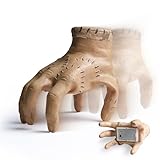
- 【Creepy Crawling Thing Hand】Get ready to elevate your Halloween decorations with the Crawling Zombie Hand, inspired by the iconic Thing from the Wednesday Family. This Halloween animatronic piece is perfect for parties, haunted houses, and yard displays, adding an eerie vibe that everyone will love.
- 【Sound-Activated for Instant Scares】This animatronic hand features sound activation, making it even creepier! As it crawls across the floor, it emits unsettling sounds that enhance the spooky atmosphere. It's the ultimate addition to your haunted house or outdoor Halloween props.
- 【Easy Setup with Sound Activation】Setting up this Halloween horror prop is a breeze! With just a scream, clap, or touch, you can activate the crawling hand. It delivers immediate scares, making your home or yard the go-to spot for Halloween fun.
- 【Versatile Indoor and Outdoor Use】Whether you're decorating indoors or creating a chilling outdoor display, this creepy Halloween decoration is designed to withstand various environments. Its versatile design makes it an essential part of any Halloween theme.
- 【Battery-Powered and Realistic Design】 Powered by 3 AAA batteries(Not Included), this Halloween animatronic hand is crafted from realistic latex material, mimicking the creepy feel of the Wednesday hands. It's reusable for multiple Halloweens, ensuring you have long-lasting scares year after year.
In a show defined by sharp aesthetics and heightened performances, the practical embodiment of Thing is a quiet creative victory. It’s a reminder that sometimes the most effective special effect is simply a performer, placed carefully in front of the camera, trusted to do what technology alone cannot.
Inside the Performance: How Dorobantu Gave Thing Personality, Emotion, and Humor
What ultimately elevates Thing in Wednesday isn’t the novelty of a living hand, but the clarity of performance behind it. Victor Dorobantu approached the role the way any actor would: by defining character, intention, and emotional logic. Every movement had motivation, even when the gesture was as simple as a cautious fingertip tap on a desk.
The Tool Desk
Outbyte Driver Updater FREEFix the driver behind crashes, sound loss and screen glitchesFind Drivers →Outbyte PC Repair FREERepair Windows errors before they cause bigger problemsFix Now →Rather than thinking in terms of “hand tricks,” Dorobantu treated Thing as a silent scene partner. That mindset allowed the character to feel reactive and alive, capable of listening, judging, and even teasing without ever stealing focus from the human actors.
Acting Without a Face
Performing without facial expressions forced Dorobantu to compress emotion into micro-movements. A clenched fist could convey frustration, while a loose, open palm suggested comfort or concern. Timing became everything, with pauses often carrying more meaning than motion itself.
Dorobantu has spoken about studying how people communicate subconsciously through hands in everyday life. Nervous fidgeting, affectionate touches, or decisive snaps all informed how Thing responded in scenes, grounding the character in recognizable human behavior despite his fantastical nature.
Comic Timing in the Smallest Gestures
Thing’s humor is subtle but surgical, often landing the show’s biggest laughs without dialogue. A delayed thumbs-up, an exaggerated shrug, or a sarcastic finger wag becomes a punchline when executed with perfect rhythm. Dorobantu’s sense of comedic timing ensures these moments never feel forced or cartoonish.
Because he was physically present on set, Dorobantu could adjust his performance in real time to match the energy of the scene. That responsiveness allows Thing’s humor to feel organic, emerging naturally from interactions rather than being engineered in post-production.
Building Chemistry With Jenna Ortega
One of Thing’s most important relationships is with Wednesday herself, and that chemistry was built the old-fashioned way. Dorobantu and Jenna Ortega rehearsed scenes together, finding a shared language of beats and reactions. Ortega has credited the physical presence of Thing with making her performance more grounded and emotionally precise.
Their interactions feel intimate because they were. Thing doesn’t just assist Wednesday; he supports her, challenges her, and occasionally scolds her, all communicated through touch and timing. That emotional shorthand is the result of two performers listening closely to one another, even when one of them is only a hand.
The Discipline Behind the Illusion
Maintaining character consistency across long shoots required extreme physical discipline. Dorobantu often performed in uncomfortable positions, hidden beneath floors or inside furniture, holding poses for extended takes. Despite the physical strain, the performance never betrays effort or fatigue.
That commitment is why Thing feels so assured on screen. Dorobantu’s control allows the character to move with confidence and intention, reinforcing the illusion that this is not a prop or gimmick, but a fully realized presence within Wednesday’s world.
On Set with Wednesday: Working with Jenna Ortega, Tim Burton, and the Addams Legacy
Stepping onto the Wednesday set meant stepping into one of pop culture’s most carefully guarded worlds. For Victor Dorobantu, the challenge wasn’t just technical execution, but honoring decades of Addams Family history while helping redefine it for a new generation. Thing may be a disembodied hand, but its presence carries enormous narrative and cultural weight.
Dorobantu’s work sits at the intersection of performance art and franchise stewardship. Every movement had to feel modern, emotionally grounded, and in conversation with the Addams lineage that audiences know by heart.
Jenna Ortega and the Art of Silent Scene Partners
Working opposite Jenna Ortega required a level of precision and trust rarely demanded of co-stars. Ortega’s Wednesday is controlled, internal, and deliberate, which meant Dorobantu had to match her intensity without pulling focus. Their scenes often played like tightly choreographed duets, built on eye-lines, pauses, and physical proximity.
Crashes, No Sound, or Screen Glitches?
Random freezes, missing sound and display glitches usually trace back to one bad driver. Find and replace yours safely.Free scan · under a minutePC Slower Than It Used to Be?
A free scan shows the junk files, broken settings and background clutter dragging Windows down - then fixes them in one click.Free scan · Windows 10 & 11Rank #3

- Wednesday Hand size: Height 5.7 inches and Width 5.7 inches
- [REALISTIC DESIGN] This Addams family hand possesses a remarkably lifelike appearance and intricate details. Each scar makes it seem to be the same as the hand you see on television.
- [HIGH-QUALITY LATEX MATERIAL] The thing hand Addams family is made of high-quality latex material that is odorless, soft, and durable. Besides, it is waterproof and fade-resistant. The distressed surface adds a realistic touch to the Wednesday hand, making it more visually appealing and likely to catch more attention.
- [FUN] Our Wednesday Addams dress can be used as a Halloween or Christmas home decoration, as well as a desk decoration. It can even be used to playfully scare family and friends. The Wednesday thing hand is an essential item that you must have.
- [PERFECT GIFT] It is a perfect gift for any fan of Wednesday, as well as a fantastic choice for birthday parties, family gatherings, and cosplay events with family, kids, friends, and fans of the Addams Family.
Because Dorobantu was present on set rather than replaced by a CGI placeholder, Ortega could respond instinctively. That authenticity is visible in the final performance, where Wednesday’s reactions to Thing feel instinctual rather than imagined. The result is a partnership that feels lived-in, not performed.
Tim Burton’s Direction and Respect for Practical Magic
Tim Burton’s influence looms large over Wednesday, and his appreciation for practical effects played directly into Dorobantu’s strengths. Burton has long favored tactile performances that feel handmade and slightly strange, qualities that align perfectly with Thing’s role in the series. Rather than minimizing the performer behind the effect, Burton embraced Dorobantu as an essential on-set presence.
That approach allowed Dorobantu to collaborate directly with the director, shaping how Thing reacted within Burton’s heightened visual language. Small adjustments to posture or pacing could align a scene more closely with Burton’s gothic whimsy, reinforcing the character’s place within his unmistakable aesthetic.
Honoring the Addams Family While Redefining Thing
Thing has appeared in multiple Addams incarnations, from television to film, each with its own interpretation. Dorobantu studied those versions closely, understanding what fans expect while identifying where Wednesday could push the character further. This Thing is more emotionally expressive, more reactive, and more narratively involved than many of its predecessors.
Quick wins for a faster PC:
Fix the driver behind crashes, sound loss and screen glitchesFind Drivers →Clear out junk files and repair common Windows errorsFree Scan →By grounding the character in physical performance rather than spectacle, Dorobantu helped Thing feel essential rather than ornamental. It’s a reinvention that respects the past while asserting its own identity, ensuring that Wednesday’s Thing stands confidently alongside the most iconic versions that came before it.
Independent reader supportYour contribution helps us test, update, and keep practical guides available for everyone.The Art of Practical Effects: Costumes, Prosthetics, and Physical Challenges
Bringing Thing to life on Wednesday required more than a convincing hand model. It demanded a hybrid of costume engineering, physical endurance, and performance discipline, all centered on Victor Dorobantu’s ability to disappear everywhere except where the audience needed him most. The result is a character that feels tactile and alive, precisely because so much of it was achieved in-camera.
Hiding the Performer Without Losing the Performance
Dorobantu typically performed in a full-body blue chroma suit, allowing the visual effects team to erase everything but his exposed hand in post-production. That setup sounds simple, but it required constant awareness of framing, lighting, and camera movement to ensure clean composites. One wrong angle or shadow could compromise the illusion, making precision part of the performance itself.
Unlike a static prop, Dorobantu’s hand had to remain expressive while the rest of his body stayed invisible. He often contorted himself into awkward positions, tucked beneath furniture or wedged into set pieces, maintaining stillness everywhere except his fingers. It’s a feat of control that borders on athletic.
What’s actually slowing this PC down?
Pick the symptom - the matching free tool is one click away.
Prosthetics, Continuity, and On-Set Illusion
While Dorobantu’s real hand is the primary Thing audiences see, prosthetic versions were also used for specific shots and stunts. Matching skin tone, texture, and movement between real and artificial hands required meticulous continuity. Dorobantu worked closely with the effects and makeup teams to ensure that every version of Thing felt consistent in personality and physicality.
Even when a prosthetic took over, Dorobantu’s performance informed its placement and movement. His understanding of Thing’s emotional vocabulary helped guide how the hand should be posed or framed, maintaining character integrity across practical and post-production elements.
The Physical Toll of Playing a Hand
Performing as Thing is deceptively demanding. Dorobantu often held uncomfortable positions for extended takes, sustaining tension in his arm to keep the hand animated and responsive. Finger isolation, rapid gesture changes, and sustained poses turned each shooting day into a test of stamina.
There’s also a psychological challenge in performing without facial expression or body language. Dorobantu had to channel intent, emotion, and humor through movement alone, trusting that the smallest gesture would read on camera. That trust, combined with physical resilience, is what allows Thing to feel like a full character rather than a visual trick.
Why Practical Effects Still Matter
Wednesday’s commitment to practical effects gives Thing a weight and immediacy that CGI alone rarely achieves. Dorobantu’s on-set presence allowed actors to interact with a real performance, grounding scenes in tangible reality. The camera captures subtle imperfections, natural timing, and spontaneous reactions that can’t be fully fabricated later.
In an era dominated by digital shortcuts, Thing stands as a reminder of what practical magic can accomplish when paired with the right performer. Victor Dorobantu doesn’t just operate a costume or wear a suit; he inhabits a character under extreme constraints, turning limitation into creative power.
Rank #4

- 【High-quality material】 Addams family Thing Hand is made of high-quality eco-friendly latex material, soft and comfortable, strong and durable.
- 【Realistic design】 Wednesday Thing Hand is made realistically, every scar and stitching line on the palm is perfectly restored, it is really a perfect work of art.
- 【Home Drama Decoration】Wednesday family Thing hand is very suitable as a perfect decoration for the living room, study room, or office, you can put it anywhere or use it as a trick prop.
- 【Art Collection】As the popular new drama on Wednesday, the 'Thing' in the play is very popular among fans. The palm is made of latex material and the realistic design is very collectible.
- 【Movie cosplay】 Wednesday latex palms suitable for children and adults, fun cosplay photo props. Also makes the perfect gift for a Addams family fan!
Beyond the Hand: Dorobantu’s Career, Skills, and Life Outside Nevermore
While Wednesday introduced Victor Dorobantu to a global audience, his career didn’t begin at Nevermore Academy. Long before Thing scuttled across gothic hallways, Dorobantu was building a reputation as a versatile physical performer with roots in dance, mime, and movement-based acting. Those disciplines, often operating on the margins of mainstream stardom, quietly shaped the skill set that would later define one of Netflix’s most talked-about characters.
A Background Built on Movement
Dorobantu’s training centers on body control, rhythm, and nonverbal storytelling. Dance and physical theater taught him how to isolate muscle groups, communicate intention through gesture, and maintain precision under pressure. These are the same foundational tools used by creature performers, stunt specialists, and mime artists, making his transition into practical-effects performance a natural evolution.
Unlike traditional acting paths that prioritize dialogue and facial expressiveness, Dorobantu’s work thrives on restraint. He understands how to strip movement down to its essentials, letting a curl of the fingers or a sudden stillness do the narrative heavy lifting. That economy of motion is exactly what allows Thing to feel intelligent, reactive, and emotionally tuned into the scene.
Skills That Translate Across Mediums
What sets Dorobantu apart is his adaptability. Performing as Thing requires not only physical endurance but also an awareness of camera angles, lighting, and continuity. He adjusts movement based on framing, knowing when a gesture needs to be bold for wide shots or subtle enough to read in close-up.
This technical fluency places him in the same lineage as legendary creature and suit performers who understand that acting for genre television is as much about collaboration as individual performance. Dorobantu works in sync with directors, cinematographers, and visual effects teams, tailoring his movement to serve the story rather than draw attention to the technique.
Life Outside the Spotlight
Away from the set, Dorobantu maintains a relatively private life, focused on creative exploration and physical practice. He continues to train, refine his movement skills, and engage with performance art forms that value expression over celebrity. That grounded approach is part of why his work resonates; there’s no sense of novelty chasing the role, only respect for the craft.
Recommended Free Tools
For fans, it’s tempting to see Thing as a one-of-a-kind opportunity, but Dorobantu’s career suggests something broader. He represents a class of performers whose work is essential yet often invisible, bringing personality and soul to characters that could easily feel mechanical. In giving Thing its spark, Victor Dorobantu has also pulled back the curtain on an art form that thrives just outside the spotlight.
Why Victor Dorobantu’s Thing Matters for the Future of Performance and Storytelling
Victor Dorobantu’s work as Thing arrives at a moment when television is renegotiating its relationship with physical performance. In an era dominated by digital shortcuts, his contribution to Wednesday is a reminder that audiences still respond to something real, tactile, and deliberately crafted. Thing doesn’t just function as a nostalgic callback; it feels alive because it is grounded in human movement and intention.
More importantly, Dorobantu proves that performance doesn’t require a face, a voice, or even a full body to be emotionally legible. Through precise physical storytelling, he gives Thing curiosity, loyalty, humor, and vulnerability. That achievement expands how we define acting itself, pushing it beyond traditional metrics and into a space where motion, rhythm, and timing carry narrative weight.
A Case for Practical Effects in a Digital Age
Thing’s success underscores the enduring power of practical effects when paired with the right performer. While visual effects enhance the illusion, the foundation of the character is unmistakably human. Dorobantu’s hand reacts to other actors in real time, creating chemistry that no amount of post-production can fully replicate.
What’s actually slowing this PC down?
Pick the symptom - the matching free tool is one click away.
This hybrid approach sets a compelling template for future genre storytelling. By blending practical performance with selective digital refinement, Wednesday demonstrates that realism and fantasy don’t have to compete. Instead, they can coexist in a way that deepens immersion and strengthens emotional credibility.
Redefining Visibility and Recognition
Dorobantu’s rise also sparks a larger conversation about visibility in performance. Characters like Thing traditionally risk being dismissed as gimmicks or technical achievements, yet his work insists on recognition as acting in its purest form. It challenges the industry to broaden its understanding of who gets credit and why.
As audiences become more curious about the craftsmanship behind their favorite shows, performers like Dorobantu are finally being seen. His presence invites fans to look beyond the finished frame and appreciate the collaborative artistry that brings unforgettable characters to life.
A Quiet Blueprint for the Future
In many ways, Victor Dorobantu’s Thing is less about reinvention and more about reclamation. It reconnects modern television with the physical discipline of mime, puppetry, and movement-based storytelling, reminding creators that innovation often comes from refining fundamentals rather than abandoning them.
Thing may never speak, but its impact resonates loudly. Through restraint, precision, and creative humility, Dorobantu has helped shape a character that feels timeless while pointing toward the future. In doing so, he hasn’t just given Wednesday one of its most beloved elements; he’s offered a compelling argument for why human performance, in all its forms, still matters.
Quick Recap
Product prices and availability are accurate as of the date/time indicated and are subject to change. Any price and availability information displayed on Amazon at the time of purchase will apply.

