Madea has never just been a punchline. Since her first stage appearances in Tyler Perry’s early plays, the foul-mouthed, Bible-quoting matriarch has functioned as both comic relief and cultural mirror, reflecting generational tensions, Black Southern traditions, and hard-earned wisdom wrapped in outrageous humor. More than two decades later, Madea remains one of the most recognizable figures in American comedy, a character whose endurance says as much about her audience as it does about her creator.
Tyler Perry’s Madea movies arrived during a period when Black-led theatrical comedies were largely absent from mainstream Hollywood, and they filled that gap with stories that felt specific, unapologetic, and deeply personal. The films blend slapstick, melodrama, and moral lessons in ways that defy traditional studio formulas, which is precisely why they resonated so widely. Madea speaks truths other characters won’t, disrupts polite conversations, and anchors chaotic family stories with a worldview shaped by survival rather than sentimentality.

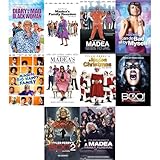
Understanding why Madea still matters also means understanding how her story unfolds across multiple timelines. The franchise doesn’t move in a straight line, with prequels, spiritual successors, and thematic callbacks complicating the viewing experience for newcomers. That’s where watching order becomes important, whether you prefer to follow the films as audiences originally experienced them or trace Madea’s in-universe life chronologically to better grasp recurring characters, evolving relationships, and the way Perry’s storytelling has shifted over time.
The Complete Madea Filmography at a Glance
Before diving into detailed timelines, it helps to see the full scope of Madea’s cinematic run laid out cleanly. Tyler Perry has brought the character to the screen across more than a decade and a half, sometimes as the central force and sometimes as a scene-stealing presence who reframes the story around her worldview. What complicates matters is that the order these films were released doesn’t always line up with where they seem to fall in Madea’s life.
Quick wins for a faster PC:
Fix the driver behind crashes, sound loss and screen glitchesFind Drivers →Repair Windows errors before they cause bigger problemsFix Now →#1 Best Overall
Below, you’ll find the Madea films organized two ways: first by theatrical release, which reflects how audiences originally experienced the character, and then by in-universe chronology, which better tracks Madea’s relationships, living situations, and evolving role within the extended Simmons-Brown family network.
Madea Movies in Release Order
This is the simplest and most common way to watch the franchise, mirroring the evolution of Perry’s filmmaking style and the way Madea gradually became the centerpiece of his cinematic brand.
Diary of a Mad Black Woman (2005)
Madea’s Family Reunion (2006)
Meet the Browns (2008)
Madea Goes to Jail (2009)
I Can Do Bad All by Myself (2009)
Madea’s Big Happy Family (2011)
Madea’s Witness Protection (2012)
A Madea Christmas (2013)
Boo! A Madea Halloween (2016)
Boo 2! A Madea Halloween (2017)
A Madea Family Funeral (2019)
A Madea Homecoming (2022)
Watching in release order emphasizes how Madea shifted from a supporting character with roots in Perry’s stage plays into a pop-culture institution. It also highlights the tonal changes over time, from heavier melodrama in the early films to broader, almost sketch-like comedy in later entries.
Recommended Free Tools
Madea Movies in Chronological (In-Universe) Order
If you’re more interested in Madea’s internal timeline and recurring family dynamics, a chronological approach offers a different perspective. This order focuses on where Madea appears to be in her life rather than when the film was produced.
Madea’s Family Reunion
Diary of a Mad Black Woman
Meet the Browns
Madea Goes to Jail
I Can Do Bad All by Myself
Madea’s Big Happy Family
Madea’s Witness Protection
A Madea Christmas
Boo! A Madea Halloween
Boo 2! A Madea Halloween
A Madea Family Funeral
A Madea Homecoming
This sequence places earlier family conflicts and generational tensions upfront, with later films reflecting a more settled Madea who operates as the unquestioned authority in any room she enters. While continuity isn’t airtight, watching chronologically makes character callbacks and emotional beats feel more intentional.
Choosing the Right Viewing Order
Release order works best for first-time viewers who want to experience Madea the way audiences did, watching her popularity and cultural impact grow in real time. Chronological order, on the other hand, is ideal for returning fans or binge-watchers who want a smoother narrative flow and a clearer sense of Madea’s role within Perry’s interconnected universe.
The Tool Desk
Outbyte Driver Updater FREEFix the driver behind crashes, sound loss and screen glitchesFind Drivers →Outbyte PC Repair FREERepair Windows errors before they cause bigger problemsFix Now →Either way, the Madea films reward commitment. Beneath the jokes, wigs, and one-liners is a character whose longevity is rooted in consistency, cultural specificity, and an unapologetic point of view that never softens to fit Hollywood expectations.
Madea Movies by Release Date: How Audiences Originally Met Her
Watching the Madea films by release date recreates the experience audiences had as Tyler Perry gradually expanded his most famous creation from stage favorite to box-office mainstay. This order captures how Madea’s personality, purpose, and screen time evolved alongside Perry’s growing influence in Hollywood.
Theatrical Breakthrough and Early Expansion
Diary of a Mad Black Woman (2005)
Madea’s first film appearance positions her as a scene-stealing supporting character rather than the main attraction. She functions as a blunt, comedic truth-teller, grounding the film’s heavier melodrama with humor and streetwise wisdom.
Madea’s Family Reunion (2006)
This sequel pushes Madea closer to the center, giving her more emotional weight and family authority. The film leans harder into generational trauma and domestic issues, reinforcing Perry’s early balance of comedy and social commentary.
Free tools Windows power users keep installed
One-click scans. No signup required.
Meet the Browns (2008)
Although not strictly a Madea-centric story, her presence ties the film into Perry’s expanding universe. It reflects a period where Madea could drop into other narratives and still feel essential.
Madea Goes to Jail (2009)
By this point, Madea is undeniably the star. The premise is broad and comedic, but the film still carries moral lessons, marking the franchise’s pivot toward higher-concept setups built around Madea herself.
Mainstream Peak and Broad Comedy Era
I Can Do Bad All by Myself (2009)
Released the same year, this film uses Madea as a supporting catalyst rather than the emotional lead. It shows Perry experimenting with how much Madea is needed to anchor a story.
Madea’s Big Happy Family (2011)
Adapted directly from one of Perry’s stage plays, this entry leans heavily into family conflict and stage-style confrontations. It feels like a bridge between Madea’s theatrical roots and her increasingly cinematic presence.
Do these 3 things before closing this tab:
1Clear out junk files and repair common Windows errors2Scan for outdated or missing drivers - takes under a minute3Repair Windows errors before they cause bigger problemsMadea’s Witness Protection (2012)
This is where the franchise fully embraces absurdity. Fish-out-of-water comedy takes precedence over realism, signaling a tonal shift toward bigger laughs and broader appeal.
A Madea Christmas (2013)
Holiday trappings give Madea a new playground, blending seasonal sentiment with her trademark irreverence. It underscores her transition into a pop-culture fixture capable of carrying themed releases.
Late-Stage Franchise and Cultural Saturation
Boo! A Madea Halloween (2016)
Designed with younger audiences and viral humor in mind, this film reflects the changing comedy landscape. Madea becomes more cartoonish, with set pieces built around reactions and punchlines.
Boo 2! A Madea Halloween (2017)
The sequel doubles down on spectacle and parody, prioritizing momentum over narrative depth. By now, Madea’s personality is fully established, requiring little setup.
A Madea Family Funeral (2019)
Marketed as Perry’s farewell to the character, this film plays like a greatest-hits collection of Madea behavior. It blends farce with callbacks, functioning as both an ending and a celebration.
A Madea Homecoming (2022)
Revived for Netflix, this release reintroduces Madea to a streaming-era audience. The film leans into stage-play energy and cultural commentary, reaffirming why the character remains relevant decades after her debut.
Madea Movies in Chronological (In-Universe) Order: Following the Timeline
Unlike franchises built on rigid continuity, the Madea films exist in a loose, sliding present. Characters age inconsistently, references are often topical, and Madea herself feels more mythic than fixed in time. Still, when watched through an in-universe lens, a surprisingly coherent timeline emerges—one that tracks Madea’s rise from chaotic family enforcer to full-blown cultural institution.
The Early Family Years
Diary of a Mad Black Woman (2005)
Chronologically, this is the clearest starting point. Madea enters the cinematic world as a disruptive supporting force, grounding the film’s melodrama with blunt wisdom and unfiltered comedy. Her role here establishes the core dynamic that will define her presence across the franchise.
PC Slower Than It Used to Be?
A free scan shows the junk files, broken settings and background clutter dragging Windows down - then fixes them in one click.Free scan · Windows 10 & 11Crashes, No Sound, or Screen Glitches?
Random freezes, missing sound and display glitches usually trace back to one bad driver. Find and replace yours safely.Free scan · under a minuteMadea’s Family Reunion (2006)
Set not long after Diary, this film deepens Madea’s relationships with her extended family. The story reinforces her role as both moral compass and agent of chaos, while leaning heavily into the stage-play structure that shaped Perry’s early work.
Madea Expands Beyond the Family Circle
I Can Do Bad All by Myself (2009)
Though released later, this story fits comfortably after Madea’s family groundwork is laid. She operates more as a narrative catalyst than the central figure, suggesting a period where her reputation precedes her. It’s a natural progression of her growing influence within Perry’s universe.
Madea Goes to Jail (2009)
This entry works best once Madea is fully established as a public menace. Her arrest and courtroom antics feel like the inevitable result of years of unchecked behavior, making this a midpoint escalation rather than an origin story.
The High-Concept Era
Madea’s Big Happy Family (2011)
Returning to familial conflict after jail, Madea feels older, sharper, and more set in her ways. The film plays like a later chapter in her life, where experience has replaced patience and subtlety is no longer on the table.
Rank #3
![Tyler Perry's Madea - 6 Film Collection (Family Funeral/Boo!/Boo! 2/Christmas/Family Reunion/Witness Protection) [DVD]](https://m.media-amazon.com/images/I/41p1BQMs19L._SL160_.jpg)
- DVD Collection – Region Free playback (compatible with all DVD players worldwide)
- Official Australian manufactured release
- 6 Film Collection: A Madea Family Funeral, Boo! A Madea Halloween, Boo! 2: A Madea Halloween, A Madea Christmas, Madea's Family Reunion, Madea's Witness Protection
- Standard definition widescreen presentation for all films
- English language audio with widescreen presentation
Madea’s Witness Protection (2012)
The fish-out-of-water premise implies a Madea who is already legendary enough to be dropped into extreme scenarios. Chronologically, this lands after her family and legal entanglements, when her personality is fully formed and immovable.
A Madea Christmas (2013)
Holiday duties feel like an extension of her role as family anchor. By this point in the timeline, Madea is less reactive and more performative, fully aware of her place at the center of chaos.
The Later Years and Cultural Icon Phase
Boo! A Madea Halloween (2016)
This chapter works best once Madea has long been normalized within her community. Her interactions feel routine, even as the situations become more exaggerated, signaling a late-stage version of the character.
Boo 2! A Madea Halloween (2017)
Immediately following the first Halloween film in spirit and tone, this sequel assumes viewers already know exactly who Madea is. Chronologically, it’s a direct continuation of her cartoonishly confident era.
A Madea Family Funeral (2019)
Positioned late in the timeline, this film treats Madea like a living legend. The callbacks, heightened farce, and “final chapter” energy all suggest a character nearing the end of her narrative arc.
A Madea Homecoming (2022)
Set after the supposed farewell, this Netflix revival functions as the most recent point in the in-universe timeline. Madea is older, louder, and more self-aware than ever, embracing her role as both family elder and cultural commentator in the modern era.
Key Differences Between Release Order vs. Chronological Order
Watching the Madea films by release date versus chronological order creates two very different experiences. One mirrors how audiences originally met the character, while the other reshapes Madea into a more traditional narrative arc with a clearer sense of progression. Neither approach is wrong, but each emphasizes different strengths of Tyler Perry’s long-running creation.
Release Order Prioritizes Cultural Impact and Comedy Evolution
Following the release order lets viewers experience Madea as audiences did in real time, watching her grow alongside Tyler Perry’s expanding cinematic ambitions. Early films feel smaller, stage-influenced, and raw, while later entries lean into broader comedy, higher concepts, and self-aware spectacle. This approach highlights how Madea evolved from a supporting force of chaos into a full-blown cultural icon.
Release order also preserves the meta humor and escalation of jokes. Running gags, recurring family dynamics, and Madea’s increasing absurdity land harder when you see how far the character has been pushed over the years. It’s the best option for understanding Madea’s place in pop culture rather than her place in a fictional timeline.
Chronological Order Creates a Clear Character Arc
Watching chronologically reframes the franchise as a loose but coherent life story. Madea’s early appearances feel more volatile and reactive, while later films show a character who has settled into her role as the family’s immovable center. Her arrests, confrontations, and eventual “elder stateswoman” status feel more intentional when viewed as cause-and-effect rather than comedic resets.
This order also smooths out tonal shifts. High-concept entries like Witness Protection or the Halloween films feel like natural escalations once Madea is established as a known quantity within her world. Instead of random genre swings, the movies play like increasingly outrageous chapters in a long life defined by confrontation and control.
Continuity vs. Standalone Energy
Release order embraces the franchise’s episodic nature. Each film largely resets the board, allowing Madea to be whatever the story needs her to be at that moment. That flexibility is part of the appeal, especially for casual viewers who want maximum laughs with minimal context.
What’s actually slowing this PC down?
Pick the symptom - the matching free tool is one click away.
Chronological order, on the other hand, rewards attention. Character relationships, recurring conflicts, and Madea’s reputation within her family carry more weight. It turns a collection of broad comedies into something closer to a generational saga, even if continuity was never the primary goal.
Which Order Is Best for First-Time Viewers?
Newcomers looking for the authentic Madea experience as audiences originally embraced it should start with release order. It captures the shock value, the escalation, and the evolving comedic voice that made the character famous. Chronological order is better suited for viewers who already enjoy the films and want to see how Madea functions as a singular, evolving character across time.
Rank #4

- Shrink-wrapped
Ultimately, the difference comes down to perspective. Release order celebrates Madea as a phenomenon, while chronological order treats her like a character with a history. Both reveal something different about why Madea has endured for so long.
How Madea Evolves Across the Films: Character, Comedy, and Themes
Watching the Madea films in either order reveals a character who is far more deliberate than she first appears. While Madea is often framed as a blunt-force comic weapon, her personality, purpose, and even her moral code sharpen over time. What begins as chaos gradually settles into control, turning her from a disruptive force into the backbone of Tyler Perry’s cinematic universe.
From Volatile Firebrand to Strategic Authority
In the earliest-set stories, Madea is reactive and unpredictable, quick to escalate any situation into confrontation. Jail time, courtroom antics, and physical intimidation define her early reputation. Chronologically, these moments feel like a woman still asserting dominance in a world that constantly challenges her authority.
As the timeline progresses, Madea becomes less impulsive and more strategic. She still threatens, shouts, and brandishes weapons, but it’s usually in service of restoring order rather than pure retaliation. By the later films, she functions as an unmovable constant, someone whose presence alone can course-correct an entire household.
Comedy That Shifts With Cultural Timing
The humor evolves noticeably depending on where you enter the franchise. Early entries lean heavily on shock value, taboo jokes, and physical comedy rooted in stage traditions. These films reflect Perry’s theatrical origins, where Madea’s extremity was the joke itself.
Later movies broaden the comedic palette. Pop culture satire, genre parody, and self-aware humor become more prominent, especially in films like Boo! A Madea Halloween and Witness Protection. In chronological order, this shift feels like Madea adapting to a changing world; in release order, it tracks Perry’s growing confidence as a filmmaker playing with form.
Family, Faith, and Control
Across every version of the timeline, Madea’s core function remains the same: she intervenes when families are breaking down. Early on, her lessons are harsh and sometimes contradictory, rooted in survival and dominance. Love is present, but it’s often buried beneath fear and discipline.
Later films frame Madea more clearly as a moral authority. Her lectures become longer, more reflective, and more openly tied to faith, accountability, and generational responsibility. Chronological viewing emphasizes this evolution, making her feel less like a loose cannon and more like a flawed but intentional guardian.
What the Evolution Reveals About Watching Order
Release order highlights Madea as an entertainment phenomenon, a character who could be reshaped to fit whatever story Perry wanted to tell at the moment. Her evolution mirrors audience expectations and shifting comedic tastes rather than strict narrative logic.
Chronological order reframes those same choices as character growth. Madea’s increasing self-awareness, her softened relationships, and her elevated status within the family feel earned. The difference doesn’t change the jokes, but it changes what they say about who Madea is and why she commands the screen every time she appears.
Do these 3 things before closing this tab:
1Fix the driver behind crashes, sound loss and screen glitches2Clear out junk files and repair common Windows errors3Scan for outdated or missing drivers - takes under a minuteStage Plays vs. Films: How Tyler Perry Adapted Madea for the Screen
Before Madea ever dominated the box office, she ruled the stage. Tyler Perry introduced the character in live theatrical productions where exaggerated performance, direct audience address, and extended moral monologues were not just accepted but expected. Understanding that origin is key to understanding why the Madea movies function differently depending on whether you watch them by release date or chronological order.
Madea as a Theatrical Creation
Onstage, Madea was built for immediacy. Perry used broad comedy, heightened conflict, and long pauses for laughter or applause, often breaking the fourth wall to speak directly to the audience. The plays weren’t concerned with subtle continuity; they were designed as communal experiences rooted in call-and-response humor and clear moral messaging.
When early films like Diary of a Mad Black Woman and Madea’s Family Reunion transitioned to the screen, they retained that theatrical DNA. Scenes play out in longer blocks, confrontations are heightened, and Madea’s lectures often feel like stage soliloquies transplanted intact. Watching these movies in release order makes that theatrical influence especially obvious.
Restructuring Madea for Film Storytelling
As Perry made more films, he gradually reshaped Madea to fit cinematic pacing. Film demanded tighter plotting, more naturalistic dialogue, and a stronger sense of cause and effect across scenes. Madea still delivered lessons, but they were increasingly embedded within the story rather than stopping it cold.
Best Value
![Tyler Perry's Boo! A Madea Halloween [DVD]](https://m.media-amazon.com/images/I/5182LJFymaL._SL160_.jpg)
- Madea winds up in the middle of mayhem when she spends a hilarious, haunted Halloween fending off killers, paranormal poltergeists, ghosts, ghouls, and zombies while keeping a watchful eye on a group of misbehaving teens.
This shift becomes clearer when viewing the franchise chronologically. Madea’s personality feels less like a reset each movie and more like a character adapting to new situations. Her authority evolves from brute force to earned wisdom, mirroring Perry’s growing comfort translating stage rhythms into film language.
Why Some Continuity Feels Loose
One reason release order can feel tonally inconsistent is that the films weren’t conceived as a strict cinematic universe. Perry pulled from different stage eras, remixed character dynamics, and occasionally softened or exaggerated Madea depending on the story he wanted to tell. Continuity mattered less than emotional impact and audience recognition.
Chronological order smooths over some of those jumps by framing them as character development rather than creative pivots. Moments that feel exaggerated in one film and restrained in another read as intentional growth when placed in-universe, even if that wasn’t the original design.
Choosing a Watch Order Based on Adaptation Style
If you’re interested in seeing how Perry evolved as a filmmaker, release order highlights the gradual shift from filmed stage energy to more cinematic comedy. You’ll see Madea move from theatrical spectacle to pop-culture-savvy icon in real time.
Recommended Free Tools
If you’re more invested in Madea as a character, chronological order benefits from understanding how Perry refined her for the screen. The transition from stage-rooted chaos to controlled authority feels purposeful, reinforcing the idea that Madea didn’t just change mediums, she learned how to live in them.
Which Order Should You Watch? A Guide for Newcomers and Returning Fans
With more than a decade of films, stage roots, and shifting tones, the Madea franchise can feel deceptively simple on the surface. In practice, how you choose to watch these movies dramatically shapes your experience. Whether you’re meeting Madea for the first time or revisiting her greatest hits, there’s a right order for what you want to get out of the journey.
Release Order: Watching Madea the Way Audiences Did
If you want to experience Madea as a pop culture phenomenon unfolding in real time, release order is the cleanest entry point. Starting with Diary of a Mad Black Woman and moving through titles like Madea’s Family Reunion, Madea Goes to Jail, and Boo! A Madea Halloween shows how Perry gradually refined his comedic voice for mainstream cinema.
This order emphasizes evolution over continuity. You’ll feel the tonal jumps, the shifts between broad farce and earnest melodrama, and the increasing confidence Perry brings to balancing humor with moral lessons. For longtime fans, this approach is also the most nostalgic, recreating the rhythm of how Madea became a household name.
Chronological Order: Following Madea’s In-Universe Life
Chronological order rearranges the films based on where Madea appears to be in her personal timeline, rather than when the movie was made. This approach foregrounds character development, making Madea feel less like a sketch character and more like a consistent presence reacting to different phases of family, community, and aging.
Watched this way, Madea’s increasing patience, emotional intelligence, and selective chaos read as growth rather than inconsistency. Her early confrontational energy softens into a more strategic authority, turning recurring jokes into personality traits and recurring themes into life lessons earned over time.
Key Differences Between the Two Orders
The biggest difference isn’t plot, but perception. Release order highlights Tyler Perry’s growth as a filmmaker and cultural force, while chronological order emphasizes Madea’s internal logic as a character. Scenes that feel exaggerated in release order often play more intentionally when framed as part of an evolving persona.
Chronological viewing also smooths over tonal whiplash. Moments of restraint feel like maturity, and moments of chaos feel like deliberate throwbacks rather than creative resets. It’s less about strict continuity and more about emotional coherence.
What’s actually slowing this PC down?
Pick the symptom - the matching free tool is one click away.
The Best Choice for Newcomers
For first-time viewers, release order is generally the most accessible. It mirrors how the films were designed to be consumed and requires no prior knowledge of timeline adjustments. You meet Madea as the world met her, loud, uncompromising, and instantly recognizable.
That said, newcomers who prioritize character arcs over cultural context may find chronological order more rewarding. It frames Madea not just as comic relief, but as a lived-in figure shaped by family conflicts, generational responsibility, and hard-earned wisdom.
The Best Choice for Returning Fans
If you’ve seen these movies before, chronological order offers something genuinely new. It reframes familiar scenes, adds emotional texture to recurring relationships, and turns Madea’s contradictions into intentional layers. What once felt episodic begins to resemble a long-running character study.
Many returning fans find that this order deepens appreciation for Perry’s instincts as a storyteller. Even without strict continuity, the emotional throughline becomes clearer, reinforcing why Madea endures beyond any single punchline.
Windows Errors? Fix Them Before They Spread
Repair common Windows errors and clear accumulated junk for a smoother, more stable PC - no reinstall needed.Free scan · no reinstallCrashes, No Sound, or Screen Glitches?
Random freezes, missing sound and display glitches usually trace back to one bad driver. Find and replace yours safely.Free scan · under a minuteIn the end, there’s no wrong way to watch Madea, only different lenses. Release order captures the cultural moment, while chronological order reveals the character beneath the wig and one-liners. Either way, Madea remains exactly what she’s always been: loud, loving, deeply flawed, and impossible to ignore.
Quick Recap
Product prices and availability are accurate as of the date/time indicated and are subject to change. Any price and availability information displayed on Amazon at the time of purchase will apply.




