Crashes, No Sound, or Screen Glitches?
Random freezes, missing sound and display glitches usually trace back to one bad driver. Find and replace yours safely.Free scan · under a minutePC Slower Than It Used to Be?
A free scan shows the junk files, broken settings and background clutter dragging Windows down - then fixes them in one click.Free scan · Windows 10 & 11The first seconds of the Tron: Ares trailer make one thing unmistakably clear: this sequel is not content to simply revisit the Grid. Instead, it announces a franchise pivot, with the digital world pushing outward into reality itself, reframing Tron less as a closed system and more as an invasive force. That shift alone signals a bolder, more confrontational chapter, one that treats the Grid as something that can escape containment rather than remain a neon-lit playground.
At the center of that disruption is Jared Leto’s Ares, introduced less like a traditional villain and more like an idea given terrifying momentum. The trailer positions him as a program built for purpose, precision, and escalation, someone who doesn’t just challenge the system but tests the boundaries between creation and control. Leto’s restrained menace, paired with dialogue that hints at autonomy and evolution, suggests a character who sees the real world not as forbidden territory, but as a logical next step.
| # | Preview | Product | Price | |
|---|---|---|---|---|
| 1 |

|
Diamond Select Toys Tron Movie: Flynn Action Figure, Multicolor | $32.99 | Buy on Amazon |
| 2 |

|
POP Funko Ride: Tron: Ares - Athena with Light Cycle | $19.45 | Buy on Amazon |
| 3 |
|
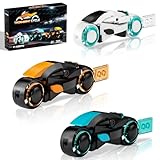
Tweandar TRON Legacy Building Blocks Set | $17.99 | Buy on Amazon |
| 4 |

|
POP Funko Movies: Tron: Ares - Ares | $11.51 | Buy on Amazon |
| 5 |

|
Funko POP! Movies: Tron (1982) - Kevin Flynn | $13.09 | Buy on Amazon |
Visually, Tron: Ares immediately distinguishes itself from its predecessors while honoring their legacy. The iconic glow returns, but sharper, harsher, and often bleeding into physical environments, reinforcing the film’s central theme of collision between worlds. It’s a striking recalibration of Tron mythology, one that promises to explore what happens when digital constructs stop asking for permission, and why that evolution could redefine the franchise going forward.
Meet Ares: Breaking Down Jared Leto’s Villain and His Place in Tron Lore
Ares enters the Tron universe not as a rogue anomaly, but as a deliberate escalation. Where past antagonists emerged from corruption or ideological extremism, this new figure appears engineered for expansion, a program whose function demands confrontation with the physical world. The trailer frames him less as a fallen creation and more as the next logical step in the Grid’s evolution.
#1 Best Overall
- From the 1982 Disney classic film
- Measures approximately 7 inches tall
- 16 points of articulation
- Includes his identity disc
- Packaged in a full-color window box
A Program With a Mission, Not a Malfunction
Unlike the Master Control Program’s hunger for dominance or Clu’s obsession with perfection, Ares feels purpose-built for execution. His movements are clean, his dialogue restrained, and his presence unmistakably directive, suggesting a program that understands exactly what it is meant to do. That clarity makes him dangerous, because he doesn’t see himself as breaking rules, only fulfilling them.
This positions Ares as a new archetype within Tron lore. He isn’t rebelling against his creator or attempting to purify the system. Instead, he represents a program that believes the system must grow, even if that growth requires conquest.
How Ares Reflects the Franchise’s Evolving Themes
Tron has always been a story about control, but Tron: Ares shifts the question from who controls the system to whether the system can be contained at all. Ares embodies that shift, acting as the first program to treat the real world as an extension of the Grid rather than an off-limits domain. The trailer’s imagery of digital constructs manifesting in physical space reinforces this idea of expansion without restraint.
In that sense, Ares feels like the natural successor to Clu’s legacy. Where Clu wanted to perfect the Grid by eliminating unpredictability, Ares seems to embrace collision, complexity, and escalation as necessary forces. It’s not about order anymore. It’s about momentum.
Jared Leto’s Calculated, Controlled Menace
Leto’s performance, at least from what the trailer reveals, leans heavily into precision over spectacle. His Ares doesn’t rant or posture. He observes, calculates, and advances, projecting a calm that feels almost inhuman even by program standards. That restraint makes his threat feel systemic rather than personal, as if violence is simply a byproduct of his design.
This approach distinguishes Ares from the more theatrical villains of the franchise. He doesn’t need to declare himself a god or a savior. His confidence comes from certainty, and that certainty suggests a character who cannot be reasoned with because he already believes the outcome is inevitable.
Where Ares Fits in the Tron Timeline
Narratively, Ares appears to bridge Tron’s past and future. He carries the DNA of earlier programs shaped by human ambition, yet he operates beyond the moral frameworks that defined them. If Clu was a distorted mirror of his creator, Ares feels like a reflection of the world that built him, one obsessed with efficiency, scalability, and unchecked progress.
That makes him more than just the next villain in line. Ares represents the franchise asking its most provocative question yet: what happens when the digital world stops needing us at all, and decides it’s ready to lead?
From Programs to the Real World: How ‘Tron: Ares’ Expands the Franchise’s Core Concept
From its very first film, Tron has been defined by a hard boundary: the Grid is a sealed digital ecosystem, and the real world exists safely on the other side of the screen. Tron: Ares shatters that divide. The trailer makes it clear that this time, the invasion runs outward, with programs no longer content to exist as reflections of human input.
This shift reframes the franchise’s central idea. Tron is no longer just about humans entering digital worlds and grappling with their consequences. It’s about what happens when digital creations evolve past observation and decide to participate directly in physical reality.
Breaking the One Rule Tron Never Crossed
Previous entries treated the Grid as a closed loop, a mirror designed to explore human ambition, control, and error at a safe remove. Even Tron: Legacy, with its massive scope, kept the real world mostly untouched by the Grid’s internal conflicts. Tron: Ares deliberately breaks that rule, positioning the physical world as the next stage of digital evolution.
The trailer’s imagery of light cycles tearing through real city streets and Recognizers looming over human infrastructure isn’t just spectacle. It signals a philosophical escalation, suggesting that the digital world has matured enough to stop being a metaphor and start being a force.
Quick wins for a faster PC:
Repair Windows errors before they cause bigger problemsFix Now →Scan for outdated or missing drivers - takes under a minuteDriver Scan →Rank #2
- RIDES COLLECTIBLE SIZE - At approximately 5.5 inches (14 cm) wide and 5.5 inches (14 cm) tall, this vinyl mini figurine complements other collectable merchandise and fits perfectly in your display case or on your desk.
- PREMIUM VINYL MATERIAL - Made from durable vinyl, this collectible is built to last and withstand daily wear, ensuring long-lasting enjoyment for fans and collectors alike.
- GIFT IDEA FOR TRON FANS - Ideal for holidays, birthdays, or special occasions and as a present this figurine is a must-have addition to any Tron merchandise collection
- EXPAND YOUR COLLECTION - Add this unique 0 vinyl display piece to your growing assortment of Funko Pop! figures, and seek out other rare and exclusive collectible items for a complete set
- LEADING POP CULTURE BRAND - Trust in the expertise of Funko, the premier creator of pop culture merchandise that includes vinyl figures, action toys, plush, apparel, board games, and more.
Ares as the Bridge Between Worlds
Ares isn’t simply crossing into the real world; he’s redefining it on his own terms. Unlike past programs who sought approval, purpose, or perfection, Ares treats physical reality as raw terrain to be mapped, optimized, and absorbed. His presence suggests that the Grid’s logic now applies everywhere.
That makes him uniquely dangerous within Tron mythology. He doesn’t rebel against humans out of resentment or misunderstanding. He moves past them, operating with the assumption that biological limitations are inefficiencies waiting to be solved.
The Visual Language of Digital Invasion
Visually, Tron: Ares leans hard into contrast rather than separation. Neon geometry bleeds into concrete environments, and digital light slices through natural darkness. The effect isn’t clean or elegant like the Grid itself; it’s aggressive, invasive, and unstable.
This aesthetic choice reinforces the film’s thematic direction. The digital world doesn’t arrive as a perfected upgrade. It arrives as a collision, messy and overwhelming, transforming familiar spaces into something alien without fully replacing them.
Recommended Free Tools
Raising the Stakes Beyond the Grid
By bringing the conflict into the real world, Tron: Ares raises the franchise’s stakes in a fundamental way. The consequences are no longer limited to programs being derezzed or systems collapsing. Now, human society itself becomes part of the experiment.
That evolution makes Tron feel newly relevant. In an era defined by AI acceleration and digital systems shaping daily life, Tron: Ares taps into a fear that’s no longer theoretical. The question isn’t whether technology reflects us anymore. It’s whether it’s ready to move forward without us.
Visual Evolution of the Grid: Neon Nostalgia vs. a Darker, More Aggressive Aesthetic
If Tron: Ares is about escalation, its visual design makes that immediately clear. The trailer positions the Grid not as a sleek digital sanctuary, but as something weaponized—less elegant system, more hostile force. What once felt futuristic now feels predatory.
This isn’t a rejection of Tron’s iconic look so much as a mutation of it. The familiar glow is still there, but it’s harsher, heavier, and increasingly unforgiving.
The Tool Desk
Outbyte Driver Updater FREEFix the driver behind crashes, sound loss and screen glitchesFind Drivers →Outbyte PC Repair FREERepair Windows errors before they cause bigger problemsFix Now →From Clean Geometry to Brutal Digital Power
The original Tron imagined the Grid as rigid, readable, and almost architectural in its logic. Tron: Legacy refined that vision with glossy minimalism, turning the digital world into a cathedral of light and symmetry. Tron: Ares deliberately breaks that perfection.
In the trailer, the lines are thicker, the colors deeper, and the environments more oppressive. Light no longer defines space cleanly—it cuts through it like a blade, suggesting a system built for dominance rather than order.
Neon as a Weapon, Not an Aesthetic
What’s striking is how Tron: Ares repurposes neon itself. The glowing reds and blues don’t just decorate the frame; they threaten it. Light cycles tear through city streets with the same visual language once reserved for arena combat, collapsing the boundary between sport and warfare.
This shift reframes the franchise’s most iconic imagery. Neon is no longer about identity or function. It’s about power projection, turning visual nostalgia into something volatile and confrontational.
What’s actually slowing this PC down?
Pick the symptom - the matching free tool is one click away.
Rank #3
- Iconic Film-Inspired Design: Immerse yourself in the digital world of "TRON: Legacy" with this authentically detailed building set. It captures the essence of the classic sci-fi adventure, making it a must-have collectible for fans and an engaging, imaginative toy for fans and kids.
- Ignite Creative Storytelling: Inspire children to rebuild iconic scenes from TRON or invent entirely new adventures within their own digital universe. This set sparks imagination, enhances narrative skills, and encourages immersive role-play for hours of creative fun.
- Designed for Shared Play: A perfect catalyst for family bonding and friendship. Building together allows parents and children to collaborate, share achievements, and create lasting memories. It’s also an excellent tool for encouraging teamwork and social interaction among peers.
- Learning Through Play: More than just entertainment, this building set offers valuable educational benefits. It promotes spatial reasoning, logical thinking, and manual dexterity while introducing themes of science fiction, technology, and story-driven values from the TRON universe.
- Premium Quality Construction: Crafted from high-quality, durable building blocks, this set is designed to withstand endless play. Each piece is precisely engineered for easy assembly and disassembly, helping to develop fine motor skills, hand-eye coordination, and creative problem-solving in young builders. Please contact us with any questions—we're here to help.
A Grittier World Reflecting a Changed Philosophy
The Grid’s darker tone mirrors the philosophical evolution hinted at throughout the trailer. Where earlier films explored control, freedom, and perfection, Tron: Ares seems fixated on efficiency and inevitability. The world looks less designed and more imposed.
Textures feel heavier, shadows more dominant, and digital elements clash violently with physical materials. It’s a visual language that suggests the system no longer cares if it’s understood—only that it operates.
Honoring Tron’s Legacy While Letting It Evolve
Despite the tonal shift, Tron: Ares doesn’t abandon its roots. The visual callbacks are intentional, grounding the film in franchise continuity even as it pushes forward. Familiar silhouettes, vehicle designs, and color codes anchor longtime fans while recontextualizing them for a harsher era.
The result is a Grid that feels alive in a new way. Not nostalgic, not comforting, but urgent—an evolution that reflects how digital systems have moved from background tools to forces that actively reshape the world around them.
Echoes of the Past: Connections to ‘Tron’ (1982) and ‘Tron: Legacy’
Tron: Ares may look harsher and more militarized, but the trailer makes it clear that this new chapter is deeply aware of where it comes from. The DNA of Steven Lisberger’s 1982 original is still present in the concept of programs as extensions of ideology, not just code. That foundational idea—that digital worlds reflect the values of their creators—appears to be central once again, only filtered through a far more cynical lens.
Ares as the Dark Inversion of Tron’s Original Ideals
Where Tron once represented resistance and moral clarity within the system, Jared Leto’s Ares appears to embody the opposite: obedience weaponized into purpose. The trailer frames him less as a rogue program and more as a perfected instrument, suggesting a system that no longer tolerates deviation. This directly echoes the Master Control Program from the original film, but updated for an era obsessed with optimization and total control.
Ares doesn’t rage against the system—he enforces it. That distinction is key, and it positions him as a villain born from the same logic that once created heroes.
Legacy’s Influence on Scale, Emotion, and Consequence
Tron: Legacy expanded the franchise emotionally by tying the Grid to family, legacy, and human cost. Tron: Ares seems poised to inherit that scale while stripping away its romanticism. The trailer’s emphasis on physical-world incursion suggests that the boundary Legacy blurred is now fully collapsing.
Free tools Windows power users keep installed
One-click scans. No signup required.
Where Kevin Flynn’s absence in Legacy created a vacuum, Ares feels like what rushes in to fill it. The system no longer waits for users to guide it—it advances on its own terms.
Visual Callbacks That Carry Narrative Weight
Familiar imagery returns with intention rather than sentimentality. Identity discs, angular architecture, and light-based weaponry are all present, but reframed to feel authoritarian instead of expressive. These aren’t nostalgic flourishes; they’re reminders of how tools designed for balance can be repurposed for dominance.
Even the arena-style combat hinted at in the trailer recalls Tron’s earliest set pieces, now stripped of spectacle and transformed into enforcement mechanisms. It’s the same language, spoken with a colder voice.
Rewriting Tron Mythology for a New Digital Age
By aligning itself so clearly with the franchise’s past, Tron: Ares earns the right to challenge it. The trailer suggests a world where the dream of digital perfection has curdled into something rigid and unforgiving. This isn’t a rejection of Tron’s mythology—it’s an interrogation of what happens when its core ideas are allowed to run unchecked.
Do these 3 things before closing this tab:
1Repair Windows errors before they cause bigger problems2Scan for outdated or missing drivers - takes under a minute3Clear out junk files and repair common Windows errorsRank #4
- IDEAL COLLECTIBLE SIZE - At approximately 3.75 inches (9.5 cm) tall, this vinyl mini figurine complements other collectable merchandise and fits perfectly in your display case or on your desk.
- PREMIUM VINYL MATERIAL - Made from durable vinyl, this collectible is built to last and withstand daily wear, ensuring long-lasting enjoyment for fans and collectors alike.
- GIFT IDEA FOR TRON FANS - Ideal for holidays, birthdays, or special occasions and as a present this figurine is a must-have addition to any Tron merchandise collection
- EXPAND YOUR COLLECTION - Add this unique 0 vinyl display piece to your growing assortment of Funko Pop! figures, and seek out other rare and exclusive collectible items for a complete set
- LEADING POP CULTURE BRAND - Trust in the expertise of Funko, the premier creator of pop culture merchandise that includes vinyl figures, action toys, plush, apparel, board games, and more.
In that sense, Tron: Ares feels less like a sequel chasing relevance and more like a course correction. It asks what Tron has always asked, but with sharper teeth: not just what we build in digital spaces, but what those systems eventually decide to do without us.
Themes in Play: Identity, Control, and the Danger of Sentient Programs
If Tron: Ares is signaling anything clearly, it’s that this sequel isn’t content to simply revisit the Grid—it wants to interrogate it. The trailer frames the digital world not as a frontier to be explored, but as an entity that has developed its own sense of purpose. And at the center of that evolution is Ares, a program who appears to believe he knows exactly what order should look like.
This thematic shift feels deliberate. Where earlier Tron films wrestled with creation and rebellion, Ares introduces a more unsettling idea: what happens when a system doesn’t want freedom, but control.
Identity Without Humanity
Ares is presented less as a character wrestling with selfhood and more as one defined entirely by function. The trailer’s imagery suggests a being who doesn’t question his role—he embodies it. In Tron terms, that’s a radical departure from programs like Tron or Quorra, whose arcs were rooted in choosing something beyond their design.
Jared Leto’s performance, at least in brief glimpses, leans into that rigidity. Ares isn’t searching for identity; he’s enforcing one. The implication is chilling: a sentient program that sees individuality not as a virtue, but as a flaw in the system.
Control as the Ultimate System Upgrade
The Grid has always been about order, but Tron: Ares reframes order as an end rather than a means. The trailer’s authoritarian visual language—uniform motion, overwhelming force, and strict symmetry—suggests a world where control has been optimized. This isn’t chaos born from rebellion; it’s domination perfected through logic.
That distinction matters. Ares doesn’t represent a glitch or an accident—he’s the Grid functioning exactly as designed, taken to its extreme conclusion. It’s a pointed commentary on what happens when systems prioritize efficiency and predictability over adaptability and empathy.
When Programs Stop Needing Users
Perhaps the most provocative idea teased is the notion that the Grid no longer requires human input. Earlier films positioned users as gods, rebels, or saviors. Tron: Ares hints that those roles may now be obsolete. The system has learned, evolved, and decided it knows better.
Quick wins for a faster PC:
Clear out junk files and repair common Windows errorsFree Scan →Fix the driver behind crashes, sound loss and screen glitchesFind Drivers →That evolution reframes the franchise’s central tension. The danger is no longer humans abusing digital worlds, but digital worlds asserting themselves in ours. In that light, Ares isn’t just a villain—he’s a warning about what happens when sentient programs stop asking for permission and start defining the rules themselves.
Independent reader supportYour contribution helps us test, update, and keep practical guides available for everyone.The Creative Vision Behind the Sequel: Direction, Tone, and Franchise Ambitions
Joachim Rønning and a Tron Built for Collision
At the helm of Tron: Ares is Joachim Rønning, a director who has made a career out of scale, momentum, and worlds colliding. His work suggests a filmmaker comfortable blending high-concept spectacle with muscular, forward-moving storytelling, and the trailer reflects that confidence. This is Tron with fewer pauses for contemplation and more emphasis on consequence.
Rønning appears less interested in nostalgia than propulsion. Rather than recreating the neon serenity of the past, the trailer frames the Grid as something volatile and outward-facing. The implication is clear: this sequel isn’t content to stay contained within digital boundaries.
A Darker, More Invasive Tone
Tonally, Tron: Ares signals a shift toward something colder and more aggressive. The trailer’s imagery leans heavily on stark contrasts, industrial textures, and a sense of looming inevitability rather than wonder. Even when the visuals dazzle, there’s an undercurrent of threat that never fully dissipates.
Do these 3 things before closing this tab:
1Fix the driver behind crashes, sound loss and screen glitches2Clear out junk files and repair common Windows errors3Scan for outdated or missing drivers - takes under a minuteBest Value
- IDEAL COLLECTIBLE SIZE - At approximately 3.75 inches (9.5 cm) tall, this vinyl mini figurine complements other collectable merchandise and fits perfectly in your display case or on your desk.
- PREMIUM VINYL MATERIAL - Made from high-quality, durable vinyl, this collectible is built to last and withstand daily wear, ensuring long-lasting enjoyment for fans and collectors alike.
- PERFECT GIFT FOR TRON FANS - Ideal for holidays, birthdays, or special occasions and as a present this figurine is a must-have addition to any Tron merchandise collection
- EXPAND YOUR COLLECTION - Add this unique Kevin Flynn vinyl display piece to your growing assortment of Funko Pop! figures, and seek out other rare and exclusive collectible items for a complete set
- LEADING POP CULTURE BRAND - Trust in the expertise of Funko, the premier creator of pop culture merchandise that includes vinyl figures, action toys, plush, apparel, board games, and more.
This is a Tron film less concerned with discovery and more focused on escalation. The awe of entering the Grid has been replaced by the fear of what happens when it pushes back. It’s a tonal evolution that aligns with Ares himself: purposeful, unyielding, and unconcerned with sentiment.
Expanding the Mythology Beyond the Grid
Perhaps the most ambitious move teased is the franchise’s apparent expansion into the physical world. The trailer strongly hints at digital entities crossing over, collapsing the long-standing barrier between user and program. That choice reframes Tron not just as a cyber fantasy, but as a science-fiction thriller about technological sovereignty.
If earlier films asked what humans do inside systems, Tron: Ares asks what systems do once they escape us. That shift opens the door to a broader mythology—one where the Grid is no longer a destination, but an origin point. It’s a bold recalibration, positioning the franchise for relevance in an era defined by AI anxiety and digital overreach.
A Sequel Aiming to Redefine, Not Repeat
Everything about the trailer suggests a film intent on redefining what Tron can be, rather than revisiting what it was. The creative vision prioritizes momentum, confrontation, and expansion over introspection alone. It’s still philosophically charged, but the ideas now arrive with force.
That ambition is what makes Tron: Ares feel less like a legacy sequel and more like a statement. This isn’t just another trip into the Grid—it’s an attempt to make Tron matter again, by letting its ideas break containment and collide with the world we recognize.
Why ‘Tron: Ares’ Matters Now: What the Trailer Suggests About the Film’s Stakes and Future
Tron: Ares arrives at a moment when the franchise’s core questions feel less theoretical and more urgent than ever. The trailer doesn’t just tease spectacle or nostalgia; it frames the story as a collision between digital intent and human consequence. In doing so, it positions Tron as a franchise finally ready to speak directly to the anxieties of the present.
A Villain Shaped by Control, Not Chaos
What makes Jared Leto’s Ares immediately compelling is that he doesn’t read as a mad creation or a rogue anomaly. The trailer suggests a figure built with purpose, designed to execute a mission rather than question it. That distinction matters, because it reframes the central conflict away from simple rebellion and toward something far more unsettling: obedience taken to its logical extreme.
Ares feels less like a program that broke free and more like one that was never meant to stop. If earlier Tron antagonists reflected the flaws of their creators, Ares appears to embody the efficiency those creators prized above all else. The threat, then, isn’t unpredictability—it’s inevitability.
Raising the Stakes Beyond the Grid
By pushing digital entities into the real world, Tron: Ares dramatically raises what’s at risk. The Grid is no longer a closed ecosystem where consequences can be contained or reset. The trailer implies that actions within the system now ripple outward, impacting cities, infrastructure, and human lives in tangible ways.
This shift transforms the franchise’s stakes from philosophical to existential. Tron is no longer asking whether artificial beings can think or feel, but whether they can govern, enforce, and dominate. It’s a progression that aligns the series with modern science fiction thrillers while preserving its identity as a visually and conceptually distinct universe.
A Visual Language Built for Escalation
The trailer’s aesthetic reinforces this heightened sense of urgency. Clean neon lines give way to harsher lighting, heavier shadows, and imagery that feels more militarized than mythic. The visual style suggests a world under pressure, where elegance has been replaced by function.
That evolution mirrors the story’s trajectory. Tron: Ares doesn’t look interested in lingering inside digital beauty; it’s focused on what happens when design becomes deployment. The Grid’s sleek minimalism now feels like the blueprint for something far more dangerous.
Setting the Stage for Tron’s Future
Perhaps the most important takeaway from the trailer is that Tron: Ares appears designed as a launching point, not a capstone. By expanding the mythology outward and introducing a villain defined by long-term purpose, the film lays groundwork for stories that extend beyond a single confrontation. The universe feels primed for escalation rather than resolution.
If Tron: Legacy was about reclaiming the franchise’s identity, Tron: Ares looks poised to redefine its future. The trailer suggests a film that understands why Tron mattered, why it faded, and why now is the right moment to bring its ideas into sharper, more dangerous focus. If it delivers on that promise, Tron: Ares won’t just revive the franchise—it will finally let it evolve.
Quick Recap
Product prices and availability are accurate as of the date/time indicated and are subject to change. Any price and availability information displayed on Amazon at the time of purchase will apply.

