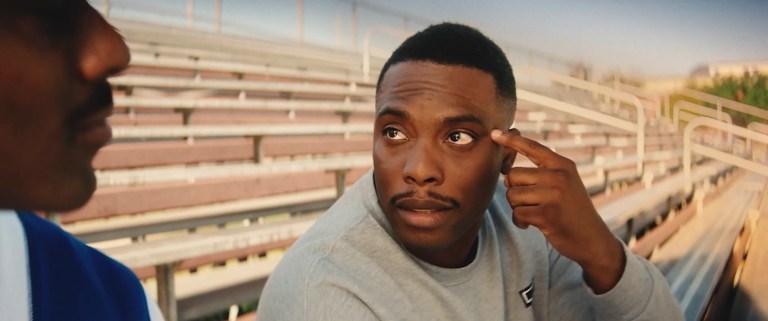
When a Top Gun: Maverick star says the team is “wanting to get it right,” it lands less like a sequel announcement and more like a mission brief delivered with intent. In an era where franchises are often rushed to capitalize on momentum, that phrasing is telling. It signals caution, deliberation, and an understanding that Top Gun now carries more cultural weight than it did before Maverick reset expectations.
The comment isn’t a greenlight, and it’s not meant to be. Instead, it reflects the reality that Top Gun 3 exists in a space where speed could be the enemy of quality. Maverick wasn’t just a hit; it became a rare legacy sequel that pleased critics, fans, and box office analysts alike, raising the bar for anything that follows.
| # | Preview | Product | Price | |
|---|---|---|---|---|
| 1 |
![Top Gun: Maverick [Blu-ray]](https://m.media-amazon.com/images/I/51MpwZT0fAL._SL160_.jpg)
|
Top Gun: Maverick [Blu-ray] | $14.95 | Buy on Amazon |
| 2 |
![Top Gun: Maverick (Special Bonus Features) [Blu-ray] [Region Free]](https://m.media-amazon.com/images/I/512FXJLF+bL._SL160_.jpg)
|
Top Gun: Maverick (Special Bonus Features) [Blu-ray] [Region Free] | $22.99 | Buy on Amazon |
| 3 |
![Top Gun Maverick [4K UHD]](https://m.media-amazon.com/images/I/5181BFwkkKL._SL160_.jpg)
|
Top Gun Maverick [4K UHD] | $27.00 | Buy on Amazon |
| 4 |
![Top Gun / Top Gun : Maverick [ Tom Cruise Top Gun Double Feature Blu-ray 2-Pack ]](https://m.media-amazon.com/images/I/514lGgDIsIL._SL160_.jpg)
|
Top Gun / Top Gun : Maverick [ Tom Cruise Top Gun Double Feature Blu-ray 2-Pack ] | $49.99 | Buy on Amazon |
What “Getting It Right” Likely Means for Top Gun 3
In practical terms, “getting it right” starts with story. Maverick succeeded because it honored the past without being trapped by it, giving Tom Cruise’s Pete Mitchell a meaningful arc while introducing a new generation of pilots who felt earned, not obligatory. Any third film would need a similarly clear emotional spine, one that justifies returning to the cockpit beyond spectacle alone.
It also points to legacy stewardship at the production level. Cruise, producer Jerry Bruckheimer, and Paramount are acutely aware that Top Gun is now a brand associated with authenticity, practical filmmaking, and event-level craftsmanship. Taking time isn’t hesitation; it’s a recognition that once you’ve flown that high, you don’t take off again unless the runway is right.
Outdated Drivers Are Slowing You Down
One free scan finds every outdated or missing driver and matches the right update for your exact hardware.Free scan · exact hardware matchPC Slower Than It Used to Be?
A free scan shows the junk files, broken settings and background clutter dragging Windows down - then fixes them in one click.Free scan · Windows 10 & 11#1 Best Overall
- Movie dvd
Who Said It—and Why It Matters: The Actor’s Role in the ‘Top Gun’ Legacy
The comment came from Glen Powell, who emerged from Top Gun: Maverick as one of the film’s breakout stars and a key pillar of its future. As Hangman, Powell didn’t just fill a call sign; he embodied the modern counterpoint to Tom Cruise’s Maverick, channeling the same bravado while gradually revealing depth, discipline, and earned humility. When an actor so closely tied to the franchise’s next generation speaks carefully about what comes next, it carries real weight.
Powell’s perspective matters because he’s uniquely positioned between eras of Top Gun storytelling. He’s not a nostalgic holdover from the 1986 original, nor is he a disposable new face. Maverick positioned Hangman as someone who could credibly inherit narrative responsibility if the story ever shifts focus, making Powell’s investment in “getting it right” feel both personal and strategic.
Why Glen Powell’s Voice Carries Weight
Unlike a promotional soundbite, Powell’s comments reflect someone who has seen firsthand how carefully Maverick was built. The cast famously underwent months of physical flight training, narrative development, and collaboration with real Navy consultants. That process forged a respect for the franchise’s standards, and Powell’s remarks suggest that bar hasn’t been lowered just because a sequel is possible.
There’s also an industry-awareness at play. Powell has watched Maverick become a career-defining moment not just for Cruise, but for everyone involved. Rushing into Top Gun 3 without a story worthy of that success risks turning a high point into diminishing returns, something Powell seems keen to avoid.
Quick wins for a faster PC:
Clear out junk files and repair common Windows errorsFree Scan →Scan for outdated or missing drivers - takes under a minuteDriver Scan →His Role in Preserving the Franchise’s Future
From a legacy standpoint, Powell represents continuity without repetition. Hangman isn’t Maverick redux; he’s a reflection shaped by a different era of pilots, warfare, and leadership. If Top Gun 3 happens, characters like his would be essential in exploring how the mythos evolves rather than simply repeating past glories.
That’s why his insistence on patience resonates. It reassures fans that those closest to the franchise aren’t treating Top Gun as a victory lap, but as something that still demands discipline, intention, and respect. In a Hollywood landscape often driven by speed, Powell’s measured tone suggests the creative team understands that Top Gun only works when it earns its wings again.
What ‘Getting It Right’ Means After ‘Maverick’s’ Massive Success
In the shadow of Maverick’s historic box office run and near-universal acclaim, “getting it right” isn’t a vague platitude. It’s a recognition that the sequel didn’t just revive Top Gun; it redefined what a legacy follow-up could be in the modern blockbuster era. Any third film now carries the responsibility of building forward without undoing the rare cultural lightning strike Maverick achieved.
That’s why Powell’s comments resonate as more than cautious optimism. They reflect an understanding that Top Gun 3 can’t exist simply because the door is open. It has to justify itself creatively, emotionally, and technically in a way that honors what made Maverick feel essential rather than opportunistic.
Story Comes Before Spectacle
One of Maverick’s greatest strengths was that its aerial spectacle was always anchored to character and consequence. The dogfights mattered because the people inside the cockpit mattered, and the mission worked because it was rooted in Maverick’s unresolved past. “Getting it right” likely means preserving that hierarchy, where story dictates action, not the other way around.
For Top Gun 3, that creates both pressure and opportunity. The next chapter would need a narrative reason to exist, whether that’s Maverick confronting the limits of his role, or a new generation grappling with warfare that looks nothing like the one he mastered. Without that emotional engine, even the most jaw-dropping flight sequences would feel hollow.
Respecting Legacy Without Repeating It
Maverick succeeded by honoring the original film’s spirit without mimicking its plot. That balance will be even harder to strike the third time around. Fans don’t want a greatest-hits remix, but they also don’t want a Top Gun movie that feels unrecognizable.
This is where characters like Hangman, Rooster, and the broader pilot roster become crucial. They offer a way to explore how the Top Gun ethos evolves across generations, allowing the franchise to move forward while still orbiting Maverick’s gravitational pull. Getting it right means evolution, not erasure.
Do these 3 things before closing this tab:
1Scan for outdated or missing drivers - takes under a minute2Clear out junk files and repair common Windows errors3Fix the driver behind crashes, sound loss and screen glitchesProduction Discipline as a Creative Philosophy
Behind the scenes, Maverick was defined by restraint as much as ambition. Real jets, real G-forces, practical photography, and an almost obsessive commitment to authenticity set it apart in a CG-saturated landscape. That approach wasn’t just a technical flex; it became part of the film’s identity.
A rushed Top Gun 3 would risk compromising that standard. Powell’s emphasis on patience suggests the creative team knows that the franchise’s credibility is tied to how it’s made, not just who’s in it. If the production can’t meet or exceed Maverick’s benchmark, waiting becomes the smarter move.
Rank #2
- Thrilling sequel to the 1986 classic Top Gun
- Starring Tom Cruise with Miles Teller, Jennifer Connelly, and Jon Hamm
- Features jaw-dropping aerial combat sequences and stunning visuals
- Region Free Blu-ray – plays on all Blu-ray players worldwide
- Must-have for fans of Tom Cruise, action blockbusters, and aviation films
Quality Over Momentum
In today’s franchise economy, momentum often dictates decision-making. Maverick’s success could easily justify a fast-tracked sequel designed to capitalize on heat rather than vision. The fact that voices from within the cast are openly advocating for caution should reassure fans that Top Gun isn’t being treated as content, but as cinema.
Getting it right, in this context, means trusting that the audience will wait if the payoff is worthy. Maverick proved that patience can be rewarded at a scale few films ever reach. If Top Gun 3 follows that same philosophy, its eventual arrival could feel less like an obligation and more like a true next chapter.
Story First, Spectacle Second: Why the Creative Team Is Taking Its Time
What Powell and others are really signaling is a philosophy that puts narrative clarity ahead of technical bravado. Top Gun: Maverick worked because its aerial set pieces were in service of character arcs, not the other way around. Every mission beat reflected Maverick’s internal conflict, Rooster’s resentment, and the weight of legacy hanging over the cockpit.
“Getting It Right” Starts on the Page
In practical terms, getting it right means a script that earns its existence. The creative team knows that another round of jaw-dropping flight photography won’t matter if the emotional engine isn’t just as powerful. Before cameras roll, they need a story that justifies revisiting these characters and places them in a conflict that feels both fresh and inevitable.
That likely means asking hard questions about Maverick’s role going forward. Is he still the point of view, or does he become the mentor figure whose presence reshapes the next generation? Those decisions can’t be rushed, because they define whether Top Gun 3 feels like a meaningful progression or a victory lap.
Legacy as Responsibility, Not Nostalgia
There’s also an understanding that the franchise now carries more weight than it did before Maverick arrived. That film wasn’t just a hit; it became a cultural reset for theatrical spectacle done with sincerity and craft. A third installment has to honor that achievement without leaning on nostalgia as a crutch.
That’s where patience becomes a form of respect. Rather than mining callbacks or escalating scale for its own sake, the filmmakers appear focused on preserving the emotional truth that made Maverick resonate across generations. Legacy, in this sense, is something to protect, not exploit.
Craft Takes Time at This Altitude
On a production level, Top Gun doesn’t operate like a typical sequel machine. Coordinating real aircraft, training actors to withstand extreme conditions, and designing sequences that can’t be faked in post-production requires long lead times and meticulous planning. Cutting corners would be immediately visible on screen.
By slowing the process down, the team is safeguarding the very qualities that set the franchise apart. The promise embedded in Powell’s comments isn’t just that Top Gun 3 will be bigger, but that it will be built with the same discipline and intentionality that turned Maverick into a modern classic.
Tom Cruise’s Franchise Philosophy and Its Impact on ‘Top Gun 3’
Any conversation about getting Top Gun 3 right ultimately leads back to Tom Cruise himself. Across decades and multiple franchises, Cruise has developed a reputation not just as a star, but as a steward who treats sequels as long-term commitments rather than short-term opportunities. His involvement signals that momentum alone won’t dictate when the next chapter takes flight.
Free tools Windows power users keep installed
One-click scans. No signup required.
That philosophy helps explain why progress on Top Gun 3 has been deliberate. Cruise has consistently prioritized stories that justify their scale, insisting that emotional clarity and character purpose come first. In his world, a sequel doesn’t exist to extend a brand, but to challenge it.
A Franchise Earns Its Future
Cruise’s approach to legacy franchises has always been rooted in restraint. Top Gun: Maverick arrived more than three decades after the original not because the timing was convenient, but because the story finally felt necessary. That same bar now applies to a third film, especially after Maverick raised expectations for what a modern blockbuster can deliver.
For Top Gun 3, “earning” its future likely means resisting easy escalation. Bigger threats or faster jets won’t be enough unless they’re grounded in character arcs that feel authentic to where Maverick and his world have landed. Cruise’s track record suggests he won’t move forward until that alignment is clear.
Quality Control at Every Level
Cruise’s hands-on involvement also shapes the production culture surrounding his films. From Mission: Impossible to Top Gun, his projects are known for extended development periods, rigorous prep, and a refusal to compromise on practical execution. That mindset filters down to every department, reinforcing a standard that prioritizes immersion over convenience.
Recommended Free Tools
Rank #3
Applied to Top Gun 3, this likely means a longer runway before cameras roll. Scripts are tested, reworked, and stress-tested again to ensure the story can support the physical demands of real aerial filmmaking. The result may be patience now, but it’s the same process that turned Maverick into an outlier success.
Trust Built Through Consistency
For audiences, Cruise’s franchise philosophy has created a rare form of trust. Moviegoers may not know when Top Gun 3 will arrive, but they can be confident it won’t be rushed into theaters half-formed. His history suggests that silence often indicates careful work happening behind the scenes, not creative uncertainty.
In that context, the reassurance from the cast carries extra weight. “Getting it right” isn’t a vague promise; it’s a reflection of a system that has proven, repeatedly, that taking the long way around can lead to something enduring.
Honoring the Past While Avoiding a Rehash: The Challenge of a Third Film
If Top Gun: Maverick proved anything, it’s that nostalgia alone isn’t enough to sustain a modern franchise. The sequel succeeded because it treated the original as emotional foundation rather than a blueprint, advancing its characters instead of simply remixing familiar beats. That approach now defines the central challenge facing a third film.
For Top Gun 3, “getting it right” almost certainly means resisting the temptation to mirror Maverick’s structure. Another generation of pilots, another impossible mission, and another training arc could quickly feel like repetition if the story doesn’t evolve the world in a meaningful way. The creative team understands that honoring the past requires progression, not imitation.
Legacy Characters Need Forward Momentum
Maverick positioned Pete “Maverick” Mitchell at a crossroads, confronting both his relevance and his unresolved guilt tied to Goose’s legacy. A third film can’t simply reset him as the same defiant ace with a new obstacle. Any continuation would need to explore the consequences of his choices, his role as a mentor, and what leadership looks like when the job is no longer about proving anything.
That same philosophy applies to the newer pilots introduced in Maverick. Audiences responded to them not because they echoed the original cast, but because they felt grounded in a present-day military reality. Preserving that authenticity means allowing those characters to grow beyond archetypes, even if that growth complicates expectations.
Spectacle Must Serve Story, Not Replace It
Top Gun: Maverick raised the bar for practical aerial filmmaking, but its success wasn’t just technical. The flight sequences worked because they were motivated by character stakes and clear narrative purpose. For a third installment, escalating spectacle without a deeper emotional spine would risk turning innovation into gimmick.
The Tool Desk
Outbyte PC Repair FREERepair Windows errors before they cause bigger problemsFix Now →Outbyte Driver Updater FREEFix the driver behind crashes, sound loss and screen glitchesFind Drivers →This is where the actor’s comments about patience resonate most. “Getting it right” suggests the filmmakers are asking difficult questions early, about why this story needs to exist and what it adds to the legacy. In an era driven by release calendars and brand momentum, that restraint is exactly what reassures fans that Top Gun 3 won’t trade longevity for short-term hype.
Independent reader supportYour contribution helps us test, update, and keep practical guides available for everyone.Behind-the-Scenes Realities: Development Timelines, Scripts, and Studio Expectations
When actors involved with Top Gun: Maverick talk about patience, it reflects a very real development reality behind the scenes. Unlike franchise sequels that are fast-tracked to capitalize on momentum, Top Gun 3 is operating on a deliberately slower timeline. That pace is less about hesitation and more about alignment, making sure story, cast, and production ambition are all moving in the same direction.
Why the Script Comes First This Time
Multiple industry insiders have suggested that the script phase is where most of the time is being spent. After Maverick’s carefully engineered success, Paramount and the creative team know that a half-formed idea won’t survive scrutiny. “Getting it right” likely means waiting until the narrative feels essential, not just viable.
This is especially important with a character as iconic as Maverick. Any new script has to justify his presence without undermining the emotional resolution already achieved. That requires iteration, testing themes, and occasionally discarding ideas that feel exciting on paper but hollow in practice.
What’s actually slowing this PC down?
Pick the symptom - the matching free tool is one click away.
Studio Confidence Without Franchise Pressure
From a studio perspective, Top Gun occupies a unique space. Maverick wasn’t just a hit, it was a cultural event that played across generations and global markets. That success gives Paramount confidence, but it also raises expectations to a level where rushing would be counterproductive.
Rather than imposing an aggressive release window, the studio appears willing to let development breathe. That signals trust in the filmmakers and an understanding that the value of Top Gun lies in its rarity. Fewer films, made carefully, protect the brand far more effectively than rapid expansion.
Rank #4
- Blu-ray Bundle
- value-pack
Production Scale Demands Precision
There’s also a practical reason timelines stretch longer for a film like this. The aerial filmmaking that defined Maverick isn’t easily replicated or scaled up without extensive planning. Coordinating real aircraft, military cooperation, actor training, and safety protocols adds months before cameras ever roll.
That logistical reality reinforces why the story has to be locked before production begins. When every flight sequence carries real-world risk and cost, there’s no room for improvisation at the narrative level. Precision in development ensures ambition doesn’t outpace execution.
Quality as the Only Acceptable Outcome
Taken together, these factors frame the actor’s comments in a reassuring light. “They’re wanting to get it right” isn’t a vague promise, but a reflection of how seriously everyone involved understands the stakes. Top Gun 3 isn’t being treated as a sequel that simply needs to exist, but as a film that must earn its place alongside two beloved predecessors.
For fans, that mindset is the most meaningful update possible. Silence and patience, in this case, suggest confidence rather than uncertainty. The message is clear: if Top Gun returns, it will do so because the story demands it, not because the market does.
Why Fans Should Be Optimistic—Even Without a Release Date
“Getting It Right” Means Story Comes First
In the context of Top Gun, “getting it right” has never been about spectacle alone. Both the original film and Maverick succeeded because they anchored their jaw-dropping aerial sequences to character-driven stories about legacy, responsibility, and evolution. Any third film will be judged less on how fast jets fly and more on whether its emotional arc feels earned.
That focus suggests the creative team is asking the right questions early. Where does this world go after Maverick? What does a Top Gun story mean in a modern era of warfare, mentorship, and shifting heroism? Taking time to answer those questions is not hesitation, it’s discipline.
Do these 3 things before closing this tab:
1Fix the driver behind crashes, sound loss and screen glitches2Repair Windows errors before they cause bigger problems3Scan for outdated or missing drivers - takes under a minuteLegacy Sequels Demand Restraint
Maverick set a high bar for legacy sequels by proving they can honor the past without being trapped by it. Repeating that feat is significantly harder than simply extending the brand. A rushed follow-up would risk undermining the careful balance that made the last film resonate so deeply with audiences.
By resisting momentum-driven decision-making, the filmmakers are protecting the emotional continuity of the franchise. That restraint signals a long-view approach, one that values coherence and respect for the characters over short-term box office urgency.
The Same Creative DNA Is Still in Place
Another reason for optimism is consistency behind the scenes. The success of Maverick wasn’t accidental; it came from a creative alignment between filmmakers, performers, and the studio that prioritized practical filmmaking and narrative clarity. There’s little indication that Paramount wants to disrupt that formula.
Maintaining that creative DNA means Top Gun 3, if it happens, will likely follow the same guiding principles. Real aircraft, grounded performances, and an emphasis on authenticity over digital excess remain the expectation, not the exception.
Patience Has Already Paid Off Once
It’s worth remembering that Maverick itself endured years of delays, rewrites, and recalibration before reaching theaters. At the time, that silence created uncertainty. In hindsight, it was essential to the film becoming a defining blockbuster rather than just another sequel.
That precedent reframes the current wait as familiar territory. The absence of a release date isn’t a warning sign; it’s part of a process that has already proven its value.
In an industry often driven by speed and saturation, Top Gun’s greatest strength may be its refusal to move unless the path forward feels undeniable. For fans, that should inspire confidence. If Top Gun 3 eventually clears the runway, it will be because everyone involved believes it deserves to fly—not because it was simply next in line.
Quick Recap
Product prices and availability are accurate as of the date/time indicated and are subject to change. Any price and availability information displayed on Amazon at the time of purchase will apply.