You can build a year-round reading practice around three selections from Mirza Ghalib each day—but the selections should not be mistaken for 1,095 distinct, complete poems. Ghalib is best approached through his ghazals: for a daily set, choose either three complete ghazals or three couplets, and label the format clearly. His love poetry makes room for desire, separation, irony and philosophical uncertainty, not just straightforward romance.
What counts as a Ghalib love poem?
Ghalib wrote in the ghazal tradition. A ghazal is made up of couplets, each of which can carry a distinct thought while belonging to the poem’s larger pattern. That means a daily selection can be a complete ghazal or a handful of individual couplets; those are different reading experiences and should be identified as such.
| # | Preview | Product | Price | |
|---|---|---|---|---|
| 1 |

|
Love Sonnets of Ghalib | $31.11 | Buy on Amazon |
| 2 |

|
Humsafar : The World of Urdu Poetry | $15.99 | Buy on Amazon |
| 3 |
|
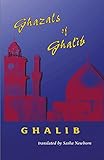
Ghazals of Ghalib | $6.95 | Buy on Amazon |
| 4 |

|
Ghazals Of Ghalib (Oip) | $21.12 | Buy on Amazon |
| 5 |
|
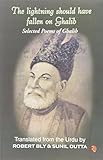
Lightning Should Have Fallen on Ghalib: Selected Poems of Ghalib | $2.99 | Buy on Amazon |
The beloved in a ghazal need not be a clearly identified romantic partner. In his translator’s note for a Ghalib ghazal, Vijay Seshadri asks: “Is the beloved a human person or God? Is the love carnal or divine?” Seshadri’s note describes his version as a free translation of all but one couplet. That interpretive openness is part of what makes Ghalib’s love poetry rewarding to revisit.
How to make three daily selections meaningful
For a repeatable daily practice, decide first whether you are reading complete ghazals or selected couplets. If you choose couplets, keep the Urdu text or transliteration beside the English version where available, and record the translator. Translations can differ in wording and presentation, so naming the translator helps readers understand which version they are encountering.
The Tool Desk
Outbyte Driver Updater FREEScan for outdated or missing drivers - takes under a minuteDriver Scan →Outbyte PC Repair FREEClear out junk files and repair common Windows errorsFree Scan →#1 Best Overall
- Choose the unit. Select three complete ghazals for a fuller reading, or three couplets for a shorter daily set. Do not describe a couplet as a complete poem.
- Keep the original close. Use a source that displays Urdu script or transliteration alongside the English rendering, such as Rekhta’s Ghalib writings.
- Vary the emotional register. Pair love and longing with selections that bring out separation, irony or philosophical ambiguity. The poems need not all read as direct declarations of romance.
- Identify the translation. When using an English version, name its translator and distinguish a translation of a whole ghazal from an excerpt or selected couplets.
Begin with Ghalib’s ghazals, not a promise of 1,095 complete poems
Rekhta’s catalogue of Ghalib ghazals presents a substantial selection and attaches dates such as 1812 and 1816 to particular entries. Those are catalogue dates for listed ghazals, not a complete chronology of his work. The catalogue is a useful starting point for finding pieces to read, but it does not establish that there are 1,095 distinct complete love poems to cover three a day for a year.
One accessible entry is the ghazal beginning “ishq par zor nahin hai ye wo aatish ghaalib.” Rekhta presents its Urdu transliteration and an English rendering; the couplet describes love as a fire beyond one’s control, suggesting both its force and its danger. Read the couplet on Rekhta. Another available translation route is the Poetry Foundation’s Seshadri version, which readers can compare with other renderings rather than treat as the only English wording.
Choosing Ghalib poems in English translation
There is no single canonical English wording for Ghalib. When choosing a collection, compare its translator, scope, inclusion of Urdu script or transliteration, and reading style. Rekhta’s bibliography records several different approaches:
| Collection | Translator | Scope and details |
|---|---|---|
| Ghalib’s Love Poems (Writers Workshop, 1971) | P. Lal | Love-poem selection; the bibliography does not establish whether Urdu script or transliteration is included. |
| Diwan-e-Ghalib: Complete Translations into English (Ghalib Institute, 2003) | Sarvat Rahman | Presented in the title as complete English translations; the bibliography does not establish whether Urdu script or transliteration is included. |
| Love Sonnets of Ghalib (Rupa, 2002) | Sarfaraz K. Niazi | A love-poetry collection; the bibliography does not establish whether Urdu script or transliteration is included. |
These are bibliographic records, not confirmation of current retail stock or prices. The titles also signal different scopes and editorial choices, so check the specific edition before buying. For bibliographic context, see Rekhta’s Urdu poetry in English translation bibliography, updated June 2020.
Recommended Free Tools
Rank #3
- Used Book in Good Condition
A practical way to read across a year
Rather than force the calendar to fit a fixed count of complete poems, treat “three a day” as a curated rhythm. Some days can feature three complete ghazals; others can focus on three couplets from one or more ghazals. A simple reading log can note the title or opening line, whether the selection is complete or excerpted, the Urdu or transliteration source, and the translator of any English version. This keeps the daily practice honest while allowing the poems’ varied moods and meanings to unfold over time.
Quick Recap
Best Value
Rank #4
Product prices and availability are accurate as of the date/time indicated and are subject to change. Any price and availability information displayed on Amazon at the time of purchase will apply.




