The Tool Desk
Outbyte PC Repair FREEClear out junk files and repair common Windows errorsFree Scan →Outbyte Driver Updater FREEScan for outdated or missing drivers - takes under a minuteDriver Scan →Somewhere between a rumor and a locked vault sits this year’s most elusive horror movie, a project that has inspired more speculation than confirmed facts. There’s no trailer circulating in the usual places, no official plot synopsis, and no cast list you can reliably Google. Even its existence feels conditional, as if acknowledging it too loudly might cause it to disappear.
What is known comes in fragments that feel deliberately rationed: a production company credit quietly logged, a release window hinted at but never locked, a filmmaker attached whose past work suggests a taste for psychological unease over spectacle. No festival premiere has been announced, no press stills released, and no social media accounts have been activated to stir hype. In an industry addicted to early buzz, the silence is not accidental; it’s the strategy.
| # | Preview | Product | Price | |
|---|---|---|---|---|
| 1 |

|
Thirteen Ghosts | $7.99 | Buy on Amazon |
| 2 |

|
Horror 20 Movie Collection | $15.96 | Buy on Amazon |
| 3 |
|
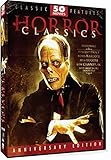
HORROR CLASSICS 50 MOVIE MEGAPACK | $15.79 | Buy on Amazon |
| 4 |
![Jaws 3-Movie Collection [DVD]](https://m.media-amazon.com/images/I/51nbLoYzBlL._SL160_.jpg)
|
Jaws 3-Movie Collection [DVD] | $5.00 | Buy on Amazon |
| 5 |

|
Ghost Ship (DVD) (WS) | $7.99 | Buy on Amazon |
That absence is precisely what makes the film impossible to ignore. Horror has always thrived on what it withholds, and this release is weaponizing that instinct at an industrial scale. By refusing to exist in the usual promotional ecosystem, the movie positions itself as an anomaly, daring audiences to lean in closer and wonder what kind of story requires this level of secrecy just to survive.
What We Actually Know (Which Isn’t Much): Verified Facts, Official Silence, and Strategic Non-Answers
For all the noise surrounding this project, the list of confirmed details is almost aggressively short. What exists are breadcrumbs, not revelations, and each one feels vetted for how little it gives away. In an era where leaks are currency, this movie’s information control is bordering on monastic.
Recommended Free Tools
#1 Best Overall
- Factory sealed DVD
The Paper Trail Exists, Barely
The film is real, at least on paper. Trade listings quietly confirm a completed production under a recognizable genre-friendly company, one with a track record of elevated horror rather than jump-scare factories. No logline accompanies the credit, and no talent has been publicly linked beyond a single filmmaker attachment that appeared once and was never elaborated on.
That absence is notable because it suggests intent, not oversight. Studios forget to update press pages all the time; they don’t usually erase fingerprints this thoroughly.
A Release Window That Refuses to Lock In
There is a release window, technically, though it behaves more like a suggestion than a plan. Industry insiders have circled a general timeframe, but nothing has been dated, finalized, or defended. No festival launch has been announced, which is unusual for a prestige-leaning horror title that would normally benefit from a midnight premiere and early think pieces.
Skipping the festival circuit doesn’t just avoid spoilers; it avoids context. Without first reactions or curated buzz, the film arrives unframed, forcing audiences to meet it on its own terms.
The Filmmaker’s Fingerprints, Seen Only in Shadow
The one consistently cited element is the filmmaker, whose previous work points toward psychological dread and slow-burn tension rather than overt spectacle. That reputation alone has fueled much of the speculation, with fans reading thematic intent into the silence itself. When a director known for unsettling ambiguity goes quiet, it rarely feels accidental.
Still, no interviews have followed, no director’s statements issued, and no reassuring quotes offered to anchor expectations. The creative voice most capable of explaining the secrecy has chosen not to.
Silence as an Official Policy
Perhaps the most revealing fact is how coordinated the silence appears. No anonymous set photos have surfaced. No test screening whispers have escaped containment. Even the usual back-channel chatter that lights up horror forums has been conspicuously thin.
That level of control suggests the secrecy is not just about avoiding spoilers, but about preserving an experience. Whatever this movie is, it seems designed to be encountered cold, without the armor of trailers, theories, or advance explanations. In that sense, every non-answer becomes part of the text, conditioning the audience long before the first frame appears.
What’s actually slowing this PC down?
Pick the symptom - the matching free tool is one click away.
Inside the Secrecy Machine: NDAs, Code Names, Closed Sets, and Controlled Leaks
The silence around the project isn’t passive. It’s enforced, engineered, and maintained through a web of old-school studio tactics and modern information control that suggests a production operating more like a classified operation than a film shoot.
NDAs as Narrative Armor
At the center of it all are unusually strict nondisclosure agreements. Crew members, vendors, and even peripheral hires are reportedly bound by contracts that go far beyond the standard spoiler language, covering everything from story elements to the tone of individual scenes.
These aren’t just legal scarecrows. Sources describe NDAs that include long tail clauses and explicit social media restrictions, effectively turning every participant into a locked vault. In an industry where leaks are often treated as inevitable, this level of discipline feels intentional, almost ideological.
Code Names and Administrative Misdirection
On paper, the movie barely exists. During production, it reportedly operated under multiple code names, changing identifiers mid-shoot to avoid pattern recognition in public records and union listings. That tactic, once common for blockbusters, is rarely deployed this aggressively for a genre title of this scale.
Even location permits were said to be filed under deliberately vague descriptors, with innocuous project summaries that revealed nothing about content or intent. It’s less about hiding from fans and more about avoiding the algorithmic eyes that scrape databases for early clues.
Closed Sets in an Open-Source Era
Perhaps the most telling detail is how physically sealed the production appears to have been. Closed sets are nothing new, but reports suggest a near-total lockdown: no visitors, no background overflow, and minimal crew overlap between departments.
In an age when even the most guarded shoots leak through satellite photos or background extras, the absence of visual evidence is striking. It implies either extraordinary logistical discipline or a production designed to minimize exposure at every possible point of failure.
Rank #2
Leaks That Feel Chosen, Not Escaped
And yet, there have been leaks. Or at least, hints masquerading as leaks. A casting confirmation here, a genre descriptor there, each appearing just substantial enough to fuel speculation without clarifying anything.
Outdated Drivers Are Slowing You Down
One free scan finds every outdated or missing driver and matches the right update for your exact hardware.Free scan · exact hardware matchWindows Errors? Fix Them Before They Spread
Repair common Windows errors and clear accumulated junk for a smoother, more stable PC - no reinstall needed.Free scan · no reinstallThat pattern mirrors a strategy used by films like The Blair Witch Project and, more recently, Barbarian, where selective information was allowed to circulate while the core experience remained untouched. The difference here is the restraint. These breadcrumbs don’t explain the movie; they test how much mystery the audience is willing to tolerate.
What This Level of Control Usually Signals
Historically, this kind of secrecy tends to accompany films that hinge on perspective shifts, narrative ruptures, or experiential shocks that collapse under explanation. When marketing becomes subtraction rather than amplification, it often suggests a movie that wants to ambush its audience rather than guide them.
Whether that ambition pays off remains unknowable. But the infrastructure surrounding the silence makes one thing clear: the secrecy isn’t a side effect of the movie. It’s part of the design, a parallel text running alongside the film itself, daring viewers to step into the dark without a map.
Marketing by Absence: How Withholding Information Became the Campaign
If traditional film marketing is about saturation, this movie has chosen deprivation. No teaser breakdowns, no viral websites spelling out lore, no conveniently timed “accidental” reveals to trend on social media. Instead, the campaign operates on a deliberate vacuum, forcing audiences to confront not what they’re being shown, but what they’re being denied.
Quick wins for a faster PC:
Fix the driver behind crashes, sound loss and screen glitchesFind Drivers →Repair Windows errors before they cause bigger problemsFix Now →That absence has become the text. Fans aren’t parsing trailers; they’re parsing the lack of them, treating every silence as intentional and every delay as a clue. In a genre that thrives on anticipation, the movie’s most powerful image so far may be a blank space where information should be.
The Anti-Algorithm Strategy
Modern marketing campaigns are typically built to feed algorithms: high-contrast imagery, keyword-friendly loglines, cast announcements designed for maximum shareability. This film appears to be doing the opposite, withholding even basic data points that would normally populate IMDb pages months in advance.
By staying vague, the production avoids being flattened into content. There’s nothing for recommendation engines to categorize, nothing for trailer reaction channels to dissect frame by frame. In effect, the movie has made itself algorithm-resistant, existing more as a rumor than a product.
Silence as Participation
What’s clever is how that silence invites audience involvement without ever acknowledging it. Online speculation fills the gap, but because there’s so little to anchor theories, no single interpretation dominates. The campaign doesn’t correct misinformation or reward accuracy; it simply watches the noise accumulate.
Do these 3 things before closing this tab:
1Fix the driver behind crashes, sound loss and screen glitches2Repair Windows errors before they cause bigger problems3Scan for outdated or missing drivers - takes under a minuteThat creates a rare dynamic where fans aren’t chasing official answers but negotiating meaning among themselves. The marketing becomes communal, fueled by uncertainty rather than clarity, and sustained by the fear of knowing too much too soon.
Selective Confirmation, Maximum Control
When the studio does speak, it’s with surgical precision. Confirmed details are abstract rather than descriptive: tonal adjectives instead of plot, thematic hints instead of character arcs. Each confirmation closes one door while opening three more.
This mirrors the strategy behind films like It Comes at Night or Under the Skin, where marketing promised an experience rather than a narrative. The difference here is scale. Those films offered ambiguity within a recognizable framework; this campaign refuses even the framework.
What Absence Suggests About the Film Itself
A campaign this controlled implies a movie that treats discovery as fragile. The fear isn’t just that spoilers would ruin twists, but that explanation itself might undermine the effect. That points toward horror rooted in perception, implication, or formal surprise rather than mythology-heavy worldbuilding.
It also suggests confidence, or perhaps risk tolerance. Withholding information limits reach but intensifies engagement among those willing to lean in. If the film lands, the secrecy will retroactively feel essential. If it doesn’t, the silence will become part of the postmortem.
For now, the marketing has succeeded in one crucial way. It has made not knowing feel like the point, turning absence into atmosphere and secrecy into spectacle, long before the lights go down in the theater.
Rank #3
- An instant library of 50 horrorics assembled on 12 DVD's.
Precedents in Terror: How This Strategy Echoes (and Escalates) Past Horror Marketing Experiments
Horror has always understood that what you don’t show can be more powerful than what you do. Long before this year’s most elusive release began tightening its grip, the genre was quietly testing how far silence, misdirection, and controlled absence could go before audiences rebelled. What’s different now is not the tactic itself, but the extremity of its execution.
The Blair Witch Blueprint, Refined to a Razor’s Edge
The Blair Witch Project remains the gold standard for secrecy-driven marketing, blurring fiction and reality until the line collapsed entirely. That campaign weaponized uncertainty by pretending the film barely existed as a movie at all. This new release doesn’t mimic that illusion, but it inherits the same faith in audience curiosity as a renewable resource.
Free tools Windows power users keep installed
One-click scans. No signup required.
Where Blair Witch fed viewers fragments to assemble a mythology, this campaign withholds even the fragments. There’s no lore trail, no in-universe artifacts, no breadcrumb ARG. The escalation lies in refusing to give fans the satisfaction of building anything concrete.
Cloverfield, Without the Puzzle Pieces
Cloverfield thrived on cryptic clues: timestamps, fake corporations, hidden websites that rewarded obsessive decoding. The secrecy was performative, but it was also generous, inviting deep dives and collaborative sleuthing. This year’s mystery film strips that generosity away.
There are no puzzles to solve, only a void to stare into. By denying interactivity while still provoking obsession, the campaign flips the Cloverfield model inside out. The result is less a game and more a test of endurance.
Post-Twist Trauma and the Fear of Mislabeling
More recent horror experiments reveal another motivation behind this extreme control: survival. Films like It Comes at Night and The Witch suffered backlash from audiences primed for a different movie than the one delivered. Their marketing ambiguity was artistic, but not always defensive enough.
This campaign seems to have learned that lesson too well. By refusing to promise anything identifiable, it can’t be accused of false advertising. The silence becomes a shield, protecting the film from expectations as much as spoilers.
Barbarian, Longlegs, and the Rise of Weaponized Restraint
Modern horror marketing has increasingly embraced strategic misdirection, as seen with Barbarian’s deliberately incomplete trailers or Longlegs’ unnerving refusal to explain itself. Those campaigns teased tone while obscuring structure, trusting mood to do the heavy lifting. Audiences responded, proving that confusion doesn’t kill interest if dread fills the gap.
This year’s film takes that restraint to an almost confrontational level. Even tonal signposts are rationed, as if every adjective is a potential leak. It’s not just secrecy as strategy, but secrecy as philosophy.
Silence as a Statement of Intent
What emerges from these precedents is a pattern: secrecy thrives when it aligns with a film’s core identity. In this case, the absence of information feels less like coy marketing and more like a thematic extension of the movie itself. The campaign doesn’t just hide the film; it behaves like it.
That alignment is what makes the strategy feel dangerous and exhilarating in equal measure. Past experiments flirted with opacity, but this one commits to it fully. In doing so, it suggests a horror experience that doesn’t want to be understood in advance, only endured.
Reading Between the Redactions: What the Silence Suggests About the Film’s Themes and Form
When a marketing campaign withholds this much, it stops being neutral. Silence becomes an active text, one that invites interpretation precisely because it refuses to clarify itself. The redactions, omissions, and dead ends start to feel intentional, as if they’re training the audience for the experience ahead.
What’s striking is how consistent that silence has been across platforms. No contradictory leaks, no accidental tells, no reassuring genre shorthand slipping through the cracks. That level of discipline usually points to a film whose impact depends less on plot mechanics and more on destabilization.
Control, Withheld Knowledge, and the Horror of Not Knowing
At a thematic level, the campaign’s behavior suggests a story obsessed with control and denial. Characters may be operating without full information, trapped in systems that obscure truth, or punished for seeking clarity. The audience, kept similarly in the dark, is already sharing that psychological space.
This kind of horror doesn’t rely on jump scares or mythology dumps. It thrives on uncertainty, on the creeping sense that understanding might be either impossible or actively dangerous. If the film is about power, surveillance, or enforced ignorance, then the marketing isn’t teasing those ideas, it’s enacting them.
Rank #4
Form as Misdirection: A Movie That Resists Being Parsed
The refusal to clarify structure hints that the film itself may resist conventional form. Nonlinear storytelling, fragmented perspective, or narrative ellipses all become more plausible when a studio won’t even confirm basics like timeline or point of view. This may be a movie that doesn’t want to be summarized because summarizing it flattens the experience.
There’s also the possibility that the film hinges on a formal pivot that marketing cannot survive. Not a twist in the crowd-pleasing sense, but a fundamental shift in genre, framing, or reality itself. Silence, in that case, isn’t coyness; it’s preservation.
The Fear of Language Failing
Another reading is more abstract but no less unsettling. The campaign’s minimalism may suggest a story about the limits of language, about experiences that resist description or categorization. Horror has long been fascinated with the unspeakable, and this film seems determined to make that idea literal.
If words diminish the threat, then withholding them becomes an act of respect. The campaign avoids adjectives, avoids labels, avoids even clear emotional cues. It’s as if naming the fear would domesticate it, and this movie has no interest in being safe or familiar.
A Test of the Audience, Not Just Their Curiosity
Ultimately, the secrecy feels like a challenge. Not a puzzle to solve, but a question posed to the audience: how much uncertainty are you willing to tolerate? In an era of explainers and instant discourse, this film appears to be demanding patience, trust, and a tolerance for discomfort.
That demand narrows the audience by design. But for those willing to submit to the unknown, the silence promises something rare: a horror film that doesn’t just scare you, but disorients you before you ever step into the theater.
Independent reader supportYour contribution helps us test, update, and keep practical guides available for everyone.Fan Theories, Industry Whispers, and Viral Breadcrumbs: Decoding the Unofficial Narrative
When official channels go dark, fandom doesn’t wait for permission. In the vacuum created by the studio’s silence, horror communities have turned into ad-hoc investigators, dissecting every frame of teaser footage and every offhand industry comment for meaning. What’s emerged isn’t a single theory, but a fog of competing interpretations, each revealing as much about audience anxieties as the film itself.
The Tool Desk
Outbyte PC Repair FREERepair Windows errors before they cause bigger problemsFix Now →Outbyte Driver Updater FREEFix the driver behind crashes, sound loss and screen glitchesFind Drivers →Theories Built From Absence
One of the most persistent fan theories suggests the movie isn’t hiding its plot so much as its protagonist. The idea that the central perspective may be unstable, non-human, or collective has gained traction precisely because the marketing refuses to anchor us to a clear lead. In horror, withholding a point of identification is often a signal that the film intends to deny viewers emotional safety as well as narrative clarity.
Another popular line of speculation posits that the film’s true genre hasn’t been revealed at all. What’s being sold as horror could slide into science fiction, psychological drama, or something closer to experimental cinema midway through. Fans point to the campaign’s careful avoidance of tone markers as evidence that the movie wants to ambush expectations rather than fulfill them.
Industry Whispers That Don’t Quite Land
Off-the-record chatter from distributors and festival programmers has only deepened the mystery. A few have hinted that the film is “difficult to market,” a phrase that can mean anything from structurally unconventional to emotionally abrasive. Others describe it as a project that plays very differently depending on how much you know going in, which neatly explains the studio’s near-monastic restraint.
What’s notable is how little of this whisper network has solidified into consensus. Unlike past secretive releases where buzz eventually coalesced around a twist or a gimmick, this film seems to resist even that level of informal categorization. The lack of a dominant narrative suggests the secrecy isn’t a shield for a single reveal, but a strategy aligned with the film’s core identity.
Free tools Windows power users keep installed
One-click scans. No signup required.
Viral Breadcrumbs and Controlled Leaks
That hasn’t stopped the internet from scrutinizing every accidental-looking detail. A briefly visible rating board listing, a casting credit that appeared and vanished, a production still posted and deleted within minutes, each has been treated like a Rosetta Stone. Whether these moments are genuine slips or carefully planted breadcrumbs is impossible to say, but their scarcity gives them outsized weight.
The most compelling breadcrumbs are the ones that don’t clarify anything. Symbols without context, dialogue snippets without speakers, imagery divorced from narrative all function less as clues than as mood pieces. They feel designed to circulate, unsettle, and provoke, not to inform.
Learning From Horror’s History of Secrecy
Genre fans are quick to draw parallels to earlier campaigns that weaponized mystery, from films that hid their true premise to those that demanded spoiler silence long after release. The difference here is scale and commitment. Where past examples eventually leaned into revelation as a selling point, this campaign seems content to let ambiguity be the hook all the way to opening night.
That approach suggests a confidence bordering on defiance. It assumes an audience willing to engage without guarantees, and a film robust enough to survive being experienced cold. In an ecosystem addicted to advance knowledge, the unofficial narrative may be the only narrative we’re meant to have.
Best Value
- Factory sealed DVD
Why Studios Take This Risk Now: Audience Psychology, Spoiler Culture, and Eventized Fear
The decision to market a horror film through near-total silence isn’t nostalgic bravado. It’s a calculated response to how audiences now consume, dissect, and often exhaust movies long before they arrive. In a landscape where every trailer is frame-analyzed and every plot point is reverse-engineered, secrecy becomes less a gimmick than a defensive maneuver.
Studios understand that horror, more than any other genre, is uniquely vulnerable to overexposure. Fear relies on uncertainty, and once the audience believes it understands the rules, the spell weakens. By refusing to define the film in advance, the campaign preserves a psychological edge that modern marketing usually erodes.
Spoiler Culture Has Changed the Value of Not Knowing
Spoilers are no longer accidental; they’re industrialized. Algorithms reward explanation, breakdowns outperform reactions, and familiarity is often mistaken for engagement. The result is a culture where audiences arrive at theaters armed with expectations that flatten surprise into confirmation.
Extreme secrecy pushes back against that system. It reframes ignorance as a premium experience rather than a failure of access. For a certain segment of horror fans, walking in cold isn’t a risk, it’s the point.
Fear Works Better as an Event Than a Product
By withholding information, the studio isn’t just selling a movie, it’s staging an event. Opening night becomes less about seeing something you’ve already half-processed and more about collective discovery. The absence of advance clarity turns the theatrical experience into a kind of ritual, where no one is entirely sure what they’re consenting to.
That uncertainty amplifies word of mouth in unpredictable ways. Reactions matter more than explanations, and emotional responses travel faster than plot summaries. Confusion, dread, and disagreement all become part of the marketing ecosystem.
Trusting the Audience to Want Discomfort
This strategy assumes a sophisticated audience, one willing to be unsettled without reassurance. It banks on the idea that modern horror fans aren’t just thrill-seekers, but participants who enjoy being challenged, misled, and even denied clarity. Silence, in this context, isn’t emptiness; it’s an invitation.
There’s also an implicit statement of confidence. A film that demands secrecy suggests it has something fragile, volatile, or experiential at its core, something that only functions when encountered firsthand. That promise, vague as it is, may be more compelling than any logline.
When Marketing Reflects the Movie’s DNA
The most effective horror campaigns don’t just advertise fear, they embody it. This level of control and obfuscation mirrors the genre’s thematic obsession with the unknown, the unseen, and the withheld. The marketing becomes an extension of the film’s worldview, training the audience to sit with unease before a single frame rolls.
If the silence feels deliberate, even aggressive, that may be the point. The campaign isn’t teasing answers because the film itself may not offer many. In an era obsessed with clarity, choosing mystery is its own form of provocation.
The Potential Payoff—or Backlash: Can Radical Secrecy Still Create a Horror Phenomenon?
The gamble here is obvious: mystery can magnetize an audience, but it can also alienate them. Radical secrecy asks viewers to commit blind, trusting that whatever awaits is worth the anxiety of not knowing. In a landscape trained by trailers, plot breakdowns, and spoiler culture, that’s a big ask.
When Mystery Turns into Momentum
History suggests this approach can work, but only under specific conditions. Films like The Blair Witch Project, It Follows, and Barbarian weaponized uncertainty, allowing confusion and debate to fuel cultural momentum rather than stall it. In each case, the lack of clarity wasn’t a void; it was a pressure cooker that forced audiences to talk, argue, and recommend the experience rather than the story.
What’s actually slowing this PC down?
Pick the symptom - the matching free tool is one click away.
If this year’s mystery horror lands with similar confidence, secrecy could transform it from a release into a moment. The film doesn’t need universal understanding, only a critical mass of intense reactions. In horror, fervent confusion often travels farther than tidy satisfaction.
The Line Between Enigma and Evasion
But secrecy has a shelf life. When audiences sense that information is being withheld to hide weakness rather than preserve experience, goodwill evaporates quickly. The risk isn’t that viewers won’t understand the movie; it’s that they’ll feel manipulated rather than invited.
That backlash can be swift, especially online, where disappointment metastasizes into narrative. A film that promises revelation through silence must eventually deliver something bold, strange, or emotionally destabilizing enough to justify the wait. Otherwise, the mystery collapses into marketing theater.
What the Silence Might Be Telling Us
The most intriguing possibility is that the secrecy isn’t just promotional, but philosophical. This level of control suggests a film preoccupied with perception, expectation, and the act of watching itself. It hints at horror rooted less in plot mechanics and more in experiential dread, the kind that fractures differently depending on who’s in the room.
Do these 3 things before closing this tab:
1Fix the driver behind crashes, sound loss and screen glitches2Clear out junk files and repair common Windows errors3Scan for outdated or missing drivers - takes under a minuteIf that’s the case, then the campaign isn’t hiding the movie so much as preparing the audience for it. The absence of information becomes a thematic prologue, conditioning viewers to surrender certainty before the lights go down.
In the end, radical secrecy can still create a horror phenomenon, but only if the film understands the contract it’s making. It’s asking audiences to bring curiosity, patience, and vulnerability, and promising something destabilizing in return. If it keeps that promise, the silence will feel prophetic; if not, it will be remembered as the loudest warning sign.
Quick Recap
Product prices and availability are accurate as of the date/time indicated and are subject to change. Any price and availability information displayed on Amazon at the time of purchase will apply.




