The Tool Desk
Outbyte PC Repair FREERepair Windows errors before they cause bigger problemsFix Now →Outbyte Driver Updater FREEScan for outdated or missing drivers - takes under a minuteDriver Scan →In the early ’80s, Hollywood was crowded with promising faces chasing a foothold, and Denzel Washington was one of many young actors hovering just outside the spotlight. Fresh off his training at Fordham University and the American Conservatory Theater, he had the craft and the presence, but not yet the role that could turn industry buzz into real momentum. His early screen work, including small television appearances and the underseen comedy Carbon Copy, hinted at range without offering a clear path forward.
At that moment, Washington’s career sat in a familiar but precarious place: respected by casting directors, largely unknown to audiences, and still searching for a part that could showcase both intellect and emotional authority. Hollywood in the Reagan era favored big personalities and instant archetypes, leaving little room for slow-burn performers to break through without the right platform. For Washington, that platform would arrive not in a movie theater, but on network television at a time when TV dramas were beginning to challenge cinematic storytelling.
| # | Preview | Product | Price | |
|---|---|---|---|---|
| 1 |
|
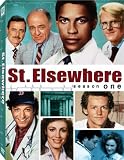
St. Elsewhere - Season 1 | $12.48 | Buy on Amazon |
| 2 |

|
St Elsewhere (CD+DVD) | $15.29 | Buy on Amazon |
| 3 |

|
St. Elsewhere (UK Special Edition) | $28.04 | Buy on Amazon |
| 4 |

|
St. Elsewhere- 1st Season (Part One) Mark Tinker, Eric Laneuville, Bruce Paltrow. - Hospital... | $40.95 | Buy on Amazon |
When St. Elsewhere debuted in 1982, it wasn’t just another hospital show filling airtime; it was a tonal shift for television itself, embracing moral complexity, social realism, and flawed professionals. For Washington, landing a central role on the series meant more than steady work—it placed him inside one of the most ambitious ensemble dramas of the decade. Just as crucially, it positioned him at the intersection of prestige television and cultural relevance, right as audiences were ready to notice.
Inside ‘St. Elsewhere’: The Groundbreaking Medical Drama That Changed Television
When St. Elsewhere premiered on NBC in October 1982, it quietly rewrote the rules of what a network drama could be. Set in the crumbling, underfunded St. Eligius Hospital in Boston, the series rejected glossy escapism in favor of bruising realism. Patients died, doctors failed, and moral certainty was often in short supply, a radical shift from the reassuring medical shows that came before it.
Free tools Windows power users keep installed
One-click scans. No signup required.
#1 Best Overall
- Factory sealed DVD
Rather than centering on a single heroic lead, St. Elsewhere embraced a dense ensemble that reflected the chaos of real hospital life. Storylines overlapped, tones shifted from bleak to absurd, and character arcs unfolded over years instead of episodes. It trusted viewers to keep up, rewarding attention with emotional depth and narrative ambition that felt closer to cinema than conventional television.
A New Kind of Medical Drama
What truly set St. Elsewhere apart was its willingness to confront social issues head-on. The show tackled racism, AIDS, medical ethics, mental health, and class inequality with a frankness that felt startling in early ’80s prime time. These weren’t “very special episodes,” but recurring realities woven into the fabric of the series.
The hospital itself became a metaphor for a system under strain, populated by professionals doing their best within deeply flawed structures. This approach influenced everything from ER to The Wire, establishing St. Elsewhere as a foundational text in prestige television. At the time, however, its innovations felt risky, even confrontational, which made its success all the more remarkable.
Denzel Washington’s Dr. Phillip Chandler
Into this demanding ensemble stepped Denzel Washington as Dr. Phillip Chandler, a brilliant, principled physician navigating both the pressures of medicine and the racial dynamics of the workplace. Chandler was not written as a token character or a simplified role model. He was ambitious, compassionate, sometimes frustrated, and occasionally compromised by the very system he believed in.
Washington’s performance immediately stood out for its intelligence and restraint. He conveyed authority without arrogance and vulnerability without sentimentality, grounding Chandler in lived-in realism. In a cast filled with future icons like Ed Begley Jr., Howie Mandel, and David Morse, Washington never disappeared into the background.
A Character Arc That Showed Range
Over six seasons, Chandler evolved in ways that mirrored Washington’s own growth as a performer. The character faced professional setbacks, personal losses, and ethical dilemmas that demanded emotional nuance rather than showy dramatics. Washington met those moments with a calm intensity that became his signature.
St. Elsewhere allowed him to explore long-form character development at a time when film roles for young Black actors were often limited or stereotyped. Week after week, audiences saw Washington handle complex dialogue, shifting power dynamics, and morally ambiguous situations. It was the kind of sustained showcase few actors receive early in their careers.
Prestige Television as a Launchpad
By the mid-1980s, St. Elsewhere had earned critical acclaim and industry respect, even if ratings were never massive. For Washington, that prestige mattered. Casting directors and filmmakers took note of his consistency, command, and ability to anchor serious material.
Quick wins for a faster PC:
Scan for outdated or missing drivers - takes under a minuteDriver Scan →Repair Windows errors before they cause bigger problemsFix Now →The show didn’t just give Washington visibility; it gave him credibility. When film opportunities began to arrive, from Cry Freedom to Glory, he wasn’t seen as a television actor making a leap, but as a fully formed dramatic presence ready for larger stages.
Meet Dr. Phillip Chandler: Washington’s Character and His Evolution on the Show
Dr. Phillip Chandler entered St. Elsewhere as a confident, intellectually rigorous attending physician, someone who believed deeply in medicine as both science and moral calling. From the outset, the role resisted easy categorization. Chandler was neither idealized nor sidelined; he was allowed to be right, wrong, empathetic, and stubborn in equal measure.
What made the character immediately compelling was how grounded he felt within the chaotic ecosystem of St. Eligius Hospital. Chandler wasn’t positioned above the fray as a moral compass, nor relegated to reacting to others’ storylines. He was fully embedded in the hospital’s politics, rivalries, and emotional fallout, a doctor shaped as much by institutional pressure as by personal conviction.
A Doctor Defined by Intellect and Integrity
Chandler’s intelligence was central to his identity, but the writing smartly complicated it. He often challenged authority, questioned protocols, and pushed back against complacency, sometimes at professional cost. Washington played these moments without grandstanding, letting quiet resolve and sharp dialogue do the work.
Do these 3 things before closing this tab:
1Fix the driver behind crashes, sound loss and screen glitches2Repair Windows errors before they cause bigger problems3Scan for outdated or missing drivers - takes under a minuteAt the same time, the character’s integrity was frequently tested. Chandler confronted ethical gray areas that had no clean answers, especially when patient care clashed with hospital bureaucracy. These storylines gave Washington room to explore restraint, frustration, and moral fatigue, emotions that would later become hallmarks of his film performances.
Navigating Race Without Reductive Storytelling
St. Elsewhere addressed race through Chandler’s experiences, but rarely in blunt or didactic ways. Instead, the show allowed subtle tensions to surface organically, whether in professional disagreements, power dynamics, or moments of isolation within the workplace. Chandler’s awareness of these dynamics was part of his internal landscape, not his defining trait.
Washington’s performance gave those moments weight without turning them into speeches. A look held too long, a measured response, or a controlled flash of anger conveyed volumes. It was a portrayal that trusted the audience to read between the lines, a rarity on network television at the time.
Rank #2
Growth Through Conflict and Compromise
As the series progressed, Chandler changed, shaped by loss, disappointment, and hard-earned wisdom. He made compromises that troubled him and decisions that didn’t always lead to neat resolutions. The show allowed him to fail, recalibrate, and keep going, reinforcing the sense that this was a life unfolding, not a static TV archetype.
What’s actually slowing this PC down?
Pick the symptom - the matching free tool is one click away.
For Washington, this evolution was invaluable. Playing Chandler over multiple seasons sharpened his ability to chart emotional continuity, to suggest history with a single reaction. By the time St. Elsewhere reached its later years, Dr. Phillip Chandler felt like a fully lived-in human being, and Washington looked like an actor preparing, almost unknowingly, for a far larger stage.
A Star Emerges: Why Washington’s Performance Stood Out in an Ensemble Cast
St. Elsewhere was famously crowded with talent, a rotating ecosystem of ambitious young actors and seasoned pros all fighting for oxygen. That Washington emerged from such a densely populated ensemble without the benefit of flashy storylines speaks volumes about his screen instincts. He didn’t demand attention; he earned it, often in the margins of scenes where less disciplined actors might disappear.
What set him apart was an early mastery of presence. Even when Chandler wasn’t driving the plot, Washington played moments with a sense of interior life, as if the character existed beyond the edges of the frame. You could feel him listening, processing, judging, and recalibrating, which made his eventual reactions feel grounded rather than performative.
Command Without Theatrics
Unlike many of his contemporaries on the show, Washington rarely relied on heightened emotion to assert authority. His Chandler was calm, controlled, and precise, a man whose confidence came from competence rather than volume. In scenes filled with overlapping dialogue and competing agendas, Washington’s stillness often became the focal point.
Recommended Free Tools
That restraint was especially striking in a genre prone to melodrama. While others leaned into the heightened stakes of life-and-death medicine, Washington underplayed, trusting that the truth of the moment would land without embellishment. It’s an approach that would later define his film work, but here it felt quietly revolutionary.
An Actor Who Elevated His Scene Partners
Washington also had an uncanny ability to raise the level of the actors around him. His scenes felt sharper, more deliberate, because he treated every exchange as a shared rhythm rather than a solo showcase. Co-stars have often noted how present he was, how scenes seemed to lock in once he entered the conversation.
This generosity made Chandler a believable colleague rather than a television construct. The hospital felt more real because Washington behaved like someone who belonged there, responding organically instead of signaling for the audience’s approval. In an ensemble built on credibility, that authenticity became his calling card.
The Industry Takes Notice
By the mid-run of St. Elsewhere, it was clear Washington was no longer just another strong supporting player. Casting directors and critics began to single him out as an actor with uncommon discipline and depth, someone capable of carrying more narrative weight. His work suggested range without advertising it, ambition without impatience.
The show didn’t turn Washington into a star overnight, but it did something arguably more important. It positioned him as a serious actor, one who could be trusted with complexity, moral ambiguity, and emotional precision. In an ensemble full of future names, Washington didn’t just stand out; he signaled that he was ready for what came next.
Representation, Prestige, and Prime Time: The Cultural Impact of Washington’s Role
A Different Kind of Visibility
In the mid-1980s, prime-time television rarely afforded Black actors roles defined by intellect, authority, and emotional nuance without stereotype. Dr. Phillip Chandler wasn’t framed as exceptional because of his race; he was simply exceptional at his job. That distinction mattered, especially on a series that prided itself on realism and professional credibility.
St. Elsewhere placed Washington in storylines that trusted the audience to see him as a doctor first, not a symbol or a lesson. The show didn’t flatten Chandler into a token presence or isolate him in “very special” episodes. Instead, he was embedded in the hospital’s daily moral and professional conflicts, allowed the same contradictions and complexities as his white counterparts.
Prestige TV Before the Term Existed
St. Elsewhere occupied a rare space in 1980s television, blending network reach with an almost literary seriousness. This was a medical drama unafraid of ambiguity, institutional failure, and ethical discomfort, and Washington fit seamlessly into that tonal ambition. His presence reinforced the show’s sense of gravity, lending weight to scenes that might otherwise have tipped into convention.
Being part of that ecosystem elevated Washington by association. The series was respected by critics, watched by industry insiders, and frequently cited as proof that network television could aspire to more. For a young actor, that prestige mattered as much as screen time, framing Washington as someone aligned with quality rather than flash.
Redefining What a Leading Man Could Look Like
While Washington wasn’t the central star of St. Elsewhere, his role quietly challenged prevailing ideas about who could command attention on network television. Chandler’s authority was never questioned within the narrative, and Washington never played him as defensive or deferential. He occupied space with ease, modeling a version of leadership that felt natural rather than performative.
That image carried weight beyond the show itself. For audiences, especially Black viewers, it offered a vision of professional representation that felt aspirational without being sanitized. For the industry, it planted the idea that Washington could anchor stories without explanation or compromise, an idea Hollywood would soon begin to test on a much larger scale.
A Foundation for a Historic Career
The cultural impact of Washington’s St. Elsewhere run isn’t measured in awards or headline moments, but in how effectively it normalized his presence at the highest level of television drama. He wasn’t breaking in by force; he was being invited forward by the strength of his work. That distinction would follow him into film, where he continued to choose roles rooted in authority, intelligence, and moral complexity.
Looking back, it’s clear that St. Elsewhere didn’t just launch Denzel Washington’s career. It introduced him to audiences in a way that made his later success feel inevitable rather than accidental. Prime time gave him the platform, prestige gave him the credibility, and Washington did the rest.
From Hospital Halls to the Big Screen: How ‘St. Elsewhere’ Opened Hollywood’s Doors
By the mid-1980s, St. Elsewhere had become more than a critical darling; it was a quiet proving ground for talent ready to graduate to bigger stages. For Denzel Washington, the show functioned as both training and audition, offering a steady platform to refine his screen presence while being closely watched by casting directors and filmmakers. Network television, at the time, was still Hollywood’s most visible showcase, and Washington was making the most of it.
Unlike many actors who struggled to shed their TV identities, Washington benefited from the show’s reputation for seriousness. St. Elsewhere was seen as smart, adult, and literate, and its actors were assumed to be the same. That perception mattered when film roles came calling, because Washington wasn’t viewed as a “TV actor,” but as a dramatic performer who happened to be working in television.
Hollywood Takes Notice
Washington’s transition to film began while St. Elsewhere was still airing, a sign that the industry saw his potential early. His casting in A Soldier’s Story in 1984 was a pivotal moment, placing him in a critically acclaimed ensemble that demanded emotional precision and moral complexity. The role felt like a natural extension of the authority and intelligence he had been projecting weekly on television.
What stood out was how little recalibration Washington needed. The discipline of network drama had already trained him to hit emotional beats cleanly, to listen as actively as he spoke, and to ground heightened material in realism. These were skills honed in hospital corridors and staff rooms, now repurposed for cinema screens.
Breaking the TV-to-Film Barrier
At a time when many television actors found film stardom elusive, Washington’s move felt unusually smooth. St. Elsewhere had positioned him as credible rather than familiar, which made it easier for audiences to accept him in new contexts. He didn’t carry the baggage of a catchphrase or a gimmick; he carried the residue of competence and trust.
Directors responded to that reliability. Washington projected a sense of internal life that suggested backstory even when scripts didn’t supply it, an ability sharpened by years of serialized storytelling. Film offered fewer minutes to establish character, and Washington arrived already fluent in that economy.
The End of One Chapter, the Start of Another
When Washington departed St. Elsewhere in 1988, it didn’t feel like a gamble so much as a graduation. He left behind a completed character arc and stepped into a film career that was already gathering momentum. The timing was precise, allowing the show to remain a respected part of his origin story rather than a shadow he needed to escape.
Crashes, No Sound, or Screen Glitches?
Random freezes, missing sound and display glitches usually trace back to one bad driver. Find and replace yours safely.Free scan · under a minutePC Slower Than It Used to Be?
A free scan shows the junk files, broken settings and background clutter dragging Windows down - then fixes them in one click.Free scan · Windows 10 & 11In hindsight, the path feels remarkably direct. St. Elsewhere didn’t just introduce Denzel Washington to Hollywood; it prepared Hollywood to receive him, having already demonstrated what he could do when given room to work.
Independent reader supportYour contribution helps us test, update, and keep practical guides available for everyone.The Long Shadow of ‘St. Elsewhere’: Traces of Dr. Chandler in Washington’s Later Roles
Even as Denzel Washington moved deeper into film stardom, echoes of Dr. Phillip Chandler never fully disappeared. The character’s calm authority, moral seriousness, and quiet intensity became foundational elements in Washington’s screen persona. Rather than shed his television roots, Washington refined them, carrying their discipline into more expansive and riskier roles.
What St. Elsewhere gave him wasn’t a template to repeat, but a baseline to build upon. Chandler taught Washington how to command a scene without overpowering it, how to suggest intelligence and integrity before a line of dialogue was spoken. Those instincts became invaluable as his characters grew more complex and the stakes more cinematic.
Authority Without Bluster
One of Dr. Chandler’s defining traits was credibility. He didn’t need speeches to assert control; his presence did the work. That same quality later anchored performances like Glory’s Trip, where Washington balanced raw emotion with disciplined restraint, and Philadelphia’s Joe Miller, a character whose ethical awakening unfolds subtly rather than theatrically.
Washington’s authority has often been described as magnetic, but its roots are procedural. Years of playing a doctor trained him to communicate competence instantly, a skill that translated seamlessly to roles involving soldiers, lawyers, investigators, and leaders. Audiences believed him because St. Elsewhere had already taught them how.
Moral Complexity as a Throughline
Dr. Chandler wasn’t a saint, and that mattered. He existed in gray areas, navigating institutional politics, personal ambition, and ethical compromise. That comfort with ambiguity resurfaced in films like Malcolm X, where Washington balanced charisma with ideological evolution, and Crimson Tide, where command becomes a moral battleground rather than a simple test of strength.
Even when Washington later played antagonistic or morally compromised figures, the Chandler DNA lingered. Training Day’s Alonzo Harris feels shocking precisely because Washington weaponizes the trust he once embodied, subverting the expectation of decency he spent years earning. The performance works because audiences sense the ghost of integrity beneath the corruption.
The Professional as Character
St. Elsewhere helped codify Washington’s gift for playing professionals at work. He understands how jobs shape identity, how competence becomes character. From the fences of August Wilson’s Pittsburgh to the vigilant routines of The Equalizer, Washington approaches roles with the same attention to process that defined his early medical drama days.
That focus lends his performances texture. Scenes feel lived-in rather than performed, grounded in behavior rather than rhetoric. It’s a sensibility born in hospital hallways, where drama emerged not from spectacle but from responsibility.
A Foundation That Never Faded
Washington has often spoken about the value of craft over flash, and St. Elsewhere was his apprenticeship. The show instilled habits that endured long after the scrubs were retired. Each role since has added layers, but the foundation remains visible to those who know where to look.
Dr. Phillip Chandler may belong to 1980s television, but his influence stretches across decades of American cinema. In Washington’s hands, that early work didn’t limit him; it quietly defined the standard he would spend a career exceeding.
Why This ’80s Breakout Still Matters: Reassessing the Show’s Legacy Through Washington’s Rise
In the decades since St. Elsewhere signed off, its reputation has only grown more intriguing. Once hailed as a smart, unconventional medical drama, the series now feels like a historical hinge point, a show that quietly reshaped television storytelling while launching one of American cinema’s most commanding stars. Rewatching it today, Denzel Washington’s presence reframes the entire enterprise.
Crashes, No Sound, or Screen Glitches?
Random freezes, missing sound and display glitches usually trace back to one bad driver. Find and replace yours safely.Free scan · under a minutePC Slower Than It Used to Be?
A free scan shows the junk files, broken settings and background clutter dragging Windows down - then fixes them in one click.Free scan · Windows 10 & 11What once seemed like an ensemble standout now reads as an origin story. Washington’s ascent has cast a retrospective glow on the series, elevating its importance not just as prestige television before the term existed, but as a genuine incubator of greatness. St. Elsewhere didn’t just reflect its era; it helped define what was possible within it.
A Show Ahead of Its Time
St. Elsewhere arrived when television was still largely episodic and safe. Its willingness to embrace serialized storytelling, moral uncertainty, and flawed authority figures marked a departure from the comforting formulas audiences were used to. The hospital wasn’t a backdrop for heroics; it was a system under strain.
That ambition made room for performances like Washington’s to breathe. Dr. Phillip Chandler wasn’t required to explain himself or telegraph his values. The writing trusted viewers to keep up, and Washington trusted the material to carry complexity without simplification.
Representation That Meant Something
Washington’s role also mattered because it resisted easy categorization. Chandler was not defined by race, nor was his professionalism framed as exceptional within the show’s world. He was simply one of the smartest people in the room, and the series treated that as a given.
The Tool Desk
Outbyte Driver Updater FREEScan for outdated or missing drivers - takes under a minuteDriver Scan →Outbyte PC Repair FREEClear out junk files and repair common Windows errorsFree Scan →In the early 1980s, that kind of representation was still rare on network television. St. Elsewhere didn’t make speeches about progress; it practiced it. Washington benefited from that environment, and audiences benefited from seeing excellence portrayed without asterisk or apology.
The Launchpad Effect
Many actors have appeared in acclaimed television. Few have used it as effectively as Washington did. St. Elsewhere gave him time, visibility, and credibility, allowing casting directors and filmmakers to see range rather than promise.
By the time he transitioned fully to film, Washington arrived not as a gamble, but as a proven quantity. His Oscar-winning turn in Glory didn’t feel like a discovery; it felt like the natural next chapter. The groundwork had already been laid in hospital corridors and late-night operating rooms.
Legacy Through a Different Lens
Today, St. Elsewhere is often remembered for its bold finale or its sprawling ensemble, but Washington’s career has become one of its most enduring arguments for relevance. His rise validates the show’s seriousness of purpose and its faith in character-driven storytelling.
The series bet on intelligence, patience, and nuance. Washington carried those values forward, becoming a living extension of what the show stood for. In that sense, its legacy isn’t confined to reruns or retrospectives; it lives on in every performance shaped by that early discipline.
St. Elsewhere gave Denzel Washington his big break, but more importantly, it gave him a proving ground. The show’s true achievement may be that it recognized greatness before the world did and trusted it enough to let it grow.
Quick Recap
Product prices and availability are accurate as of the date/time indicated and are subject to change. Any price and availability information displayed on Amazon at the time of purchase will apply.




