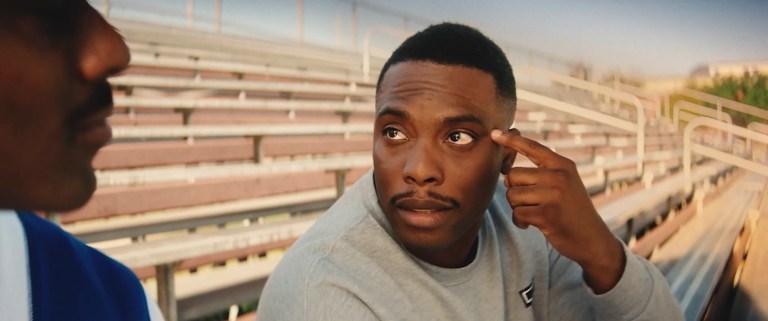
The trailer for The Wrecking Crew doesn’t ease viewers in so much as slam them through a neon-lit window. From its opening moments, it promises a bruising action ride built on street-level mayhem, sweat-soaked brawls, and a globetrotting crime story that quickly veers into Yakuza territory. The plot teases Momoa and Bautista as mismatched enforcers pulled into a war with Japanese crime syndicates, setting a tone that’s equal parts pulpy throwback and modern action spectacle.
What immediately sells the footage is the chemistry between its two leads, which feels deliberately rough-edged rather than polished. Momoa brings his familiar feral charisma, all grins and sudden violence, while Bautista counters with a heavier, more methodical presence that suggests brains behind the brawn. Their banter and body language hint at a partnership forged in chaos, the kind that turns every gunfight and fistfight into a character moment as much as a set piece.
| # | Preview | Product | Price | |
|---|---|---|---|---|
| 1 |

|
The Wrecking Crew | Buy on Amazon | |
| 2 |

|
The Wrecking Crew | Buy on Amazon | |
| 3 |

|
Matt Helm Lounge (Silencers, Wrecking Crew, Ambushers, Murderer's Row) | $49.99 | Buy on Amazon |
Visually, the Yakuza angle gives The Wrecking Crew a sharp stylistic hook, with rain-soaked streets, glowing signage, and cramped interiors framing its action. The fights look grounded and painful, favoring close-quarters brutality over superhero excess, which helps the film stand apart in a landscape crowded with CGI-heavy spectacle. In an era where action stars are often siloed into franchises, this trailer positions The Wrecking Crew as a star-driven, R-rated brawl that leans hard into personality, place, and unapologetic chaos.
Plot Clues from the Trailer: What Pulls Momoa and Bautista Into the Fight
The trailer keeps its cards close, but it drops just enough story breadcrumbs to sketch a compelling setup. Momoa and Bautista appear to be playing veteran fixers or muscle-for-hire, men accustomed to cleaning up other people’s messes until one job spirals out of control. What starts as a contained operation quickly widens into something far more dangerous, with the Yakuza emerging as the unseen power pulling strings behind the chaos.
Recommended Free Tools
#1 Best Overall
A Job Gone Wrong, Not a Chosen War
Early footage suggests neither character is looking for a crusade. They’re pulled in by obligation, leverage, or unfinished business, rather than heroism. That reluctant momentum gives the story a gritty credibility, framing the violence as escalation rather than spectacle for its own sake.
The trailer hints at betrayal or a miscalculation, possibly involving a stolen asset or a botched extraction that puts them squarely on the Yakuza’s radar. From there, every punch thrown feels reactive, as if survival, not dominance, is the immediate goal.
The Yakuza as a Relentless Force
Rather than serving as a faceless villain group, the Yakuza are presented as organized, methodical, and deeply entrenched. Quick cuts show suited enforcers, ritualistic imagery, and coordinated attacks that imply a hierarchy and code Momoa and Bautista are dangerously outmatched against. This isn’t a single boss fight but a war of attrition against a system that doesn’t forget or forgive.
The urban settings reinforce that threat, with narrow alleys and claustrophobic interiors turning every encounter into a pressure cooker. The environment itself feels weaponized, amplifying the sense that escape is never clean or easy.
Character Conflict Drives the Action
Just as revealing as the plot mechanics is how the trailer frames the relationship between the two leads. Their dialogue suggests differing philosophies on how to handle the fallout, one more impulsive, the other calculating. That friction appears to shape the action, with fights breaking out not just against enemies, but over tactics and trust.
In a genre often dominated by lone wolves, The Wrecking Crew leans into partnership as both strength and liability. The trailer makes it clear that what pulls Momoa and Bautista into the fight isn’t just the job, but the realization that walking away would cost more than staying and smashing their way through what comes next.
Momoa vs. Bautista vs. the World: Breaking Down Their On-Screen Chemistry
If The Wrecking Crew trailer sells anything with absolute confidence, it’s the collision of Jason Momoa and Dave Bautista as a volatile, uneven alliance. This isn’t a polished buddy-cop dynamic built on banter alone. It’s two dominant screen presences testing each other’s limits while the world closes in around them.
Contrasting Physicalities, Complementary Chaos
Momoa moves through the trailer with a feral looseness, all wild eyes, forward momentum, and barely contained rage. His action beats feel improvised and explosive, like a man reacting on instinct rather than strategy. Bautista, by contrast, is heavy, deliberate, and surgical, every strike looking calculated and final.
That contrast gives the action its texture. When they fight side by side, the choreography doesn’t blur them together; it emphasizes difference. One overwhelms, the other controls, and the friction between those approaches keeps the combat unpredictable.
Dialogue as a Weapon, Not Comic Relief
What’s striking is how restrained the trailer is with overt humor. There are flashes of dry tension and clipped exchanges, but the dialogue mostly functions as pressure, not punchlines. When they argue, it’s about survival, choices, and fallout, not ego.
That restraint suggests a tonal commitment closer to Heat or The Raid than a quippy blockbuster. The chemistry isn’t about likability alone; it’s about credibility. You believe these two would clash under stress, and you believe they’d still have each other’s backs when the knives come out.
A Partnership Forged Under Fire
The trailer frames their relationship as something being built in real time, not a pre-packaged bond. Moments of hesitation, disagreement, and near-separation hint that trust is earned through shared damage. Each violent encounter with the Yakuza seems to strip away illusion, forcing cooperation through necessity.
That evolving dynamic positions The Wrecking Crew as more than a star vehicle. It uses Momoa and Bautista not just as muscle, but as opposing philosophies navigating the same escalating nightmare. In an action landscape crowded with lone antiheroes, their uneasy partnership feels like a deliberate, character-driven escalation that gives the carnage weight.
The Yakuza Factor: How the Trailer Uses Japanese Crime Mythology and Style
The trailer’s pivot toward the Yakuza isn’t just a backdrop shift; it’s a tonal recalibration. The moment the conflict centers on Japanese organized crime, the film adopts a colder, more ritualized sense of danger. Violence stops feeling chaotic and starts feeling systemic, as if Momoa and Bautista have stumbled into a machine that’s been running long before they arrived.
Rather than treating the Yakuza as faceless henchmen, the trailer frames them as an institution with hierarchy, codes, and memory. That choice immediately elevates the stakes, suggesting that every act of aggression carries cultural and political consequences, not just body counts.
Ritual, Honor, and the Threat of Structure
Several quick-cut images lean heavily into Yakuza iconography: formal suits, symmetrical lineups, controlled interiors, and moments of quiet that feel more threatening than gunfire. The trailer understands that the Yakuza mythos is built on restraint and order, and it weaponizes that stillness against the film’s more explosive protagonists.
PC Slower Than It Used to Be?
A free scan shows the junk files, broken settings and background clutter dragging Windows down - then fixes them in one click.Free scan · Windows 10 & 11Crashes, No Sound, or Screen Glitches?
Random freezes, missing sound and display glitches usually trace back to one bad driver. Find and replace yours safely.Free scan · under a minuteMomoa and Bautista stand out visually as intrusions into this world. Their rough physicality and blunt methods clash with an enemy defined by protocol and long memory, reinforcing the idea that this isn’t a gang war that can be punched into submission. It’s a system that responds to disrespect with escalation, patience, and overwhelming force.
Action Choreography Inspired by Eastern Crime Cinema
The fight scenes teased in the trailer carry a noticeable shift in rhythm once the Yakuza enter the frame. There’s less shaky chaos and more emphasis on clean lines, enclosed spaces, and brutally efficient movement. Blades, close-quarters grappling, and sudden bursts of violence evoke the influence of films like The Raid, Outrage, and classic yakuza-eiga rather than Western shoot-’em-ups.
Rank #2
That stylistic influence sharpens the film’s identity. When combat breaks out, it feels purposeful and punishing, not decorative. Every hit seems designed to end a problem, not prolong a spectacle, which aligns perfectly with the Yakuza’s onscreen philosophy of decisive control.
A Villain With Cultural Weight, Not Just Firepower
What ultimately makes the Yakuza angle compelling is how the trailer frames them as inevitability rather than a single antagonist. There’s no obvious big bad delivering monologues; instead, the threat is diffuse, collective, and inescapable. Doors close, resources vanish, and allies disappear, all without a word being spoken.
Free tools Windows power users keep installed
One-click scans. No signup required.
That approach positions The Wrecking Crew within a smarter lane of modern action cinema. By tapping into Japanese crime mythology, the film signals ambition beyond standard muscle-versus-muscle storytelling. It pits raw force against tradition, impulse against order, and suggests that survival won’t depend on who hits hardest, but on who adapts fastest once the rules change.
Action DNA: Gunfights, Fistfights, and the Trailer’s Old-School Brutality
If the Yakuza represent control and inevitability, Momoa and Bautista respond with something far messier. The trailer makes it clear that The Wrecking Crew’s action language is rooted in blunt-force problem solving, where every confrontation escalates into either a gunfight, a brawl, or both. This is action that prioritizes impact over elegance, with violence treated as a last resort that becomes unavoidable once triggered.
There’s a tangible weight to how the action plays out, suggesting a production that favors physical performance over digital shortcuts. Bodies hit walls, furniture splinters, and recoil is felt in every shot fired. The result is a trailer that feels aggressive and tactile, pulling from an era when action scenes were staged to hurt.
Gunplay That Feels Desperate, Not Stylish
The firearm sequences teased in the trailer lean away from balletic shootouts and toward raw survival. Weapons are loud, cramped, and often fired at point-blank range, reinforcing the sense that these characters are constantly one mistake away from disaster. There’s no clean hero framing here; bullets are exchanged in hallways, parking structures, and tight interiors where chaos reigns.
That approach reinforces the film’s grounded tone. Instead of glorifying the gun, the trailer treats it as a blunt instrument that escalates consequences. Every pull of the trigger seems to close doors rather than open them, especially once the Yakuza machinery starts responding.
Fistfights Built Around Mass and Momentum
Where The Wrecking Crew really announces itself is in its hand-to-hand combat. Momoa and Bautista fight like men who know exactly how big they are and use that mass to overwhelm opponents. Punches aren’t flashy; they’re thrown to knock someone out of the fight permanently.
The choreography emphasizes grappling, throws, and environment-based damage, with bodies slammed into concrete, metal, and glass. It’s a style that feels closer to street-level brutality than choreographed spectacle, reinforcing the idea that these characters are wrecking balls rather than precision tools.
Momoa and Bautista’s Chemistry as a Weapon
The trailer also hints that much of the action’s appeal comes from the dynamic between its leads. Momoa brings reckless momentum, while Bautista projects controlled menace, creating a push-pull energy that carries through every fight scene. When they’re on screen together, the action feels heavier, louder, and more dangerous.
The Tool Desk
Outbyte Driver Updater FREEScan for outdated or missing drivers - takes under a minuteDriver Scan →Outbyte PC Repair FREEClear out junk files and repair common Windows errorsFree Scan →That chemistry positions The Wrecking Crew within a growing trend of star-driven action duos, but with a distinct tonal edge. This isn’t banter-first mayhem; it’s partnership forged under pressure. The trailer suggests that their combined presence doesn’t simplify the conflict with the Yakuza, it aggravates it, ensuring that every fight only digs them deeper into a war they can’t walk away from.
Tone and Personality: Humor, Violence, and the Film’s R-R Energy
Hard R, No Apologies
The trailer makes it immediately clear that The Wrecking Crew is embracing its R rating as a feature, not a warning label. Violence is frequent, physical, and occasionally ugly, with bloodshed treated as a consequence rather than spectacle. This isn’t stylized slow-motion carnage; it’s impact-driven brutality that leaves characters limping, bleeding, and visibly worn down as the conflict escalates.
That approach places the film closer to modern hard-R action like John Wick: Chapter 4 or The Raid than glossy PG-13 franchise fare. The Yakuza aren’t faceless henchmen; they’re relentless, organized, and respond to every provocation with overwhelming force. Each violent encounter feels like it’s pushing the story into darker, more dangerous territory rather than resetting the board for the next set piece.
Comedy as Pressure Release, Not the Main Event
While the tone is severe, the trailer smartly uses humor as a release valve instead of a tonal crutch. The laughs mostly come from Momoa and Bautista’s contrasting personalities clashing under stress, not from winking at the audience or deflating the stakes. It’s the kind of gallows humor that surfaces when characters are already in too deep and know it.
Do these 3 things before closing this tab:
1Fix the driver behind crashes, sound loss and screen glitches2Repair Windows errors before they cause bigger problems3Scan for outdated or missing drivers - takes under a minuteMomoa’s chaotic energy fuels the sharper lines, while Bautista’s deadpan reactions ground them. The jokes don’t interrupt the violence; they exist inside it, often landing right before or after something goes wrong. That balance helps the film avoid the self-aware parody trap that’s dulled many recent action releases.
A Throwback Attitude with Modern Edge
There’s a distinctly old-school confidence in how The Wrecking Crew presents itself. The trailer feels uninterested in shared-universe teases or sequel bait, focusing instead on selling a singular experience built around star power, physicality, and escalating consequences. That makes it feel closer in spirit to 90s and early-2000s hard-R action, filtered through modern pacing and production muscle.
In today’s action landscape, where many studio films soften edges for broader appeal, this trailer positions The Wrecking Crew as a deliberate counterpunch. It’s loud, mean, occasionally funny, and seemingly unconcerned with sanding itself down. The result is a film that promises personality through commitment, leaning fully into its violence, its stars, and the brutal logic of a war with the Yakuza that only gets worse the harder its leads hit back.
Independent reader supportYour contribution helps us test, update, and keep practical guides available for everyone.How The Wrecking Crew Fits Into Today’s Action-Movie Landscape—and Why It Feels Different
A Star-Driven Action Movie in an IP-Saturated Era
In a marketplace dominated by brands, legacies, and cinematic universes, The Wrecking Crew feels refreshingly star-forward. The trailer sells the movie almost entirely on the physical presence and volatile chemistry of Jason Momoa and Dave Bautista, not on mythology or franchise homework. That approach recalls an earlier era when action films lived or died on whether audiences wanted to spend two hours watching specific actors break things and people.
Quick wins for a faster PC:
Fix the driver behind crashes, sound loss and screen glitchesFind Drivers →Repair Windows errors before they cause bigger problemsFix Now →Rank #3
- DVD
- first aired in 1966 to 1968
- Spy Spoof
- made in USA
Momoa and Bautista aren’t interchangeable action figures here; the trailer makes their contrast the engine of the movie. Momoa plays with unpredictability and reckless momentum, while Bautista projects weariness and controlled brutality. Their dynamic feels less like quippy buddy-cop banter and more like two dangerous professionals stuck in a situation that keeps escalating beyond their control.
The Yakuza as a Serious, Escalating Threat
What truly separates The Wrecking Crew from many studio action films is how it frames its antagonists. The Yakuza aren’t presented as a one-level obstacle to be cleared, but as an organized force that adapts, retaliates, and escalates with ruthless efficiency. The trailer emphasizes consequences, with every violent encounter triggering a stronger and more coordinated response.
That structure aligns the film with modern action standouts like The Raid and John Wick, where enemies feel systemic rather than disposable. It also gives the violence narrative weight, turning each fight into a strategic miscalculation rather than a victory lap. The sense that things are spiraling, not stabilizing, gives the movie its tension.
Hard-Hitting Action Without the Franchise Safety Net
The Wrecking Crew positions itself against the safer, more sanitized end of contemporary action cinema. The choreography looks grounded, punishing, and tactile, favoring impact over spectacle and endurance over invincibility. The trailer suggests fights that exhaust the characters, leaving them bloodied, frustrated, and increasingly desperate.
What’s actually slowing this PC down?
Pick the symptom - the matching free tool is one click away.
Without a franchise roadmap or sequel setup hanging over it, the film appears willing to let its characters suffer real damage. That commitment creates suspense in a genre where audiences are often conditioned to assume survival. It also reinforces the idea that this is a single, brutal story rather than a launchpad.
Why It Feels Timed for the Moment
As audiences show renewed appetite for adult-skewing action with clear stakes and distinct personalities, The Wrecking Crew feels sharply calibrated to that demand. It doesn’t reject modern sensibilities so much as strip away excess polish, focusing on momentum, character friction, and escalating danger. The trailer suggests a movie confident enough to be loud, violent, and occasionally funny without apologizing for any of it.
In doing so, it carves out space alongside today’s best action films while resisting the gravitational pull of franchise homogenization. The Wrecking Crew looks like a movie that knows exactly what it is, trusts its stars to carry it, and embraces the chaos that comes from poking a criminal empire that refuses to back down.
What the Trailer Holds Back: Unanswered Questions and Why Fans Should Be Hyped
For all its bruising clarity, The Wrecking Crew trailer is surprisingly selective about what it reveals. It lays out the collision course but keeps key motivations, alliances, and endgame stakes just out of reach. That restraint feels intentional, designed to tease depth rather than simply sell carnage.
The Tool Desk
Outbyte PC Repair FREEClear out junk files and repair common Windows errorsFree Scan →Outbyte Driver Updater FREEFix the driver behind crashes, sound loss and screen glitchesFind Drivers →The Real Mission Remains a Mystery
The trailer establishes that Momoa and Bautista are on a job that spirals violently, but it stops short of explaining the true objective. Are they mercenaries, fixers, or reluctant enforcers pulled into something bigger than either of them anticipated? The lack of clarity adds intrigue, especially as the Yakuza response escalates from street-level intimidation to something far more organized and personal.
That ambiguity suggests the film is less about a single hit and more about consequences unfolding in real time. It positions the story as a slow-burn disaster rather than a clean in-and-out operation. For action fans, that’s often where the most memorable character work lives.
The Yakuza Threat Is Bigger Than the Trailer Lets On
While the trailer clearly frames the Yakuza as the primary antagonists, it only hints at their internal structure and reach. We see disciplined fighters, ritualized violence, and coordinated retaliation, but not the faces at the top. That choice makes the organization feel looming and systemic rather than tied to a single villain waiting for a final showdown.
By holding back on leadership reveals and long-term strategy, the film positions the Yakuza as an ecosystem rather than a boss fight. It’s a smart move that aligns with the movie’s emphasis on escalation and consequence. Every punch thrown feels like it triggers something larger and more dangerous offscreen.
Outdated Drivers Are Slowing You Down
One free scan finds every outdated or missing driver and matches the right update for your exact hardware.Free scan · exact hardware matchPC Slower Than It Used to Be?
A free scan shows the junk files, broken settings and background clutter dragging Windows down - then fixes them in one click.Free scan · Windows 10 & 11Momoa and Bautista’s Dynamic Is Still Just a Taste
The trailer sells chemistry through friction, with Momoa’s volatile energy bouncing off Bautista’s controlled physicality. What it doesn’t fully show is how that relationship evolves under pressure. Are they partners of convenience, old associates with unresolved history, or strangers forced into alignment by survival?
That unanswered question is part of the appeal. The best action duos thrive on shifting power dynamics, and the trailer suggests their alliance will be tested repeatedly. Watching that bond strain, fracture, and possibly solidify could be as compelling as the action itself.
How Far Is the Film Willing to Go?
Perhaps the biggest unknown is just how bleak or uncompromising The Wrecking Crew is willing to be. The trailer promises exhaustion, injury, and mounting losses, but it stops short of signaling whether this is a story of survival, sacrifice, or outright failure. In an era where many action films hedge their endings, that uncertainty is exciting.
By withholding its final tone, the movie invites audiences to lean in rather than settle into expectation. It suggests a film confident enough to let outcomes feel earned instead of guaranteed. That kind of commitment is rare and increasingly valuable in the modern action landscape.
Quick wins for a faster PC:
Clear out junk files and repair common Windows errorsFree Scan →Scan for outdated or missing drivers - takes under a minuteDriver Scan →Repair Windows errors before they cause bigger problemsFix Now →In holding back its biggest reveals, The Wrecking Crew doesn’t feel evasive so much as assured. The trailer trusts its audience to respond to texture, tension, and character promise rather than plot spoilers. If the finished film delivers on those withheld elements, it could stand as one of the most satisfying and hard-edged action releases of its moment.
Quick Recap
Product prices and availability are accurate as of the date/time indicated and are subject to change. Any price and availability information displayed on Amazon at the time of purchase will apply.