Outdated Drivers Are Slowing You Down
One free scan finds every outdated or missing driver and matches the right update for your exact hardware.Free scan · exact hardware matchPC Slower Than It Used to Be?
A free scan shows the junk files, broken settings and background clutter dragging Windows down - then fixes them in one click.Free scan · Windows 10 & 11The Tattooist of Auschwitz is based on real people and a survivor’s account, but it is a novel—not a documentary record. Ludwig Eisenberg, later known as Lali or Lale Sokolov, was imprisoned at Auschwitz in 1942. He said he met Gita Fuhrmannova there, and the couple later made a life together in Melbourne. Some details can be checked against records; the romance and many scenes are known chiefly through Lali’s recollections, and the book and television adaptation include disputed or invented details.
Who were the real Lali Sokolov and Gita Fuhrmannova?
Lali Sokolov
Lali was born Ludwig Eisenberg, a Slovak Jewish man imprisoned at Auschwitz in 1942. Auschwitz records identify his prisoner number as 32407, a detail reported by Smithsonian Magazine. He is referred to as Lali or Lale in accounts of his life and later used the surname Sokolov.
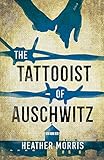
![The Tattooist of Auschwitz [movie-tie-in]: A Poignant Novel of Love, Survival, and Sacrifice Amidst the Horrors of the Holocaust](https://m.media-amazon.com/images/I/51oBZ7tuzeL._SL160_.jpg)



Gita Fuhrmannova
Gita was born Gisela Fuhrmannova and is also known as Gita Furman. The novel gives her prisoner number as 34902, but that number is not supported by the records discussed in the available accounts. Smithsonian reports that Auschwitz records and Gita’s USC Shoah Foundation testimony support 4562 instead. The correction matters: a dramatic detail in a novel should not be mistaken for a verified archival fact.
What happened to the couple?
In Lali’s recollection, he became a prisoner tattooist and met Gita when she was brought to be tattooed. Their relationship and eventual life together are rooted in his account, later shared with author Heather Morris. The couple survived the war and moved to Melbourne, Australia, according to Smithsonian’s account. The broad story of two survivors building a life together is real as Lali told it; many particulars of their meeting, conversations and experiences are not independently established by the facts cited here.
#1 Best Overall
Morris first met Lali in 2003, according to Sky’s interview. Over the following years, he shared his memories with her. The resulting book appeared in 2017 and later became a six-part television adaptation. That path—from memory to novel to screen drama—is why it is important to distinguish the real people from the scenes created to tell their story.
How true is the novel?
Morris described the book to Sky as “a work of fiction based on the memory of one man,” adding that it is not an academic historical account. It is best understood as historical fiction: it draws on Lali’s recollections and real people, while using literary construction and invented or unsupported scenes.
Rank #2
The Auschwitz Memorial Research Centre challenged the book’s historical accuracy. The Guardian reported the centre’s assessment that it contains numerous errors and information inconsistent with facts, as well as exaggerations, misinterpretations and understatements. This criticism means readers should not treat an episode as established history simply because it appears in the novel or is narrated through Lali’s perspective.
- Verifiable details: The identities of Ludwig Eisenberg and Gisela Fuhrmannova, and the prisoner numbers reported from records, can be checked against archival or testimony sources.
- Recollection-based details: The meeting, relationship and many personal experiences are largely conveyed through Lali’s memories and later retellings.
- Fictional treatment: Dialogue, scene-setting and interior thoughts in a novel are not automatically historical evidence.
Is the television series historically accurate?
The 2024 screen adaptation is a dramatization too. Sky says the production consulted the Auschwitz Memorial and Museum and engaged Naomi Gryn as a historical and Jewish cultural consultant. Consultation is a meaningful part of production, but it does not make every scene accurate. A review in the Memorial’s journal Memoria identified errors in the finished series, including placing Lali’s arrival in Birkenau in April 1942, when the men’s camp was at Auschwitz I. The review also discusses the depiction of barracks, sleeping conditions, smoke and camp supervision.
Do these 3 things before closing this tab:
1Clear out junk files and repair common Windows errors2Fix the driver behind crashes, sound loss and screen glitches3Repair Windows errors before they cause bigger problemsRank #3
The series uses an older Lali speaking with Morris as a present-day frame, bringing memory into the storytelling. That structure helps signal that the story is being recounted, but viewers should still distinguish dramatic reconstruction from documented history. For the production’s account of its approach, see Sky’s making-of feature; for the Memorial journal’s assessment, see its review in Memoria 80.
Independent reader supportYour contribution helps us test, update, and keep practical guides available for everyone.What should viewers use as a source for Auschwitz history?
The Tattooist of Auschwitz can introduce readers and viewers to Lali and Gita’s remembered story, but it should not serve as a factual guide to the Holocaust or camp life. For historical context, use the Auschwitz-Birkenau Memorial and Museum and established archival and survivor testimony collections. The distinction is not between a story that matters and one that does not: it is between a survivor’s remembered account shaped into fiction and history documented through records and careful scholarship.
For further discussion of the tension between historical accuracy and public awareness around the novel, see UNSW Sydney’s 2024 analysis.
Quick Recap
Best Value
Product prices and availability are accurate as of the date/time indicated and are subject to change. Any price and availability information displayed on Amazon at the time of purchase will apply.
The Tool Desk
Outbyte Driver Updater FREEFix the driver behind crashes, sound loss and screen glitchesFind Drivers →Outbyte PC Repair FREERepair Windows errors before they cause bigger problemsFix Now →



