Free tools Windows power users keep installed
One-click scans. No signup required.
The Secret of the Golden Flower is a Chinese meditation text presented in a layered English edition: Richard Wilhelm’s translation and exposition, Cary F. Baynes’s English translation from German, and C. G. Jung’s foreword and psychological commentary. Jung’s reading is important, but it is not the same thing as the Chinese text itself—and he cautioned against treating the book as a ready-made method for achieving happiness.
What is The Secret of the Golden Flower?
It is a Chinese work associated with meditation and Taoist alchemy. The Library of Congress describes it as an eighth-century book and notes that Jung characterized it as Taoist-alchemical; that date is the exhibit’s attribution, not an independently settled consensus. The exhibit also says the book had a major influence on Jung’s mature thinking.


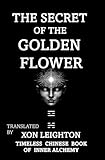
The title most English-language readers encounter is not a single-author modern guide. It brings together a Chinese text, Wilhelm’s translation and explanatory material, and Jung’s interpretation. Those layers matter: the book can be read as a historical and philosophical work, while Jung’s commentary offers a distinct psychological lens.
Who translated and wrote this edition?
Richard Wilhelm prepared the German translation and exposition. The Library of Congress says he sent Jung the translation in 1928 and, at Wilhelm’s request, Jung wrote a commentary. The German edition appeared in 1929. Cary F. Baynes translated the English edition from German; the first English publication was in 1931, according to Baynes’s preface and the Wellcome Collection catalog.
#1 Best Overall
So, although Jung and Wilhelm are prominently named on many editions, Baynes is the English translator. Jung contributed a foreword and commentary; he did not translate the Chinese text.
Is Jung’s commentary part of the book?
Yes, in the familiar Wilhelm–Baynes English edition, but it is a separate interpretive contribution rather than the Chinese source text. In the English arrangement, the text comes before Jung’s commentary. A later revised edition added material from the related Hui Ming Ching and Jung’s foreword to a later German edition, so contents can vary between editions.
Jung read the work through his developing ideas about the collective unconscious and individuation. He came to emphasize its alchemical character and interpreted alchemical imagery symbolically in relation to the psyche, rather than as literal instructions for transforming metals. That is Jung’s framework; it should not be mistaken for the only possible meaning of the Chinese work.
Did Jung recommend it as a meditation or happiness method?
No. In his foreword to the second German edition, Jung wrote: “I take this opportunity to point out certain misunderstandings to which even well-informed readers of this book fell victim.” He specifically rejected the idea that his purpose was to offer a method for achieving happiness. He said readers had tried to imitate the method described in the Chinese text, which he regarded as a misreading.
Do these 3 things before closing this tab:
1Clear out junk files and repair common Windows errors2Fix the driver behind crashes, sound loss and screen glitches3Repair Windows errors before they cause bigger problemsThat warning is a useful guide to the book’s scope. It can be approached as a historical, philosophical, and interpretive work, but Jung’s commentary does not establish a clinically validated therapy or promise a particular psychological or spiritual result. Nor should his remarks be turned into a step-by-step meditation prescription.
Which edition should you look for?
Check the title page or listing rather than relying on a cover image: editions may differ in translation route, commentary, and supplementary material. The familiar English edition is identified with Wilhelm, Baynes, and Jung. The reviewed sources do not establish a line-by-line translation winner, so there is no sound basis here for calling one version the most accurate.
- Translation route: Wilhelm’s German version; Baynes translated the English edition from German.
- Commentary: Confirm whether Jung’s foreword and commentary are included and where the commentary appears.
- Supplementary material: Check whether the edition includes the Hui Ming Ching material and later forewords.
- Format and listing: Match the publisher, release date, ISBN, and format to the exact edition you want.
At the time of writing, an Everand listing identifies an English ebook published by Open Road Integrated Media, released September 6, 2022, with ISBN 9781648371868 and a listed length of 231 pages. Those are listing details for that ebook, not guarantees about other editions or continuing availability. See the Everand ebook listing for its current details.
Independent reader supportYour contribution helps us test, update, and keep practical guides available for everyone.What does the publication history tell you?
The sequence helps distinguish the work’s layers: Wilhelm’s translation reached Jung in 1928; the German edition followed in 1929; and Baynes’s English translation first appeared in 1931. The English version’s ordering differs from the German edition, and later revisions added related material. The Library of Congress exhibit discusses the book’s arrival in Jung’s intellectual life, while the Wellcome Collection catalog records Baynes’s translation from German and the earlier English edition.
What’s actually slowing this PC down?
Pick the symptom - the matching free tool is one click away.
Quick Recap
Product prices and availability are accurate as of the date/time indicated and are subject to change. Any price and availability information displayed on Amazon at the time of purchase will apply.