Quick wins for a faster PC:
Scan for outdated or missing drivers - takes under a minuteDriver Scan →Repair Windows errors before they cause bigger problemsFix Now →The Santal Hul—an uprising against East India Company rule and the systems surrounding it—grew from pressures over land, rent, debt and colonial administration. Led by Sido and Kanu, among others, it spread from the Santal settlement in Damin-i-koh into neighbouring districts. British forces suppressed the main rebellion by the end of 1855, though accounts record further isolated resistance into 1856. The exact death toll is not established by the sources cited here.
Why did the Santal Hul take place?
There was no single cause. The revolt grew out of the collision between Santal settlement and cultivation, colonial land and revenue systems, and the arrival of landlords, traders and moneylenders who could extract rents and debts from communities with limited recourse to officials or courts.

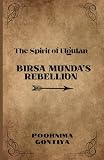



Settlement, land and debt
The Sahibganj District Administration’s retrospective history says Santhals migrated from neighbouring regions and were encouraged to settle in Damin-i-koh, where cultivation expanded as land was cleared. It describes land grants and rents alongside the growing influence of traders and landlords. In that account, new economic relationships and weak local administration left Santhal communities increasingly exposed to exploitation. Sahibganj District Administration, “History”
Debt could be enforced through kamauti, repayment by physical labour. The district history says such obligations could persist across generations. This made indebtedness more than a financial burden: it could bind a household’s work and choices over time.
What’s actually slowing this PC down?
Pick the symptom - the matching free tool is one click away.
Immediate grievances and official neglect
A House of Commons debate on 21 July 1856 reported the late Commissioner Bidwell’s view that the primary causes included oppressive moneylender exactions, corruption among local police and land-tax collectors, oppression by some railway employees, and the lack of effective government checks. The debate also described delayed attention to complaints and abuses by moneylenders, officials and zamindars. This is a contemporary account of how colonial authorities explained the outbreak, not a complete or neutral account of Santal experience. House of Commons debate, 21 July 1856
Access to justice was another pressure. The district history describes courts as distant and expensive, while local officials and policing were part of the grievances. These pressures reinforced one another: debt and rent disputes were harder to challenge when the institutions meant to address them were costly, corrupt or unresponsive.
Who led the uprising?
The Sahibganj district history identifies Sido (also written Sidhu), Kanu (also written Kanhu), Chand and Bhairab as four brothers associated with Bhognadih. It also names Chandrai and Simgrai among other figures. Spellings vary across sources; Sido/Sidhu and Kanu/Kanhu refer to the same leaders in these variant forms, not separate people.
The same local account places an early spark at Littipara. It says Baijal, also rendered Baijai Manjhi, was arrested and died in custody, and that his son Singrai was hanged. This episode is part of the district’s retrospective narrative and should be understood as attributed to that source rather than as independently corroborated here.
Rank #3
How was the Santal Hul fought and suppressed?
The conflict spread beyond the area now known as Santhal Pargana into Birbhum, Bankura and Hazaribagh, according to the district history. The sources consulted establish the broad geographical and chronological course more clearly than a detailed sequence of battles, so a battle-by-battle account would overstate what they document.
British authorities deployed troops. After a lull in September, martial law was proclaimed on 10 November 1855, and the district history says the principal uprising was suppressed by December. It records the suspension of martial law on 3 January 1856. A Ministry of Culture commemorative summary describes the main insurrection as brought under control by January 1856 and notes isolated outbursts later that year. The main rebellion’s suppression and the end of all resistance were therefore not necessarily the same moment. Ministry of Culture, “Anti-Colonial Resistance by the Subaltern: The Santhal Rebellion, 1855-1856”
Independent reader supportYour contribution helps us test, update, and keep practical guides available for everyone.What did the colonial government propose after the revolt?
In the Commons debate of 21 July 1856, the government described the area as a non-regulation province under a Commissioner and reported a set of intended administrative and relief measures. These were presented as responses to the uprising; the parliamentary account alone does not show that each measure was fully implemented or that it worked as intended.
- Judicial arrangements under a Commissioner, with planned judicial powers for the new administration.
- A reorganised police force, with troops to remain until it was established.
- Paid public-works employment for people needing work.
- Grain and salt stores for people in need.
- A three-year postponement of rent payment.
The debate records what officials announced or proposed, rather than a full record of the measures’ later delivery or effects.
Free tools Windows power users keep installed
One-click scans. No signup required.
Best Value
What is known about casualties and the longer-term outcome?
The sources cited here do not establish a reliable total for Santal deaths. Bloomsbury’s description of Peter Stanley’s book, Hul! Hul!: The Suppression of the Santal Rebellion in Bengal, 1855, gives a figure of “at least 10,000” Santals killed, but that publisher description is not enough to verify the estimate or its underlying evidence. It should not be treated as a settled total without consulting the book’s documentation. Bloomsbury Publishing India, book listing
The evidence cited here supports a distinction between the principal uprising, suppressed by the end of 1855 or early January 1856 depending on the account, and isolated outbursts reported later in 1856. It does not establish the long-term effectiveness of the measures described to Parliament, nor does it provide a full account of the rebellion’s subsequent social and political consequences.
A book for further reading
Peter Stanley’s Hul! Hul!: The Suppression of the Santal Rebellion in Bengal, 1855 is a directly relevant book-length study. Bloomsbury’s listing identifies paperback and ebook editions and ISBN 9789394701786; check the publisher’s page for current edition and availability details.
Quick Recap
Product prices and availability are accurate as of the date/time indicated and are subject to change. Any price and availability information displayed on Amazon at the time of purchase will apply.




