Quick wins for a faster PC:
Repair Windows errors before they cause bigger problemsFix Now →Scan for outdated or missing drivers - takes under a minuteDriver Scan →Clear out junk files and repair common Windows errorsFree Scan →There is no official, timeless ranking of the most powerful Yu-Gi-Oh! cards. A card’s strength depends on the format, rules, available card pool, deck, and date. Konami’s TCG and OCG use separate Forbidden & Limited Lists, so a historical list of notorious cards should not be mistaken for a guide to what is legal in current competition.
What does “most powerful” mean?
Power can mean several different things: a card’s impact on the game’s history, its usefulness in a specific tournament format, its flexibility across decks, or the advantage it can create when its conditions are met. Those measures do not necessarily point to the same card.


Konami’s official lists establish restrictions for particular formats; they do not assign cards a universal strength score. The official card database describes the TCG list as identifying cards prohibited or limited in official TCG tournaments, not as a cross-era power ranking.
TCG and OCG legality are different
The English-language TCG list reviewed here took effect May 18, 2026. Konami’s OCG list page identifies a separate effective date of July 1, 2026. These are distinct rules contexts, not one worldwide list. Check the list for the format and region in which you intend to play, and recheck it before a tournament because restrictions can change.
What’s actually slowing this PC down?
Pick the symptom - the matching free tool is one click away.
#1 Best Overall
On Konami’s Forbidden & Limited Lists – May 18, 2026 page, the categories mean:
- Forbidden: the card cannot be used in the Main, Extra, or Side Deck. Konami states, “Cards that are “Forbidden” cannot be used in your Main Deck, Extra Deck, or Side Deck.”
- Limited: no more than one copy of a card may be included across those decks combined.
- Semi-Limited: no more than two copies may be included across those decks combined.
For the corresponding official database description, see Konami’s Yu-Gi-Oh! Neuron card database. A restriction indicates tournament legality or a copy limit; it does not establish that every Forbidden card is equally powerful, or that a restricted card is stronger than every unrestricted one.
Rank #2

- 1 pack of Legend of Blue-Eyes White Dragon, 1 pack of Metal Raiders, 1 pack of Spell Ruler, 1 pack of Pharaoh’s Servant
- 1 pack of Dark Crisis, 1 pack of Invasion of Chaos, 1 Ultra Rare Obelisk the Tormentor card, 1 Ultra Rare Slifer the Sky
- Dragon card, 1 Ultra Rare The Winged Dragon of Ra card, 1 Ultra Rare Blue-Eyes White Dragon card, 1 Ultra Rare Dark
- Magician card, 1 Ultra Rare Red-Eyes Black Dragon card, and 1 Quarter Century Secret Rare version of 1 of the 6 a forementioned cards (random
Why a historical list is not a current deck guide
Cards become notorious or influential in particular environments, but their practical strength depends on the rules and card pool around them. A card’s reputation from an earlier period cannot, by itself, show whether it is legal or competitive today. Likewise, legality alone does not measure how often a card is useful, what it enables, or how readily an opponent can answer it.
A defensible comparison would need to name its scope and criteria: the format and date, what the card enables, how reliably and flexibly it can be used, its costs and counterplay, and dated tournament results or usage data. The official pages cited here provide legality information, not comparative tournament evidence. Without those additional sources, naming an objectively strongest card—or presenting a ranked all-time list as fact—would overstate what is established.
Rank #3
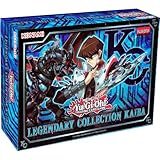
- 2025 Reprint 3 Packs included Mega Packs contains 4 Secret Rares and 6 Ultra Rares for a total of 10 foil cards per pack (that’s 30 cards per box)
Fame, rarity, and strength are different claims
A card may be famous, rare, or nostalgic without being among the strongest choices for competitive play. Collectibility and tournament usefulness answer different questions; neither is a reliable substitute for checking a card’s effect, format, and current legality.
Quick Recap
Best Value
Rank #4
How to check before building or buying
- Identify the format and region. Decide whether you mean TCG, OCG, or a particular digital game; do not assume the rules or card pool are interchangeable.
- Check the current official list. Use the relevant Konami list to confirm whether the card is Forbidden, Limited, Semi-Limited, or unrestricted for that rules context.
- Evaluate it in a dated context. For competitive claims, look for evidence tied to the named format and period rather than relying on an all-time reputation.
- Search for an individual card if you want to collect it. Konami lists physical categories such as booster packs, structure decks, tins, and starter decks on its official products page. Its booster-pack page describes boosters as adding cards and effects to the card pool; a booster is not a guarantee of any particular named card.
Product prices and availability are accurate as of the date/time indicated and are subject to change. Any price and availability information displayed on Amazon at the time of purchase will apply.




