The most famous ghost photographs are famous as cultural artifacts, not as verified proof of ghosts. The strongest historical canon includes William H. Mumler’s Lincoln spirit photograph, the Brown Lady of Raynham Hall, the Cottingley Fairies series, and the Tulip Staircase image—four cases that show how photography became entangled with mourning, spiritualism, celebrity, image manipulation, and the desire to make the unseen visible.
1. William H. Mumler’s Lincoln spirit photograph
William H. Mumler’s portrait of Mary Todd Lincoln with the apparent spirit of Abraham Lincoln is one of the defining images of nineteenth-century spirit photography. Mary Lincoln sits in the foreground while a faint image resembling the assassinated president appears behind her, seemingly placing a grieving widow under the protection of her dead husband.
The photograph became powerful because it joined several Victorian preoccupations in a single frame: mourning, celebrity, spiritualism, and the belief that a camera might record realities invisible to the human eye. Abraham Lincoln’s recent assassination gave the image an emotional force that an ordinary double exposure could not have produced on its own.
Its historical importance does not require the apparition to be genuine. The White House Historical Association describes the Lincoln figure as an imposed photographic image. The Smithsonian places Mumler’s work within the broader nineteenth-century tradition of spirit photographers who claimed that ghostly forms appeared on developed plates. In other words, this is best understood as a famous photograph of an alleged ghost—not a photograph verified to contain one.
Free tools Windows power users keep installed
One-click scans. No signup required.
#1 Best Overall

- For Instax mini instant cameras
- 2.13 x 3.4 inches image size
- High speed ISO 800
- Excellent sharpness and vibrant color reproduction
- 20 exposures
Evidence label: Documented photograph; supernatural interpretation unverified, with historical accounts treating the Lincoln figure as a constructed or imposed effect.
2. The Brown Lady of Raynham Hall
The Brown Lady photograph was taken at Raynham Hall in Norfolk, England, on September 19, 1936, by photographers working for Country Life. It was published in December of that year and quickly became one of Britain’s most famous spirit photographs.
The image appears to show a veiled, translucent woman descending the grand staircase. The apparition is traditionally identified as Lady Dorothy Walpole, an eighteenth-century figure associated with Raynham Hall. That identification belongs to the legend surrounding the house, however. The photograph itself establishes neither the woman’s identity nor a supernatural origin.
The Brown Lady’s fame comes partly from its unusually strong setting. The staircase, the old country-house atmosphere, the veil-like shape, and the prestige of Country Life made the image immediately legible as a ghost story. A photograph that might otherwise have been dismissed as an optical effect became attached to a specific building, historical figure, and long-running haunting tradition.
The distinction between provenance and interpretation matters here. The date, location, photographers’ assignment, and publication history are comparatively clear. What remains uncertain is what, precisely, the camera recorded.
Evidence label: Documented date and publication; the apparition’s identity and supernatural nature remain unverified.
3. The Cottingley Fairies photographs
The Cottingley Fairies images are not ghost photographs in the narrow sense, but no serious history of famous supernatural photography can omit them. They became one of the most influential tests of whether photography could provide evidence of beings that ordinary observers could not see.
Rank #2
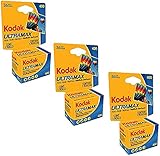
- 3 pack Kodak Ultra Max 400 Color print film 36 exp. 35mm DX 400 135-36 (108 pics)
- Country of Origin:China
- Package weight:4.0 lb
- Package dimensions:4.32"L x 9.65"W x 19.05"H
In 1917, cousins Elsie Wright and Frances Griffiths used a quarter-plate Midg camera to make the first images. The eventual series comprised five photographs. The National Science and Media Museum’s records place the case at the intersection of photography, spiritualism, scientific investigation, and public fascination with the unseen.
The photographs appeared to show Elsie and Frances surrounded by small winged fairies. They attracted extraordinary attention after public figures, most notably Arthur Conan Doyle, treated them as evidence that fairies existed. The pictures benefited from the authority then attached to photography: if a camera had recorded the figures, many viewers assumed that the figures must have been physically present.
Later evidence showed how the illusion was made. The fairies were drawings created by Elsie and held in place around the girls with hatpins. The museum’s documentation includes important physical material connected with the case, including original prints, cameras, correspondence, and sketches. Elsie and Frances eventually admitted that most of the photographs had been staged. Frances continued to suggest that the final image might have been genuine, but that personal qualification is not evidence that it was.
The case is valuable precisely because it exposes the gap between photographic appearance and photographic proof. A practical joke became a major public controversy because the images fit the hopes of influential believers and because the camera was treated as a neutral witness rather than a device capable of staging, manipulation, and misinterpretation.
Evidence label: Historically documented photographic hoax for most of the series; the creators’ later qualification about the final image does not establish authenticity.
Do these 3 things before closing this tab:
1Scan for outdated or missing drivers - takes under a minute2Clear out junk files and repair common Windows errors3Fix the driver behind crashes, sound loss and screen glitches4. The Tulip Staircase photograph
In 1966, Reverend R. W. Hardy photographed the Tulip Staircase at the Queen’s House in Greenwich, London. When the photograph was examined, it appeared to contain two or three shrouded figures on the stairs.
Royal Museums Greenwich continues to describe the image as a famous photograph whose phenomenon has never been fully explained. That is a careful and important formulation. “Never fully explained” means that the available record has not settled the image’s cause; it does not mean that a ghost has been authenticated.
Rank #3

- MINI FILM ONLY COMPATIBLE WITH POLAROID GO: The Polaroid Go only uses Polaroid Go format films. The same Polaroid you know and love, only smaller. Go Film is not compatible with full size Polaroid I-Type Now Cameras
- POLAROID GO FILM DOUBLE PACK: Each double pack includes 16 color instant photos framed in glossy white and ready to take on the world. For use exclusively with the Polaroid Go camera.
- STORE CHILLED, SHOOT WARM: Temperature affects how the film works. Keep it stored cold in the fridge, but never freeze it. Ideally you should let it adjust to room temperature before you use it.
- SHOOT WITH LIGHT: The more light in your shot, the better your photo will turn out. Instant film loves light, especially natural light. Use the flash for all your indoor photos.
- DEVELOP IN THE DARK: All photos appear blank at first. They’re most sensitive during this time, so don’t bend or shake them. Shield them from the light and place them face down for 6 minutes as they develop.
The photograph is especially suggestive because of its setting. The staircase’s spiral geometry, railings, shadows, and unusual perspective create a natural environment for ambiguous shapes. Questions about exposure, reflections, movement, light, and the way the camera was positioned all matter before a paranormal conclusion can be considered.
The Tulip Staircase image therefore occupies a different category from the Cottingley photographs. The Cottingley case has substantial evidence of staging. The Tulip Staircase photograph remains historically intriguing because its explanation is disputed or incomplete, but uncertainty should not be upgraded into supernatural proof.
Evidence label: Documented location and image history; the cause of the apparent figures remains disputed or unresolved.
What makes a ghost photograph famous?
There is no objective, universally accepted ranking of the “most famous” ghost photographs. Fame is not a scientific measurement, and the images that circulate most widely are not necessarily the ones with the best provenance.
A more responsible historical canon considers several kinds of influence:
- Cultural reach: How widely did the image circulate through newspapers, books, exhibitions, museums, and popular culture?
- Historical influence: Did it affect debates about spiritualism, photography, evidence, or the afterlife?
- Provenance: Are the photographer, date, location, original negative, prints, or related objects documented?
- Institutional recognition: Has a museum, archive, historical association, or other established institution preserved or interpreted the material?
- Enduring controversy: Does the photograph continue to produce competing explanations?
By those standards, Mumler’s Lincoln image, the Brown Lady, the Cottingley Fairies, and the Tulip Staircase photograph form a stronger historical group than many modern viral images whose original files, editing history, photographer, and circumstances are unknown.
Recommended Free Tools
Why old photographs so often look haunted
Early photography was not the perfectly immediate recording system that many viewers assumed it to be. The U.S. House of Representatives’ historical account of early photography notes that exposures could last long enough for movement to create transparent, blurred, or apparently disembodied figures. At the same time, the public often regarded photographs as direct records of reality, even though the medium could produce striking artifacts.
Rank #4

- INSTAX COMPATIBILITY: Use our film with your Fujifilm Instax Mini cameras including the Mini 12, Mini 11, Mini 9, Mini 8, Mini 7+, Mini 40, Mini SP-2, Mini Link, Mini 90, Mini 70, Mini 40, Mini Hello Kitty, Polaroid PIC 300 and other Instant Film Cameras!
- PREMIUM QUALITY: These Instax films are Hi-Speed ISO 800 so you can be sure they will capture your shots in the best light, giving you beautiful, natural looking colors with awesome grain quality.
- CLEAR PHOTOS IN AN INSTANT: Snap a picture and immediately get a high res photo printed in seconds with your Fujifilm camera – photos are high quality with optimal grain quality.
- MINI WALLET SIZED: Our white film sheets provide you with credit card sized photos (5.4 x 8.6 cm) for you to carry precious memories with you anywhere right in your bag or pocket!
- PHOTOS THAT WILL LAST A LIFETIME: Using thin-film technology, images develop quicker! Using emulsion, development accelerators and control tech, your photos will last forever.
Several ordinary mechanisms can create a ghost-like result:
- Movement during a long exposure: A person who moves through the frame may appear partly transparent, blurred, or detached from the surrounding scene.
- Multiple exposure: The same plate can be exposed more than once, placing a faint second image over the first.
- An incompletely cleaned plate or negative: Residual images and darkroom artifacts can create forms that resemble faces or bodies.
- Reflections and lens flare: Light entering the lens at an unusual angle may produce bright, translucent shapes.
- Translucent materials: Curtains, veils, smoke, glass, or moving fabric can be mistaken for a human figure.
- Compositing or darkroom manipulation: Images can be combined or altered to produce an apparition.
- Pareidolia: The viewer’s brain may interpret an ambiguous pattern as a face, body, or familiar person.
- Perspective and camera position: Railings, shadows, reflections, and architectural lines can align in ways that suggest a figure.
These possibilities do not automatically explain every famous photograph. They do establish the correct burden of proof: seeing a transparent figure is an observation about an image; it is not proof of the figure’s identity or supernatural origin.
How to judge an alleged ghost photograph
The strongest way to examine one of these images is to separate what is documented from what is inferred.
The Tool Desk
Outbyte Driver Updater FREEFix the driver behind crashes, sound loss and screen glitchesFind Drivers →Outbyte PC Repair FREEClear out junk files and repair common Windows errorsFree Scan →- Establish the image’s origin. Identify the photographer, date, location, assignment, owner, and publication history. An image with no reliable origin should not be treated like an image with an archival record.
- Find out whether the original survives. A scan or reproduction may conceal retouching, cropping, damage, or details visible in the original print or negative.
- Ask what the photographer knew at the time. Was the figure noticed immediately, or only after the image was developed? Were there other exposures from the same session?
- Reconstruct the scene. Examine windows, mirrors, stair rails, curtains, reflective surfaces, lighting, camera position, and anything that could have moved during exposure.
- Consider photographic technique. Multiple exposures, compositing, plate contamination, processing errors, and deliberate manipulation all belong in the explanation set.
- Separate appearance from identification. Even if an image contains an unexplained human-shaped form, that does not show that it is a particular dead person such as Lady Dorothy Walpole or Abraham Lincoln.
- Use proportional conclusions. “The image is authentic” may mean only that an old print genuinely exists. It does not necessarily mean that the subject depicted is supernatural.
This approach allows a photograph to remain mysterious without calling it conclusive. It also avoids the opposite mistake of dismissing every unusual image without investigating its technical and historical context.
Independent reader supportYour contribution helps us test, update, and keep practical guides available for everyone.Famous does not mean authentic
These four cases illustrate four different relationships between fame and evidence:
| Photograph or series | Why it endures | Most defensible conclusion |
|---|---|---|
| Mumler’s Lincoln portrait | It connects a famous national tragedy with Victorian mourning and spirit photography. | A culturally important constructed or imposed image, not verified evidence of Abraham Lincoln’s ghost. |
| Brown Lady of Raynham Hall | Its veiled figure is fused with a historic house and the legend of Lady Dorothy Walpole. | The photograph’s circumstances are documented, but the apparition’s identity and cause are not established. |
| Cottingley Fairies | It shows how photographic authority, celebrity endorsement, and belief can turn staged images into a major controversy. | Most of the series was staged; the case is a landmark in the history of image manipulation and paranormal belief. |
| Tulip Staircase | Its architectural setting produces a striking image that remains visually ambiguous. | A famous unexplained photograph, not a scientifically authenticated paranormal image. |
Further reading
Readers who want a longer, image-focused examination of alleged paranormal photographs may find Psychic Photography: The Visual Proof by Hans Holzer a useful companion. It explores historic photographic evidence and paranormal interpretations; it should be read as a history of claims and arguments, not as confirmation that the photographs discussed here prove ghosts exist.
What these photographs really document
The enduring value of famous ghost photographs is not limited to the question of whether a ghost was present. Mumler’s Lincoln image documents the way photography could give visual form to grief. The Brown Lady shows how an image can become inseparable from the story of a place. Cottingley demonstrates that a staged photograph can persuade audiences when it matches the expectations of believers and influential advocates. The Tulip Staircase photograph shows why an image can remain culturally compelling even when its cause is unsettled.
Together, they are records of what people wanted cameras to reveal: the dead, the hidden, the spiritual, and the impossible. They are famous photographs of alleged supernatural subjects. None of the historical cases examined here establishes that a camera has definitively captured a ghost.
Best Value

- Updated Classic- The classic Polaroid film is back with a new formula exclusively for I-Type cameras with 40 classic iconic white framed photos.
- New Classic- I-Type film uses Polaroid's latest chemistry to provide richer colors, tones, and contrast. I-Type film is not compatible with vintage Polaroid cameras.
- Light it up- Polaroid instant film loves light. The more light in your shot, the better your photo will turn out. Always shoot in bright light or use the camera flash.
- Develop- Photos will appear blank at first. Photos develop within 15 minutes. Shield photos from the light and place them face down as they develop.
- Create- Every photo you create is rich, textured, and unique. Unpredictable, imperfect, and impossible to reproduce, just like you.
Frequently Asked Questions
Have any famous ghost photographs been verified as genuine?
No. The documented historical record supports the fame, provenance, or cultural impact of these images, but it does not verify that any depicts a supernatural being. Some have strong ordinary explanations, while others remain disputed or incompletely explained.
Is the Brown Lady definitely Lady Dorothy Walpole?
The Brown Lady is traditionally said to be Lady Dorothy Walpole, an eighteenth-century figure associated with Raynham Hall. The photograph does not establish the apparition’s identity, and the identification remains part of the legend rather than a verified conclusion.
Why are the Cottingley Fairies included in a list of ghost photographs?
They are photographs of alleged fairies rather than ghosts, but they are essential to the history of supernatural photography. The case shows how photographic authority, spiritualist ideas, celebrity endorsement, and staged imagery can combine to create a powerful public controversy.
What’s actually slowing this PC down?
Pick the symptom - the matching free tool is one click away.
Does an original photograph prove that the ghost in it is real?
Not necessarily. An authentic old print or negative proves that the photographic object exists; it does not prove that the figure shown is a ghost. Provenance and supernatural interpretation are separate questions.
What appears in the Tulip Staircase photograph?
The Tulip Staircase photograph was taken in 1966 by Reverend R. W. Hardy at the Queen’s House in Greenwich. It appears to show two or three shrouded figures, and Royal Museums Greenwich describes it as famous but not fully explained. That uncertainty is not the same as paranormal verification.
The Bottom Line
The most famous ghost photographs are best understood as influential historical images, not authenticated paranormal evidence. Their real subject is the complicated relationship between cameras, belief, grief, technology, and the human desire to make the invisible visible.
Quick Recap
Product prices and availability are accurate as of the date/time indicated and are subject to change. Any price and availability information displayed on Amazon at the time of purchase will apply.