The Tool Desk
Outbyte PC Repair FREEClear out junk files and repair common Windows errorsFree Scan →Outbyte Driver Updater FREEFix the driver behind crashes, sound loss and screen glitchesFind Drivers →The Platform 2 doesn’t simply drop viewers back into the Pit; it forces them to confront how little has actually changed since the first experiment. At first glance, the rules feel familiar, the vertical hierarchy intact, and the ritualized cruelty depressingly recognizable. But very quickly, the sequel reveals itself as less a continuation than a recalibration, asking not whether the system is broken, but why people keep believing it can be fixed from inside.
Where the original film functioned as a blunt parable about class inequality and resource hoarding, The Platform 2 sharpens its focus on control, consent, and the myth of moral progress. This time, the Pit isn’t just an apparatus imposed from above; it’s a structure maintained by belief, ritual, and enforced participation. The experiment evolves from a social test into something closer to a self-sustaining ideology, one that survives precisely because its subjects keep trying to give it meaning.
![Halloween II (Collector's Edition) [Blu-ray / DVD]](https://m.media-amazon.com/images/I/51iX9AF99HL._SL160_.jpg)
That reframing is crucial to understanding the film’s ending, which deliberately resists the catharsis or revelation audiences might expect. The Platform 2 isn’t interested in escape or reform as narrative goals, but in exposing how systems absorb rebellion and convert sacrifice into fuel. By returning to the Pit with this colder, more philosophical lens, the sequel transforms the original’s question of fairness into a far more unsettling inquiry: what if the system doesn’t need to change because it’s already working exactly as intended?
What Actually Happens at the End: A Step‑by‑Step Breakdown of the Final Descent
The final act of The Platform 2 strips away momentum and replaces it with inevitability. Rather than building toward an escape or revelation, the film slows its rhythm, forcing us to watch the system complete one more perfect cycle. Every choice the characters make feels smaller, more constrained, until the descent becomes less a journey downward than a confirmation of where they were always headed.
#1 Best Overall

- Premier brand: Hewlett‑Packard discs are back in stock with top-grade quality. Save files quickly—burning time is about 20–25 minutes when used with 8X capable DVD Double Layer writers.
- Compatible with most DVD burners, DVD players, and DVD-ROM drives on Windows and Mac systems. Perfect for: Data backup, Video storage, Music libraries, Photo archiving, System recovery discs, Business data storage
- White Inkjet Hub Printable surface (no groove). Compatible with CD/DVD color inkjet printers for direct printing on the disc.
- 8.5GB storage capacity per disc, nearly double the capacity of standard single-layer DVDs. DVD+R DL (Double Layer) format, ideal for high-capacity data storage and video recording.
- Low cost per megabyte, making them ideal for file backups before accidental deletion. Designed for long-term data archiving and storage, supporting over one million read cycles to ensure extended data protection.
The Breakdown of Order on the Upper Levels
As the platform continues its daily descent, the fragile codes of behavior introduced earlier in the sequel finally collapse. The rituals meant to ensure “fair” distribution are no longer followed, not because people reject them, but because fear overrides belief. Violence returns not as chaos, but as routine, signaling that the system doesn’t need constant enforcement once its logic is internalized.
This mirrors the film’s central thesis: control works best when people police themselves. By the time the platform reaches the mid-levels, the distinction between enforcers and victims has blurred completely. Everyone is participating, whether through action, silence, or survival instinct.
The Voluntary Sacrifice and the Illusion of Choice
One of the film’s most unsettling moments arrives when a key character chooses not to eat, framing their hunger as a moral stand. On the surface, this echoes the original film’s belief that individual sacrifice might send a “message” upward. But The Platform 2 reframes this act as tragically misguided, less a rebellion than a fulfillment of the system’s needs.
The Pit thrives on sacrifice, especially when it’s voluntary. By choosing hunger, the character reinforces the idea that suffering is meaningful, even necessary. The system doesn’t punish this behavior; it absorbs it, proving that moral gestures don’t disrupt power when they operate within its rules.
Do these 3 things before closing this tab:
1Scan for outdated or missing drivers - takes under a minute2Clear out junk files and repair common Windows errors3Fix the driver behind crashes, sound loss and screen glitchesReaching the Lowest Levels Again
When the platform finally reaches the bottom, there is no hidden truth waiting, no authority figure to confront. The lower levels are quieter, emptier, and stripped of myth. The absence of revelation is the point: the system doesn’t rely on secrets, only repetition.
Unlike the first film’s symbolic “message,” there is no child, no object, no act left that can be misread as hope. The descent ends not with discovery, but with confirmation that the Pit has nothing left to reveal. It never did.
The Final Image and Its Meaning
The closing moments linger on those left behind, watching the platform ascend without them. This inversion is crucial. The platform has always been the illusion of movement and progress, while the people remain trapped in place. By ending on stillness rather than action, the film denies the audience emotional release.
What we’re left with is a system that continues untouched, fueled by belief, fear, and the promise that next time might be different. The descent doesn’t end the experiment; it resets it. And that, The Platform 2 suggests, is the most honest ending possible.
The New Rules of Control: Power, Surveillance, and the Illusion of Reform
If the first film exposed the Pit as a blunt instrument of cruelty, The Platform 2 reveals something more insidious: a system that learns. The rules haven’t disappeared; they’ve evolved, shifting from overt punishment to behavioral management. Control is no longer enforced solely through hunger, but through the promise that the system can be fixed if everyone just follows the new guidelines.
This is where the sequel’s ending gains its sharpest edge. The Pit no longer needs chaos to function. It thrives on order, compliance, and the belief that reform is already underway.
Power Without a Face
One of the most striking changes in The Platform 2 is the continued absence of a visible authority figure. There is still no warden, no architect stepping forward to explain the rules or justify the experiment. Power remains abstract, distributed, and therefore impossible to confront.
This facelessness is deliberate. By removing a central villain, the film suggests that modern systems of control don’t rely on tyrants, but on processes. The Pit operates automatically, sustained by structure and belief rather than command.
Surveillance as Participation
The film repeatedly implies that the inhabitants are being watched, but never confirms how or by whom. This ambiguity transforms surveillance into a psychological condition rather than a physical presence. People behave as if observation is constant, adjusting their actions to align with what they believe is expected.
In this way, surveillance becomes participatory. The prisoners monitor themselves and each other, enforcing norms without direct intervention. The system doesn’t need guards when fear of consequence has already been internalized.
The Promise of Reform
The sequel introduces new ideas of fairness and balance, suggesting that lessons have been learned since the first experiment. These adjustments create the illusion that progress is being made, that the Pit is no longer purely sadistic. But the ending reveals this reform as cosmetic.
Nothing fundamental has changed. Resources are still artificially scarce, mobility is still controlled, and suffering remains essential to the system’s function. Reform becomes a tool of stabilization, not liberation.
Quick wins for a faster PC:
Scan for outdated or missing drivers - takes under a minuteDriver Scan →Clear out junk files and repair common Windows errorsFree Scan →Why the System Must Continue
By the time the platform ascends without its final passengers, it’s clear that the experiment doesn’t end because it can’t afford to. The Pit exists to study obedience, adaptation, and belief under pressure. Ending it would mean admitting its conclusions are already known.
The true horror of The Platform 2 lies in this realization. The system no longer needs to test human behavior. It has perfected a model where people willingly sustain their own confinement, convinced that change is happening just beyond reach.
Rank #2

- [Complete Standalone Operation] No PC required to operate the duplicator. [Lifetime Support] Comes with LIFETIME FREE TECH SUPPORT plus 1 year parts and labor warranty.
- [FREE Copy Protection] Able to create FREE copy protected DVD Video copies using OPTODISC MID media from an original master. [Uses Top Grade Components] Unit offers certified UL and TUV compliant power supply as well as the industries top SATA DVD Duplication Grade burner/writer drives, ensuring the highest quality and reliability.
- [Supports Max Write Speed] Up to 24x DVD Write Speed, 52x CD-R Write Speed, with default max caps for selected medias to give optimal burning capability
- [Supports M-Disc DVD Format] Able to record on to 1000 year archival grade M-Disc media
- [Won’t Copy Encrypted Discs] The duplicator will not copy any discs that are encrypted with copy protection.
The Meaning of the Child, the Descent, and the Final Choice
The final stretch of The Platform 2 abandons realism almost entirely, shifting into something closer to myth. Logic gives way to symbol, and narrative clarity is replaced by ritualistic imagery. This is intentional. The film isn’t trying to explain the system anymore; it’s asking what kind of moral response is even possible inside it.
The Child as an Impossible Future
The child at the bottom of the Pit is not meant to be read literally. Much like the panna cotta in the original film, the child functions as a symbol rather than a plot device, but with a crucial difference. Where the dessert represented proof that the system could be challenged, the child represents a future that cannot survive within it.
Children traditionally symbolize innocence, continuity, and hope. By placing a child at the very bottom, the film suggests that the system’s lowest levels consume the future before it has a chance to grow. The Pit doesn’t just exploit the present; it actively erases what comes next.
There’s also a darker implication. The fact that the system allows a child to exist there at all reframes the experiment as fundamentally unethical beyond reform. No adjustment of rules or redistribution of resources can justify a structure that feeds on its most vulnerable.
The Descent as Moral Regression
The physical descent toward the lower levels mirrors a psychological one. Each level downward strips away the language of policy, fairness, and reform, leaving only survival and raw instinct. By the time the protagonists reach the bottom, ideology has collapsed entirely.
This descent isn’t heroic in the traditional sense. It’s not a journey toward enlightenment but an exposure of truth. The lower they go, the clearer it becomes that the system’s cruelty isn’t accidental; it’s structural and necessary.
Free tools Windows power users keep installed
One-click scans. No signup required.
In this way, the descent functions as a rejection of the belief that understanding the system deeply enough will reveal a solution. Knowledge doesn’t grant power here. It only confirms that the rules are designed to prevent meaningful change.
The Final Choice and the Illusion of Sacrifice
The decision to send the child upward while remaining behind is framed as a moral sacrifice, echoing the ending of the first film. But The Platform 2 complicates this gesture. The platform ascends, yet nothing indicates that the child will be saved, protected, or even acknowledged.
This is the film’s most brutal insight. Sacrifice within an unchanging system does not equal transformation. It becomes another data point, another variable absorbed without consequence.
By refusing to show what happens next, the film denies the audience emotional closure. Hope is neither confirmed nor denied, only suspended. The final choice isn’t about saving the child; it’s about exposing the futility of believing that symbolic acts alone can dismantle systemic violence.
What’s actually slowing this PC down?
Pick the symptom - the matching free tool is one click away.
In that sense, the ending isn’t nihilistic. It’s accusatory. The film turns outward, asking whether viewers, like the characters, are comforted by gestures that feel meaningful while leaving the structure intact.
Violence as Language: Why Brutality Becomes the Only Form of Communication
By the film’s final act, words have lost all power. Negotiation, persuasion, and even ideology collapse under the weight of a system that offers no meaningful way to be heard. In The Platform 2, violence doesn’t erupt because the characters are inherently savage; it emerges because brutality becomes the only remaining method of expression.
This is where the film’s bleakest insight takes shape. When a system refuses dialogue, suffering turns into speech.
A World Where Listening Is Structurally Impossible
The vertical prison is designed to prevent communication across levels. People can shout, threaten, or beg, but nothing travels upward in a way that produces accountability. Authority exists, but it is distant, abstract, and unmoved.
In this vacuum, violence becomes a distorted substitute for language. It’s the only action that produces an immediate response, even if that response is more punishment or death. Pain is the one thing the system reliably registers.
From Protest to Performance
Early acts of violence are framed as resistance, attempts to reclaim agency in a space that denies it. But as the descent continues, brutality loses even that purpose. Violence becomes ritualized, almost procedural, mirroring the system’s own mechanical cruelty.
This shift is crucial. When violence no longer aims to change conditions but merely to assert existence, it stops being protest and becomes performance. The characters aren’t communicating with authority anymore; they’re communicating with each other, proving they’re still capable of impact, even if that impact is destructive.
The Platform as a Translator of Pain
The platform itself functions like a grotesque translator. It doesn’t interpret words, values, or intent. It only responds to physical outcomes: who eats, who starves, who survives. In this economy, violence is legible, while morality is not.
Outdated Drivers Are Slowing You Down
One free scan finds every outdated or missing driver and matches the right update for your exact hardware.Free scan · exact hardware matchPC Slower Than It Used to Be?
A free scan shows the junk files, broken settings and background clutter dragging Windows down - then fixes them in one click.Free scan · Windows 10 & 11Rank #3
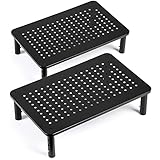
- ★DIMENSION for monitor riser desktop stand: Large 14.6 x 9.3 inches platform monitor stand riser, this screen riser is suitable for most of flat screen display, laptop and printer, iMac, this computer monitor stand maximum support weight up to 44lbs (20kg). Heights can be adjusted to 3.9", 4.7"&5.5", which allow you to customize your own viewing height. The width between legs is 12" & 7" for our tv riser, perfectly for storing your office supplies computer stand for desktop monitor.
- ★ Ergonomic Design monitor riser with 3 Height Adjustments: This lightweight raise computer monitor Stand comes with 3 adjustable height levels allowing you to choose the most ergonomic, healthiest and most comfortable viewing angle while working. Simply press the button on the leg of the pc stand and lift the platform to adjust between the different height levels 3.9/4.7/5.5 inch to create a comfortable viewing position which help reduce stress on the neck and back.
- ★Quick & Simple Easy ASSEMBLY computer stand: Simply unbox the computer stand for desk, screw-in legs, and place where it's most convenient. Our laptop and monitor stand comes with 1 platform and 4 legs, all you need to do is just screw the 4 legs into the platform and away you go. No tools needed. Have your monitor stand fully installed in 1 minute or less so you can focus more and improve your productivity with this monitor stands for 2 monitors.
- ★ EXTREMELY STABLE & SAFE laptop stand: This monitor riser holds up to 44 lbs comes with non-slip legs & anti-skid rubber that increases stability and protects your laptop and furniture from damage. Rest assured that your device is in safe hands while you get more work done. Also it could save space for your workplace.
- ★Ventilated Platform Increased Airflow Prevents Overheating monitor stand: Large sturdy platform with vented holes, this stand will prevent overheating and keep the device running cool. Our adjustable monitor riser is made of podwer coated steel with a perforated mesh hole platform that improves air flow going towards your device. The holes also help to prevent dreaded overheating and keep your computer cool and in peak working condition
This reframes the ending’s brutality. The bloodshed surrounding the final choice isn’t incidental or gratuitous. It’s the only “message” the system allows to pass through its structure, even if no one on the receiving end is actually listening.
Why Silence Is the Cruelest Outcome
Perhaps the most disturbing implication is that even extreme violence fails to generate true communication. No matter how brutal the act, the system remains silent. There is no response, no acknowledgment, no sign that suffering has meaning beyond its immediate consequences.
This is why the ending feels so hollow and unresolved. The characters scream through action, not words, and the system answers with indifference. Violence becomes language, but it is a language spoken into a void, exposing a structure where expression exists without recognition and sacrifice without witness.
Sacrifice vs. Systemic Change: Is Resistance Even Possible Inside the Platform?
If violence is the only language the system understands, sacrifice becomes its most extreme dialect. The ending of The Platform 2 forces a brutal question into focus: can giving oneself over to suffering ever disrupt a structure designed to absorb it? Or does the system simply metabolize sacrifice the same way it does hunger and death, as fuel rather than rupture?
Recommended Free Tools
The Illusion of the Meaningful Sacrifice
The film frames sacrifice as a final, almost sacred act, echoing the first film’s fixation on sending a “message” upward. In The Platform 2, that impulse returns, but it’s stripped of optimism. Sacrifice no longer carries the promise of awakening those in power; it functions as a personal moral stand in a space where morality has no currency.
What’s devastating is how little the system reacts. The platform continues its cycle, indifferent to intent. In this reading, sacrifice doesn’t fail because it lacks purity, but because the structure was never built to register ethical meaning in the first place.
Resistance Without Leverage
Traditional resistance depends on leverage: visibility, disruption, or consequence. Inside the platform, none of these exist in a meaningful way. The administration remains abstract and unreachable, and suffering is already the baseline condition.
This makes every act of resistance self-contained. It may restore a character’s sense of agency or dignity, but it cannot accumulate into change. The system isolates each act, preventing solidarity from ever becoming momentum.
Windows Errors? Fix Them Before They Spread
Repair common Windows errors and clear accumulated junk for a smoother, more stable PC - no reinstall needed.Free scan · no reinstallOutdated Drivers Are Slowing You Down
One free scan finds every outdated or missing driver and matches the right update for your exact hardware.Free scan · exact hardware matchHow The Platform 2 Reframes the Original Film’s Hope
Where the first The Platform flirted with the idea that a perfectly chosen symbol might break through, the sequel is far more cynical. It suggests that even symbols are processed, diluted, and neutralized once they enter the system’s machinery. What once felt like a fragile possibility now reads as a miscalculation.
This doesn’t negate the original film; it interrogates it. The Platform 2 asks whether believing in symbolic resistance is itself a survival mechanism, a way for individuals to endure injustice by imagining their suffering matters beyond themselves.
The System’s Greatest Trick
The platform doesn’t need to suppress resistance outright. It allows it, even invites it, because resistance that cannot scale is harmless. Sacrifice becomes another predictable outcome, another body accounted for in the cycle.
In this light, the ending’s bleakness isn’t nihilistic but diagnostic. The film isn’t saying resistance is immoral or pointless; it’s saying that within a closed, self-correcting system, resistance is permitted precisely because it changes nothing. The tragedy of The Platform 2 is not that the characters fail to resist, but that the system has already won by defining the terms under which resistance can exist at all.
Connecting the Endings: How The Platform 2 Comments on — and Complicates — the First Film
Viewed together, the endings of The Platform and The Platform 2 form a conversation rather than a contradiction. The first film ends on an unresolved gesture upward, a belief that meaning might still travel beyond the pit. The sequel responds by looking downward instead, asking what happens when the system absorbs every message before it can be understood.
What initially felt like ambiguity in the original now reads as intentional uncertainty. The Platform 2 doesn’t retcon that ending; it reframes it as a question the system never intended to answer.
From the “Message” to the Mechanism
In the first film, the panna cotta functions as a message: untouched, symbolic, and meant to signify collective restraint. Its power depends entirely on the belief that someone at the top can still be morally surprised. That belief sustains both Goreng and the audience through the film’s final moments.
The Platform 2 dismantles this assumption. Its ending suggests that the system is no longer reactive but automated, no longer listening but simply functioning. Messages don’t fail because they are unclear; they fail because there is no receiver capable of interpreting them as anything but data.
Hope Recast as a Structural Illusion
Where the first ending left space for hope to exist outside the frame, the sequel collapses that space inward. Any sense of transcendence is revealed as internal, psychological, and ultimately contained. Hope becomes something the characters generate to survive, not something that alters the conditions of survival.
This doesn’t make the original ending naïve, but it does make it tragic in retrospect. The Platform 2 implies that the belief in an external moral authority was itself a byproduct of the system, a final comfort offered to those trapped inside it.
Rank #4
Cycles, Not Conclusions
Both films end without closure, but they do so with different implications. The first pauses at the possibility of interruption, as if the cycle might finally break. The sequel insists on continuity, showing that the cycle doesn’t need resolution to persist.
By aligning their endings this way, The Platform 2 suggests that the true horror isn’t endless suffering, but endless repetition disguised as choice. Each ending feeds into the next, not narratively but philosophically, reinforcing the idea that systems of power endure by making every ending feel provisional, personal, and ultimately irrelevant to the structure itself.
Multiple Interpretations: Hope, Nihilism, or an Endless Loop?
The Platform 2’s ending resists a single, authoritative meaning, and that resistance feels intentional rather than evasive. By stripping away the idea of a receptive authority, the film opens itself to competing philosophical readings. Whether viewers walk away feeling devastated, cautiously hopeful, or trapped in conceptual quicksand says as much about their worldview as it does about the film’s design.
The Case for Hope: Awareness as Resistance
One interpretation frames the ending as a grim but necessary awakening. If the system can no longer be appealed to, then the illusion of reform is finally shattered. In this reading, the characters’ suffering produces clarity, not change, and that clarity is the first step toward any genuine resistance.
Hope here is not external or institutional. It exists only in consciousness, in the recognition that obedience, sacrifice, and symbolic gestures have been co-opted. The ending becomes hopeful not because the system breaks, but because belief in the system does.
The Nihilistic Reading: Nothing Ever Reaches the Top
A darker interpretation sees the ending as a declaration of futility. The platform keeps moving, the rules remain intact, and every act of defiance is absorbed without consequence. Sacrifice, cooperation, and even rebellion become just more variables in an unfeeling equation.
Free tools Windows power users keep installed
One-click scans. No signup required.
From this perspective, The Platform 2 suggests that meaning itself is a byproduct of oppression. The system doesn’t just control bodies; it exhausts interpretation until even resistance feels performative. The final moments aren’t tragic because they end in death or silence, but because they confirm that nothing was ever listening.
An Endless Loop Disguised as Choice
Perhaps the most unsettling reading lies between hope and nihilism. The ending can be seen as proof that the system survives by offering endless interpretive freedom while remaining materially unchanged. Characters believe they are choosing differently, acting more ethically, or seeing more clearly, yet the outcome never deviates.
This interpretation reframes the film’s ambiguity as part of its critique. The audience debates meaning while the platform continues its descent. In that sense, the ending mirrors the system itself: dynamic on the surface, static at its core, and perfectly designed to keep everyone inside it arguing about significance rather than escape.
What The Platform 2 Ultimately Says About Society, Power, and Complicity
If The Platform exposed how inequality is maintained through scarcity and fear, The Platform 2 sharpens the blade by interrogating why that system continues unchallenged. The sequel is less interested in who suffers than in how participation becomes normalized, even moralized. Power here is no longer faceless; it is distributed, internalized, and defended by those trapped within it.
The film’s bleak genius lies in how it reframes survival itself as collaboration. Eating, waiting, enforcing rules, and even hoping all become ways of sustaining the vertical order. By the end, it’s clear the system doesn’t require loyalty, only routine.
Power Doesn’t Need Villains When It Has Structure
One of the film’s most unsettling ideas is that no singular authority needs to intervene for the system to function. Unlike traditional dystopias, The Platform 2 avoids clear overseers or enforcers. The rules persist because the structure incentivizes obedience and punishes deviation automatically.
This absence of a visible oppressor shifts responsibility downward. Characters police each other, justify cruelty as necessity, and rationalize suffering as fairness. Power becomes architectural, embedded in the design rather than imposed by force.
Complicity as a Survival Mechanism
The sequel argues that complicity isn’t born from malice but adaptation. Most characters don’t believe in the system; they simply learn how to live inside it. Over time, endurance replaces outrage, and pragmatism replaces ethics.
Quick wins for a faster PC:
Scan for outdated or missing drivers - takes under a minuteDriver Scan →Clear out junk files and repair common Windows errorsFree Scan →What makes this more disturbing is how moral language is used to defend inaction. Sacrifice is praised when it costs others, and order is valued over justice. The film suggests that systems endure not because people agree with them, but because resisting feels impractical, dangerous, or futile.
The Illusion of Ethical Choice
The Platform 2 repeatedly presents moments where characters appear to choose differently than those before them. Yet those choices rarely alter outcomes. Whether through cooperation, rebellion, or self-denial, the structure absorbs every response.
This is where the sequel directly dialogues with the original film. If the first movie asked whether solidarity could save the system, the second questions whether ethical behavior matters at all when the framework remains untouched. Choice exists, but consequence does not.
A Mirror Held Up to the Audience
Perhaps the most biting element of the ending is how it implicates the viewer. The film knows it will be debated, interpreted, and dissected endlessly. That conversation becomes part of its thesis.
The Tool Desk
Outbyte PC Repair FREEClear out junk files and repair common Windows errorsFree Scan →Outbyte Driver Updater FREEFix the driver behind crashes, sound loss and screen glitchesFind Drivers →Just as the characters argue over meaning while the platform descends, the audience searches for answers while the system rolls on. The Platform 2 suggests that intellectual engagement, while valuable, can also become a substitute for action. Understanding injustice is not the same as interrupting it.
In the end, The Platform 2 offers no blueprint for escape and no comforting moral victory. Its final statement is harsher and more honest: systems like this persist because they don’t rely on monsters, only participation. Power survives not through domination alone, but through everyday compliance, justified by survival, dressed up as reason, and sustained by the hope that maybe next time, the platform will stop.
Quick Recap
Product prices and availability are accurate as of the date/time indicated and are subject to change. Any price and availability information displayed on Amazon at the time of purchase will apply.




