The Leavenworth Case (1878) is Anna Katharine Green’s first novel and an early landmark of American detective fiction. It opens with the shooting of a wealthy retired merchant in his own library, and it introduces Ebenezer Gryce, a professional investigator who returns in later Green books. Scholars credit the novel with helping establish the recurring detective and the puzzle-driven household murder, which is why Green is often called the “mother of detective fiction.” That label is useful shorthand, but it needs qualifying, and the book is worth reading on its own terms.
What the novel is about
The story begins with the death of Horatio Leavenworth, a wealthy retired merchant, who is shot in his library. The circumstances of the house narrow suspicion to the people living under his roof, including his nieces Mary and Eleanore. Everett Raymond, a lawyer connected to the Leavenworth family, works alongside Ebenezer Gryce, an unassuming official investigator, to determine who did it.

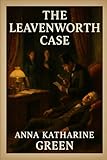


The setup will feel familiar to contemporary readers of closed-circle mysteries: a sealed household, an inheritance, and family members who all have something to hide. What distinguishes the book is its method. Gryce is a patient, methodical professional rather than a brilliant amateur, and the investigation unfolds through questioning and close observation of the household. The description here stays spoiler-free; the solution is left for readers to discover.
Why the book matters historically
The novel was published in 1878, the year it appeared as Green’s debut. Patricia D. Maida’s scholarly study, published by the University of Wisconsin Press, describes it as a bestseller and a seminal work of detective fiction. The press’s description of the study also says that recurring detectives were among Green’s major contributions, and that Ebenezer Gryce first appeared in 1878, almost a decade before Sherlock Holmes.
#1 Best Overall
That comparison is a matter of chronology, not causation. Green’s book and Arthur Conan Doyle’s A Study in Scarlet (1887) were produced in a shared literary moment, and nothing in the sources establishes that Doyle drew directly on Green. What the dates do show is that the serial-detective format Green used was already in circulation before Holmes became the standard reference point.
Scholarly accounts also place Green within a tradition that runs from Edgar Allan Poe toward later serial detectives. That placement is more defensible than any claim that she single-handedly invented the genre. Detective fiction developed through many writers, and Green’s contribution is best understood as a substantial early step, particularly in building a recurring investigator and a long-form, method-driven puzzle.
Is Green really “forgotten”?
The word “forgotten” in popular discussion of Green is a framing choice rather than a measured fact. What the available sources establish is a scholarly rehabilitation of her work, including a full-length study by Maida, and the continued availability of modern reissues. They do not quantify how widely the novel or its author are read today, and no survey or sales data was located to show a decline in readership. A fair reading is that Green is more often discussed by scholars and historians of crime fiction than by general readers, and that her reputation has been revisited rather than rebuilt from nothing.
What is established and what is not
- Established: the novel is from 1878 and was Green’s first; its central crime is the shooting of Horatio Leavenworth in his library; Gryce is its recurring investigator.
- Described as a bestseller: Maida’s publisher description says the novel quickly became a bestseller. No copies-sold figure from a traceable original source was found, so no exact sales number should be attributed to it.
- Not established: any verbatim quotation from Green, a contemporary reviewer, or a named scholar that can be quoted responsibly here. Paraphrase is safer until the full text of the scholarly study or an original contemporary source is consulted.
Choosing an edition
There are two distinct reader paths: a modern edition for reading, and an original 1878 copy for collecting. They are not interchangeable purchases, and they differ in what you need to verify.
Recommended Free Tools
| Option | Identifier or source | What to check before buying |
|---|---|---|
| Penguin edition | ISBN 978-0-14-310612-8; reviewed by Publishers Weekly | Confirm current listing, format and availability at the time of purchase. |
| HarperCollins-listed edition (2016) | ISBN 978-0-00-813759-5; recorded in Open Library | Confirm publisher, format and whether the listing is still active. |
| Earlier editions | Listed in Open Library’s catalog records | Check the edition statement, publisher and date against the catalog entry. |
| Original 1878 first edition (G. P. Putnam’s Sons) | Identified as the first edition in a specialist first-edition guide | Title-page details, binding, and any inserted material; verify with a reputable rare-book dealer or institutional catalog. |
If you are buying a modern edition
Compare text, introduction, publisher, format and current availability. Editions differ in whether they include introductory material on Green’s career, and that context is often the most useful feature for a first-time reader.
If you are considering an 1878 first edition
A specialist guide identifies the G. P. Putnam’s Sons 1878 issue as the first edition and discusses title-page, binding and insert clues. That guide is not an authoritative catalog record, so treat its identification as a starting point. Before paying a significant price, compare the publisher and date, the completeness of any inserted material, the condition, the provenance, and whether an independent dealer or institutional catalog confirms the same details.
Rank #4
Where to go next
For the scholarly context behind the claims in this article, Patricia D. Maida’s study from the University of Wisconsin Press is the most direct secondary source. Read the novel first, though. Green’s puzzle depends on how the household is arranged and how Gryce moves through it, and that is easier to appreciate without a summary in hand.
Quick Recap
Best Value
Product prices and availability are accurate as of the date/time indicated and are subject to change. Any price and availability information displayed on Amazon at the time of purchase will apply.
Free tools Windows power users keep installed
One-click scans. No signup required.




