For decades, Pamela Anderson existed as a cultural symbol more than a performer, her image shaped by Baywatch slow-motion mythology, tabloid narratives, and a media machine that rarely allowed her interiority to matter. Recent years have complicated that story, from the reflective clarity of her Netflix documentary to a growing willingness to reframe her career on her own terms. The Last Showgirl arrives as the most deliberate expression of that shift, positioning Anderson not as a nostalgic cameo or ironic stunt casting, but as the emotional center of a small, character-driven indie drama.
In the film, Anderson plays a veteran Las Vegas showgirl confronting the erosion of relevance, identity, and bodily capital in a world that has quietly moved on. It’s a role that draws obvious parallels to her public life, but the film resists easy meta commentary, instead allowing her performance to carry the weight of lived experience. That tension between perception and self-definition becomes the movie’s quiet engine, and Anderson proves unexpectedly adept at navigating it with restraint rather than self-pity.
| # | Preview | Product | Price | |
|---|---|---|---|---|
| 1 |
|
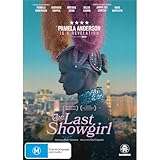
The Last Showgirl DVD | Pamela Anderson | $22.21 | Buy on Amazon |
| 2 |

|
THE LAST SHOWGIRL | $3.99 | Buy on Amazon |
| 3 |

|
The Last Real Showgirl: My Sequined '70s Onstage | $19.99 | Buy on Amazon |
| 4 |

|
The Last Showgirl : A Script | $3.99 | Buy on Amazon |
| 5 |

|
Anastasia (1956) | $14.99 | Buy on Amazon |
This review examines whether The Last Showgirl succeeds beyond the novelty of its casting, looking closely at Anderson’s lead performance while also interrogating the film’s storytelling, direction, and thematic ambition. At stake is more than a comeback narrative; it’s a test of whether the film can translate cultural reevaluation into meaningful cinema, and whether Anderson’s long-overdue dramatic credibility holds under sustained scrutiny.
Premise and Setting: The World of The Last Showgirl and What’s at Stake
The Last Showgirl unfolds in a Las Vegas that feels deliberately stripped of glamour, less postcard fantasy than emotional purgatory. The neon still hums in the background, but the film situates itself in backstage corridors, modest apartments, and aging rehearsal spaces where the illusion of permanence has long since worn thin. This is a city built on reinvention, yet unforgiving to those whose bodies and identities are tethered to a specific moment in time.
PC Slower Than It Used to Be?
A free scan shows the junk files, broken settings and background clutter dragging Windows down - then fixes them in one click.Free scan · Windows 10 & 11Crashes, No Sound, or Screen Glitches?
Random freezes, missing sound and display glitches usually trace back to one bad driver. Find and replace yours safely.Free scan · under a minute#1 Best Overall
- Pamela Anderson, Brenda Song, Kiernan Shipka
Pamela Anderson’s character has spent decades performing in the same long-running revue, a fixture of a fading entertainment model that once thrived on spectacle and objectification. When the show’s closure becomes inevitable, the film resists turning that plot point into melodrama. Instead, it treats the end of the production as a quiet existential rupture, forcing its protagonist to confront not just unemployment, but the erosion of self-definition.
A Profession Built on Visibility
What makes the premise quietly devastating is how thoroughly the character’s sense of worth has been intertwined with being seen. The film understands showgirl culture as both empowering and predatory, offering independence and identity while exacting a long-term emotional toll. Anderson’s character is not naïve about the compromises she has made, but she has also never been invited to imagine a version of herself beyond the stage.
Director Gia Coppola frames this world with a patient, observational eye, favoring natural light and unadorned compositions that allow age, fatigue, and vulnerability to exist without comment. The aesthetic reinforces the film’s central concern: what happens when a woman raised within a system of visual consumption is no longer deemed consumable. It’s a setting that mirrors Anderson’s own cultural history without reducing the character to autobiography.
Personal and Emotional Stakes
The Last Showgirl keeps its narrative stakes intimate, almost stubbornly so. There are no sweeping reinvention arcs or inspirational pivots toward newfound purpose. The tension lies in whether the character can sit with uncertainty long enough to imagine a future not defined by performance, validation, or nostalgia.
What’s actually slowing this PC down?
Pick the symptom - the matching free tool is one click away.
That restraint is both the film’s risk and its defining choice. By refusing easy redemption, the story asks the audience to engage with discomfort, aging, and diminished visibility as lived realities rather than narrative problems to be solved. It’s within this narrow emotional bandwidth that Anderson’s performance finds its power, and where the film reveals its ambitions as a character-driven indie drama rather than a symbolic comeback vehicle.
Pamela Anderson’s Performance: A Career-Reframing Turn of Vulnerability and Control
Pamela Anderson’s work in The Last Showgirl is not a reinvention so much as a recalibration. She strips away the defensive armor of celebrity and expectation, delivering a performance built on restraint, listening, and emotional precision. It’s a turn that feels earned rather than performative, anchored in lived experience without ever leaning on it for easy resonance.
Weaponized Restraint Over Reinvention
What’s most striking is how little Anderson signals to the audience. She resists theatrical displays of anguish, allowing scenes to breathe in silence, hesitation, and guarded body language. The performance trusts stillness as an expressive tool, letting discomfort linger rather than resolving it through catharsis.
Her control is evident in the smallest gestures: the way she occupies space backstage, the careful modulation of her voice when discussing her future, the practiced ease that slips only when she’s alone. These choices create a character who is perpetually performing and acutely aware of it, even when no one is watching.
Free tools Windows power users keep installed
One-click scans. No signup required.
Recontextualizing a Public Image
The film gains added texture from Anderson’s cultural history, but her performance never exploits it. Instead, she allows that history to sit quietly beneath the surface, informing how the character navigates being seen and not seen. There’s an implicit understanding of what it means to be valued for visibility, and the exhaustion that comes from sustaining it.
Rather than playing against type in an overt way, Anderson deepens it. She presents femininity not as spectacle but as labor, something maintained, rehearsed, and ultimately vulnerable to expiration. It’s a subtle reframing that gives the film emotional credibility without collapsing into meta commentary.
An Actor Finally Given Space to Listen
Gia Coppola’s direction gives Anderson room to react rather than perform, and she uses that space with intelligence. Many of the film’s most affecting moments happen when Anderson is responding to others, absorbing information she doesn’t yet know how to process. Her reactions carry more weight than her dialogue.
Rank #2
This responsiveness underscores the film’s commitment to character over plot. Anderson’s performance becomes the primary narrative engine, guiding the audience through uncertainty without offering emotional signposts. It’s a demanding approach, but one that she meets with surprising confidence.
Do these 3 things before closing this tab:
1Scan for outdated or missing drivers - takes under a minute2Clear out junk files and repair common Windows errors3Fix the driver behind crashes, sound loss and screen glitchesA Performance That Redefines the Film’s Ambitions
Without Anderson’s measured, introspective work, The Last Showgirl risks feeling too slight, too narrowly focused on its themes of aging and erasure. Her performance gives those ideas texture, grounding them in specificity rather than abstraction. She doesn’t ask for sympathy, and that refusal becomes the film’s most honest gesture.
This is not a comeback designed for awards-season soundbites, but a recalibration of how Anderson can function within serious, character-driven cinema. The film succeeds largely because it understands her strengths and allows her to exercise them with discipline, patience, and a newfound sense of authorship over her own image.
Character Study: Aging, Visibility, and the Cost of Living for the Applause
At the center of The Last Showgirl is a woman who understands that visibility is conditional, and that its withdrawal can feel abrupt and impersonal. The film treats aging not as tragedy but as a logistical problem, one that disrupts routines, income, and identity all at once. Anderson’s character isn’t mourning youth so much as negotiating relevance in a system that never promised longevity.
This distinction is crucial to the film’s restraint. Coppola avoids the familiar arc of self-pity or reinvention, instead observing how a life built around performance adapts when the audience thins out. The character’s anxiety isn’t abstract; it’s practical, rooted in rent, schedules, and the quiet fear of being replaced without ceremony.
Recommended Free Tools
Visibility as Currency
The film frames attention as a form of labor compensation, something earned nightly and never guaranteed tomorrow. Anderson plays a performer who knows exactly what her image provides, even as she senses its diminishing return. There’s no illusion of permanence, only the ongoing transaction between body, gaze, and survival.
What makes this dynamic compelling is how casually it’s depicted. No speeches announce the stakes; they’re embedded in side glances, in the way she prepares herself before going onstage, in the careful maintenance of a persona that still needs to work. The film understands that visibility doesn’t just fade, it gets redistributed.
The Private Cost of Public Adoration
Away from the stage, the character’s solitude becomes more pronounced, not because she lacks relationships, but because her work has trained her to be emotionally self-sufficient. Anderson captures the fatigue of someone who has spent years performing approachability, now unsure how to receive genuine concern without suspicion. Applause has been her most consistent form of affirmation, and its absence leaves an unfamiliar silence.
The Last Showgirl is careful not to romanticize this isolation. It presents it as an occupational hazard, one that accrues slowly and without melodrama. The film suggests that when admiration is your primary feedback loop, its disappearance can destabilize more than just confidence.
Aging Without Sentimentality
Perhaps the film’s most effective choice is its refusal to treat aging as a moral lesson. There are no grand realizations about self-worth beyond beauty, no tidy reframing of value. Instead, Coppola and Anderson allow aging to exist as a fact, one that demands adjustment rather than epiphany.
This approach gives the character dignity without sanctifying her experience. She is neither punished nor redeemed by time; she is simply required to adapt. In that honesty, The Last Showgirl finds its quiet power, offering a character study that respects its subject enough to let her remain unresolved.
Direction and Storytelling: How the Film’s Intimate Approach Shapes Its Emotional Impact
Gia Coppola’s direction leans into proximity rather than spectacle, placing the audience uncomfortably close to the emotional rhythms of her protagonist’s life. The camera favors faces over environments, gestures over dialogue, creating a sense that we are observing rather than being guided. This intimacy becomes the film’s defining strength, allowing Pamela Anderson’s performance to register in micro-adjustments of expression rather than dramatic beats.
The storytelling mirrors this approach, unfolding in fragments rather than arcs. Scenes end before they feel resolved, conversations drift without catharsis, and time passes without clear markers. Coppola resists the urge to shape the narrative into a conventional rise-or-fall trajectory, instead presenting the character’s life as an ongoing negotiation with relevance and routine.
Observational Direction Over Narrative Handholding
Coppola trusts the audience to read between the lines, often withholding exposition that might clarify backstory or motivation. This restraint can feel challenging, especially for viewers expecting clearer narrative signposts, but it reinforces the film’s thematic interest in uncertainty. The protagonist exists in a state of emotional and professional limbo, and the direction refuses to artificially stabilize that feeling.
This observational style also places greater responsibility on Anderson, who carries scenes that might otherwise feel underwritten. The camera’s patience allows her to fill narrative gaps with lived-in behavior, turning silence into subtext. In doing so, the film makes a quiet argument for performance as storytelling in its own right.
Minimalism as Emotional Amplifier
The film’s sparse plotting and muted pacing work in tandem with its visual language. Coppola avoids dramatic confrontations or symbolic turning points, favoring repetition and routine as structural elements. The effect is cumulative rather than immediate, with emotional weight accruing through familiarity rather than shock.
This minimalism sharpens the film’s emotional impact by refusing to tell the audience what to feel. Moments that might seem inconsequential in isolation gain resonance through recurrence, echoing the character’s own sense of days blending together. It’s a risky approach, but one that aligns closely with the film’s interest in endurance rather than transformation.
Quick wins for a faster PC:
Fix the driver behind crashes, sound loss and screen glitchesFind Drivers →Repair Windows errors before they cause bigger problemsFix Now →A Director-Actor Collaboration Built on Trust
The success of The Last Showgirl as a character-driven indie drama rests heavily on the trust between Coppola and Anderson. The direction never undercuts the performance with irony or sentimentality, allowing Anderson to exist onscreen without commentary. This hands-off confidence feels deliberate, signaling a belief that the character’s inner life is compelling enough without embellishment.
In this sense, the film’s intimate approach does more than shape its emotional impact; it defines its artistic identity. Coppola’s direction creates the space for Anderson’s career-defining performance to breathe, making the film less about plot progression than about presence. Whether that approach resonates will depend on the viewer’s patience, but its integrity is difficult to dismiss.
Supporting Cast and On-Screen Dynamics: Who Elevates (or Undercuts) the Lead
A Deliberately Muted Ensemble
The supporting cast of The Last Showgirl operates with restraint, a choice that mirrors the film’s overall minimalism but also places pressure on every interaction to feel purposeful. Most secondary characters are sketched lightly, defined less by backstory than by how they reflect or refract Anderson’s central presence. This approach largely works, reinforcing the sense that the world around the protagonist is indifferent, even as it continues to move forward without her.
That said, the thinness of characterization occasionally flattens emotional stakes. Some scenes feel less like exchanges between fully realized people and more like atmospheric punctuation, useful for tone but limited in dramatic tension. It’s a gamble that prioritizes mood over momentum, and while it keeps the focus squarely on Anderson, it also narrows the film’s emotional bandwidth.
The Tool Desk
Outbyte Driver Updater FREEFix the driver behind crashes, sound loss and screen glitchesFind Drivers →Outbyte PC Repair FREEClear out junk files and repair common Windows errorsFree Scan →Key Performances That Create Contrast
Among the supporting players, those given even modest shading prove essential in grounding the film. Performers inhabiting coworkers, acquaintances, and family-adjacent figures bring a casual naturalism that helps sell the film’s observational texture. Their performances are not showy, but they provide subtle counterpoints to Anderson’s more internalized work, reminding the audience of the external pressures she rarely articulates.
Rank #4
When these interactions land, they deepen the film’s thematic concern with invisibility and aging in performance-driven industries. A passing remark or half-hearted encouragement often carries more weight than overt conflict, precisely because it underscores how little space the protagonist occupies in other people’s emotional landscapes. These moments quietly validate Anderson’s performance by giving it something tangible to push against.
When Understatement Becomes Absence
Not all of the ensemble dynamics are as successful. In several scenes, the supporting cast recedes to the point of near anonymity, making certain relationships feel conceptually sound but emotionally abstract. This is where the film’s devotion to subtlety risks disengagement, as the lack of friction can drain scenes of immediacy.
Still, even these limitations serve a larger purpose. The relative emotional vacancy around the protagonist reinforces the film’s portrait of professional and personal marginalization. Whether this reads as thematically coherent or dramatically undercooked will vary by viewer, but there’s no question that the supporting cast exists primarily to frame Anderson’s performance rather than compete with it.
Themes and Subtext: Reinvention, Female Agency, and the Myth of the Spotlight
At its core, The Last Showgirl is less about comeback than recalibration. The film treats reinvention not as a triumphant narrative beat but as a quiet, often uncomfortable process shaped by age, economic reality, and shifting cultural value systems. This perspective aligns closely with Pamela Anderson’s own career context, lending the film an added layer of meta-textual resonance without ever tipping into self-mythologizing.
Reinvention Without Applause
Unlike many films about performers facing obsolescence, The Last Showgirl resists the catharsis of public redemption. Reinvention here happens privately, in half-decisions and emotional recalibrations rather than bold declarations. The absence of a clear “next act” becomes the point, emphasizing survival and self-definition over reinvention as spectacle.
Anderson’s performance anchors this approach with remarkable restraint. She plays a woman who understands that reinvention does not guarantee renewed visibility, only a chance at internal coherence. That distinction gives the film a maturity often missing from stories about aging women in entertainment, where worth is too frequently revalidated through external recognition.
Female Agency in a Narrowing World
The film’s treatment of female agency is deliberately unsentimental. Choice exists, but it is constrained by financial precarity, industry indifference, and the erosion of cultural patience for women who no longer align with youthful fantasy. The Last Showgirl never pretends these limitations can be willed away, and its honesty is one of its quiet strengths.
Agency here is expressed through endurance rather than dominance. Anderson’s character navigates her circumstances with a subdued resolve that refuses both victimhood and romanticized resilience. It’s a portrayal that acknowledges how agency can look small from the outside while remaining profoundly personal from within.
The Myth of the Spotlight
Perhaps the film’s most pointed subtext lies in its dismantling of the spotlight itself. Fame is depicted not as a sustaining force but as a temporary illusion that leaves little behind once it moves on. The camera lingers on empty spaces, backstage corridors, and off-hours environments, visually reinforcing how performance culture discards what it no longer finds useful.
This thematic thread also reframes Anderson’s casting as more than stunt or novelty. The film understands her public image as part of the narrative architecture, using it to interrogate how audiences consume and abandon female performers. In doing so, The Last Showgirl becomes not just a character study, but a quiet critique of the systems that define worth by visibility and confuse attention with longevity.
Technical Craft and Tone: Cinematography, Score, and the Texture of Indie Realism
If The Last Showgirl ultimately succeeds as a character-driven indie drama, much of that credit belongs to its disciplined technical craft. The film’s aesthetic choices are intentionally modest, designed not to impress but to observe. That restraint mirrors the emotional economy of Anderson’s performance, creating a unified tone that privileges presence over polish.
Quick wins for a faster PC:
Fix the driver behind crashes, sound loss and screen glitchesFind Drivers →Clear out junk files and repair common Windows errorsFree Scan →Best Value
Cinematography That Resists Glamour
The cinematography leans into naturalistic lighting and unobtrusive framing, favoring lived-in spaces over stylized spectacle. Las Vegas, typically rendered as excess incarnate, is presented here in muted hues and off-peak quiet, stripped of illusion and photographed like any other working environment. The camera often holds at a respectful distance, allowing scenes to breathe without editorial insistence on emotional punctuation.
This visual approach resists the temptation to aestheticize decline or hardship. Instead, it situates Anderson’s character within an environment that feels neither hostile nor romanticized, just indifferent. That indifference becomes part of the film’s emotional texture, reinforcing its themes without underlining them.
A Score That Knows When to Step Back
The score is sparingly deployed, favoring subtle motifs over declarative emotion. When music does enter, it tends to underscore mood rather than dictate feeling, often fading out before scenes resolve. Silence, or near-silence, is frequently allowed to carry moments that lesser films would flood with sentiment.
This restraint benefits Anderson immensely. Without musical cues instructing the audience how to feel, her performance has room to register in small shifts of posture, cadence, and gaze. The film trusts its lead, and the score follows suit.
The Lived-In Feel of Indie Realism
Director and crew embrace a form of indie realism that prioritizes texture over narrative momentum. Scenes unfold with a slightly unhurried rhythm, emphasizing routine, repetition, and the emotional weight of ordinary time passing. Editing choices favor continuity and observation, avoiding the sharp compression typical of more commercial dramas.
This tonal consistency is crucial to the film’s credibility. By refusing heightened dramatics, The Last Showgirl allows its themes to emerge organically, aligning form with content. The result is a film that feels honest about its limitations, just as its protagonist is honest about hers, creating a quietly cohesive cinematic experience grounded in empathy rather than aspiration.
Final Verdict: Is The Last Showgirl Worth Watching—and What It Means for Pamela Anderson’s Legacy
A Performance That Reframes a Career
The Last Showgirl is, first and foremost, worth watching for Pamela Anderson’s performance, which stands as one of the most quietly assured turns of her career. She resists any impulse toward self-mythologizing, instead embracing vulnerability, fatigue, and emotional restraint. The film never asks the audience to applaud her transformation, but the cumulative effect is undeniable. Anderson proves not only that she can carry a dramatic feature, but that she can do so without leaning on nostalgia or irony.
This role subtly recalibrates her legacy. Rather than functioning as a comeback engineered for headlines, it feels like a reclamation of craft long overshadowed by persona. The performance suggests a future in character-driven cinema that values presence over provocation, and emotional truth over spectacle.
Free tools Windows power users keep installed
One-click scans. No signup required.
An Indie Drama That Knows Its Limits
As a film, The Last Showgirl succeeds within a clearly defined scope. Its storytelling is intentionally modest, sometimes to a fault, favoring atmosphere and observation over narrative propulsion. Viewers expecting conventional plot arcs or dramatic catharsis may find its pacing challenging. Yet those attuned to indie cinema’s quieter rhythms will recognize a confidence in how little the film insists upon itself.
The direction and screenplay understand that not every life-altering moment announces itself. By focusing on routine, erosion, and emotional stasis, the film offers a truthful depiction of a working life nearing its twilight. It does not always feel urgent, but it does feel honest.
Who This Film Is For
The Last Showgirl will resonate most with audiences drawn to character studies and performance-first storytelling. It is less concerned with entertainment value in the traditional sense than with emotional accuracy and lived-in detail. For Pamela Anderson fans, it offers a rare opportunity to see her unguarded and unadorned, carrying a film on internal strength rather than star power.
Ultimately, the film stands as a meaningful, if understated, entry in contemporary indie drama. It may not redefine the genre, but it solidifies Anderson’s place within it, suggesting that her most interesting work may still be unfolding. In that sense, The Last Showgirl is not just worth watching, it feels like the beginning of a more enduring chapter rather than a closing act.
Outdated Drivers Are Slowing You Down
One free scan finds every outdated or missing driver and matches the right update for your exact hardware.Free scan · exact hardware matchWindows Errors? Fix Them Before They Spread
Repair common Windows errors and clear accumulated junk for a smoother, more stable PC - no reinstall needed.Free scan · no reinstallQuick Recap
Product prices and availability are accurate as of the date/time indicated and are subject to change. Any price and availability information displayed on Amazon at the time of purchase will apply.