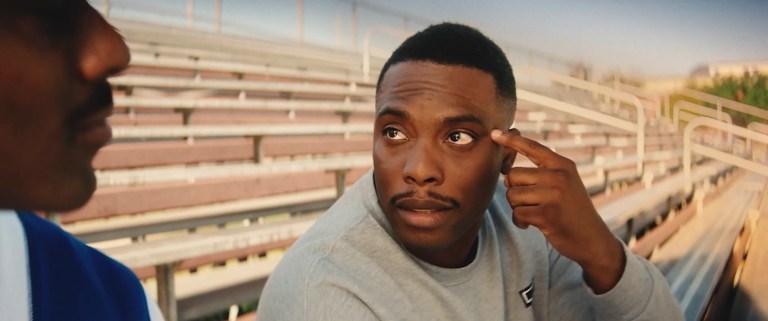
When Jason Bourne arrived in theaters in 2016, it looked like a clean victory lap. Matt Damon was back, Paul Greengrass returned to direct, and the film delivered a solid global box office haul that suggested the franchise still had muscle. Yet despite that surface-level success, the movie quietly marked the point where the Bourne series stopped moving forward.
In the decade since, the absence of a direct sequel has felt less like a delay and more like a stall. The reasons are not rooted in a single failure, but in a convergence of creative fatigue, shifting studio priorities, and an industry that changed faster than Bourne could adapt. Understanding why the franchise hit a wall after 2016 explains why its future has remained unresolved for so long.
| # | Preview | Product | Price | |
|---|---|---|---|---|
| 1 |
![The Bourne Complete Collection - 4K Ultra HD + Digital [4K UHD]](https://m.media-amazon.com/images/I/51b+krARE-L._SL160_.jpg)
|
The Bourne Complete Collection - 4K Ultra HD + Digital [4K UHD] | $34.99 | Buy on Amazon |
| 2 |
![The Bourne Ultimate Collection [4K Ultra HD]](https://m.media-amazon.com/images/I/516MpJgBSJL._SL160_.jpg)
|
The Bourne Ultimate Collection [4K Ultra HD] | $52.99 | Buy on Amazon |
| 3 |

|
The Bourne Complete Collection - Blu-ray + Digital | $17.65 | Buy on Amazon |
| 4 |

|
Jason Bourne (4K UHD) | $4.99 | Buy on Amazon |
| 5 |
![Jason Bourne: 5 Movie Collection [4K Ultra HD Blu-ray]](https://m.media-amazon.com/images/I/310HcANe53L._SL160_.jpg)
|
Jason Bourne: 5 Movie Collection [4K Ultra HD Blu-ray] | $65.05 | Buy on Amazon |
Creative Closure Disguised as a Comeback
Jason Bourne was conceived less as a launching pad and more as a final statement. Greengrass and Damon approached the film with a sense of thematic closure, revisiting surveillance, identity, and institutional corruption without leaving obvious narrative doors open. Once the story was told, neither filmmaker expressed urgency to continue, and without their involvement, the franchise lacked its defining creative engine.
Matt Damon’s Reluctance to Repeat the Formula
Damon has been unusually candid about his hesitation to return without a compelling reason. The physical toll of the role, combined with the repetition inherent in the character’s arc, made another sequel feel unnecessary rather than inevitable. Universal was unwilling to move forward with a Bourne film that didn’t include Damon, effectively freezing development.
Recommended Free Tools
#1 Best Overall
A Franchise Caught Between Eras of Action Cinema
Bourne helped redefine modern action in the early 2000s, but by 2016 the genre had evolved again. Audiences were gravitating toward heightened spectacle, shared universes, and stylized set pieces rather than grounded espionage realism. Jason Bourne performed well financially, but its muted critical reception signaled diminishing cultural impact.
Studio Rights and Strategic Uncertainty
Behind the scenes, rights complexities further slowed momentum. Universal retained the franchise but faced an unclear long-term strategy without a creative team in place, while the Ludlum estate weighed broader opportunities for the property. Without a definitive plan for reinvention or continuation, Bourne drifted into development limbo rather than moving decisively forward.
The Rights Reset: How Universal Lost Control and What That Changed Overnight
For years, Universal Pictures functioned as the unquestioned steward of the Bourne identity, controlling development timelines, creative approvals, and the franchise’s overall direction. That era ended quietly but decisively when the underlying rights reverted back to the Robert Ludlum estate after the studio failed to actively advance a new installment. What followed was less a pause and more a hard reset that fundamentally altered Bourne’s future.
The moment those rights shifted, Bourne was no longer bound to Universal’s internal hesitations or legacy commitments. The franchise re-entered the open marketplace as a valuable but creatively flexible asset, free from the expectations attached to its past films. Overnight, the question stopped being when Universal would make another Bourne movie and became who would make the next Bourne movie at all.
Why the Rights Reverted in the First Place
Universal’s hold on Bourne was not permanent; it was conditional on continued development. With Matt Damon uninterested in returning and no viable replacement strategy in place, the studio allowed the property to stagnate beyond the thresholds typically required to maintain exclusivity. Once those windows closed, the Ludlum estate was legally empowered to seek new partners.
This was less a hostile breakup than a natural consequence of inaction. Universal had prioritized other franchises with clearer paths forward, leaving Bourne in a holding pattern that ultimately worked against them. In an industry increasingly driven by momentum, standing still proved fatal.
The Estate’s Strategic Pivot
Once the rights reset, the Ludlum estate moved quickly and decisively. Rather than defaulting back to Universal out of familiarity, the estate partnered with a major talent agency to shop the property aggressively across studios and streamers. The message was clear: Bourne was no longer a sequel-dependent franchise tied to one actor or one studio.
This repositioning reframed Bourne as a long-term intellectual property play rather than a dormant film series. The estate emphasized flexibility, openness to reinvention, and the potential for expansion beyond the traditional theatrical sequel model. That alone made the franchise instantly more attractive in a post-IP-gold-rush landscape.
The Tool Desk
Outbyte Driver Updater FREEScan for outdated or missing drivers - takes under a minuteDriver Scan →Outbyte PC Repair FREERepair Windows errors before they cause bigger problemsFix Now →New Players, New Possibilities
As the property circulated, multiple studios reportedly expressed interest, drawn by Bourne’s global recognition and grounded tone in an era of escalating spectacle. Skydance Media ultimately emerged as the leading new home for the franchise, signaling a shift toward a more modern franchise-building approach. While final deal details were closely guarded, the intent was unmistakable: Bourne would be rebuilt, not simply resumed.
For the first time since The Bourne Identity, the franchise’s future was no longer tethered to Matt Damon’s availability or Paul Greengrass’ vision. Damon’s involvement became optional rather than essential, opening the door to recasting, rebooting, or parallel storytelling. The rights reset didn’t just free Bourne from Universal; it freed the character from his own past.
Inside the Bidding War: Studios, Streamers, and the New Power Players
Once the Ludlum estate opened the door, the Bourne franchise became one of the most quietly competitive IP pursuits in Hollywood. This wasn’t a flashy auction conducted in public trades, but a tightly managed bidding process aimed at partners who could balance legacy respect with long-term franchise ambition. Bourne’s value wasn’t just nostalgia; it was credibility in a market saturated with heightened, CGI-driven action.
Traditional studios immediately saw theatrical upside, while streamers viewed Bourne as a prestige action brand capable of anchoring a global slate. The franchise’s grounded realism, international scope, and built-in name recognition made it unusually adaptable to both models. That flexibility is precisely what drove interest across multiple lanes of the industry.
Do these 3 things before closing this tab:
1Scan for outdated or missing drivers - takes under a minute2Clear out junk files and repair common Windows errors3Fix the driver behind crashes, sound loss and screen glitchesThe Studio Perspective: Theatrical Still Matters
For legacy studios, Bourne represented one of the last action franchises with proven box office appeal that didn’t rely on superheroes or fantasy mythology. Executives saw potential in reviving the brand as a premium theatrical experience, particularly overseas, where Bourne has historically performed strongly. The argument was simple: if handled correctly, Bourne could still be an event.
Rank #2
- Runtime: 603 minutes
However, those same studios faced internal hesitation. Rebuilding Bourne would require creative risk, marketing patience, and a willingness to move forward without guaranteed original cast participation. In an era of safer franchise extensions, that made some studios cautious, even if the IP itself remained attractive.
The Streamer Play: Bourne as a Global Brand Engine
Streamers approached Bourne from a different angle, viewing it as a platform rather than a single-film proposition. Limited series, spin-offs, and international storylines were all reportedly discussed as part of broader franchise ecosystems. For subscription-driven companies, Bourne’s recognizability offered immediate value in crowded content libraries.
There was also an appetite to modernize the franchise’s themes, leaning harder into surveillance, data warfare, and geopolitical instability. Streamers saw Bourne as a way to deliver adult-skewing action with prestige ambition, filling a gap between blockbuster spectacle and grounded political thrillers. That made the franchise unusually well-suited to long-term episodic expansion.
What’s actually slowing this PC down?
Pick the symptom - the matching free tool is one click away.
Why Skydance Emerged on Top
Skydance’s emergence wasn’t about outspending competitors, but out-positioning them creatively. The company has built its reputation on revitalizing established IP while maintaining close relationships with both studios and streaming platforms. That hybrid fluency made Skydance a natural fit for a franchise in transition.
Crucially, Skydance pitched Bourne as a flexible universe rather than a single reboot mandate. The approach left room for a theatrical relaunch, serialized storytelling, or a combination of both, depending on how the first project performs. For the Ludlum estate, that adaptability aligned perfectly with their post-Universal strategy.
What This Means for Matt Damon
One of the most significant shifts in the bidding process was the reframing of Matt Damon’s role. Interested parties no longer viewed his participation as a prerequisite, but as a potential asset if the timing and story aligned. That removed a major bottleneck that had stalled the franchise for years.
Damon remains respected as the face of Bourne’s modern era, but the new rights holders are no longer building around his availability. Whether through a reboot, a new operative, or a parallel narrative, the franchise is finally structured to move forward with or without him. That reality, more than any single deal point, defines the power shift at the heart of the bidding war.
Crashes, No Sound, or Screen Glitches?
Random freezes, missing sound and display glitches usually trace back to one bad driver. Find and replace yours safely.Free scan · under a minutePC Slower Than It Used to Be?
A free scan shows the junk files, broken settings and background clutter dragging Windows down - then fixes them in one click.Free scan · Windows 10 & 11Is Matt Damon Done for Good? What Insiders Say About His Willingness to Return
With the franchise finally moving beyond Universal’s long stewardship, the biggest question for fans remains whether Matt Damon has truly closed the door on Jason Bourne. Insiders close to the negotiations say the answer is more nuanced than a simple yes or no. Damon isn’t actively pursuing another Bourne film, but he hasn’t ruled it out either.
What has changed is the leverage dynamic. For the first time since The Bourne Ultimatum, Damon is no longer the structural cornerstone of the franchise’s future, and that shift has actually made his potential return more realistic rather than less.
Damon’s Longstanding Conditions Haven’t Changed
Over the years, Damon has been remarkably consistent about what it would take to bring him back. He has repeatedly signaled that a compelling story and the right creative partner, most notably director Paul Greengrass, would be essential. Without those elements, he’s shown little interest in revisiting the role.
Industry sources say that stance still holds. Damon is not looking for a nostalgia-driven encore or a legacy cameo, and he has little appetite for a soft reboot that simply resets the clock. Any return would need to feel additive, not repetitive.
Why the New Rights Situation Actually Helps His Odds
Paradoxically, Damon’s chances of returning improve now that the franchise no longer depends on him. Skydance and the Ludlum estate are developing Bourne as a broader narrative ecosystem, which allows Damon to participate selectively rather than shoulder an entire relaunch. That flexibility removes the pressure that previously made a comeback feel all-or-nothing.
Insiders suggest this opens the door to limited appearances, parallel storylines, or even a late-stage reintroduction once a new version of the franchise finds its footing. In that context, Damon’s Bourne becomes a narrative asset rather than a logistical obstacle.
No Rush, No Reunion Tour
Crucially, there is no internal mandate to bring Damon back immediately. The current development philosophy prioritizes sustainability over star dependency, and that means the next Bourne project is likely to move forward without him. If it succeeds, the conversation shifts from whether the franchise can survive without Damon to whether his return could elevate it further.
For now, the message from insiders is clear: Matt Damon isn’t done with Jason Bourne in spirit, but he’s also not waiting by the phone. If he returns, it will be because the story earns it, not because the franchise needs saving.
Free tools Windows power users keep installed
One-click scans. No signup required.
Reboot, Recast, or Reinvent? The Creative Paths on the Table
With the rights now consolidated and the urgency to chase Damon removed, Skydance and the Ludlum estate have more creative latitude than the franchise has had in years. That freedom has sparked three distinct approaches under active discussion, each with different implications for tone, continuity, and long-term viability. Importantly, none of them are being rushed into production, a signal that the studio is prioritizing durability over short-term relevance.
What’s clear is that the next Bourne project will define the franchise’s future, not just extend its past. The question isn’t simply who plays Jason Bourne, but what Bourne represents in a post-Greengrass, post-Damon landscape.
The Full Reboot Option
A clean reboot remains the most straightforward path on paper, but it’s also the least creatively favored. Starting over with a younger actor and retelling the origins would allow for a fresh entry point, yet it risks feeling redundant in a genre already saturated with spy reinventions. Internally, there’s awareness that Bourne’s amnesia-driven origin story has already been exhaustively explored.
There’s also the brand issue. Bourne without any connective tissue to the Damon films risks becoming just another competent espionage thriller rather than a cultural event. For a franchise built on realism and character specificity, wiping the slate entirely clean may undermine what made it distinct in the first place.
The Straight Recast Continuation
A more nuanced option is a recast that preserves continuity while moving the timeline forward. This would position a new actor as an operational successor, someone shaped by the same black-ops machinery but not burdened by retelling Bourne’s personal journey. Think evolution rather than erasure.
This approach aligns with the studio’s desire to maintain the franchise’s grounded tone while avoiding direct comparison to Damon. It also leaves room for legacy elements to exist in the background, keeping the door open for future crossovers without making them obligatory.
Reinvention Through Expansion
The most intriguing path, and the one insiders say is gaining the most traction, is reinvention through expansion. Rather than centering the franchise exclusively on Jason Bourne, the idea is to build stories around the systems, agencies, and covert programs that created him. Bourne becomes part of the mythology, not necessarily the protagonist.
This model mirrors how modern franchises are built: flexible, scalable, and less dependent on a single character. It also dovetails with Damon’s current positioning, allowing his Bourne to exist as a looming presence or eventual narrative payoff rather than the foundation of the entire enterprise.
Quick wins for a faster PC:
Scan for outdated or missing drivers - takes under a minuteDriver Scan →Repair Windows errors before they cause bigger problemsFix Now →Why a Straight Sequel Is Unlikely—and What a Bourne Reset Would Look Like
For all the nostalgia surrounding Matt Damon’s return in 2016’s Jason Bourne, the film quietly clarified a hard truth for the studio: the traditional sequel model has diminishing returns. Damon’s Bourne reached emotional closure long ago, and each subsequent chapter has had to work harder to justify reopening his story. From a creative standpoint, there is little appetite to put the character back into the same cycle of shadow wars and personal reckonings.
From a business perspective, the math is just as unforgiving. Damon’s involvement comes with a premium price tag, extended development timelines, and creative constraints that make rapid franchise building difficult. Universal wants Bourne to function as a long-term asset, not an occasional prestige revival, and that makes a Damon-led sequel more limiting than liberating.
The Rights Reality Shaping Bourne’s Future
Complicating matters is the shifting rights landscape. With the Robert Ludlum estate actively exploring new partnerships and Universal no longer treating Bourne as a dormant crown jewel, the mandate is flexibility. Any future iteration needs to work whether or not Damon ultimately returns, rather than being dependent on his availability or interest.
Rank #4
That reality makes a straight sequel the riskiest option. It locks the franchise into a single creative lane at a time when studios are prioritizing adaptability, cross-platform potential, and long-term scalability. Bourne’s future is being designed to survive beyond one actor, one filmmaker, or one release window.
Why a Full Reboot Doesn’t Solve the Problem
A clean reboot might seem like an easy solution, but internally it’s viewed as a creative dead end. Retelling Bourne’s origin without Damon invites direct comparison while offering little that audiences haven’t already seen. In a market flooded with reboots and spy reimaginings, familiarity is no longer a selling point.
There’s also the risk of brand dilution. The Bourne identity, quite literally, is tied to a specific performance, tone, and era of filmmaking. Strip that away entirely, and the franchise risks losing its unique cultural weight.
What a Bourne Reset Actually Looks Like
Instead, the reset under consideration is more structural than narrative. The focus shifts from Jason Bourne the man to the intelligence ecosystem that produced him. New protagonists, new field agents, and new moral compromises take center stage, all operating in the long shadow of Treadstone and Blackbriar.
In this model, Bourne himself becomes a legend within the universe. His actions have consequences that ripple forward, shaping policy, paranoia, and protocol long after he’s gone underground. That allows the franchise to honor its legacy while telling stories that feel urgent, contemporary, and unburdened by repetition.
Do these 3 things before closing this tab:
1Scan for outdated or missing drivers - takes under a minute2Repair Windows errors before they cause bigger problems3Fix the driver behind crashes, sound loss and screen glitchesWhere Matt Damon Fits—If at All
Crucially, this approach doesn’t close the door on Damon. It simply reframes his importance. Rather than carrying the franchise, he becomes a strategic asset: a potential mentor figure, a final-act revelation, or a one-film return event designed to elevate the larger saga.
That optionality is the point. By building a Bourne world instead of another Bourne sequel, the franchise gains room to grow while preserving the possibility of one last, meaningful appearance from the man who defined it.
Independent reader supportYour contribution helps us test, update, and keep practical guides available for everyone.The Spy Franchise Landscape: How Bond, Mission: Impossible, and TV Changed Bourne’s Future
The recalibration of Bourne isn’t happening in a vacuum. The modern spy genre has undergone a quiet but decisive evolution, driven by how James Bond, Mission: Impossible, and prestige television have redefined what longevity and relevance look like in espionage storytelling. Those shifts have directly influenced how studios now view Bourne’s path forward.
Where Bourne once felt disruptive, the market has caught up. That reality has forced the franchise to rethink not just its next movie, but its entire creative posture.
Crashes, No Sound, or Screen Glitches?
Random freezes, missing sound and display glitches usually trace back to one bad driver. Find and replace yours safely.Free scan · under a minutePC Slower Than It Used to Be?
A free scan shows the junk files, broken settings and background clutter dragging Windows down - then fixes them in one click.Free scan · Windows 10 & 11James Bond Proved Reinvention Has a Shelf Life
Bond’s Daniel Craig era demonstrated how effective a grounded, psychologically driven reboot can be, but it also revealed its limits. By the time No Time to Die closed that chapter, the franchise had fully exhausted the idea of emotional realism layered onto a legacy character. The result was a definitive ending that left Bond’s owners facing the same question now confronting Bourne: what comes after the definitive version?
For Bourne, the lesson was cautionary. Audiences will embrace reinvention once, but repeated attempts to modernize the same icon eventually feel redundant. Universal has no appetite to put Bourne into the same cyclical reboot trap Bond is now navigating.
Mission: Impossible Raised the Bar for Theatrical Event Status
If Bond showed the limits of reinvention, Mission: Impossible highlighted the dangers of escalation. Tom Cruise’s franchise has thrived by transforming each installment into a global spectacle, but it has also become inseparable from its star. The stunts, scale, and marketing are all built around Cruise’s physical commitment.
Bourne cannot, and should not, compete on that axis. The franchise was never about spectacle for spectacle’s sake. Trying to chase Mission: Impossible’s event-driven model would require bigger budgets, broader tone shifts, and a star dependency Universal is actively trying to avoid.
Free tools Windows power users keep installed
One-click scans. No signup required.
Best Value
Prestige Television Quietly Solved the Bourne Problem
The most significant influence on Bourne’s future isn’t another movie franchise, but television. Shows like Jack Ryan, Slow Horses, The Night Agent, and even Andor have proven that espionage now thrives on long-form storytelling. Audiences are drawn to systemic corruption, bureaucratic rot, and morally compromised institutions rather than singular super-agents.
This is where Bourne’s mythology naturally fits. Treadstone, Blackbriar, and post-9/11 intelligence overreach were always bigger than one man. Expanding that world across multiple characters and timelines aligns perfectly with how modern spy stories are being consumed.
Why Bourne’s Future Is About Format as Much as Story
Internally, the franchise is now viewed as format-flexible rather than film-exclusive. Theatrical releases remain part of the plan, but they are no longer the sole delivery mechanism. Limited series, streaming-first projects, and interconnected storylines are all being discussed as viable extensions of the Bourne universe.
That flexibility is what keeps Damon relevant without making him essential. In a landscape shaped by Bond’s closure, Mission: Impossible’s escalation, and television’s narrative depth, Bourne’s survival depends on becoming an ecosystem rather than a singular action vehicle.
The Tool Desk
Outbyte Driver Updater FREEScan for outdated or missing drivers - takes under a minuteDriver Scan →Outbyte PC Repair FREERepair Windows errors before they cause bigger problemsFix Now →The Most Likely Outcome: What the Next Jason Bourne Era Will Actually Be
The clearest signal emerging from Universal’s recent moves is that Bourne isn’t ending—it’s being restructured. The studio is no longer chasing a definitive “next movie,” but a sustainable framework that can support multiple stories across formats without overcommitting to a single star or tone.
This isn’t a hard reboot, and it isn’t a clean continuation either. It’s a controlled reset that preserves the Bourne identity while loosening its dependence on Jason Bourne himself.
A Soft Reboot Built Around the World, Not the Man
The most likely next step is a project that treats Bourne as a legacy figure rather than an active lead. That could mean a new protagonist operating within the same intelligence ecosystem, shaped by the fallout of Treadstone and its successors.
In this model, Bourne’s actions still matter. His exposure of CIA black ops becomes the inciting mythology rather than the ongoing plot engine, allowing new characters to inherit the moral consequences without mimicking his journey.
Matt Damon’s Role: Present, But No Longer Central
Matt Damon remains a valuable asset, but not a structural necessity. Industry conversations increasingly frame his involvement as optional—cameos, limited appearances, or advisory participation rather than full franchise stewardship.
That approach protects the character’s legacy while avoiding the trap that ensnared other long-running franchises. Damon can return when the story justifies it, not because the brand requires him to anchor every installment.
Why Television Is Likely the First Domino
A limited series is the most practical launchpad for this new era. It allows deeper exploration of intelligence culture, modern surveillance, and institutional decay without the box office pressure that now weighs on mid-budget action films.
Television also provides a low-risk way to test new characters and tones. If one resonates, theatrical spinoffs can follow organically rather than being forced upfront.
Quick wins for a faster PC:
Repair Windows errors before they cause bigger problemsFix Now →Scan for outdated or missing drivers - takes under a minuteDriver Scan →Clear out junk files and repair common Windows errorsFree Scan →Universal’s Endgame: Longevity Over Event Status
What Universal appears to want is durability. Bourne doesn’t need to compete with Mission: Impossible’s spectacle or Bond’s iconography to survive. It needs relevance, flexibility, and thematic consistency in a crowded espionage landscape.
By turning Bourne into a narrative universe instead of a star-driven franchise, the studio ensures it can evolve with audience tastes rather than aging out of them.
The next Jason Bourne era won’t announce itself with a title card or a global press tour. It will arrive quietly, through a new face, a familiar moral tension, and a world that still feels uncomfortably close to our own. That’s not a retreat—it’s exactly how Bourne has always worked best.
Quick Recap
Product prices and availability are accurate as of the date/time indicated and are subject to change. Any price and availability information displayed on Amazon at the time of purchase will apply.