Crashes, No Sound, or Screen Glitches?
Random freezes, missing sound and display glitches usually trace back to one bad driver. Find and replace yours safely.Free scan · under a minuteWindows Errors? Fix Them Before They Spread
Repair common Windows errors and clear accumulated junk for a smoother, more stable PC - no reinstall needed.Free scan · no reinstallIn a February 2018 interview, Arnaud Nourry, then chief executive of Hachette Livre, called the ebook “a stupid product” because he believed conventional ebooks mostly copied print instead of using digital media to create a distinct reading experience. He was criticizing how publishers had handled digital publishing—not declaring that Hachette opposed ebooks or that every digital book must be creatively limited.
What Nourry said about ebooks
Speaking with Harsimran Gill of Scroll.in in an interview published February 17, 2018, Nourry said: “The ebook is a stupid product. It is exactly the same as print, except it’s electronic. There is no creativity, no enhancement, no real digital experience.” The Guardian quoted the same interview in its contemporaneous report on his remarks.
His point was about the conventional commercial ebook as he saw it: a digital version of a book designed for a flat printed page. He argued that publishers had not made much of the possibilities beyond that format. “We, as publishers, have not done a great job going digital,” he said, describing attempts at enhanced ebooks, apps, and websites as yielding “one or two successes among a hundred failures.” That was his rhetorical assessment of the industry, not a measured survey of products or outcomes.
Was he against ebooks?
No. The Guardian reported that Nourry explicitly said Hachette was not against ebooks. He regarded them as a part of publishing, but argued they should cost less than print books. “People have to pay a price that is about 40% lower than the print price. And it works,” he said. That was Nourry’s proposed price relationship in 2018, not a verified average or a rule for ebook prices today.
#1 Best Overall
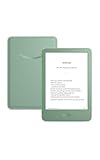
- Light and compact - With adjustable brightness, high contrast ratio, and fast page turns.
- Effortless reading in any light - Read comfortably with a 6“ glare-free display, adjustable front light—now 25% brighter at max setting—and dark mode.
- Escape into your books - Tune out messages, emails, and social media with a distraction-free reading experience.
- Read for a while - Get up to 6 weeks of battery life on a single charge.
- Take your library with you – 16 GB storage holds thousands of books.
He also framed price control as a way to protect the wider book ecosystem. The distinction matters: his objection was to an ebook that simply reproduces print without offering a sufficiently distinct digital experience, not to readers choosing electronic books.
What he thought publishers were missing
Nourry did not say that digital books could never become more than electronic copies. He said he believed publishers could invent something new with their content and digital properties, but lacked the skills and talent to do so. In the interview, he attributed that gap to an industry accustomed to selecting manuscripts and designing them “on a flat page.”
Rank #2

- Light and compact - With adjustable brightness, high contrast ratio, and fast page turns.
- Effortless reading in any light - Read comfortably with a 6“ glare-free display, adjustable front light—now 25% brighter at max setting—and dark mode.
- Escape into your books - Tune out messages, emails, and social media with a distraction-free reading experience.
- Read for a while - Get up to 6 weeks of battery life on a single charge.
- Take your library with you - 16 GB storage holds thousands of books.
That criticism identifies a challenge of craft and organization as much as a technical one. A digital-native work may require decisions about software, interaction, audio or video, and how those elements serve the reading experience. Simply adding features does not guarantee a better book; the question is whether they make the work more meaningful or useful.
Can digital books do more than replicate print?
Yes, at least in the sense that publishers and creators have experimented with multimedia and interactive forms. A 2018 filing by Authors Alliance and co-signers in a U.S. Copyright Office proceeding cited examples of enhanced editions and independent platforms for interactive works. Those examples show that such formats existed, but do not establish how common they were, whether they succeeded commercially, or whether those particular products remain available.
Rank #3
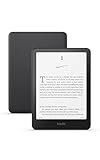
- Our fastest Kindle Paperwhite ever – The next-generation 7“ Paperwhite display has a higher contrast ratio and 25% faster page turns.
- Ready for travel – The ultra-thin design has a larger glare-free screen so pages stay sharp no matter where you are.
- Escape into your books – Your Kindle doesn’t have social media, notifications, or other distracting apps.
- Battery life for your longest novel – A single charge via USB-C lasts up to 12 weeks.
- Read in any light – Adjust the display from white to amber to read in bright sunlight or in the dark.
Scholarship also puts Nourry’s complaint in historical context. Simone Murray Rowberry’s history of ebooks describes them not only as files but as systems involving devices, software, connectivity, and services. Commercial ebook design often emphasized practical reproduction of print, even as designers and inventors explored ways screens might support different kinds of reading. That distinction leaves room for both observations: a standard ebook can closely resemble print, while digital publishing can also experiment with other forms.
For some readers, similarity to print is a feature rather than a failure. E-readers and ebook platforms made books portable and practical on screens, and electronic paper displays were developed to support sustained reading. A familiar page-like experience may be the right choice when the goal is to read a text without distraction. Multimedia and interactivity matter only when they serve the work.
Rank #4

- 3.7" Pocket eBook Reader, Only Approx. 58g: Take your library anywhere with the XTEINK X3, a compact 3.7-inch lightweight eReader designed for everyday portability. Weighing approximately 58g and measuring just 5.1mm thin, it easily slips into your pocket or bag, making it ideal for reading during commutes, while traveling, or during quick breaks.
- Paper-feel E-Ink Reading, Made for Focus: Enjoy a clean, paper-feel E-Ink reading experience that feels gentle on the eyes and helps you stay focused. No constant notifications, no social media distractions—just a simple mini eReader built for books, manga, notes, and quiet reading time.
- Gyroscope Page-Turn + Physical Buttons: Read comfortably with one hand using gyroscope page-turn control and responsive physical buttons. Whether you are standing, commuting, or relaxing, XTEINK X3 makes page turning smoother, easier, and more intuitive than traditional touch-only reading devices.
- Personalized Features & Long-Lasting Battery:Switch between reading, photos, clock, and more for a customizable experience beyond traditional eReaders. Designed for everyday portability, XTEINK X3 delivers up to 10 hours of reading time, supporting about a week of casual reading on a single charge. For safe charging, use a locally certified charger and keep conductive objects away from the charging pin contacts during charging to help prevent short circuits.
- Magnetic-Ready Design with Pogo-Pin Charging: XTEINK X3 includes an Adhesive Metal Ring to enable magnetic attachment on compatible non-magnetic phone cases or surfaces, expanding compatibility for everyday use. The magnetic pogo-pin charging design maintains a clean, minimalist appearance while supporting convenient daily charging.
How to read Nourry’s market figures
Nourry also offered estimates of ebook market share in the 2018 interview. These are his estimates from that time, not current statistics:
| Market | Nourry’s 2018 estimate of ebook share |
|---|---|
| United States and United Kingdom | About 20% of the total book market |
| Other markets | 5%–7% of the total book market |
The interview does not make these figures a current, comparable measure of ebook adoption by country. They should be understood as Nourry’s characterization of the market in 2018.
Quick wins for a faster PC:
Clear out junk files and repair common Windows errorsFree Scan →Scan for outdated or missing drivers - takes under a minuteDriver Scan →Repair Windows errors before they cause bigger problemsFix Now →What the headline gets right—and what it leaves out
The headline captures Nourry’s frustration with ebooks that mimic print and with publishers’ limited success in building distinctive digital products. It can mislead if read as a blanket rejection of ebooks: he said Hachette was not against them, accepted their place in publishing, and argued that they should be priced below print. His broader challenge to publishers was to explore digital formats with more imagination, while recognizing that an added feature is not automatically an enhancement.
Quick Recap
Product prices and availability are accurate as of the date/time indicated and are subject to change. Any price and availability information displayed on Amazon at the time of purchase will apply.




