Watching TV with your family can turn a show into a chance to connect, talk, and learn about what matters to your child. The benefits depend on what you watch and how you watch: choosing suitable content and joining in is different from leaving a screen on in the background or having a child watch alone.
What family co-viewing can offer
A starting point for conversation
When you watch with a child, you can ask what they think is happening, how a character might feel, or what they would do next. The American Academy of Pediatrics (AAP) describes shared viewing as a way to understand children’s media experiences and open conversations about what they see. AAP co-viewing guidance
A window into a child’s interests
Sharing a program your child enjoys gives you a chance to see what captures their attention and to enjoy a common experience. It can support connection, but it does not guarantee a closer relationship; the value is in the attention and interaction you bring to it.
Room to discuss perspectives
Stories can raise questions about choices, feelings, and how people treat one another. Talking about a character’s point of view can help children make connections and consider another person’s perspective. A show provides a prompt for discussion, not proof that a child has learned a particular lesson.
#1 Best Overall
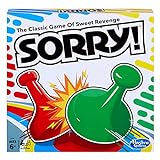
- GAME OF SWEET REVENGE: Enjoy classic Sorry! gameplay with this Sorry! board game for kids. It's an edge-of-your-seat race to home, so hurry up and get there first
- FIRST ONE HOME WINS: Who will be the first player to get all 3 of their pawns to the home space? But watch out! Players can get "sweet revenge" by sending each other's pawns back to the starting point
- SO MANY POSSIBILITIES: Slide, collide, and score to win the Sorry! game. This family game for kids and adults features so many possibilities depending on the card picked up and strategy chosen
- CLASSIC SORRY! GAMEPLAY: Remember playing the original Sorry! game as a kid? Bring back memories of playing the Sorry! game with family members and introduce it to a new generation
- FAMILY GAME NIGHT FAVORITE: A go-to game for family time or anytime indoor fun, the Sorry! game for kids is one of the best family games for game night
Why watching together is different from simply having the TV on
| Approach | What it can do | What to keep in mind |
|---|---|---|
| Active co-viewing | An adult watches, listens, and talks with the child about the program. | It gives you opportunities to understand the child’s interests and discuss the content. AAP guidance |
| Solo or background viewing | The child watches alone, or a screen plays without shared attention. | This is not the same as engaged co-viewing. The AAP’s 2025 policy statement discusses associations between heavier solo or noneducational media use and less favorable outcomes; it does not establish that one family viewing session causes harm. AAP 2025 policy statement |
| Shared selection and discussion | Family members help choose a suitable program and talk about it together. | This can model thoughtful media choices and shared expectations, including times when devices are put away. AAP guidance |
Choose content and involvement to suit the child’s age
Children ages 2–5
The AAP’s 2016 policy statement recommends no more than one hour per day of high-quality programming for children ages 2–5. It also recommends that a caregiver watch with the child and help them understand and apply what they see. This is age-specific guidance, not a universal limit for older children. AAP, “Media and Young Minds”
School-aged children and adolescents
For older children, AAP guidance supports involving them in media selection and co-viewing. The cited guidance does not set one daily viewing-time limit for every school-aged child or adolescent, so consider the child’s needs and whether media is displacing sleep, physical activity, reading, meals, or offline time with family. AAP, “Media Use in School-Aged Children and Adolescents”
Rank #2

- CLASSIC BEGINNER GAME: Do you remember playing Candy Land when you were a kid. Introduce new generations to this sweet kids' board game
- RACE TO THE CASTLE: Players encounter all kinds of "delicious" surprises as they move their cute gingerbread man pawn around the path in a race to the castle
- NO READING REQUIRED TO PLAY: For kids ages 3 and up, Candy Land can be a great game for kids who haven't learned how to read yet
- GREAT GAME FOR LITTLE ONES: The Candy Land board game features colored cards, sweet destinations, and fun illustrations that kids love
How to make a shared viewing session worthwhile
- Choose together. Pick something appropriate for the child’s age and interests. For young children, prioritize high-quality programming.
- Give it your attention. Watch together when possible rather than treating a TV left on in the background as shared activity.
- Talk naturally. Ask a question, notice a character’s choices, or let the child tell you what caught their attention. There is no need to turn every episode into a lesson.
- Keep other routines protected. Make room for sleep, play, reading, meals, and conversation away from screens.
What the evidence does—and does not—establish
Co-viewing is best understood as an opportunity for interaction, not as a guaranteed developmental or relationship benefit. The AAP’s 2025 policy statement describes the evidence on children’s digital media as largely observational and reports associations between heavier noneducational or solo screen use and less favorable developmental, sleep, and activity outcomes. Those associations do not show that a particular family movie night causes harm, nor do they quantify how much co-viewing improves learning, wellbeing, or family relationships. AAP 2025 policy statement
Quick Recap
Best Value

- WHO’S GOT THE MOVES: Classic Twister gameplay challenges players to place their hands and feet on red
- GIVE THE SPINNER A WHIRL: See where it lands and make a move. Right foot red, off to a good start. Left foot green, you’ve got this. Left hand blue … wait, is that physically possible. Give it a shot
- INDOOR ACTIVITY FOR KIDS: Stuck inside. The Classic Twister game is an action-packed way for kids, tweens, and teens to "get their energy out." (Parents, rejoice)
- FUN PARTY GAME TO PLAY IN TEAMS: This group game includes instructions to play in teams, along with tips for hosting a Twister tournament. Break out the mat for game night too
- TYING PLAYERS UP IN KNOTS FOR GENERATIONS: Who doesn’t remember playing this Hasbro game as a kid. The Twister game is for adults and kids age 6 and up. Families can join in the fun together
Rank #4

- INTRODUCING A DIGITAL DIE: More suspense, more surprises, more laughs! In this Jenga game, enjoy the classic Jenga gameplay fans love—or dare to play it with the digital die for added challenges
- 6 MORE WAYS TO PLAY: Roll the digital die for unpredictable challenges: play using thumbs only, race against the clock, and more! (To download the die onto a phone, scan the in-pack QR code or access the web app. No additional purchase needed)
- HILARIOUS CHALLENGES: Actions like “Team-Up” amp up the fun! A player who rolls it selects another player to act as their eyes. The other player can guide their arm, but can’t touch the tower—or topple it
- EXCITING GAME FOR PARTIES OR SOLO PLAY: The Jenga game for kids and adults is the wooden block balancing game livening up parties for generations. No friends around? No problem. Play solo to beat a personal best
- GENUINE WOOD BLOCKS: The Jenga party game includes 54 precision crafted wooden blocks. Pull out a block, place it on top, but don't let the tower fall in this original wood block game
Rank #3

- FUN FAMILY GAME FOR KIDS: Remember playing the original Trouble board game as a kid? Introduce a new generation to classic Trouble gameplay with this Trouble game for kids
- EASY TO LEARN AND SET UP: The Trouble game is easy to play and quick set up. The object of the game is simple: the first player to get all of their game pieces around the board wins
- POWER UP SPACES: The game instructions include options for classic Trouble gameplay or a version with Power Up Spaces for a more challenging game
- POP-O-MATIC BUBBLE: In this beloved children's board game, players press and pop the plastic bubble to roll the die. The iconic Pop-o-Matic die roller is fun to press, and it keeps the die from getting lost
- BOARD GAMES FOR FAMILY: Adults and kids can play this family board game together. It's a fun indoor game for playdates and a great choice for Family Game Night
Product prices and availability are accurate as of the date/time indicated and are subject to change. Any price and availability information displayed on Amazon at the time of purchase will apply.




