Do these 3 things before closing this tab:
1Fix the driver behind crashes, sound loss and screen glitches2Repair Windows errors before they cause bigger problems3Scan for outdated or missing drivers - takes under a minuteMaya Angelou’s poems portray resistance in more than one way: “Still I Rise” confronts a hostile gaze with personal defiance, “Caged Bird” gives confinement and the desire for freedom a symbolic voice, and “On the Pulse of Morning” addresses a nation at a civic turning point. Read together, they connect individual dignity with historical memory and collective possibility—without reducing every poem to the same message.
What does resistance mean in Angelou’s poems?
Resistance in these poems is not one fixed idea or a single biographical code. It takes different forms: answering denigration, imagining freedom under constraint, and inviting a public audience to consider its shared future. Close reading can show how each poem creates that effect; biographical context helps situate Angelou’s work but does not settle its meaning.
| # | Preview | Product | Price | |
|---|---|---|---|---|
| 1 |

|
The Complete Poetry | $12.98 | Buy on Amazon |
| 2 |

|
Maya Angelou: Poems | $9.74 | Buy on Amazon |
| 3 |

|
The Complete Collected Poems of Maya Angelou | $26.86 | Buy on Amazon |
| 4 |

|
Phenomenal Woman: Four Poems Celebrating Women | $7.61 | Buy on Amazon |
| 5 |
|
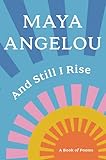
And Still I Rise: A Book of Poems | $13.41 | Buy on Amazon |
Angelou’s literary career and activism overlapped. The Library of Congress account of Maya Angelou records her involvement in civil-rights efforts, including work with a northern wing of the Southern Christian Leadership Conference and the Organization of Afro-American Unity. That context matters, but the poems’ language and occasions remain the clearest grounds for interpreting them.
How does “Still I Rise” address oppression?
“Still I Rise” opens by confronting the possibility that history will misrepresent or diminish its speaker. The speaker then addresses an implied hostile observer directly, turning the act of being judged into an occasion for answering back. Questions challenge that observer’s assumptions; the poem’s confident, witty voice refuses to accept the terms imposed on it.
#1 Best Overall
Its repeated declarations of rising make persistence audible as well as thematic. The refrain, “But still, like dust, I’ll rise,” is brief but central: dust rises despite attempts to press it down. As the poem develops, its defiance reaches beyond an individual exchange, drawing on historical pain, shame, ancestors, and the legacy of slavery. The movement from confrontation toward inherited memory gives the speaker’s survival a larger historical resonance.
The Academy of American Poets text and record for “Still I Rise” credits the poem to And Still I Rise and dates its publication to 1978. The poem’s challenge can be read as personal dignity, a response to racialized historical denigration, or both; its language supports those readings without requiring one exclusive interpretation.
Rank #2
Where to read the poem in book form
Penguin Random House’s listing for And Still I Rise: A Book of Poems identifies the collection that gives the poem its title. The publisher lists a hardcover edition dated August 12, 1978, alongside ebook and audiobook formats. The collection is a useful starting point for readers who want to encounter the poem in its book context; it should not be assumed to contain every Angelou poem discussed here.
What does the caged bird symbolize?
In “Caged Bird,” the contrast between a bird in confinement and one that moves freely gives restriction and longing a vivid symbolic form. The caged bird’s desire to sing can be read as an expression of voice and yearning under conditions that limit freedom. Unlike “Still I Rise,” which stages direct confrontation, this poem’s resistance is carried through contrast: the imagined freedom of one bird throws the other’s confinement into relief.
Quick wins for a faster PC:
Clear out junk files and repair common Windows errorsFree Scan →Scan for outdated or missing drivers - takes under a minuteDriver Scan →Repair Windows errors before they cause bigger problemsFix Now →That is a symbolic reading of the poem, not a claim that each image maps directly onto one event in Angelou’s life. “Caged Bird” is a poem distinct from her autobiography I Know Why the Caged Bird Sings, despite their shared image. Poetry Foundation listings credit the poem to Shaker, Why Don’t You Sing? and note its inclusion in The Complete Collected Poems of Maya Angelou.
How is “On the Pulse of Morning” different?
“On the Pulse of Morning” was written for a public occasion, not an imagined private confrontation. Angelou recited it on January 20, 1993, at President Bill Clinton’s inauguration. The Library of Congress describes the poem’s civic orientation in terms of unity, inclusivity, and opportunity, and places it in a tradition of African American oratory and storytelling.
Rank #4
Its address asks listeners to think beyond themselves and toward a shared civic future. The Library of Congress account identifies the rock, river, and tree among the poem’s symbols. Those images give the public address a scale different from the personal voice of “Still I Rise” or the symbolic enclosure of “Caged Bird.” The resistance here is an invitation to accept responsibility for what a society might become, rather than a reply to one hostile observer.
Independent reader supportYour contribution helps us test, update, and keep practical guides available for everyone.How do the three poems frame resistance differently?
| Poem | Speaker and setting | Central image or method | Scale of resistance |
|---|---|---|---|
| “Still I Rise” | A speaker addresses an implied hostile observer against the background of historical denigration. | Repeated assertions of rising, rhetorical questions, and movement toward ancestral memory. | Personal dignity connected to historical survival. |
| “Caged Bird” | A symbolic contrast between confinement and freedom. | The bird, the cage, and the desire to sing. | Longing for freedom and voice under constraint. |
| “On the Pulse of Morning” | A public address delivered at the 1993 presidential inauguration. | The rock, river, and tree, described in the Library of Congress account. | Collective civic possibility and responsibility. |
These are interpretive distinctions, not rigid categories. What links the poems is not that they speak in the same voice, but that each makes room to imagine a response to forces that diminish, constrain, or divide.
Crashes, No Sound, or Screen Glitches?
Random freezes, missing sound and display glitches usually trace back to one bad driver. Find and replace yours safely.Free scan · under a minuteWindows Errors? Fix Them Before They Spread
Repair common Windows errors and clear accumulated junk for a smoother, more stable PC - no reinstall needed.Free scan · no reinstallBest Value
How biography adds context without fixing meaning
The Library of Congress records Angelou’s civil-rights activity as well as her public literary life. It also notes that her first poetry collection, Just Give Me a Cool Drink of Water ’fore I Diiie, was nominated for a Pulitzer Prize, and that she received the Presidential Medal of Freedom in 2010. These facts help situate her work and public role; they are not substitutes for reading the poems’ particular speakers, images, and occasions.
Quick Recap
Product prices and availability are accurate as of the date/time indicated and are subject to change. Any price and availability information displayed on Amazon at the time of purchase will apply.




