Star Trek’s Q is an all-powerful, unpredictable member of the Q Continuum, played by John de Lancie. He first puts Captain Jean-Luc Picard and the Enterprise-D crew on trial in The Next Generation’s “Encounter at Farpoint,” then returns across several series as adversary, trickster, occasional guide, and—eventually—a deeply personal presence in Picard’s life.
Who is Q in Star Trek?
Q is a representative of the Q Continuum, a race StarTrek.com describes as all-powerful. He can disrupt ordinary reality and place Starfleet officers in situations that expose their judgment, assumptions, and choices. His extravagant entrances and taunts make him a comic performer as well as a threat; treating him simply as a villain misses the uncertainty at the heart of his encounters.
| # | Preview | Product | Price | |
|---|---|---|---|---|
| 1 |

|
TUBBZ: Star Trek TNG - Q Continuum Rubber Duck Collectible Toy 3.5" | $20.59 | Buy on Amazon |
| 2 |

|
Mego Star Trek: The Next Generation: Q 8" Action Figure Multicolor | $24.90 | Buy on Amazon |
| 3 |
|
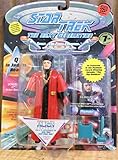
Star Trek The Next Generation Q In Judges Robes | $29.86 | Buy on Amazon |
Q’s first on-screen confrontation comes in “Encounter at Farpoint,” the The Next Generation pilot. He puts Picard and the crew on trial, establishing a relationship that will recur throughout the series. StarTrek.com’s selected gallery of Q appearances follows him across The Next Generation, Deep Space Nine, Voyager, Lower Decks, and Picard; it is a curated selection, not a complete census of every appearance.
What is the Q Continuum?
The Continuum is the larger society of powerful beings to which Q belongs. Its stories widen the subject beyond Q’s personal rivalry with Picard: they raise questions about the responsibilities and limits of near-immortal power, and about what it means to choose an end to existence.
What’s actually slowing this PC down?
Pick the symptom - the matching free tool is one click away.
#1 Best Overall
- Welcome to Boxed Edition TUBBZ; highly detailed, carefully crafted collectible figures that capture the essence of your favourite characters, complete with costumes and accessories
- Flaunt your collection in style using the display box adorned with awesome Miku inspired graphics, perfect for displaying on your shelf or gifting to a loved one
- Whether you’re a die-hard gamer or passionate movie lover, our official Boxed Edition TUBBZ range is perfect for gifting and jeep ducking
- Collect all of your favourite characters from games, movies, TV shows, comic books, and popular music as they come to life as rubber duck vinyls
- Approximately 9 centimetres (3.54 inches) tall when outside of tub display stand (some may vary)
Quinn’s request for asylum
In Voyager’s “Death Wish,” another Q, Quinn, asks for asylum because he wants to end his immortal existence. The episode makes the Continuum’s conflict personal and ethical rather than merely a spectacle of Q’s powers. StarTrek.com reported that 6.8 million viewers watched “Death Wish” in a 2015 article; the page does not identify the original ratings-data publisher, so the figure should be understood as a historical episode-specific report, not a measure of Q’s overall popularity.
How Q changes across the franchise
From judge to disruptive foil
In The Next Generation, Q’s tests can feel like games, but their stakes reach beyond the joke. “Q Who” brings the Borg into the Enterprise’s path, while “Déjà Q” takes away Q’s powers and changes the terms of his relationship with the crew. “Tapestry” turns his attention toward Picard’s choices and the life those choices produced. Across these stories, Q can be judge, comic disruptor, adversary, or catalyst.
Beyond Picard
Q’s role depends on the crew he provokes. He clashes with Benjamin Sisko in Deep Space Nine’s “Q-Less” and draws Kathryn Janeway into Continuum affairs on Voyager, including “The Q and the Grey” and “Q2.” His animated appearance in Lower Decks’ “Veritas” offers another franchise-era variation, while Picard returns him to the story of Picard’s later life.
Rank #2
- A retro-style figure from Mego
- Officially licensed
- Stands 8" tall
- Features 14 points of articulation
- Retro-style blister card
A personal reconciliation
In Picard, Q’s purpose is framed less as a test of humanity than as an effort to make Picard face trauma and loneliness. The story brings their long antagonistic relationship toward reconciliation before Q’s final moments. It gives the character’s provocations a more intimate context without erasing the mischief and danger that defined earlier encounters.
What John de Lancie says about playing Q
De Lancie has said he did not consider Q a villain. In an interview with StarTrek.com, he described being drawn to stories built around large questions, including whether someone can reclaim a life and whether they deserve to be “out here.” He also singled out material in “All Good Things…” as especially satisfying and said he felt particularly suited to Q. These are the actor’s perspectives, not a definitive statement of the character’s intended meaning.
In a StarTrek.com video, de Lancie summed up Q as “mad, bad and dangerous to know.” The line captures the character’s theatrical self-presentation, but it is not a neutral description of the entire Q Continuum—or of every role Q plays in the stories.
Independent reader supportYour contribution helps us test, update, and keep practical guides available for everyone.Which Q episodes should you watch?
This selected path starts with Q’s introduction, follows his changing relationship with Picard, and then branches out to show the Continuum and other crews. The episodes are drawn from StarTrek.com’s Q appearances gallery and retrospective coverage; they are not a complete appearance list.
- The Next Generation: “Encounter at Farpoint,” “Hide and Q,” “Q Who,” “Déjà Q,” “Qpid,” “True Q,” “Tapestry,” and “All Good Things…”
- Deep Space Nine: “Q-Less.”
- Voyager: “Death Wish,” “The Q and the Grey,” and “Q2.”
- Lower Decks: “Veritas.”
- Picard: “The Star Gazer.”
Compare four episodes by what Q is doing
| Episode | What it highlights |
|---|---|
| “Encounter at Farpoint” | Q as judge, testing humanity through Picard and the Enterprise-D crew. |
| “Q Who” | Q as a disruptive adversary whose intervention exposes the crew to a wider danger. |
| “Déjà Q” | Q’s loss of power and the consequences of being made vulnerable. |
| “Tapestry” | Q as a catalyst for Picard to consider the life shaped by his choices. |
| “Death Wish” | The Continuum beyond Q, through Quinn’s request to end his immortal existence. |
A useful way to read the path is to ask two questions: is the story mainly about Picard or about the wider Continuum, and is Q acting chiefly as judge, comic disruptor, adversary, or compassionate catalyst? The answers shift from episode to episode, which is why Q works as more than a recurring antagonist.
Quick wins for a faster PC:
Fix the driver behind crashes, sound loss and screen glitchesFind Drivers →Clear out junk files and repair common Windows errorsFree Scan →Further reading about Q
StarTrek.com identifies two books focused on Q: I, Q, a Q-and-Picard adventure by John de Lancie, and Q’s Guide to the Continuum, a humorous look at the Star Trek universe from Q’s perspective. These are useful next steps for readers who want Q-centered stories beyond the screen.
Quick Recap
Product prices and availability are accurate as of the date/time indicated and are subject to change. Any price and availability information displayed on Amazon at the time of purchase will apply.




