Quick wins for a faster PC:
Repair Windows errors before they cause bigger problemsFix Now →Scan for outdated or missing drivers - takes under a minuteDriver Scan →Clear out junk files and repair common Windows errorsFree Scan →There is no single authoritative ranking of the 50 greatest directors—or a definitive pair of best films for each. This curated list treats greatness as a combination of sustained achievement, influence, stylistic innovation, range and cultural reach. The two films selected for each director balance critical standing and historical importance with how well they represent the filmmaker’s work. It is a viewing guide, not a claim that one poll or formula settles the question.
How to read this list
The 100 films below are organized as two essential starting points for each director, not ranked from 1 to 100. The pair aims to show both a filmmaker’s signature and a distinct facet of their career where possible. “Best” is necessarily a judgment: a different reader might choose another masterpiece, and a different selection could emphasize accessibility, national cinema or a particular period.
| # | Preview | Product | Price | |
|---|---|---|---|---|
| 1 |

|
The Bourne Complete Collection - Blu-ray + Digital | $17.65 | Buy on Amazon |
| 2 |
![Riddick: The Complete Collection [Blu-ray]](https://m.media-amazon.com/images/I/51ITY6eDlLL._SL160_.jpg)
|
Riddick: The Complete Collection [Blu-ray] | $12.99 | Buy on Amazon |
| 3 |
|
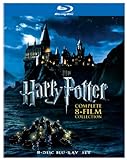
Harry Potter: The Complete 8-Film Collection (BD) | $39.99 | Buy on Amazon |
| 4 |

|
The Twilight Saga: 5-Movie Collection | $15.99 | Buy on Amazon |
The Sight and Sound poll is a valuable record of changing film-industry and critical opinion, but it ranks films according to ballots cast in a particular edition. It does not rank directors by a shared, objective measure of greatness. BFI’s 2012 directors’ poll, for example, listed Federico Fellini first in its poll-derived top ten directors, followed by Stanley Kubrick; that is a result from that edition, not a universal order.
What the Sight and Sound polls can—and cannot—tell us
The British Film Institute’s Sight and Sound “Greatest Films of All Time” poll began in 1952. It publishes separate critics’ and directors’ polls, so their winners should not be conflated. In the 2022 directors’ poll, 2001: A Space Odyssey ranked first; the maintained BFI results page reports 480 filmmaker ballots. In the separate 2022 critics’ poll, Chantal Akerman’s Jeanne Dielman, 23 quai du Commerce, 1080 Bruxelles took the top spot.
Windows Errors? Fix Them Before They Spread
Repair common Windows errors and clear accumulated junk for a smoother, more stable PC - no reinstall needed.Free scan · no reinstallCrashes, No Sound, or Screen Glitches?
Random freezes, missing sound and display glitches usually trace back to one bad driver. Find and replace yours safely.Free scan · under a minute#1 Best Overall
BFI’s 2025 retrospective describes the 2022 critics’ electorate as more than 1,600 critics, programmers, curators, academics and archivists, and the directors’ electorate as almost 600 filmmakers. Those are the retrospective’s descriptions; the maintained directors’ results page gives a different count of 480 filmmaker ballots. The figures belong to their respective BFI pages and should not be combined as if they were one precise tally. The retrospective also reports 3,800 different films nominated by critics and 1,700 by directors—evidence of how varied the electorate’s choices were, not a scoring system for directors.
The results change with time and electorate. In the 2012 directors’ poll, Yasujiro Ozu’s Tokyo Story was first with 48 votes, while 2001: A Space Odyssey and Orson Welles’s Citizen Kane tied for second with 42 votes apiece. By 2022, 2001 led the directors’ list. The BFI’s 2012 page also records 358 participating directors. A poll is best understood with its edition and voters attached: a film’s placement reflects that ballot, not a permanent verdict.
Rank #2
- Shrink-wrapped
The 50 directors and their 100 essential movies
Each director has two films chosen to offer a compact entry into their work. The selections favor landmark achievement and influence while trying to show range rather than simply repeat one kind of film. The order of directors is for navigation, not a ranking.
Silent cinema and the foundations of film language
- Charlie Chaplin — City Lights; Modern Times.
- Buster Keaton — Sherlock Jr.; The General.
- F. W. Murnau — Sunrise: A Song of Two Humans; The Last Laugh.
- Sergei Eisenstein — Battleship Potemkin; Ivan the Terrible, Part I.
- Dziga Vertov — Man with a Movie Camera; Enthusiasm.
- Ernst Lubitsch — Trouble in Paradise; The Shop Around the Corner.
- John Ford — Stagecoach; The Searchers.
- Howard Hawks — Bringing Up Baby; Rio Bravo.
Postwar humanism, modernism and world cinema
- Yasujirō Ozu — Tokyo Story; Late Spring.
- Kenji Mizoguchi — Ugetsu; Sansho the Bailiff.
- Akira Kurosawa — Seven Samurai; Ikiru.
- Satyajit Ray — Pather Panchali; The Music Room.
- Roberto Rossellini — Rome, Open City; Journey to Italy.
- Vittorio De Sica — Bicycle Thieves; Umberto D..
- Federico Fellini — 8½; La strada.
- Ingmar Bergman — Wild Strawberries; Persona.
- Michelangelo Antonioni — L’Avventura; Blow-Up.
- Jacques Tati — PlayTime; Mon Oncle.
- Alfred Hitchcock — Vertigo; Notorious.
- Orson Welles — Citizen Kane; Touch of Evil.
The French New Wave and European auteurs
- Jean-Luc Godard — Breathless; Contempt.
- Agnès Varda — Cléo from 5 to 7; The Gleaners and I.
- François Truffaut — The 400 Blows; Day for Night.
- Robert Bresson — Pickpocket; Au Hasard Balthazar.
- Andrei Tarkovsky — Andrei Rublev; Stalker.
- Rainer Werner Fassbinder — The Marriage of Maria Braun; Ali: Fear Eats the Soul.
- Chantal Akerman — Jeanne Dielman, 23 quai du Commerce, 1080 Bruxelles; News from Home.
- Wong Kar-wai — In the Mood for Love; Chungking Express.
Hollywood reinvention and American independent cinema
- Stanley Kubrick — 2001: A Space Odyssey; Barry Lyndon.
- Francis Ford Coppola — The Godfather; Apocalypse Now.
- Martin Scorsese — Taxi Driver; Goodfellas.
- Steven Spielberg — Jaws; Schindler’s List.
- Ridley Scott — Alien; Blade Runner.
- David Lynch — Mulholland Drive; Blue Velvet.
- Terrence Malick — Days of Heaven; The Thin Red Line.
- Joel and Ethan Coen — Fargo; No Country for Old Men.
- Spike Lee — Do the Right Thing; Malcolm X.
- John Cassavetes — A Woman Under the Influence; Opening Night.
- Paul Thomas Anderson — There Will Be Blood; Magnolia.
- Christopher Nolan — Memento; Oppenheimer.
Global cinema and contemporary masters
- Abbas Kiarostami — Close-Up; Taste of Cherry.
- Edward Yang — Yi Yi; A Brighter Summer Day.
- Hou Hsiao-hsien — A City of Sadness; Flowers of Shanghai.
- Wim Wenders — Paris, Texas; Wings of Desire.
- Pedro Almodóvar — All About My Mother; Talk to Her.
- Jane Campion — The Piano; The Power of the Dog.
- Claire Denis — Beau Travail; 35 Shots of Rum.
- Guillermo del Toro — Pan’s Labyrinth; The Shape of Water.
- Bong Joon-ho — Memories of Murder; Parasite.
- Hayao Miyazaki — Spirited Away; Princess Mononoke.
Where to begin watching
Choose by the kind of viewing experience you want, rather than trying to treat the list as homework. For a concise introduction to visual storytelling, start with Chaplin’s City Lights or Keaton’s Sherlock Jr.; for a classic narrative epic, try Kurosawa’s Seven Samurai; for formally adventurous cinema, consider Godard’s Breathless or Akerman’s Jeanne Dielman. If you want to see how a director works across very different registers, pair a filmmaker’s two selections and notice changes in pace, framing, performance and subject.
Rank #3
- Brand New in box. The product ships with all relevant accessories
Availability varies by country and date, so check a local library, repertory cinema, disc collection or current legal streaming catalog before planning a watchlist. BFI’s editor-in-chief Mike Williams put the practical point simply in the 2025 retrospective: “please enjoy them and most of all watch as many of the films as you can.”
Independent reader supportYour contribution helps us test, update, and keep practical guides available for everyone.Further reading
The BFI’s 2012 introduction notes that its critics’ poll had been running since 1952, while the directors’ poll began in 1992; author James Bell argued that this longer history gave the critics’ poll greater gravitas. That is Bell’s framing, not a neutral rule for judging either poll. BFI’s 2025 paperback special edition describes itself as containing the 2022 top 100 and introductions to poll editions from 1952 onward; the BFI Shop page currently marks it sold out, and stock status can change.
Quick Recap
Rank #4
Product prices and availability are accurate as of the date/time indicated and are subject to change. Any price and availability information displayed on Amazon at the time of purchase will apply.




