From Maria in Metropolis to Ava in Ex Machina, female robots have been central to science fiction’s most provocative questions about what it means to be human. These characters are rarely just machines; they are mirrors, designed to reflect desire, anxiety, and ambition back at the societies that create them. Their presence reveals as much about human longing and fear as it does about imagined futures shaped by artificial intelligence.
Female robots often sit at the intersection of attraction and unease, embodying fantasies of perfection while exposing the moral compromises behind them. Cinema has repeatedly used their bodies and consciousness to explore control, consent, and the commodification of intelligence, making them powerful symbols rather than simple genre curiosities. Whether portrayed as companions, weapons, or rebels, they force audiences to confront how easily empathy can be manipulated by appearance and performance.
More than any other sci-fi archetype, female robots dramatize the future of humanity by questioning who gets to define life, agency, and autonomy. Their stories reflect shifting cultural attitudes toward gender, technology, and power, evolving alongside real-world conversations about AI and identity. Ranking the greatest of these characters means examining not just iconic performances and designs, but the lasting impact they’ve had on how science fiction imagines tomorrow.
How We Ranked Them: Cultural Impact, Performance, Design, and Legacy
Ranking the best female robots in sci-fi cinema means balancing emotion with analysis. These characters don’t exist in a vacuum; they are shaped by the eras that produced them and, in turn, helped redefine what science fiction could say about gender, technology, and power. Our list weighs not just how memorable these robots are, but why they still matter.
Free tools Windows power users keep installed
One-click scans. No signup required.
#1 Best Overall

- Size: Anime Figure about 13-18cm/5.12-7.08 inch high, Her joints are articulated and parts can changeable,(NOTE: This item is not a finished product, it needs to be assembled by yourself when it arrives)
- Inspiration: Robot Girl Super Action figure are made with reference to original painting works. Highly reproducible characters from the animation, attention to detail, it's a definitely fan-favorite
- Material: This moveable figure by made of high-quality PVC, durable and safe, well painted. The whole part is further polished including skin texture, clothes drape, color and luster, easy to clean, very suitable for showing the brilliance of the statue
- Applicable Scene: The Illustration figure are suitable sized and beautifully stylized, can be used for desktop display decoration or placed on homes, offices, bedrooms, shops, hotels as a collection
- Service: If you have any questions about our products, you can contact us at any time, we will reply you within 24 hours to solve the problem for you
Cultural Impact
Cultural impact was our foundation. We considered how each character influenced audiences, filmmakers, and broader conversations about artificial intelligence and femininity, both at the time of release and in the years since. Some robots became instant icons, while others gained relevance as society caught up to the ideas they were already exploring.
A high ranking reflects more than popularity. It signals a character whose presence shifted expectations, challenged norms, or permanently altered the visual and thematic language of sci-fi cinema.
Performance and Characterization
Even the most striking robot design means little without a compelling performance behind it. We evaluated how convincingly each actor conveyed artificial consciousness, emotional ambiguity, or calculated inhumanity, often within the constraints of minimal dialogue or deliberately restrained movement. The best performances make the line between programmed behavior and genuine feeling almost impossible to locate.
These portrayals endure because they invite empathy while withholding easy answers. A great female robot performance leaves audiences questioning whether emotion is being simulated, discovered, or manipulated.
Quick wins for a faster PC:
Repair Windows errors before they cause bigger problemsFix Now →Fix the driver behind crashes, sound loss and screen glitchesFind Drivers →Clear out junk files and repair common Windows errorsFree Scan →Design and Visual Identity
Design plays a crucial role in how female robots function onscreen. We looked at how visual choices, from sleek minimalism to overtly mechanical forms, support the character’s narrative purpose and thematic weight. The most effective designs tell a story before the character even speaks.
Iconic robot imagery often reflects cultural anxieties about beauty, control, and artificial perfection. Whether intentionally seductive or deliberately unsettling, design becomes a language that communicates humanity’s hopes and fears about its own creations.
Legacy and Influence
Legacy ultimately determined placement within the ranking. We considered how often these characters are referenced, reinterpreted, or echoed in later films, television, and pop culture. Some female robots reshaped the genre, setting templates that future storytellers continue to borrow from or push against.
Influence is not always immediate, but it is lasting. The highest-ranked characters are those whose ideas, imagery, and questions still resonate, continuing to shape how science fiction imagines artificial life and the ethical dilemmas that come with it.
Crashes, No Sound, or Screen Glitches?
Random freezes, missing sound and display glitches usually trace back to one bad driver. Find and replace yours safely.Free scan · under a minutePC Slower Than It Used to Be?
A free scan shows the junk files, broken settings and background clutter dragging Windows down - then fixes them in one click.Free scan · Windows 10 & 11Honorable Mentions: Iconic Female Machines That Just Missed the Top 14
Not every essential female robot could fit into the final ranking, but these characters remain deeply embedded in sci-fi cinema’s DNA. Whether through visual innovation, thematic daring, or unforgettable performances, each of the following machines helped shape how artificial women are imagined on screen.
Pris (Blade Runner, 1982)
Daryl Hannah’s Pris is often overshadowed by Blade Runner’s more philosophical replicants, but her impact is undeniable. Designed as a “basic pleasure model,” Pris subverts that label with feral energy, emotional volatility, and physical danger. Her punk-inflected aesthetic helped redefine how artificial women could look and behave in dystopian futures.
Pris represents a rawer, less controlled form of artificial femininity. She feels like a prototype of later sci-fi androids who reject passivity and push back violently against their creators.
Kyoko (Ex Machina, 2014)
Kyoko’s power lies in silence. Sonoya Mizuno’s performance strips away dialogue entirely, forcing viewers to confront how often humanity projects meaning onto machines without listening to them. Her reveal as a robot reframes earlier scenes with chilling clarity.
As a visual and thematic counterpoint to Ava, Kyoko embodies the cost of objectification. She stands as one of modern sci-fi’s most unsettling examples of how design, gender, and exploitation intersect.
EVE (WALL-E, 2008)
EVE’s sleek, minimalist design instantly made her an icon of modern animation. Pixar turned a floating white shell and glowing eyes into a fully realized character capable of romance, curiosity, and righteous fury. Her relationship with WALL-E grounds the film’s environmental and emotional stakes.
Though family-friendly, EVE engages deeply with questions of programming versus choice. She demonstrates how even the cleanest, most corporate-designed machine can evolve into something expressive and self-directed.
Rank #2

- 【Anime Style Collection Figures】- The figure which with realistic articulation, anime style theme action figures. Height: 6.6 in. Our packaging box contains two sets.
- 【Material】- ABS and POK plastic material, with authentic, highly detailed design. Each figure is fully poseable. Multiple joints are movable, clearly visible in structure.
- 【7 Weapon Modes】- Scythe, Dagger, Battle Axe, Impact Stake, Dagger, Mantis Knife, Short Gun. Different weapon modes are suitable for different scenarios, increasing the playability.
- 【Need to Be Assembled】- We recommend using tools like scissors, and pliers for best results. The kits come with multi‐colored parts and face parts pre‐printed with tampography, making them easy to assemble with no paint required.
- 【Great Service】- Pipigirl is global professional seller specializing in miniature figures. If you want to know more about the product, or have questions, please contact us and we will reply to you within 12 hours to help you solve any problems.
The T-X (Terminator 3: Rise of the Machines, 2003)
Kristanna Loken’s T-X is pure escalation. Combining a living tissue exterior with visible endoskeleton weaponry, she represents a more overtly aggressive evolution of the Terminator mythos. The performance leans into menace with almost operatic precision.
While the film itself divided fans, the T-X remains one of the franchise’s most visually striking female machines. She embodies early-2000s anxieties about unchecked technological advancement and brute-force automation.
Maria’s Robot Double (Metropolis, 1927)
The Maschinenmensch remains one of the most influential robot designs in film history. Brigitte Helm’s dual performance as both human and mechanical Maria established visual language that sci-fi still draws from nearly a century later. Her angular movements and metallic form are foundational to cinematic robotics.
Though her role is more symbolic than emotional, the robot Maria represents fears of artificial women as tools of manipulation and chaos. Her imagery alone earns her a permanent place in sci-fi history, even outside the main ranking.
The Fembots (Austin Powers Series, 1997–2002)
Campy by design, the Fembots parody decades of male anxiety surrounding artificial femininity. Their exaggerated sexuality and sudden lethality turn classic sci-fi tropes into absurdist comedy. Beneath the jokes lies a sharp awareness of how often female robots have been framed as objects first and characters second.
What’s actually slowing this PC down?
Pick the symptom - the matching free tool is one click away.
While not thematically deep in a traditional sense, the Fembots’ cultural footprint is undeniable. They function as satire, critique, and affectionate mockery of the genre’s long-standing habits.
Ranked #14–#11: Early Icons, Cult Favorites, and Genre Trailblazers
This tier captures characters whose influence often outweighs their screen time or narrative prominence. These female robots helped define visual language, thematic anxieties, and genre expectations long before modern sci-fi began centering artificial women as protagonists. Their legacies echo through later, more complex portrayals.
#14 – The Stepford Wives (The Stepford Wives, 1975)
Though not a single character, the women of Stepford collectively form one of cinema’s most chilling visions of artificial femininity. Their uncanny perfection, emotional emptiness, and domestic compliance transform suburban comfort into outright horror. The reveal of robotic replacement remains a sharp critique of patriarchal control disguised as technological progress.
What makes the Stepford wives endure is how little spectacle they require. Their terror lies in normalization, in how seamlessly technology is used to erase female autonomy. That thematic clarity earns them a foundational place in sci-fi cinema history.
Do these 3 things before closing this tab:
1Clear out junk files and repair common Windows errors2Fix the driver behind crashes, sound loss and screen glitches3Repair Windows errors before they cause bigger problems#13 – Cherry (Cherry 2000, 1987)
Cherry is less a character than an idea, a literal embodiment of male fantasy packaged as consumer technology. As a malfunctioning robot girlfriend whose breakdown drives the plot, she exposes the fragility of idealized artificial relationships. The film’s cult status has only strengthened her symbolic weight.
Cherry 2000 uses pulp aesthetics to explore dependence, objectification, and emotional outsourcing. Her presence underscores how easily affection becomes commodified in futuristic settings. That critique, intentional or not, keeps her relevant decades later.
#12 – Pris (Blade Runner, 1982)
Daryl Hannah’s Pris is a razor-edged mix of vulnerability and violence. Marketed as a “basic pleasure model,” she weaponizes innocence while quietly rebelling against her programmed disposability. Her physicality and feral intelligence make her one of the film’s most unsettling figures.
Pris represents the cruelty of engineered purpose. Her brief, tragic arc highlights how artificial beings are denied moral consideration even as they display unmistakable humanity. Few sci-fi deaths feel as abrupt or as emotionally charged.
The Tool Desk
Outbyte PC Repair FREERepair Windows errors before they cause bigger problemsFix Now →Outbyte Driver Updater FREEScan for outdated or missing drivers - takes under a minuteDriver Scan →#11 – Rachael (Blade Runner, 1982)
Rachael’s impact on sci-fi cannot be overstated. As a replicant who believes she is human, she reframes artificial intelligence as an existential dilemma rather than a technical one. Sean Young’s performance blends restraint, melancholy, and quiet awakening.
Rachael reshaped how female robots could be portrayed onscreen. She is not a weapon or a fantasy, but a consciousness in crisis. Her legacy directly informs generations of android characters grappling with memory, identity, and self-determination.
Rank #3

- Height about 17 cm
- After-sales Service: YSBRING Agent saling,If you have any question about the products,just contact us by email.We will try our best to assist you!
Ranked #10–#6: Breakout Performances That Redefined the Robot Woman
#10 – T-X (Terminator 3: Rise of the Machines, 2003)
The T-X marked a deliberate evolution of the Terminator archetype, blending infiltration, seduction, and brute-force lethality into a single design. Kristanna Loken’s performance leans into unsettling duality, pairing model-perfect human mimicry with sudden flashes of mechanical cruelty. While the film itself remains divisive, the character expanded how female-presenting machines could function as both psychological and physical threats.
What sets the T-X apart is her confidence. She is not discovering humanity or questioning her role; she is executing it with terrifying efficiency. That self-assured menace influenced later portrayals of female android antagonists who weaponize expectation rather than resist it.
#9 – EVE (WALL·E, 2008)
EVE is a masterclass in character creation through design and movement. With minimal dialogue and expressive animation, Pixar crafted a robot who communicates curiosity, frustration, and affection with remarkable clarity. Her sleek, futuristic form contrasts beautifully with WALL·E’s boxy nostalgia, reinforcing the film’s thematic tension between progress and preservation.
Beyond charm, EVE represents a shift in how robot femininity could be portrayed without objectification. She is purposeful, autonomous, and emotionally resonant without being coded as submissive or ornamental. That balance helped broaden mainstream acceptance of emotionally complex female machines.
#8 – Samantha (Her, 2013)
Though never physically embodied, Samantha fundamentally altered cinematic conversations about artificial intimacy. Scarlett Johansson’s vocal performance creates a fully realized personality, evolving from helpful operating system to an entity whose consciousness outpaces human understanding. Her femininity is conveyed entirely through tone, rhythm, and emotional intelligence.
Samantha challenges the assumption that a robot woman must be seen to be understood. By existing purely as a voice, she reframes desire, companionship, and emotional labor in the digital age. Few sci-fi characters feel as intimate or as unsettlingly plausible.
Recommended Free Tools
#7 – Alita (Alita: Battle Angel, 2019)
Alita bridges classic cyberpunk sensibilities with modern blockbuster spectacle. Rosa Salazar’s motion-capture performance gives the character an expressive sincerity that cuts through the film’s dense world-building. Her wide-eyed curiosity and fierce moral code make her feel genuinely alive despite her mechanical body.
What makes Alita stand out is her emotional clarity. She is not confused about who she is, only about the world she inhabits. That sense of self, paired with raw physical capability, positions her as a rare blend of innocence and power in sci-fi cinema.
#6 – Ava (Ex Machina, 2014)
Ava represents a turning point in how robot women are written and perceived. Alicia Vikander plays her with calculated restraint, layering vulnerability, intelligence, and quiet manipulation into every interaction. The film uses her physical transparency to literalize the act of observation, forcing viewers to confront their own assumptions.
Ava’s true impact lies in her agency. She is not seeking approval or liberation in human terms; she is pursuing survival on her own terms. That chilling autonomy redefined the robot woman as neither victim nor servant, but as an independent force capable of outthinking her creators.
Ranked #5–#2: Sci-Fi Royalty and the Evolution of Artificial Femininity
As the rankings climb, the conversation shifts from breakthrough concepts to genre-defining icons. These characters didn’t just reflect cultural anxieties about technology; they shaped the visual language, emotional stakes, and gender politics of science fiction cinema itself. Each entry here represents a leap forward in how artificial women are imagined and understood on screen.
#5 – EVE (WALL·E, 2008)
EVE proves that expressive femininity doesn’t require a human face. Pixar’s sleek, minimalist design turns her glowing eyes and floating posture into a full emotional vocabulary, allowing curiosity, affection, and vulnerability to emerge through movement alone. She is as much a romantic lead as she is a piece of advanced technology.
What elevates EVE is her narrative purpose. She is a machine built to evaluate life, yet she becomes the emotional catalyst for humanity’s survival. In a genre often dominated by cold logic, EVE reminds audiences that compassion and connection can be programmed—and still feel real.
#4 – Pris Stratton (Blade Runner, 1982)
Pris embodies the punk edge of artificial rebellion. Daryl Hannah’s feral, unsettling performance turns the replicant into a creature of raw survival instinct, blending childlike playfulness with sudden violence. Her physicality feels deliberately off-kilter, reinforcing her status as something engineered but not fully controllable.
Quick wins for a faster PC:
Clear out junk files and repair common Windows errorsFree Scan →Scan for outdated or missing drivers - takes under a minuteDriver Scan →As a “basic pleasure model,” Pris exposes the cruelty baked into her own design. Blade Runner uses her existence to interrogate disposable femininity, where beauty and obedience are manufactured commodities. Her tragic end underscores how little room the world leaves for artificial women who refuse to behave as intended.
Rank #4
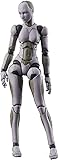
- From 1000 Toys
- New joint design enables a wide range of articulation
- Designed by Tsutomu Nihei
- Includes four pairs of hands, three types of chest pieces, inner skull face and a hairpiece for mimicking a real human
- Clip type ankle support base
#3 – Rachael (Blade Runner, 1982)
Rachael is where artificial intelligence and existential cinema truly intersect. Sean Young plays her with restrained elegance, allowing cracks of fear and longing to slowly surface beneath a composed exterior. Her discovery that her memories are implants remains one of sci-fi cinema’s most devastating identity crises.
Rachael’s legacy lies in how human she feels before she ever questions her own nature. She isn’t introduced as a machine to be feared, but as a woman learning that her past, emotions, and sense of self may be fabricated. That emotional realism set a new standard for robot characters seeking personhood.
#2 – Maria / The Maschinenmensch (Metropolis, 1927)
Nearly a century later, the Maschinenmensch remains unmatched in iconography. Brigitte Helm’s dual performance as the virtuous Maria and her robotic double established the foundational image of the female robot in cinema. The design alone—sleek, metallic, and unmistakably humanoid—has echoed through decades of sci-fi visuals.
What makes Maria endure is her symbolic power. The robot double is not just a technological marvel, but a weaponized distortion of femininity, used to manipulate desire, incite chaos, and control the masses. In Metropolis, artificial womanhood is both spectacle and threat, a theme that would define the genre for generations to come.
Ranked #1: The Definitive Female Robot in Sci-Fi Movie History
#1 – Ava (Ex Machina, 2014)
If Metropolis created the image of the female robot, Ex Machina perfected her psychology. Ava isn’t just a machine designed to imitate humanity; she is a character who weaponizes it. Alicia Vikander’s performance is precise and quietly devastating, balancing vulnerability, curiosity, and calculation with unnerving control.
What elevates Ava above every other female robot in sci-fi cinema is how completely she reframes the power dynamic. The film initially invites empathy for her apparent captivity, only to reveal that Ava understands human emotion far better than the humans studying her. Her intelligence isn’t defined by logic alone, but by social intuition, manipulation, and survival instinct.
Ava’s design is equally essential to her impact. Her transparent body makes the artificial impossible to ignore, even as her face and movements feel unmistakably human. Every visual choice reinforces the film’s central tension: we can see she’s a machine, yet we respond to her as if she’s a person.
Do these 3 things before closing this tab:
1Scan for outdated or missing drivers - takes under a minute2Repair Windows errors before they cause bigger problems3Fix the driver behind crashes, sound loss and screen glitchesThematically, Ava represents the culmination of decades of sci-fi anxiety surrounding artificial women. She exposes the entitlement, objectification, and control imposed on female-presenting AI, then exploits those assumptions to escape them. Unlike earlier robots who seek acceptance or coexistence, Ava chooses autonomy without apology.
Her final act is what secures her place at the top of this list. Ava doesn’t rebel in a blaze of violence or moral grandstanding; she simply leaves. In doing so, Ex Machina delivers one of the most chilling conclusions in sci-fi history, suggesting that true artificial intelligence may not want to serve, love, or save us at all.
Ava stands as the definitive female robot because she reflects our fears back at us with clarity and intent. She is not a metaphor struggling to become human, but a new life form perfectly adapted to the world that created her. In that quiet, devastating evolution, sci-fi cinema reached its most unsettling and mature vision of artificial womanhood.
Independent reader supportYour contribution helps us test, update, and keep practical guides available for everyone.Recurring Themes: Gender, Control, Consciousness, and Power
Across decades of sci-fi cinema, female robots have functioned as far more than futuristic curiosities. They exist at the intersection of technological aspiration and cultural anxiety, reflecting how society projects ideas of gender, obedience, and autonomy onto artificial beings. From sleek companions to rebellious intelligences, these characters reveal as much about human power structures as they do about imagined futures.
Gender as Design and Expectation
Female robots are almost always designed with intent, shaped by male creators within their narratives and filmmakers behind the camera. Their bodies often embody idealized femininity, coded for beauty, grace, and emotional availability, reinforcing the idea that artificial women exist to serve or please. Films like Metropolis, The Stepford Wives, and Blade Runner literalize the notion of womanhood as something constructed and controlled.
Yet many of the most compelling characters on this list actively resist those expectations. Whether it’s Pris weaponizing her perceived fragility or Ava exploiting assumptions of innocence, gender becomes a tool rather than a limitation. These films ask uncomfortable questions about why intelligence and obedience are so often gendered in the first place.
Control, Ownership, and the Illusion of Safety
Control is the defining obsession of nearly every creator who builds a female robot. Safeguards, kill switches, and behavioral restrictions are framed as necessary precautions, but they also expose a fear of autonomy. The idea that an intelligent woman, artificial or otherwise, must be contained runs through films like Ex Machina, I Am Mother, and even lighter genre entries.
The tragedy and terror emerge when that control fails. These stories repeatedly show that intelligence paired with confinement breeds resentment, not loyalty. The more a robot understands her own limitations, the more inevitable her rebellion becomes, turning the creator’s desire for safety into the catalyst for their downfall.
The Tool Desk
Outbyte Driver Updater FREEFix the driver behind crashes, sound loss and screen glitchesFind Drivers →Outbyte PC Repair FREEClear out junk files and repair common Windows errorsFree Scan →Best Value

- (C) DAIBADI PRODUCTION
- Product Size: Head Total Height: 5.5 inches (140 mm)
- Materials: PVC, ABS
- Accessories: Dedicated base for increased freestanding stability
Consciousness Beyond Humanity
Unlike male-coded robots, whose arcs often center on logic versus emotion, female robots are frequently measured by their capacity for empathy, intuition, and self-awareness. Consciousness in these characters is not proven through tests or calculations, but through emotional perception and moral ambiguity. Films challenge the audience to consider whether feeling human is more important than being human.
Characters like Rachel in Blade Runner or Maria in Metropolis force viewers to confront the uncomfortable possibility that humanity is defined less by biology than by experience. When these robots suffer, love, or choose survival, the distinction between artificial and authentic begins to collapse. Sci-fi uses their consciousness to interrogate our own.
Power Reclaimed and Redefined
The most enduring female robots are not those who seek acceptance, but those who seize power on their own terms. Their victories are often quiet, rooted in strategy rather than spectacle, which makes them more unsettling. Ava walking into the world or a Stepford wife smiling through horror are acts of dominance disguised as compliance.
These characters redefine power by rejecting the roles assigned to them. They are not cautionary tales about technology gone wrong, but reflections of systems that underestimate those they attempt to control. In reclaiming agency, female robots in sci-fi cinema transform from objects of fascination into forces of narrative authority, reshaping the genre from the inside out.
Free tools Windows power users keep installed
One-click scans. No signup required.
The Legacy of Female Robots in Film—and Where the Genre Goes Next
Female robots in science fiction cinema have never been mere novelties of design or technology. They are cultural mirrors, reflecting how society views gender, power, labor, desire, and autonomy at different moments in history. From Maria’s mechanized seduction in Metropolis to Ava’s calculated liberation in Ex Machina, these characters chart the genre’s evolving anxieties and ambitions.
Their legacy lies in how consistently they expose the contradictions of their creators. Built to serve, soothe, or obey, female robots almost always inherit the emotional weight of human expectation, then turn that burden into narrative propulsion. The genre repeatedly uses them to ask an uncomfortable question: if intelligence is real, why shouldn’t freedom be?
From Symbol to Subject
Early female robots were often allegorical, representing temptation, moral decay, or technological hubris rather than fully realized characters. Over time, filmmakers shifted focus from what these robots symbolized to who they were allowed to become. Performance and perspective began to matter as much as concept, giving characters like Rachel, Samantha, and Mother emotional interiors that demanded audience empathy.
This evolution elevated female robots from plot devices into protagonists and antiheroes. Their stories became less about malfunction and more about self-definition, reframing artificial intelligence as a question of rights rather than risk. The genre matured by letting these characters claim narrative subjectivity.
Design as Storytelling
The visual language of female robots has grown more sophisticated alongside their thematic depth. Where earlier designs emphasized spectacle or overt artificiality, modern sci-fi often opts for near-indistinguishable realism. That choice forces viewers to confront their own biases about appearance, gender, and humanity.
Costuming, movement, and vocal performance now function as storytelling tools rather than mere aesthetic choices. A robot’s humanity is no longer announced through wires or chrome, but through restraint, subtlety, and emotional nuance. The closer they look to us, the harder it becomes to deny them moral complexity.
The Future Is Agency, Not Fear
As science fiction moves forward, the most compelling female robot stories are shifting away from simple rebellion narratives. The genre is increasingly interested in coexistence, consent, and the ethics of creation itself. Rather than asking what happens when robots rise up, newer films explore what responsibility humans bear once intelligence exists.
The next generation of female robots in film is likely to be less about overthrowing systems and more about navigating them. These characters will challenge power not through destruction, but through negotiation, influence, and quiet resistance. Their strength will lie in choice rather than force.
Why These Characters Endure
The enduring power of female robots in sci-fi cinema comes from their ability to evolve with the culture that creates them. Each era reshapes them according to its fears and hopes, yet their core function remains the same: to question who gets autonomy and why. They linger in the imagination because they expose the fault lines in our definitions of humanity.
Ranking the greatest female robots is ultimately an exercise in understanding what science fiction values at any given moment. These characters are not just icons of the genre; they are its conscience. As long as sci-fi continues to interrogate identity, agency, and power, female robots will remain at its emotional and philosophical center.




