Art the Clown didn’t arrive fully formed as a franchise mascot or a box office provocation. He crawled out of Damien Leone’s earliest micro-budget experiments, shaped by practical effects obsession, grindhouse aesthetics, and a deliberate rejection of slick horror convention. Long before Terrifier became a cultural flashpoint, Art was a silent dare to audiences raised on jump scares and quippy killers.
What makes Art endure isn’t just the extremity, but the intentional minimalism behind him. Leone has repeatedly revealed that Art was born from a desire to strip horror down to its most unsettling basics: pantomime cruelty, exaggerated physicality, and a clown stripped of humor or motive. In an era of lore-heavy villains, Art’s origins as a visual and performative nightmare explain why he feels both retro and dangerously unpredictable.
As Terrifier 3 pushes the franchise further into the mainstream without sanding down its edges, those origins suddenly matter more than ever. Understanding where Art came from reframes him not as a shock-value gimmick, but as a carefully engineered throwback to outlaw horror filmmaking. Leone’s journey from handmade gore shorts to modern theatrical chaos mirrors Art’s rise, and it’s that raw, uncompromising DNA that keeps the character alive in a genre constantly chasing the next safe scare.
Damien Leone Before Terrifier: The Short Films, Experiments, and Creative Frustrations That Birthed Art
Before Terrifier became a midnight movie rite of passage, Damien Leone was grinding through the indie horror trenches with a mix of ambition, restlessness, and very little money. Fresh out of school with a background in practical effects and creature design, Leone wasn’t chasing studio polish or broad appeal. He was chasing sensation: images that lingered, movements that disturbed, and gore that felt handmade and confrontational.
#1 Best Overall

- Figure measures 5 inches
- Color changes to blood splatter when the figure is sprayed with ice water or put in freezer
- Included accessories: Trash bag, pistol, knife, and hacksaw
- Officially licensed
Those early years were defined less by success than by experimentation. Leone cycled through short films, effects reels, and half-formed concepts, trying to find a visual language that felt honest to his obsessions. The frustration of working within traditional short-form horror structures eventually became the pressure that cracked Art the Clown into existence.
Short Films as a Testing Ground for Extremity
Leone’s earliest shorts weren’t story-driven in the conventional sense. They functioned more like showcases of mood, makeup, and physical performance, often built around a single disturbing idea pushed to its limit. Dialogue was minimal, character psychology secondary to what Leone could communicate through movement, expression, and violence.
This approach mirrored Leone’s admiration for grindhouse horror and silent-era physicality. He has spoken in interviews about how early slashers, giallo films, and even silent comedians influenced his thinking. The shorts allowed him to strip away exposition and see how much discomfort he could generate with pure visual storytelling.
Art the Clown emerged organically from this process. Leone needed a figure who could carry a short without speaking, someone who could command attention through posture and presence alone. The clown costume, exaggerated features, and dead-eyed stare were practical solutions that became iconic almost by accident.
Quick wins for a faster PC:
Scan for outdated or missing drivers - takes under a minuteDriver Scan →Repair Windows errors before they cause bigger problemsFix Now →Fix the driver behind crashes, sound loss and screen glitchesFind Drivers →The Birth of Art in The 9th Circle and All Hallows’ Eve
Art’s first appearances were rough, brief, and far from the pop-cultural juggernaut he would become. In The 9th Circle, part of the All Hallows’ Eve anthology, Art was just one nightmare among many, a silent tormentor in a low-budget segment designed to shock rather than charm. There was no grand mythology, no franchise roadmap.
What surprised Leone was how strongly audiences reacted to that segment. Viewers weren’t just unsettled by the violence; they were fixated on Art himself. The silence, the exaggerated expressions, and the lack of motive made him feel more dangerous than the average slasher with a backstory and one-liners.
All Hallows’ Eve became a proving ground, showing Leone that his instincts were landing. Art didn’t need explanation. In fact, explaining him too much would dilute what made him frightening in the first place.
Creative Frustration as Fuel for Reinvention
Despite the attention All Hallows’ Eve received, Leone still found himself boxed in by indie horror expectations. Budget limitations, anthology formats, and pressure to conform to familiar beats clashed with his desire to go further. Rather than compromise, Leone doubled down on the aspects that made his work uncomfortable.
Art became the outlet for that rebellion. Leone leaned into ugliness, cruelty, and humor that felt hostile rather than crowd-pleasing. The character’s pantomime roots allowed Leone to bypass dialogue-heavy scripts and focus on what he loved most: effects, timing, and pushing audiences past their comfort zones.
This period of frustration is key to understanding Terrifier 3’s DNA. Art wasn’t designed to be liked, franchised, or merchandised. He was designed to survive Leone’s creative dissatisfaction, and in doing so, became a modern horror anomaly that still refuses to play by the rules.
The Surprising Origins of Art the Clown: Leone’s Unlikely Inspirations and Early Character DNA
What makes Art the Clown so disarming isn’t just what he does, but where he comes from creatively. Damien Leone has been candid that Art wasn’t born from a single horror icon or slasher blueprint, but from a collision of influences that rarely share the same screen. The result is a villain who feels both ancient and anarchic, rooted as much in silent comedy as in grindhouse cruelty.
Silent Film Comedy, Not Slasher Lore
One of Leone’s most surprising admissions is that Art owes more to silent-era performers than to masked killers. Figures like Charlie Chaplin, Buster Keaton, and classic mime artists shaped Art’s exaggerated physicality and precise timing. Leone has described Art as a performer first, a killer second, someone who understands the power of a pause, a stare, or a sudden shift in posture.
Rank #2
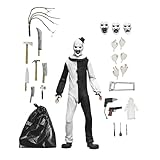
- The enigmatic Art the Clown is here to stalk your shelves.
- The iconic villain from Damien Leone’s Terrifier is getting NECA’s Ultimate treatment.
- Capturing every eerie detail of the silent slasher, this 7-inch scale articulated action figure includes interchangeable expressions and hands.
That DNA explains why Art can hold the frame without speaking. His violence lands harder because it’s preceded by anticipation, misdirection, and grotesque humor. In Terrifier 3, those silent beats feel even more deliberate, as if Leone is refining the language Art has been speaking since his earliest appearances.
The Dark Side of Clowning and Pantomime
Leone has also pointed to traditional clowning and mime culture as unexpectedly sinister influences. Stripped of bright colors and audience-facing joy, the fundamentals of clown performance become unsettling fast. White makeup freezes expressions, while pantomime forces emotion into unnatural extremes.
Art weaponizes that discomfort. His grin lingers too long, his reactions feel rehearsed, and his silence reads as judgment rather than mystery. Leone has noted that removing dialogue wasn’t a gimmick, but a way to deny audiences emotional cues, making Art feel less human and more predatory.
Cartoon Violence with No Moral Safety Net
Another key strand in Art’s early DNA comes from Leone’s love of old-school slapstick animation. The elastic brutality of Tom and Jerry or Looney Tunes, where characters endure outrageous harm without consequence, directly informs Art’s behavior. The difference, of course, is that Art exists in a world where pain is real and permanent.
Do these 3 things before closing this tab:
1Fix the driver behind crashes, sound loss and screen glitches2Repair Windows errors before they cause bigger problems3Scan for outdated or missing drivers - takes under a minuteThat collision between cartoon logic and physical reality is central to the Terrifier films, especially as the franchise escalates. Art doesn’t kill efficiently; he indulges, improvises, and performs. Understanding that lineage makes Terrifier 3’s excess feel intentional rather than indulgent, a continuation of Leone’s original, deeply personal vision.
Why These Origins Still Matter in Terrifier 3
Knowing where Art came from reframes how he functions now. He isn’t evolving toward a mythic slasher archetype; he’s refining his act. Leone has resisted smoothing Art into something more digestible, instead leaning further into the uncomfortable blend of humor, silence, and cruelty that defined him from the start.
Those unlikely inspirations explain why Art remains so difficult to predict, even after multiple films. He isn’t bound by rules, motives, or psychology in the traditional sense. He’s a performer driven by impulse, and that origin point continues to shape every unsettling choice Leone makes as Terrifier 3 pushes the character deeper into horror history.
Silent Terror: Why Art Doesn’t Speak and How Physical Performance Shaped His Identity
If Art the Clown feels unnervingly present without ever uttering a word, that absence is the point. Damien Leone has repeatedly emphasized that silence wasn’t a stylistic flourish, but a foundational decision rooted in performance psychology. Dialogue humanizes; silence alienates. By denying Art a voice, Leone removes the last familiar bridge between killer and audience.
Recommended Free Tools
Art doesn’t explain himself, taunt verbally, or offer motive. His silence forces viewers to project meaning onto every stare, shrug, and exaggerated reaction, turning even minor gestures into threats. In Terrifier 3, that void feels louder than ever, especially as the violence escalates and Art’s reactions remain perversely playful.
Mime, Clowns, and the Power of Wordless Performance
Leone’s background in practical effects and creature performance led him toward physical storytelling long before Terrifier became a franchise. He has cited classic mime work and silent-era performers as unlikely but essential touchstones. Characters like Lon Chaney’s grotesques or even Charlie Chaplin’s exaggerated emotional beats demonstrated how much can be communicated without sound.
That lineage is baked into Art’s DNA. His movements are broad but precise, comedic yet malicious, forcing the audience to read intent through posture and timing rather than exposition. Every slow head tilt or sudden freeze functions like punctuation in a sentence that never arrives.
David Howard Thornton’s Body as the Character
Art fully crystallized once actor David Howard Thornton stepped into the costume. Leone has been open about how Thornton’s background in musical theater, physical comedy, and mime transformed Art from a concept into a presence. The character’s now-iconic expressions, rubbery reactions, and sudden shifts in energy were shaped collaboratively on set.
What’s actually slowing this PC down?
Pick the symptom - the matching free tool is one click away.
Rank #3

- From Damien Leone's Terrifier 2, NECA brings you this Ultimate Art the Clown action figure—a terrifying tribute to a modern horror icon.
- Bring home this silent, deadly menace to stalk your shelves!
Thornton doesn’t just play Art; he performs him. His face becomes a mask capable of snapping from glee to cruelty in seconds, often within the same shot. That elasticity allows Art to oscillate between absurdity and horror without tonal whiplash, a balance that becomes increasingly important as Terrifier 3 leans into longer, more elaborate set pieces.
Silence as a Weapon, Not a Gimmick
In a genre crowded with quippy killers and lore-heavy mythology, Art’s muteness feels almost confrontational. Leone has resisted pressure to give Art a voice or backstory explanation, understanding that once the character speaks, the spell breaks. Words create logic, and logic invites empathy.
Silence, by contrast, keeps Art unknowable. It turns his violence into performance art rather than narrative necessity, aligning with Leone’s original vision of Art as a sadistic entertainer rather than a psychologically grounded murderer. As Terrifier 3 expands the franchise’s scope, that commitment to physical performance over explanation remains the character’s most unsettling constant.
From All Hallows’ Eve to Terrifier: How Art Evolved Through Iteration, Audience Reaction, and Gore Escalation
Art the Clown didn’t arrive fully formed; he was stress-tested in front of audiences long before Terrifier became a franchise. Damien Leone has often pointed to Art’s earliest appearances in the All Hallows’ Eve anthology as a kind of laboratory, where the character’s limits were probed through tone, pacing, and sheer audacity. Those segments weren’t designed to mythologize Art, but to see how much discomfort a silent clown could generate with minimal context.
Free tools Windows power users keep installed
One-click scans. No signup required.
What surprised Leone was how quickly Art dominated attention. Viewers responded less to narrative cohesion and more to the raw, confrontational energy Art brought to the screen, even when he appeared alongside other horror concepts. That reaction shaped Leone’s understanding of Art as a centerpiece rather than a side attraction.
Testing the Clown in All Hallows’ Eve
In All Hallows’ Eve, Art functioned like a recurring nightmare slipping between stories, unburdened by explanation or continuity. Leone has described those early segments as intentionally abrasive, leaning into ugliness and cruelty to see what audiences would tolerate. The lack of polish wasn’t a flaw; it was part of the experiment.
Art’s design was also rougher, more overtly grotesque, and less playful than what would come later. His humor was meaner, his violence more abrupt, and his presence more alien. That rawness helped Leone identify which elements felt transgressive in a compelling way and which simply pushed viewers away.
Audience Reaction as Creative Compass
Leone has been candid about how audience response shaped Art’s evolution. Festival crowds and home viewers fixated on Art’s expressions, his timing, and the uncomfortable laughs he provoked, often more than the violence itself. That feedback revealed that Art’s power wasn’t just in what he did, but in how long he made audiences sit with it.
As Terrifier took shape, Leone began refining Art’s behavior to heighten anticipation rather than rely on constant shock. Scenes stretched longer, pauses became more pronounced, and the clown’s awareness of the viewer grew sharper. Art wasn’t just killing; he was performing for an audience he knew couldn’t look away.
Escalating Gore Without Losing the Joke
With Terrifier and its sequels, gore escalation became inevitable, but Leone has stressed that excess alone was never the goal. Each film pushed boundaries not simply to outdo the last, but to preserve the tension between cruelty and absurdity that defines Art. The violence became more elaborate because Art himself became more theatrical.
In Terrifier 3, that escalation reflects confidence rather than desperation. Leone now understands exactly how far he can go without collapsing Art into parody or nihilism. The surprising origin of Art as a testing-ground creation makes this evolution clearer; he’s a character refined through reaction, iteration, and provocation, shaped as much by the audience as by his creator.
Reinventing the Slasher Archetype: How Art the Clown Breaks (and Honors) Horror Tradition
Art the Clown didn’t emerge in a vacuum. Leone has often framed him as a response to the slasher icons he grew up with, killers who felt increasingly safe in their predictability. Where so many modern slashers announce themselves with lore dumps and tragic backstories, Art arrives stripped of explanation, daring the audience to project meaning onto his silence.
The Tool Desk
Outbyte PC Repair FREERepair Windows errors before they cause bigger problemsFix Now →Outbyte Driver Updater FREEScan for outdated or missing drivers - takes under a minuteDriver Scan →Rank #4
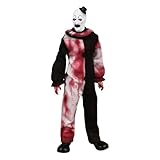
- Who'S Laughing Now: From the gruesome slasher series Terrifier, Art the Clown joins the One:12 Collective lineup!
- Collectible Size: Figure measures approximately 6 inches tall.
- Authentic Design: Features three interchangeable head portraits that capture his varying maniacal facial expressions. Art is all smiles, wearing his signature blood-stained black-and-white clown costume.
- Ready For Action: Includes murderous accessories, including 2 garbage bags, flamethrower, cat o' nine tails, hacksaw, table leg, knife-edge hammer, hammer, horn, butcher knife, cleaver knife, 3 blood FX (attach to knives), and a display base with logo.
- Great Gift Idea: Purchase this figure for yourself, or gift it to the Terrifier fan in your life.
That decision places Art in direct conversation with horror history. He shares Michael Myers’ blankness, Freddy Krueger’s showmanship, and Pennywise’s performative cruelty, but Leone rearranges those traits into something deliberately unstable. Art isn’t cool, clever, or mythic; he’s intrusive, awkward, and emotionally unreadable.
Silence as a Weapon
One of Art’s most radical breaks from tradition is his refusal to speak. In an era where horror villains are increasingly verbose or quippy, Art’s mime-like silence feels confrontational. Leone has described this choice as a way to remove psychological comfort, forcing viewers to sit with pure behavior rather than explanation.
That silence also reframes violence as spectacle rather than catharsis. Without dialogue to guide emotional response, every grin, head tilt, and prolonged stare becomes unnervingly intimate. Art doesn’t tell you what he’s thinking; he lets you wonder if he’s thinking at all.
Comedy Without Relief
Slasher films have long used humor as a pressure valve, but Art weaponizes it instead. His slapstick antics don’t release tension; they prolong it. Leone has noted that the laughs Art provokes are often nervous, delayed, and immediately followed by regret.
Outdated Drivers Are Slowing You Down
One free scan finds every outdated or missing driver and matches the right update for your exact hardware.Free scan · exact hardware matchWindows Errors? Fix Them Before They Spread
Repair common Windows errors and clear accumulated junk for a smoother, more stable PC - no reinstall needed.Free scan · no reinstallThis approach honors classic physical comedians while perverting their purpose. Art borrows timing and body language from silent-era performers, but filters them through sadism rather than charm. In Terrifier 3, that lineage feels even clearer, as Art’s routines grow more elaborate without becoming self-aware or winkingly ironic.
The Killer as Performer, Not Protagonist
Unlike many modern slashers who drift into antihero territory, Art never invites identification. Leone resists framing him as a misunderstood monster or a symbol of trauma. Instead, Art exists purely to disrupt narrative comfort, stepping into scenes like an unwanted guest who refuses to leave.
That choice reinforces why Art’s origins matter. Born from experimental shorts and audience stress-testing, he was never designed to be lovable or redeemable. Terrifier 3 leans into that purity, using Art as a reminder of what slashers once did best: confront viewers with something they can’t rationalize, root for, or fully understand.
Independent reader supportYour contribution helps us test, update, and keep practical guides available for everyone.What Terrifier 3 Reveals About Art’s Origins: Leone’s New Insights, Mythology, and Character Intentions
Terrifier 3 doesn’t just escalate Art the Clown’s brutality; it sharpens the understanding of why he exists at all. In recent interviews, Damien Leone has been unusually candid about how Art’s origins were never meant to be a tidy backstory, but a philosophy. The new film reflects that intent, offering fragments of context without ever handing the audience a comforting explanation.
Rather than demystifying Art, Leone uses Terrifier 3 to clarify the rules of his presence. It’s less about where Art came from in a literal sense, and more about what he represents within Leone’s personal horror language. That distinction is key to why Art remains so resistant to overexposure or dilution.
Born From Experiment, Not Lore
Leone has emphasized that Art was not conceived as a fully formed character with a mythology bible. His earliest incarnation emerged from Leone’s fascination with stress-testing audiences through tone, pacing, and discomfort in short-form projects. Art was essentially a tool, a vessel designed to see how far visual cruelty and performance could go without narrative safety nets.
Terrifier 3 honors that origin by refusing to retrofit Art with a conventional slasher genealogy. Leone has said that any glimpses into Art’s past are meant to feel incidental, almost intrusive, rather than revelatory. The film treats backstory as texture, not explanation, preserving the character’s experimental DNA.
The Mythology Is Intentionally Incomplete
While Terrifier 2 began expanding the series’ supernatural framework, Terrifier 3 refines it rather than blowing it wide open. Leone has described Art’s mythology as something that should feel ancient and wrong, like overhearing a fragment of a ritual you were never meant to understand. The goal isn’t clarity, but unease.
Recommended Free Tools
Best Value
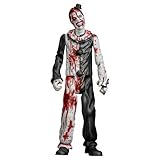
- Figure measures 5.5 inches
- Included accessories: mace, cleaver, medical hammer and shotgun
- Officially licensed
This approach separates Art from modern horror villains who arrive pre-packaged with elaborate lore. Leone is careful to avoid turning Art into a puzzle to be solved. Terrifier 3 suggests there are forces and histories at play, but it deliberately withholds coherence, reinforcing Art as an anomaly rather than a legend.
Art as a Reflection of Audience Complicity
One of Leone’s more surprising insights is how consciously Art was shaped by audience reaction. From the beginning, Art evolved based on what made viewers squirm, laugh uncomfortably, or look away. Terrifier 3 doubles down on this feedback loop, pushing Art into scenarios that test not just endurance, but moral distance.
Leone has noted that Art’s origin is inseparable from spectatorship itself. Art exists because people watch him. The more attention he commands, the more power he seems to have, a dynamic Terrifier 3 explores with unsettling self-awareness.
Why These Origins Matter Now
By the time Terrifier 3 arrives, Art is no longer an underground oddity; he’s a recognizable horror icon. Leone’s restraint in defining Art’s origins becomes more radical at this scale. Instead of expanding Art into a franchise mascot with neat motivations, Leone reinforces the character’s original purpose: to feel dangerous, unknowable, and slightly inappropriate to be watching at all.
PC Slower Than It Used to Be?
A free scan shows the junk files, broken settings and background clutter dragging Windows down - then fixes them in one click.Free scan · Windows 10 & 11Crashes, No Sound, or Screen Glitches?
Random freezes, missing sound and display glitches usually trace back to one bad driver. Find and replace yours safely.Free scan · under a minuteThat commitment explains why Art hasn’t softened as the series has grown. Terrifier 3 doesn’t reveal Art to make him understandable; it reveals just enough to remind viewers that understanding was never the point. In staying true to those origins, Leone ensures Art the Clown remains a problem for audiences, not a comfort.
Why Art the Clown Works Now: Cultural Timing, Indie Freedom, and the Future of the Franchise
Art the Clown’s rise isn’t accidental; it’s the result of arriving at a cultural moment primed for discomfort. In an era where horror often explains itself to death, Art refuses clarity, dialogue, or moral framing. That resistance feels almost confrontational now, a reminder of when horror was allowed to be hostile rather than reassuring.
Audiences are also savvier, more aware of horror’s mechanics, which makes Art’s simplicity more dangerous. He doesn’t subvert tropes so much as ignore them, weaponizing silence and physicality in a genre crowded with irony. Terrifier 3 leans into that tension, trusting viewers to sit with something that doesn’t want to be decoded.
Indie Horror as a Creative Weapon
Leone’s independence remains the franchise’s greatest advantage. Free from studio mandates and brand smoothing, Terrifier operates with the raw instincts of a grindhouse artifact that somehow escaped containment. Art’s origins, rooted in visual performance and transgressive humor, could only survive in that environment.
Terrifier 3 benefits directly from that freedom. Leone has spoken about building sequences around instinct rather than marketability, letting scenes run long, ugly, or absurd if that’s where the character leads. It’s a process closer to underground cinema than mainstream franchise filmmaking, and Art thrives in that lawlessness.
Why Art Endures When Others Fade
What makes Art last is that he never evolves toward relatability. While other horror icons are softened through backstory or tragic motivation, Art remains stubbornly alien. His origins aren’t about trauma or revenge; they’re about presence, about what happens when something cruel enjoys being watched.
That choice keeps the franchise flexible without diluting its core. Terrifier 3 hints at larger forces and deeper history, but it never reframes Art as a misunderstood figure. He stays obscene, funny, and horrifying in equal measure, a balance that modern horror rarely risks.
The Future of the Franchise
Looking ahead, the challenge isn’t escalation but preservation. Leone has suggested that Art’s power lies in limitation, in knowing when not to answer questions. Terrifier 3 feels like a statement of intent, signaling that growth doesn’t mean domestication.
Free tools Windows power users keep installed
One-click scans. No signup required.
If the franchise continues to respect those origins, Art the Clown won’t just survive expansion; he’ll resist it. In a genre obsessed with legacy and lore, Art remains a glitch in the system, a reminder that horror icons don’t need to be explained to endure. Sometimes, they just need to exist, staring back, daring you to keep watching.
Quick Recap
Product prices and availability are accurate as of the date/time indicated and are subject to change. Any price and availability information displayed on Amazon at the time of purchase will apply.




