Quick wins for a faster PC:
Repair Windows errors before they cause bigger problemsFix Now →Fix the driver behind crashes, sound loss and screen glitchesFind Drivers →Clear out junk files and repair common Windows errorsFree Scan →Of the four Indiana Jones films, Indiana Jones and the Temple of Doom (1984) is the one that most often comes up when Indian critics and audiences talk about how Hollywood portrays their country. The reason is not a single scene. It is the combination of an India-set story built around a sinister fictional cult, child captives, and ritual violence, released to a world that had few other mainstream images of India to set against it.
What the film is, and where it is set
Steven Spielberg directed Indiana Jones and the Temple of Doom, which Lucasfilm lists as released in 1984. It is a prequel to Raiders of the Lost Ark, set in 1935, and it follows Indiana Jones, the nightclub singer Willie Scott, and the young Short Round as they fall into trouble in northern India. Lucasfilm’s official page describes the plot: a village’s children have disappeared after a sacred Sankara stone is stolen, and the heroes travel to find them.
![Indiana Jones: The Complete Adventures (Limited Edition Steelbook) [Blu-ray]](https://m.media-amazon.com/images/I/414Nj38NBLL._SL160_.jpg)
![Indiana Jones: The Complete Adventures (Raiders of the Lost Ark / Temple of Doom / Last Crusade / Kingdom of the Crystal Skull) [Blu-ray]](https://m.media-amazon.com/images/I/410ndWhEgUL._SL160_.jpg)
![Indiana Jones 4-Movie Collection [Blu-ray]](https://m.media-amazon.com/images/I/51X7QJhIjYL._SL160_.jpg)
The villains are a cult led by Mola Ram, who enslaves children in mines and practices human sacrifice. The cult is fictional. The problem is not that a fictional cult exists in an adventure film; it is that the film places that cult in a real country, attaches it to a real religious vocabulary, and makes Indian characters the people who need rescuing.
Why the India setting became controversial
A teaching analysis from the Humanities Institute says the decision to set the adventure in India was controversial from the start, and it discusses objections to how the film depicts Indian people, culture, and religion. That analysis is a secondary interpretation, not a contemporary record of Indian audiences, but it points to the core complaint: the film’s Indian setting is treated as a backdrop for spectacle rather than as a place with its own people doing their own things.
Outdated Drivers Are Slowing You Down
One free scan finds every outdated or missing driver and matches the right update for your exact hardware.Free scan · exact hardware matchWindows Errors? Fix Them Before They Spread
Repair common Windows errors and clear accumulated junk for a smoother, more stable PC - no reinstall needed.Free scan · no reinstallThe film also arrived at a moment when American ratings were in flux. According to the same Humanities Institute document, its violent material fell between the MPAA’s existing PG and R categories, and the controversy is linked to the creation of PG-13. That is a historical account from a secondary source; no original MPAA record was reviewed for this article.
The ban claim: what is reported and what is not confirmed
The most-repeated claim about the film in India is that it was banned at release. Scroll.in, in a 2016 piece whose headline gives this article its title, reports that India banned the film. The claim is attributed to that article. An official Indian government source confirming the ban was not located, so readers should treat it as a reported claim rather than an established legal fact.
Rank #2
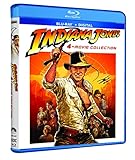
- Genre: Action / Adventure
- Number of Discs: 5
- Number of Tracks: 0
- Playback Duration: 481
- Rating: PG13
Scroll’s piece also recounts the reaction of the filmmaker Satyajit Ray, and it describes the casting of Amrish Puri as Mola Ram. For the content of Ray’s remarks, read the original article directly.
Separating the fictional cult from real religion
The film’s cult, its sacrifices, and its stolen stones are invented for the story. They do not describe Hinduism, Indian village life, or the communities the film’s setting evokes, and no reading of the plot supports treating them as typical. The Humanities Institute analysis frames the objection as a question of representation: when a film builds its villains from a real culture’s symbols, audiences may take the fiction as a description of the culture itself.
Rank #3
![Indiana Jones: 4-Movie Collection (Bonus Features) [1981–2008] [5-Disc Set] [Blu-ray] [Region Free]](https://m.media-amazon.com/images/I/51NvEgux6-L._SL160_.jpg)
- COMPLETE 4-MOVIE COLLECTION – Includes Raiders of the Lost Ark, Indiana Jones and the Temple of Doom, Indiana Jones and the Last Crusade, and Indiana Jones and the Kingdom of the Crystal Skull
- 5-DISC BLU-RAY SET – Four legendary Indiana Jones feature films plus an additional disc of bonus content in one complete collection
- STARRING HARRISON FORD – Follow the legendary archaeologist across four globe-spanning adventures filled with ancient mysteries, spectacular action, and unforgettable discoveries
- 482 MINUTES OF ADVENTURE – Enjoy approximately 8 hours of Indiana Jones feature-film entertainment spanning the classic 1981–2008 era
- REGION FREE BLU-RAY – High-definition Blu-ray collection compatible with Blu-ray players worldwide
That is the distinction to keep in view when the film is discussed. A story can be invented and still be harmful if it borrows the visual and ritual language of a real faith and presents it as the default there.
What the filmmakers have said since
The most detailed retrospective account comes from an August 2, 2017 oral history published on Medium under the “From Director Steven Spielberg” name. It is a participant-recollection piece, not a contemporary transcript, and the quotations below are as reproduced there.
- Steven Spielberg, director: “I wasn’t happy with Temple of Doom at all. It was too dark, too subterranean, and much too horrific. I thought it out-poltered Poltergeist. There’s not an ounce of my personal feeling in Temple of Doom.”
- Lawrence Kasdan, screenwriter of Raiders of the Lost Ark: “I just thought it was horrible. It’s so mean. There’s nothing pleasant about it. I think ‘Temple of Doom’ represents a chaotic period in both their [Lucas and Spielberg] lives, and the movie is very ugly and mean-spirited.”
- Kate Capshaw, who played Willie Scott: recalled that critics were hard on her character, and said she understood the film as an action-adventure rather than “message work.” That is her own view, not a consensus of critics.
The same oral history says Spielberg later described Indiana Jones and the Last Crusade as “an apology” for its predecessor. That phrase appears there as the article’s narration, not as a verbatim Spielberg sentence, so it should be attributed to the oral history rather than quoted as his exact words. The oral history also says the story developed from Lucas’s wish for a darker supernatural adventure, with Willard Huyck and Gloria Katz writing the screenplay.
Independent reader supportYour contribution helps us test, update, and keep practical guides available for everyone.How to read the controversy
Discussions of the film tend to mix four separate questions, and they are easier to assess apart:
Best Value
| Question | What the evidence supports | Status |
|---|---|---|
| Is the cult real? | Lucasfilm and the Humanities Institute both describe it as fictional. | Established |
| Was the India setting criticised? | The Humanities Institute analysis discusses objections to the portrayal of Indian people, culture, and religion. | Established as a critique in secondary analysis |
| Was the film banned in India? | Scroll.in reports a ban at release. No official Indian government record was located. | Reported, not confirmed by an official source |
| Did the filmmakers regret it? | Spielberg, Kasdan, and Capshaw discuss it in a 2017 oral history. | Participant recollection |
A useful way to judge any single claim is to ask which of these categories it falls into. Claims about the film’s fiction and its ratings history can be checked against the films and documents. Claims about a ban, or about how Indian audiences felt in 1984, need a primary source that was not found here.
About the headline
The title’s phrase, “Indians won’t forget in a hurry,” is a pointed editorial line from Scroll’s headline. It is not a survey result, and it does not describe the view of every Indian reader or viewer. The accurate version of the claim is narrower: the film is remembered in India as a controversial portrayal, and that memory is tied to the criticisms and the reported ban discussed above.
Quick Recap
Product prices and availability are accurate as of the date/time indicated and are subject to change. Any price and availability information displayed on Amazon at the time of purchase will apply.




