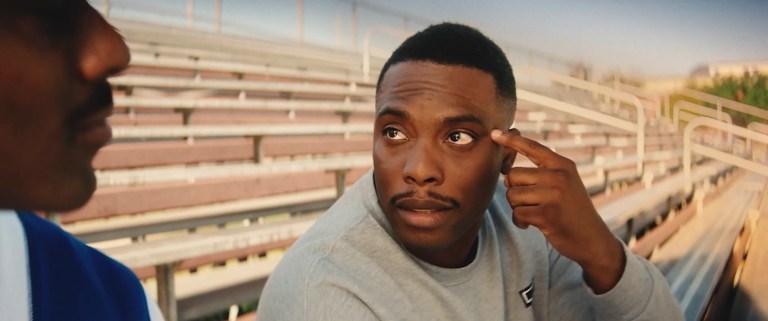
Taylor Sheridan isn’t done expanding the Yellowstone mythos; he’s simply shifting its center of gravity. The Madison is the next series born from Sheridan’s modern Western universe, and it signals a deliberate pivot from ranch-empire power plays to something more intimate, emotional, and quietly ferocious. Set against Montana’s sweeping Madison River Valley, the show reframes the franchise’s obsession with land, legacy, and survival through a new family’s reckoning with grief and belonging.
At its core, The Madison is a character-driven drama following a wealthy New York family who relocate to rural Montana after a devastating loss. That fish-out-of-water premise is classic Sheridan, but the tone is expected to skew more reflective and psychological than Yellowstone’s boardroom warfare and gunfights. The land remains sacred, the stakes deeply personal, and the Western setting once again becomes a crucible where modern identity is stripped down to its essentials.
What makes The Madison matter within the broader Yellowstone era is its strategic placement. Rather than functioning as a direct sequel or prequel, the series exists in the same contemporary world, allowing Sheridan to explore the emotional aftershocks of wealth, migration, and cultural collision without leaning on the Duttons themselves. Anchored by Michelle Pfeiffer in a rare television lead role, The Madison positions itself as a prestige evolution of the franchise, one that expands Sheridan’s Western canvas while signaling that the Yellowstone universe is far from finished, just evolving.
Release Date & Production Timeline: When ‘The Madison’ Is Expected to Premiere
As of now, Paramount+ has not announced an official release date for The Madison, but the series is firmly positioned on the streamer’s near-term slate. Based on its production timeline and Taylor Sheridan’s established rollout patterns, the series is widely expected to premiere sometime in 2025, likely in the back half of the year.
The Tool Desk
Outbyte Driver Updater FREEFix the driver behind crashes, sound loss and screen glitchesFind Drivers →Outbyte PC Repair FREERepair Windows errors before they cause bigger problemsFix Now →#1 Best Overall

- Stunning 4K and Dolby Vision streaming made simple: With America’s number 1 TV streaming platform,* exploring popular apps—plus tons of free movies, shows, and live TV—is as easy as it is fun. *Based on hours streamed—Hypothesis Group
- Breathtaking picture quality: Stunningly sharp 4K picture brings out rich detail in your entertainment with four times the resolution of HD. Watch as colors pop off your screen and enjoy lifelike clarity with Dolby Vision and HDR10+.
- Seamless streaming for any room: With Roku Streaming Stick 4K, watch your favorite entertainment on any TV in the house, even in rooms farther from your router thanks to the long-range Wi-Fi receiver.
- Shows on the go: Take your TV to-go when traveling—without needing to log into someone else’s device.
- Compact without compromises: Our sleek design won’t block neighboring HDMI ports, so you can switch from streaming to gaming with ease. Plus, it’s designed to stay hidden behind your TV, keeping wires neatly out of sight
The timing makes strategic sense. Paramount+ has consistently staggered Sheridan’s projects to maintain a year-round presence for the Yellowstone universe, and The Madison is designed to function as a prestige tentpole rather than a surprise drop.
Filming Status and Production Progress
Production on The Madison began in late 2024, with filming taking place primarily in Montana, including locations in and around the Madison River Valley that anchor the show’s visual identity. Additional production reportedly occurred in New York, reflecting the series’ dual-world structure as its central family transitions from urban wealth to rural isolation.
By early 2025, the series was understood to be deep into principal photography or entering the latter stages of its shoot. Given Sheridan’s hands-on creative approach and the cinematic scale of the production, the schedule has leaned toward quality over speed.
Post-Production and Paramount+’s Release Strategy
Sheridan’s recent series typically undergo extended post-production, particularly to refine their naturalistic visuals and score-driven tone. That places The Madison in a comfortable position for a mid-to-late 2025 debut, aligning with Paramount+’s preference for high-profile fall or winter releases.
The streamer has also shown a tendency to pair new Yellowstone-universe entries with significant marketing lead time. Once a teaser or first-look imagery drops, a firm premiere date is likely to follow within a few months.
What to Expect Next
The next major milestone for The Madison will likely be its first official footage, followed by casting confirmations for key supporting roles. Until then, all signs point to the series arriving after the conclusion of Yellowstone’s flagship run, allowing it to inherit the franchise’s audience while carving out its own identity.
For fans tracking Sheridan’s expanding television empire, The Madison isn’t a distant project. It’s an imminent chapter, one carefully positioned to extend the Yellowstone universe into its next, more introspective era.
Confirmed Cast & Characters: Who’s Starring in ‘The Madison’ and Why It Matters
As with any Taylor Sheridan project, casting is never incidental. The Madison’s confirmed lineup signals a deliberate tonal shift for the Yellowstone universe, favoring prestige pedigree and emotional weight over legacy familiarity. Rather than relying on crossover appearances from existing characters, Sheridan is building this series around performers who bring gravitas, restraint, and long-form dramatic credibility.
Michelle Pfeiffer as the Series’ Emotional Anchor
The most significant casting announcement to date is Michelle Pfeiffer in the lead role, marking her return to a major television drama. Pfeiffer plays the matriarch of a wealthy family uprooted from New York City and forced to rebuild their lives in Montana following a devastating personal loss.
Her involvement immediately elevates The Madison’s profile. Pfeiffer’s screen presence aligns perfectly with Sheridan’s recent interest in introspective, character-driven storytelling, and her casting signals that this series will lean heavily into emotional complexity rather than frontier bombast.
Matthew Fox and the Show’s Psychological Undercurrent
Matthew Fox is also confirmed to star, adding another layer of dramatic intensity to the ensemble. Best known for Lost and his work in darker genre material, Fox brings a brooding, internalized energy that fits seamlessly within Sheridan’s evolving television style.
While character specifics remain under wraps, Fox’s casting suggests The Madison will explore moral ambiguity and psychological fallout just as much as physical survival. His presence hints at a story driven by trauma, accountability, and the consequences of reinvention.
Rank #2

- Ultra-speedy streaming: Roku Ultra is 30% faster than any other Roku player, delivering a lightning-fast interface and apps that launch in a snap.
- Cinematic streaming: This TV streaming device brings the movie theater to your living room with spectacular 4K, HDR10+, and Dolby Vision picture alongside immersive Dolby Atmos audio.
- The ultimate Roku remote: The rechargeable Roku Voice Remote Pro offers backlit buttons, hands-free voice controls, and a lost remote finder.
- No more fumbling in the dark: See what you’re pressing with backlit buttons.
- Say goodbye to batteries: Keep your remote powered for months on a single charge.
Patrick J. Adams and Elle Chapman Round Out the Core Ensemble
Patrick J. Adams and Elle Chapman have also been announced as series regulars, further reinforcing the show’s prestige credentials. Adams, widely recognized for Suits, has increasingly gravitated toward grounded dramatic roles, making him a natural fit for Sheridan’s dialogue-heavy, morally complex narratives.
Chapman’s inclusion points toward a multigenerational story structure, with The Madison expected to examine how displacement and grief affect each member of the family differently. Together, the ensemble suggests a series more interested in emotional inheritance than ranch politics.
Why This Cast Signals a Different Kind of Yellowstone Story
What’s notably absent from The Madison’s casting so far is direct reliance on Yellowstone legacy characters. Instead, Sheridan appears focused on thematic continuity rather than narrative overlap, using the Montana setting as connective tissue rather than nostalgia.
This cast choice matters because it positions The Madison as a tonal evolution for the franchise. It’s less about dynasties defending land and more about identity, loss, and what happens when privilege meets isolation. With performers of this caliber at the center, the series is clearly designed to stand on its own while quietly expanding the emotional scope of the Yellowstone universe.
Do these 3 things before closing this tab:
1Fix the driver behind crashes, sound loss and screen glitches2Repair Windows errors before they cause bigger problems3Scan for outdated or missing drivers - takes under a minutePlot & Setting: What We Know About the Story, Themes, and Tone
A New Family, A Familiar Frontier
At its core, The Madison is built around a grieving New York family who relocate to rural Montana following a devastating personal loss. Rather than inheriting land or power, these characters arrive as outsiders, attempting to rebuild their lives in a place that is as emotionally unforgiving as it is visually vast.
This narrative shift is significant for the Yellowstone universe. Montana remains central, but it is no longer framed primarily as a battlefield for legacy families; instead, it becomes a crucible for reinvention, where trauma and privilege collide with isolation, labor, and cultural displacement.
Grief, Identity, and Reinvention as Central Themes
Early details suggest The Madison is less concerned with overt crime or land wars and more focused on the internal cost of starting over. Grief is positioned as the show’s emotional engine, shaping how each character navigates their new environment and one another.
Sheridan has consistently explored how identity is forged under pressure, and here that pressure comes from loss rather than rivalry. The series appears poised to examine how wealth and urban sensibilities fracture when stripped of familiar structures, forcing its characters to confront who they are without status, routine, or emotional insulation.
Free tools Windows power users keep installed
One-click scans. No signup required.
Montana as Emotional Landscape, Not Just Backdrop
As with Yellowstone and its spinoffs, the setting is inseparable from the story, but The Madison uses Montana differently. The land is not something to be conquered or defended; it is something to be endured, respected, and slowly understood.
Wide-open spaces, harsh winters, and rural rhythms are expected to mirror the characters’ internal states. The isolation of the frontier amplifies grief rather than offering immediate solace, reinforcing Sheridan’s ongoing fascination with how environment shapes morality, resilience, and human connection.
A Quieter, Psychological Tone Within the Yellowstone Universe
Tonally, The Madison is shaping up to be more introspective than its franchise counterparts. While moments of tension and conflict are inevitable, early indications point toward a restrained, character-driven approach that prioritizes emotional stakes over spectacle.
This quieter tone aligns with the casting choices and suggests a series that unfolds deliberately, allowing silence, unresolved pain, and interpersonal fractures to carry weight. Rather than escalating toward power struggles, The Madison seems designed to explore survival on a more intimate level, where the most dangerous confrontations are internal and the cost of healing is as high as the cost of failure.
What’s actually slowing this PC down?
Pick the symptom - the matching free tool is one click away.
Rank #3

- The Google TV Streamer (4K) delivers your favorite entertainment quickly, easily, and personalized to you[1,2]
- HDMI 2.1 cable required (sold separately)
- See movies and TV shows from all your services right from your home screen[2]; and find new things to watch with tailored recommendations for everyone in your home based on their interests and viewing habits
- Watch live TV and access over 800 free channels from Pluto TV, Tubi, and more[3]; if you find an interesting show or movie on your TV, mobile app, or Google search, you can easily add it to your watchlist, so it’s ready when you are[2]
- Up to 4K HDR with Dolby Vision delivers captivating, true-to-life detail[4]; and you can connect speakers that support Dolby Atmos for more immersive 3D sound
How ‘The Madison’ Connects to the Yellowstone Universe
While The Madison tells a self-contained story, it is firmly situated within Taylor Sheridan’s expanding Yellowstone universe. Rather than functioning as a direct sequel or prequel, the series is designed as a parallel narrative, sharing the same modern Montana landscape and thematic DNA without relying on crossover-heavy storytelling.
This approach allows The Madison to feel accessible to new viewers while still resonating with longtime fans who recognize Sheridan’s recurring concerns with land, identity, and the psychological cost of survival in the American West.
A Shared World, Not a Shared Storyline
Unlike 1883 or 1923, which trace the Dutton family lineage, The Madison is not centered on the ranching dynasty that anchors Yellowstone. There are no confirmed appearances by Dutton family members, and early information suggests the show deliberately avoids entangling its plot with ongoing power struggles from the flagship series.
Instead, the connection lies in geography and atmosphere. The Madison occupies the same contemporary Montana ecosystem, where wealth, isolation, and the unforgiving nature of the land quietly shape human behavior, even when cattle empires and political battles are off-screen.
Recommended Free Tools
Thematic Continuity Across the Franchise
What most strongly binds The Madison to Yellowstone is Sheridan’s thematic throughline. Across the franchise, his stories interrogate what people cling to when their way of life is threatened. In Yellowstone, that threat is external and aggressive; in The Madison, it is internal and destabilizing.
Grief, displacement, and identity erosion echo concerns previously explored through different lenses. The Madison reframes those ideas through urban transplants rather than generational landowners, offering a new perspective on how Montana tests those who believe wealth or status can insulate them from loss.
A Modern Counterpoint to the Dutton Saga
The Madison also functions as a tonal counterbalance within the Yellowstone universe. Where Yellowstone thrives on operatic conflict and escalating stakes, this series appears intentionally restrained, focusing on emotional attrition rather than territorial warfare.
That contrast expands the franchise’s scope, proving the Yellowstone universe is not defined by a single family or genre mode. It positions Montana as a crucible capable of breaking or reshaping anyone, regardless of background, reinforcing Sheridan’s vision of the West as a place where reinvention comes at a steep personal cost.
Strategic Expansion Without Franchise Fatigue
From a franchise standpoint, The Madison represents a calculated evolution. By avoiding direct narrative dependencies, the series reduces entry barriers for viewers while deepening the universe’s emotional and thematic range.
It signals that Sheridan’s world-building is less about interconnected plot mechanics and more about shared philosophy. The result is a series that complements Yellowstone rather than competing with it, broadening what the universe can be without diluting what made it compelling in the first place.
Behind the Scenes: Creative Team, Filming Locations, and Sheridan’s Expanding TV Empire
As with every Yellowstone offshoot, The Madison is driven first and foremost by Taylor Sheridan’s authorial control. He remains the series’ creator and guiding voice, ensuring tonal continuity even as the story moves away from the Dutton ranch and into a more intimate, grief-centered narrative. The project is produced under Sheridan’s Bosque Ranch Productions banner alongside 101 Studios and MTV Entertainment Studios, the same infrastructure that supports the broader franchise.
Rather than feeling like a side project, The Madison has been positioned as a prestige extension of Sheridan’s long-form storytelling ambitions. Paramount’s confidence in the series is reflected in both its talent attachments and its careful rollout, signaling that this is meant to stand shoulder-to-shoulder with Yellowstone rather than exist in its shadow.
Crashes, No Sound, or Screen Glitches?
Random freezes, missing sound and display glitches usually trace back to one bad driver. Find and replace yours safely.Free scan · under a minuteWindows Errors? Fix Them Before They Spread
Repair common Windows errors and clear accumulated junk for a smoother, more stable PC - no reinstall needed.Free scan · no reinstallCreative Leadership and Production Approach
While Sheridan remains deeply involved, The Madison benefits from the collaborative model that has become a hallmark of his television empire. Directors and department heads drawn from Yellowstone and its spinoffs help preserve a consistent visual language, marked by naturalistic performances, restrained dialogue, and painterly widescreen compositions.
Rank #4

- Advanced 4K streaming - Elevate your entertainment with the next generation of our best-selling 4K stick, with improved streaming performance optimized for 4K TVs.
- The newest Fire TV experience (2026) – Our biggest update to Fire TV has a new, modern design that gets you to your entertainment fast. Browse dedicated content categories, pin more of your favorite apps, and get personalized recommendations from Alexa+. Spend less time scrolling, and more time watching.
- Cloud gaming, no console required – Stream Call of Duty: Black Ops 7, Hogwarts Legacy, Outer Worlds 2, Ninja Gaiden 4, and hundreds of games on your Fire TV Stick 4K Select with Xbox Game Pass and Luna via cloud gaming. Xbox Game Pass subscription and compatible controller required. Each sold separately.
- Smarter picks with Alexa+ – Getting to what you love has never been easier. Press the voice remote button and talk naturally to find what to watch across your apps, manage your smart home, or dive into virtually any topic.
- Wi-Fi 6 support - Enjoy smooth 4K streaming, even when other devices are connected to your router.
That continuity matters, particularly for a series that trades ranch warfare for emotional interiority. The creative team’s familiarity with Sheridan’s rhythms allows the show to slow down without losing tension, using silence, landscape, and performance to communicate stakes that are psychological rather than physical.
Filming Locations and the Role of Place
True to its name and thematic focus, The Madison leans heavily on location to define its identity. Filming has taken place in Montana, using real towns, valleys, and open spaces to ground the story in the same tactile authenticity that defines Yellowstone. These settings are not romanticized backdrops but active forces, reinforcing the idea that the land itself exerts pressure on those who arrive carrying unresolved loss.
Production has also incorporated urban environments to reflect the characters’ lives before Montana, creating a visual and emotional contrast that underscores their displacement. That juxtaposition mirrors the show’s core tension: the collision between inherited expectations of control and a place that resists being shaped by outside wealth or intention.
Quick wins for a faster PC:
Clear out junk files and repair common Windows errorsFree Scan →Fix the driver behind crashes, sound loss and screen glitchesFind Drivers →Repair Windows errors before they cause bigger problemsFix Now →Sheridan’s Expanding Television Empire
The Madison arrives during an unprecedented period of output for Sheridan, whose slate now spans multiple genres and networks while maintaining a remarkably consistent thematic spine. From Tulsa King and Mayor of Kingstown to Lioness and Landman, his projects explore power, loyalty, and identity under pressure, often through morally complicated protagonists navigating unstable worlds.
What distinguishes The Madison within that empire is its restraint. Rather than escalating violence or spectacle, it reflects Sheridan’s growing confidence in quieter storytelling, proving his universe can expand emotionally as well as geographically. In that sense, the series is less about building another franchise pillar and more about demonstrating how elastic the Yellowstone world has become under his stewardship.
Independent reader supportYour contribution helps us test, update, and keep practical guides available for everyone.What Sets ‘The Madison’ Apart from Yellowstone, 1883, and 1923
While The Madison shares DNA with Yellowstone and its historical prequels, it is not driven by land wars, dynastic legacy, or frontier survival. Instead, it reframes the universe through a contemporary, inward-looking lens, focusing on grief, reinvention, and the emotional cost of privilege colliding with place. The result is a series that feels adjacent to the Yellowstone saga rather than directly embedded within its traditional power struggles.
A Shift From Dynasty to Displacement
Yellowstone, 1883, and 1923 are fundamentally about inheritance, whether of land, trauma, or responsibility. Their characters are bound to place by bloodlines and obligation, fighting to preserve something they believe is rightfully theirs. The Madison upends that dynamic by centering characters who arrive in Montana as outsiders, carrying wealth and expectation but no ancestral claim.
This shift allows the series to explore what happens when control fails to translate. The land does not need them, does not bend to them, and quietly exposes the fragility beneath their certainty. It is a thematic inversion of Yellowstone’s core conflict, replacing ownership with estrangement.
Contemporary Grief Over Historical Survival
The prequels thrive on survival against overwhelming odds, using historical hardship to externalize emotional stakes. Even Yellowstone, for all its modern trappings, relies on visible threats and escalating conflicts to propel its drama. The Madison is far more interested in internal survival, examining how loss fractures identity long after the immediate crisis has passed.
Grief in The Madison is not a motivating backstory but an active force shaping daily behavior. Characters are not fighting enemies so much as confronting the versions of themselves that no longer function. This emotional focus gives the series a more intimate tone, closer to prestige character drama than traditional Western epic.
A Different Relationship With Power and Wealth
In Yellowstone, power is territorial and hard-earned, enforced through loyalty, violence, and generational memory. The Madison interrogates a softer, more precarious form of power: financial privilege without cultural grounding. The series questions whether wealth can provide refuge, or if it merely delays the reckoning that comes with unprocessed loss.
This approach allows Sheridan to critique modern affluence in a way his other series only touch on. Montana becomes less a battleground and more a mirror, reflecting the emptiness that money cannot insulate against.
Best Value

- Essential 4K streaming – Get everything you need to stream in brilliant 4K Ultra HD with High Dynamic Range 10+ (HDR10+).
- The newest Fire TV experience (2026) – Our biggest update to Fire TV has a new, modern design that gets you to your entertainment fast. Browse dedicated content categories, pin more of your favorite apps, and get personalized recommendations from Alexa+. Spend less time scrolling, and more time watching.
- Make your TV even smarter – Fire TV gives you instant access to a world of content, tailor-made recommendations, and Alexa, all backed by fast performance.
- All your favorite apps in one place – Experience endless entertainment with access to Prime Video, Netflix, YouTube, Disney+, Apple TV+, HBO Max, Hulu, Peacock, Paramount+, and thousands more. Easily discover what to watch from hundreds of thousands of movies and TV episodes (subscription fees may apply), including free, ad-supported content.
- Getting set up is easy – Plug in and connect to Wi-Fi for smooth streaming.
Standalone Accessibility Within the Yellowstone World
Unlike 1883 and 1923, which are deeply tied to Dutton lineage, The Madison is designed to be approachable for viewers unfamiliar with Yellowstone lore. Its narrative does not require genealogical knowledge or historical context, only an understanding of emotional stakes. Any connections to the broader universe function as thematic echoes rather than plot dependencies.
That accessibility positions The Madison as both an expansion and an entry point. It signals Sheridan’s intent to let the Yellowstone world evolve beyond one family’s mythology, proving the universe can sustain stories driven by mood, psychology, and modern identity as effectively as it has sustained guns, cattle, and legacy.
What to Expect Next: Trailers, First Looks, and Remaining Unknowns
As of now, The Madison remains intentionally enigmatic, with Paramount+ and Taylor Sheridan holding back full-scale promotion. That restraint aligns with how the series positions itself tonally, prioritizing mood and character over spectacle. Still, the next phase of the rollout is likely to clarify how this quieter entry fits into the expanding Yellowstone ecosystem.
What’s actually slowing this PC down?
Pick the symptom - the matching free tool is one click away.
When a Trailer Is Likely to Drop
If Paramount+ follows its usual Sheridan-era playbook, the first teaser should arrive several months ahead of the premiere rather than far in advance. Early footage will likely emphasize landscape, isolation, and emotional tension rather than plot mechanics. Expect more atmosphere than exposition, designed to signal that this is a tonal evolution rather than a familiar brand extension.
A full trailer would then follow closer to release, potentially anchoring a major streaming marketing push alongside other franchise titles. The Madison does not need to sell the Yellowstone name as much as it needs to redefine expectations around it.
First Looks and Character Reveals
Initial images are expected to focus on performance-driven moments rather than ensemble introductions. Given the show’s emphasis on grief, identity, and emotional displacement, character portraits and quiet scenes may carry more weight than sweeping action shots. These first looks will likely establish Montana as a psychological space as much as a physical one.
Casting announcements may continue to roll out gradually, especially if the series relies on a small, carefully balanced ensemble. Any additional names will help clarify whether The Madison remains intimate in scale or slowly broadens its narrative reach.
The Biggest Remaining Unknowns
The most intriguing unanswered question is how explicitly The Madison will connect to existing Yellowstone characters or locations. While it is positioned as standalone, Sheridan’s universe has a habit of revealing connections organically rather than through marketing promises. Whether those links are thematic, geographic, or quietly personal remains to be seen.
There is also uncertainty around pacing and structure. Will the season unfold as a slow-burn character study, or will it introduce sharper external pressures as the story progresses? The balance between introspection and conflict will ultimately define how audiences respond.
Why the Wait Matters
The controlled release of information suggests confidence rather than caution. Sheridan’s recent work has proven that audiences will follow him into less conventional territory if the emotional grounding is strong. By withholding details, The Madison positions itself as a discovery rather than a pre-sold event.
When the first footage finally arrives, it will not just announce a new series. It will signal the next phase of the Yellowstone universe, one where legacy is internal, power is fragile, and survival is measured not by land held, but by self reclaimed.
Recommended Free Tools
Quick Recap
Product prices and availability are accurate as of the date/time indicated and are subject to change. Any price and availability information displayed on Amazon at the time of purchase will apply.