The Tool Desk
Outbyte PC Repair FREEClear out junk files and repair common Windows errorsFree Scan →Outbyte Driver Updater FREEScan for outdated or missing drivers - takes under a minuteDriver Scan →The Talamasca has always been the quiet constant in Anne Rice’s Immortal Universe, a shadow organization watching from the margins while vampires love, witches unravel bloodlines, and ancient powers resurface. For longtime readers and viewers of Interview with the Vampire and The Mayfair Witches, the name carries a sense of ominous authority: a group that knows far more about the supernatural than it ever reveals. With Talamasca: The Secret Order, that whispered presence finally steps into the foreground.
Within Rice’s mythology, the Talamasca is a centuries-old secret society devoted to the study, documentation, and containment of the paranormal. Its members are scholars, spies, and chroniclers rather than warriors, tasked with observing vampires, witches, spirits, and psychic phenomena without interfering—at least in theory. Their archives are legendary, housing firsthand accounts of immortal lives, forbidden rituals, and supernatural catastrophes that shape the larger universe.
| # | Preview | Product | Price | |
|---|---|---|---|---|
| 1 |
|
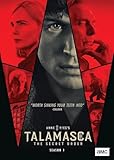
Talamasca: The Secret Order | $14.99 | Buy on Amazon |
| 2 |

|
Anne Rice's Talamasca: The Secret Order Season 1 DVD | Nicholas Denton, Celine Buckens | Region 4... | $30.86 | Buy on Amazon |
| 3 |
![Dulha Dulhan [DVD]](https://m.media-amazon.com/images/I/510o08MuTmL._SL160_.jpg)
|
Dulha Dulhan [DVD] | $17.95 | Buy on Amazon |
| 4 |

|
La Horda (DVD) (Import) | $10.18 | Buy on Amazon |
| 5 |
![Karla [DVD]](https://m.media-amazon.com/images/I/41z92dWZhOL._SL160_.jpg)
|
Karla [DVD] | $19.13 | Buy on Amazon |
The order serves as the connective tissue between Rice’s disparate supernatural worlds, quietly linking the vampire chronicles to the Mayfair witches through shared knowledge and overlapping histories. Figures associated with the Talamasca often appear as confidants, investigators, or uneasy allies, blurring the line between neutral observer and moral participant. As the Immortal Universe expands on screen, understanding the Talamasca becomes essential—not just to track who’s watching whom, but to grasp how power, secrecy, and history truly operate in a world where immortality is very real.
The Talamasca on Screen: How the Series Fits Into AMC’s Immortal Universe Timeline
Talamasca: The Secret Order is designed less as a standalone offshoot and more as the Immortal Universe’s hidden spine. Chronologically, the series unfolds alongside the events of Interview with the Vampire and The Mayfair Witches, filling in the unseen spaces where supernatural history is recorded, debated, and quietly manipulated. Rather than retelling familiar storylines, it reframes them through the eyes of the observers who have always been there.
Quick wins for a faster PC:
Clear out junk files and repair common Windows errorsFree Scan →Fix the driver behind crashes, sound loss and screen glitchesFind Drivers →#1 Best Overall
- Talamasca: The Secret Order [DVD]
Operating in the Shadows of Familiar Stories
In Interview with the Vampire, the Talamasca already exists as an off-screen presence, referenced through documents, interviews, and the sense that Louis and Lestat’s story has been studied long before it reached the audience. The Talamasca series pulls that thread tighter, revealing the agents tasked with cataloging vampire lives in real time. These are the people deciding what knowledge is preserved, what is buried, and which immortals are deemed too dangerous to ignore.
This places the show in a parallel narrative lane, running alongside key moments from the vampire timeline without disrupting them. Viewers may recognize events, names, and consequences, but now filtered through institutional memory rather than personal confession.
The Mayfair Witches Connection
The Talamasca’s role becomes even more concrete when viewed through The Mayfair Witches, where the order’s historical obsession with bloodlines, prophecy, and inherited power is central to the plot. Talamasca: The Secret Order contextualizes that fixation, showing how centuries of observation shaped the group’s cautious, often morally conflicted approach to the Mayfair family. Witches are not anomalies to the Talamasca; they are long-term case studies.
By positioning the series around the organization itself, AMC clarifies why the Talamasca treats witches differently from vampires, and why certain families receive more scrutiny than others. The show underscores that knowledge, not combat, has always been the Talamasca’s greatest weapon.
Do these 3 things before closing this tab:
1Fix the driver behind crashes, sound loss and screen glitches2Repair Windows errors before they cause bigger problems3Scan for outdated or missing drivers - takes under a minuteA Narrative Hub for the Immortal Universe
Functionally, Talamasca: The Secret Order acts as the Immortal Universe’s connective control room. Its characters are not heroes or villains in the traditional sense, but archivists of catastrophe, burdened by what they know and constrained by rules that demand restraint. This perspective allows the series to reference events across centuries without anchoring itself to a single immortal protagonist.
As AMC continues expanding Anne Rice’s world, the Talamasca’s on-screen arrival gives the franchise narrative flexibility. It creates a place where timelines overlap, secrets converge, and future stories can be seeded long before audiences realize what they’re watching.
Nicholas Denton as [Lead Talamasca Agent]: The Audience’s Way Into the Order
Every secret society needs a point-of-view character, and Talamasca: The Secret Order smartly assigns that role to Nicholas Denton’s lead agent. Positioned neither at the top of the hierarchy nor entirely naïve, his character functions as the audience’s proxy inside an organization defined by compartmentalized truth. Through his assignments, viewers learn how the Talamasca actually operates day to day, not just what it claims to be.
Denton’s agent is introduced as capable but unsettled, someone trained to observe rather than intervene, yet increasingly aware of the moral cost that restraint carries. That tension mirrors the show’s larger thematic engine: the price of knowing everything and acting on almost nothing.
Free tools Windows power users keep installed
One-click scans. No signup required.
Who He Is Within Talamasca Lore
Within Anne Rice’s mythology, Talamasca agents are scholars first and operatives second, tasked with documenting the supernatural without destabilizing it. Denton’s character embodies that philosophy, serving as a field-facing archivist who gathers intelligence, conducts interviews, and verifies legends that most of the world would dismiss as myth. He is not a hunter, nor a hero, but a living extension of the Talamasca’s vast record-keeping machine.
What sets him apart is proximity. His cases bring him into indirect contact with vampires, witches, and legacy bloodlines viewers already know, placing him just close enough to danger to feel its pull without crossing the line into immortality himself. The show uses his growing unease to explore how the Talamasca justifies its own passivity.
Nicholas Denton’s Performance and Genre Credibility
Nicholas Denton brings a restrained intensity well-suited to prestige genre television, grounding the supernatural stakes in human consequence. His performance leans on quiet reactions rather than grand speeches, allowing scenes heavy with lore to feel lived-in instead of expositional. That approach makes him an ideal anchor for a series dense with timelines, rules, and institutional memory.
For audiences familiar with Interview with the Vampire or The Mayfair Witches, Denton’s agent offers a tonal bridge. He reacts to revelations the way a rational outsider would, even as he’s been conditioned to accept the impossible as routine.
A Narrative Conduit to the Immortal Universe
Functionally, this character is how Talamasca: The Secret Order threads itself into the broader Immortal Universe without retelling existing stories. Through his assignments, the series can revisit known events from an entirely different angle, revealing how they were logged, interpreted, or quietly misfiled by the order. Familiar names and incidents resurface not as drama, but as data with consequences.
As the franchise expands, Denton’s lead agent becomes a movable lens, capable of intersecting with multiple timelines while remaining grounded in the Talamasca’s present-day agenda. He is not the most powerful figure in the room, but he may be the most important one for viewers trying to understand how all these immortal lives are being watched, measured, and remembered.
Elizabeth McGovern as [Senior Archivist / Leader]: Power, Knowledge, and Moral Ambiguity at the Top
If Nicholas Denton’s field agent represents the Talamasca’s eyes and ears, Elizabeth McGovern’s senior archivist sits firmly at its brain. She embodies the institutional authority that has kept the order intact for centuries, presiding over knowledge so vast it borders on the dangerous. In a universe ruled by immortals, her power is not supernatural, but informational.
Rank #2
- Nicholas Denton, Celine Buckens
McGovern’s character operates at the highest level of the Talamasca’s hierarchy, where decisions are made about what is recorded, what is suppressed, and what is quietly allowed to continue. She understands the stakes better than anyone, having studied generations of vampires, witches, and hybrids not as legends, but as repeating patterns. Her authority comes from knowing how often catastrophe follows interference, and how often inaction proves just as deadly.
Recommended Free Tools
The Talamasca’s Philosophy, Personified
Within Anne Rice’s mythology, the Talamasca has always walked a careful line between observation and complicity. McGovern’s archivist personifies that tension, articulating the order’s long-standing belief that knowledge is safer than intervention. When she discourages action, it is not out of cowardice, but experience.
Her presence reframes the organization as something closer to an ancient academic institution than a covert task force. This is a woman who has read the footnotes to history, who understands that immortals do not vanish when confronted, they adapt. Through her, the series interrogates whether the Talamasca’s detachment is wisdom or a moral failing disguised as discipline.
Elizabeth McGovern’s Authority-Driven Performance
McGovern brings a measured gravitas that immediately sells centuries of institutional continuity. Known for commanding roles in prestige dramas, she excels at conveying dominance without overt menace, making every calm directive feel like an unspoken ultimatum. Her scenes are defined by precision, with pauses and eye contact carrying as much weight as dialogue.
Rather than playing the character as a villain or savior, McGovern leans into ambiguity. Viewers are left to question whether her archivist is protecting the world from supernatural chaos, or protecting the Talamasca from accountability. That uncertainty is central to the show’s thematic core.
A Gatekeeper to the Immortal Universe’s Darkest Records
Narratively, McGovern’s character functions as a living index to the Immortal Universe. She knows which files reference Lestat, which bloodlines intersect with the Mayfair witches, and which incidents were quietly buried to preserve balance. When familiar names surface in her archives, they carry the weight of precedent rather than spectacle.
Her interactions with Denton’s agent highlight the generational divide within the Talamasca itself. Where he still wrestles with the ethics of watching and waiting, she has long since accepted the cost. In doing so, Elizabeth McGovern’s senior archivist becomes the series’ most unsettling figure, not because of what she does, but because of everything she has chosen not to do.
Key Field Agents, Scholars, and Watchers: Supporting Talamasca Members Explained
While Elizabeth McGovern’s senior archivist embodies the Talamasca’s institutional memory, the organization’s true reach is revealed through the agents, scholars, and watchers who operate beneath her. These are the figures who leave the safety of the archives, embed themselves in human lives, and quietly monitor supernatural threats without ever tipping the balance. Together, they flesh out the Talamasca as a living system rather than a single governing voice.
Nicholas Denton’s Field Agent: The Moral Center in Motion
Nicholas Denton’s character serves as the audience’s most immediate point of entry into the Talamasca’s operational side. As a field agent, he is tasked with observing supernatural activity up close, compiling reports, and resisting the urge to interfere even when human lives are at risk. His proximity to witches, vampires, and other immortals makes him uniquely vulnerable to emotional entanglement.
What sets Denton’s agent apart is his unresolved discomfort with the Talamasca’s doctrine of restraint. Where senior leadership views detachment as survival, he still believes knowledge should lead to action. This tension positions him as a potential catalyst for internal conflict, especially when his investigations brush against familiar Immortal Universe figures and unresolved historical atrocities.
The Embedded Watchers: Lives Lived in Plain Sight
Several supporting Talamasca members function as long-term watchers, agents who abandon traditional fieldwork to live entire lives within communities touched by the supernatural. These characters are teachers, doctors, archivists, and neighbors, quietly recording anomalies while blending seamlessly into the background. Their power lies not in combat or magic, but in patience.
Within Anne Rice’s mythology, watchers are often the first to notice patterns connecting immortal bloodlines across decades. In Talamasca: The Secret Order, they serve as narrative bridges, linking modern storylines to events referenced in Interview with the Vampire and The Mayfair Witches. When a watcher flags a disturbance, it carries the weight of years, sometimes generations, of observation.
Scholars of the Unnatural: Translators of Forbidden Knowledge
Beyond the field agents, the series introduces Talamasca scholars who specialize in decoding ancient texts, blood records, and oral histories passed down through supernatural families. These characters rarely leave the safety of controlled environments, but their discoveries often drive the plot more than any physical confrontation. A translated passage or rediscovered ledger can be more dangerous than a vampire’s confession.
These scholars reinforce the Talamasca’s identity as an academic order first and foremost. Their work contextualizes immortals like Lestat and the Mayfair lineage not as isolated legends, but as recurring case studies within a much larger, meticulously cataloged history. Knowledge, in their hands, becomes both a weapon and a liability.
Internal Overseers: Enforcers of Non-Intervention
Operating between leadership and fieldwork are Talamasca overseers tasked with enforcing the organization’s most controversial rule: observe, record, and do not interfere. These characters monitor agents as closely as they monitor supernatural subjects, ensuring that curiosity never turns into crusade. When agents cross lines, overseers are the ones who quietly erase evidence, reassign personnel, or close files indefinitely.
Rank #3
Their presence adds an unsettling layer of surveillance within the Talamasca itself. Loyalty is expected, but never fully trusted, reinforcing the idea that the order’s greatest fear is not the immortals it studies, but the possibility of losing control over its own narrative.
How These Supporting Members Expand the Immortal Universe
Collectively, these agents, scholars, and watchers transform the Talamasca into a connective tissue for Anne Rice’s shared universe. They are the reason stories intersect, timelines overlap, and past sins refuse to stay buried. Through their eyes, the Immortal Universe feels less like a collection of isolated myths and more like a single, ongoing historical record.
By grounding supernatural spectacle in procedure, documentation, and ethical compromise, Talamasca: The Secret Order deepens the mythology without demystifying it. Every supporting member reinforces the same haunting truth: the immortals may shape history, but it is the watchers who decide how that history is remembered.
Supernatural Subjects and Observed Immortals: Vampires, Witches, and Others Under Talamasca Surveillance
While Talamasca: The Secret Order centers on the watchers rather than the watched, the immortals themselves remain the series’ gravitational force. Vampires, witches, and other aberrations of nature appear not as protagonists, but as living case files—studied, tracked, and quietly contextualized within centuries of hidden records. Their presence reinforces the Talamasca’s purpose: not to challenge power, but to understand it before it reshapes the world.
Vampires: The Longest Files in the Archive
Vampires are among the Talamasca’s most exhaustively documented subjects, with records stretching back centuries. Figures like Lestat de Lioncourt and Louis de Pointe du Lac loom large over the organization’s archives, their movements and confessions cross-referenced against firsthand observation and recovered texts. The series treats these immortals as historical constants rather than unpredictable monsters, beings whose emotional volatility is matched only by their longevity.
Because Interview with the Vampire has already established these characters through Sam Reid and Jacob Anderson’s performances, Talamasca reframes them through an institutional lens. A vampire’s personal narrative is never accepted at face value; it is dissected, annotated, and often contradicted by Talamasca field notes. The result is a chilling reminder that even the most charismatic immortals are never truly alone.
Crashes, No Sound, or Screen Glitches?
Random freezes, missing sound and display glitches usually trace back to one bad driver. Find and replace yours safely.Free scan · under a minutePC Slower Than It Used to Be?
A free scan shows the junk files, broken settings and background clutter dragging Windows down - then fixes them in one click.Free scan · Windows 10 & 11Witches and Bloodlines: The Mayfair Case Studies
If vampires represent endurance, witches represent inheritance. The Mayfair lineage, led on-screen by Alexandra Daddario’s Rowan Fielding in The Mayfair Witches, occupies a uniquely sensitive position within Talamasca surveillance. Unlike vampires, witches pass their power through bloodlines, making them unpredictable not across centuries, but generations.
Talamasca agents monitor these families with particular care, documenting patterns of possession, madness, and supernatural escalation. Lasher’s influence, in particular, is treated less as a demon and more as an anomaly repeatedly manifesting under specific conditions. The witches are not merely observed; they are mapped, their genealogies treated as living diagrams of supernatural cause and effect.
Other Entities: The Files That Defy Classification
Beyond vampires and witches lie the cases the Talamasca struggles to categorize. Spirits, possessed humans, and rare hybrid phenomena occupy sealed sections of the archive, often revisited only when patterns reemerge decades later. These entities underscore the limits of even the Talamasca’s vast knowledge, reminding agents that not everything fits cleanly into established lore.
These lesser-known immortals and anomalies allow the series to expand Anne Rice’s universe without rewriting it. Each appearance hints at stories untold, civilizations forgotten, and mistakes quietly buried by those sworn to remember everything.
What’s actually slowing this PC down?
Pick the symptom - the matching free tool is one click away.
Why the Watched Matter as Much as the Watchers
By presenting immortals primarily through surveillance, Talamasca: The Secret Order alters the audience’s relationship to familiar characters. Vampires and witches become forces of nature observed through glass, their tragedies and triumphs filtered through institutional caution. This perspective doesn’t diminish their mythic power—it reframes it.
In doing so, the series reinforces a core truth of the Immortal Universe: legends endure, but records decide what survives. And within the Talamasca’s shadowed halls, every immortal, no matter how powerful, is ultimately just another file waiting to be reopened.
Characters With Crossover Potential: Connections to Interview with the Vampire and The Mayfair Witches
If Talamasca: The Secret Order functions as the nervous system of Anne Rice’s Immortal Universe, its greatest strength lies in proximity. This is the series positioned closest to the legends viewers already know, watching them from the margins, cataloging their movements, and quietly preparing for their return. Several characters, both seen and unseen, are designed to bridge that gap.
Rather than overt cameos, the show favors narrative overlap. Familiar immortals re-enter the story as case files, whispered warnings, or unresolved threats that Talamasca agents have been tracking for decades.
What’s actually slowing this PC down?
Pick the symptom - the matching free tool is one click away.
Louis, Lestat, and the Vampires Who Broke the System
The vampires of Interview with the Vampire loom large over the Talamasca’s institutional memory. Louis de Pointe du Lac and Lestat de Lioncourt are treated not simply as individuals, but as destabilizing variables whose emotional volatility makes long-term prediction nearly impossible. Their centuries-long entanglement is often cited in Talamasca records as an example of how personal bonds can reshape vampire behavior on a historical scale.
Rank #4
- La Horda (Dvd) (Import)
Claudia’s existence, brief yet catastrophic, remains one of the Talamasca’s most frequently reexamined failures. Agents debate whether her creation represents an anomaly or a warning the order chose to ignore. Even in absence, these figures influence how Talamasca assesses every new vampire encounter.
The Ancients in the Archive: Armand and the Theatre of Surveillance
Armand occupies a particularly unsettling position within Talamasca lore. Unlike younger vampires, he understands the mechanisms of observation and has, at various points, manipulated them. Talamasca files describe him as both subject and saboteur, an immortal who recognizes when he is being watched and adapts accordingly.
The Théâtre des Vampires, long dismantled, is still referenced in training materials as a case study in collective immortality. It represents a rare moment when vampires formed a self-sustaining culture, forcing Talamasca observers to confront the limits of passive surveillance.
Recommended Free Tools
The Mayfair Bloodline: A Living Case File
From The Mayfair Witches, Rowan Fielding and her lineage remain under constant review. Unlike vampires, the Mayfairs cannot be isolated to a single immortal lifespan. Their power mutates with each generation, forcing Talamasca analysts to track patterns across centuries of births, deaths, and disappearances.
Lasher’s recurring manifestations are treated as a recurring event rather than an entity with fixed rules. Some Talamasca scholars argue that understanding the Mayfair line is key to predicting future supernatural escalation, making Rowan one of the most consequential figures currently under observation.
Talamasca Liaisons: The Characters Who Cross the Threshold
Several Talamasca agents are positioned as connective tissue between series, tasked with interfacing directly with vampires and witches when containment fails. These characters often appear across timelines, their careers spanning decades as they inherit cases from predecessors who vanished or retired under suspicious circumstances.
Because the Talamasca values continuity over heroics, these agents rarely change history outright. Instead, they shape what is remembered, what is buried, and which immortals are allowed to fade back into myth. Their quiet persistence makes them the most likely point of human crossover between all corners of the Immortal Universe.
Why These Connections Matter
By grounding crossovers in documentation rather than spectacle, Talamasca: The Secret Order deepens the shared universe without overwhelming it. Familiar characters gain new dimensions when seen through the eyes of those sworn to never interfere, yet always record.
In this series, crossover potential is less about who appears on screen and more about whose story refuses to stay contained. Every name in the archive carries history, consequence, and the promise that no legend in Anne Rice’s world is ever truly finished.
Independent reader supportYour contribution helps us test, update, and keep practical guides available for everyone.The Talamasca’s Philosophy and Internal Conflicts: Believers, Skeptics, and Dangerous Knowledge
At its core, the Talamasca operates on a deceptively simple mandate: observe, record, and never interfere. In practice, that philosophy fractures under the weight of centuries spent watching monsters shape history while humans pay the price. Talamasca: The Secret Order treats this tension not as background lore, but as the organization’s defining fault line.
The series frames the Talamasca less as a unified cabal and more as a living institution struggling to agree on its own purpose. Every case file is filtered through human belief, fear, and ambition, turning neutrality into a constant moral negotiation rather than a fixed rule.
The Believers: Knowledge as Survival
The Believers are Talamasca agents and scholars who accept the supernatural as an immutable reality. For them, vampires, witches, and spirits are not aberrations but forces of nature, no different from earthquakes or plagues. Their priority is preparedness: catalog everything, anticipate patterns, and ensure humanity is never completely defenseless.
Several senior operatives in the series fall into this camp, often portrayed as weary but pragmatic professionals. These characters tend to have the longest service records, shaped by firsthand encounters that erased any lingering doubt. Their belief isn’t reverence, but resignation born of experience.
The Skeptics: Distance as Control
In contrast, the Skeptics view belief itself as a liability. While they acknowledge the existence of the supernatural, they insist on emotional and philosophical distance, fearing that fascination leads to corruption. To them, the Talamasca’s power lies in detachment, not understanding.
Younger analysts and archivists are frequently aligned with this worldview, approaching cases as data rather than lived trauma. The show uses these characters to explore how denial can coexist with evidence, and how skepticism can quietly morph into arrogance when monsters refuse to follow recorded patterns.
Best Value
- DVD
Dangerous Knowledge and the Cost of Knowing Too Much
The most volatile internal conflict arises around forbidden knowledge: texts, artifacts, and firsthand testimonies deemed too destabilizing for general circulation. Talamasca: The Secret Order reveals that entire sub-archives exist, accessible only to agents who have proven psychologically resilient, or reckless enough to insist.
Some supporting characters are defined by what they’ve read and can never forget. Exposure fractures loyalties, blurs ethical lines, and occasionally pushes agents toward intervention, the one sin the Talamasca claims to abhor. These storylines echo Anne Rice’s recurring theme that knowledge itself is a kind of curse.
Where the Cast Embodies the Conflict
The cast is carefully positioned to personify these philosophical divides rather than resolve them. Senior figures often clash with rising operatives, not over facts, but over what responsibility those facts demand. Conversations about vampires like Louis de Pointe du Lac or anomalies like the Mayfair witches become proxy debates about faith, restraint, and guilt.
By embedding ideology into character dynamics, the series avoids reducing the Talamasca to a monolithic secret society. Instead, it becomes a battleground of competing truths, where belief and skepticism are equally dangerous, and the greatest threat may be understanding the universe too well.
Do these 3 things before closing this tab:
1Fix the driver behind crashes, sound loss and screen glitches2Clear out junk files and repair common Windows errors3Scan for outdated or missing drivers - takes under a minuteWhy the Cast Matters: How These Performances Expand the Scope of the Immortal Universe
In a universe already defined by operatic vampires and dynastic witches, Talamasca: The Secret Order widens the lens by grounding the supernatural in human performance. This cast doesn’t compete with icons like Lestat or Rowan Mayfair; it reframes them. By centering observers rather than immortals, the series asks what it costs to live adjacent to legends without ever becoming one.
What makes the casting especially effective is its restraint. These characters are not written as awestruck audience surrogates, but as professionals whose lives have been shaped, narrowed, and sometimes ruined by proximity to the uncanny. The performances sell the idea that the Talamasca is not merely a narrative device, but a functioning institution with its own culture, hierarchies, and emotional casualties.
The Senior Archivists: Authority Without Comfort
The upper ranks of the Talamasca are embodied by performers who project composure rather than warmth. Their characters are veteran archivists and adjudicators, people who have outlived colleagues, buried reports, and learned to speak about horrors in procedural language. These roles require actors capable of conveying history through stillness, suggesting entire lifetimes of secrets without exposition.
Within Anne Rice’s mythology, these figures act as the closest thing to a governing conscience. They reference events tied to vampires like Louis de Pointe du Lac or bloodlines connected to the Mayfair witches with clinical precision, reinforcing the idea that nothing in the Immortal Universe happens in isolation. The cast makes that interconnectedness feel earned rather than encyclopedic.
Quick wins for a faster PC:
Fix the driver behind crashes, sound loss and screen glitchesFind Drivers →Clear out junk files and repair common Windows errorsFree Scan →The Field Operatives: Where Theory Collides With Trauma
Younger operatives and investigators are played with a deliberate tension between competence and vulnerability. These characters are often brilliant, skeptical, and ideologically aligned with the Talamasca’s doctrine of non-intervention, at least at first. The actors bring urgency and emotional friction to roles that could have easily become passive observers.
As these operatives encounter living vampires, corrupted humans, or supernatural aftermaths, the performances shift. Fear, fascination, and moral doubt begin to surface, echoing the journeys of Rice’s immortals themselves. In this way, the cast bridges the emotional language of Interview with the Vampire with the institutional perspective unique to Talamasca.
Outsiders, Assets, and Living Evidence
Supporting characters, often civilians, scholars, or reluctant informants, play a crucial role in expanding the universe laterally. These performances remind viewers that the supernatural doesn’t just affect immortals and secret societies, but ordinary lives caught in the crossfire. A convincing sense of fear or disbelief from these actors reinforces the stakes without relying on spectacle.
Some of these characters function as living artifacts, people who have seen too much and can no longer return to normalcy. Their presence mirrors the tragic trajectories seen throughout Anne Rice’s work, reinforcing the franchise’s core idea that knowledge is never neutral. The cast’s ability to humanize these smaller roles gives the world texture and consequence.
Free tools Windows power users keep installed
One-click scans. No signup required.
Performance as World-Building
What ultimately sets this ensemble apart is how deliberately each performance contributes to the Immortal Universe’s thematic architecture. No character exists solely to explain lore; they embody its consequences. Through subtle choices in tone, posture, and restraint, the cast communicates how belief, denial, and obsession shape lives over decades.
Talamasca: The Secret Order succeeds because its cast treats the supernatural not as fantasy, but as an occupational hazard. Their performances expand the scope of Anne Rice’s world by showing how vast it truly is, and how many people are quietly carrying its weight. In doing so, the series proves that the Immortal Universe doesn’t just belong to monsters and myths, but to the humans brave, or foolish, enough to keep their records.
Quick Recap
Product prices and availability are accurate as of the date/time indicated and are subject to change. Any price and availability information displayed on Amazon at the time of purchase will apply.

