Free tools Windows power users keep installed
One-click scans. No signup required.
A private letter Sylvia Plath wrote to her former therapist adds painful biographical context to poems including “The Rabbit Catcher” and “Thalidomide.” In the letter, dated September 22, 1962, Plath alleged that Ted Hughes physically abused her shortly before her 1961 miscarriage. The Hughes estate rejected the abuse claim. The letter changes the questions readers may bring to the poems, but it does not prove what every image means or settle their interpretation.
What Plath’s letter says—and what it cannot establish
The disclosure became public in 2017, when reporting drew attention to letters Plath had written to her former therapist, Ruth Beuscher, also identified in some accounts as Ruth Barnhouse. In the September 22, 1962 letter, Plath wrote: “Ted beat me up physically a couple of days before my miscarriage.” That is Plath’s allegation, not an independently established finding that Hughes caused the miscarriage. The Hughes estate, speaking for Carol Hughes, called the abuse claim “absurd.” (The Guardian’s 2017 account)


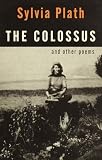
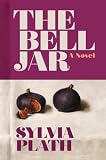
The same report described a separate letter from October 1962 in which Plath said Hughes had told her he wished she were dead. The letters were part of an archive assembled by feminist scholar Harriet Rosenstein. They came to public attention amid an attempted sale and legal dispute and were eventually awarded to Smith College. The Guardian reported that the archive included 14 letters to the therapist dated from February 18, 1960, to February 4, 1963. That account documents the letters’ history at the time; it does not establish their current access arrangements.
The distinction matters: the letter records Plath’s account of abuse and its timing in relation to her miscarriage. It does not independently verify the account or demonstrate a medical cause. The disclosure is significant for how readers can contextualize the writing, not as a definitive explanation of the loss.
What’s actually slowing this PC down?
Pick the symptom - the matching free tool is one click away.
#1 Best Overall
Why the poems read differently in this context
Poetry scholar Jason Miller argues that Plath’s miscarriage, read alongside her journals and the development of her drafts, gives “The Rabbit Catcher” and “Thalidomide” added resonance. His reading draws attention to images of snares, vacancy, cords and bodily harm, and to the way knowledge of the miscarriage can alter what those images suggest. (Miller’s essay)
“The Rabbit Catcher”
The title can evoke the old expression “the rabbit died,” which referred to a historical pregnancy test involving rabbits. In the context of Plath’s pregnancy loss, the poem’s language of entrapment and bodily vulnerability may take on a more specific biographical force. That connection offers a way to read the poem; it does not establish that the poem is simply a coded account of one event.
Rank #2
“Thalidomide”
Miller notes that earlier drafts used more direct miscarriage language that was later removed. Knowing this drafting history makes the poem’s treatment of bodily harm and loss newly charged: the subject was present more explicitly in the poem’s development than in its final wording. A reader can consider that context without treating the published poem as a one-to-one transcript of Plath’s experience.
Biography can inform a poem without exhausting it
Miller’s argument is one interpretation grounded in a letter and the poems’ drafts, not a settled consensus or an exclusive key. Plath also addressed miscarriage in the radio play “Three Women” and poems including “Elm” and “Parliament Hill Fields”; the Guardian likewise identifies miscarriage as a subject of “Parliament Hill Fields.” These works provide a broader context for considering how pregnancy loss entered Plath’s writing, rather than proof that every image in the two poems refers to it.
Rank #3
Reading a poem biographically also raises a question about the speaker: a poem may draw on a writer’s personal experience without making speaker and author identical. A Wiley excerpt on Plath’s work describes the overlap between personal experience and poetic speaker while cautioning that readers cannot know exactly what was in Plath’s mind in her final period. Holding both ideas together makes room for the biographical stakes and for meanings that exceed biography. (Wiley excerpt)
Independent reader supportYour contribution helps us test, update, and keep practical guides available for everyone.Which edition of Ariel includes the poems?
The edition matters when following this argument. Miller writes that “The Rabbit Catcher” and “Thalidomide” were omitted from the original 1965 Ariel and appeared in an updated 2004 edition. Ariel was published posthumously and edited by Hughes; the 1965 arrangement should not be described as one Plath herself published. Readers comparing Miller’s interpretation with the collection should check which edition and poem text they are using.
Quick Recap
Best Value
Rank #4
Product prices and availability are accurate as of the date/time indicated and are subject to change. Any price and availability information displayed on Amazon at the time of purchase will apply.




