Recommended Free Tools
The phrase “series-low” attached to Stranger Things 5 landed like a shock because the show has spent nearly a decade as one of Netflix’s most critic-proof juggernauts. For years, each new season arrived with near-automatic acclaim, buoyed by nostalgia, blockbuster craft, and the cultural goodwill the Duffer Brothers built from the start. Seeing the Rotten Tomatoes score dip below every previous season, even modestly, reframes the final chapter as something to be scrutinized rather than simply celebrated.
What matters most is context. Stranger Things 5 is not being rejected outright; it is being measured against an unusually high internal benchmark set by its own past successes. Earlier seasons benefited from novelty, escalating ambition, and the sense of a phenomenon still in the making. By contrast, Season 5 arrives as a conclusion, carrying the weight of payoff, resolution, and years of fan theories, which inevitably sharpens critical expectations.


How a “Low” Score Can Still Mean Strong Reception
A series-low Rotten Tomatoes score does not translate to failure so much as recalibration. The early critical consensus points less to broken storytelling and more to familiar complaints that long-running hits often face: narrative sprawl, tonal heaviness, and the challenge of balancing character closure with spectacle. In that light, the score reflects a tougher grading curve rather than a collapse, signaling that Stranger Things is now being judged not as a breakout phenomenon, but as a legacy series trying to stick the landing.
A Look Back at the Numbers: How Season 5 Compares to Every Previous Season
To understand why the phrase “series-low” carries so much weight, it helps to step back and examine how consistently strong Stranger Things has been across its run. From the start, the show wasn’t just popular; it was critically dominant, with Rotten Tomatoes scores that placed it among Netflix’s most reliably acclaimed originals. Season 5’s early numbers stand out precisely because they break a near-decade-long pattern of exceptional consensus.
The Tool Desk
Outbyte Driver Updater FREEScan for outdated or missing drivers - takes under a minuteDriver Scan →Outbyte PC Repair FREERepair Windows errors before they cause bigger problemsFix Now →#1 Best Overall

- Season 1 Complete Collection – Includes all episodes from the first season
- Blu-ray and DVD Combo – Multiple viewing formats for convenience
- Collector’s Edition Packaging – Retro VHS-style box designed for display
- Bonus Collectibles Included – Features poster and themed puzzle
- Great for Fans & Collectors – Perfect gift for sci-fi and TV series enthusiasts
Season 1 Through 3: Near-Unanimous Acclaim
Season 1 debuted with a Rotten Tomatoes score hovering in the high 90s, a reflection of how fresh its Spielbergian nostalgia and genre confidence felt in 2016. Critics embraced it as both a throwback and a reinvention, rewarding its tight pacing and ensemble chemistry. That goodwill carried into Season 2, which landed only slightly lower, still firmly in the mid-90s.
Season 3 marked the show’s first noticeable dip, settling in the high 80s. While still warmly received, reviews began noting tonal excess and a growing reliance on spectacle over intimacy. Even then, the score would be considered a triumph for most series, especially one already three seasons deep.
Season 4: Ambition Over Precision
Season 4 arrived with enormous expectations and an unusually long runtime, and its Rotten Tomatoes score reflected a mix of admiration and fatigue. Sitting in the high 80s, critics praised its scale, darker horror elements, and individual performances, particularly Millie Bobby Brown and Sadie Sink. At the same time, concerns about bloat and narrative sprawl became more pronounced, planting the seeds for the scrutiny Season 5 now faces.
Importantly, Season 4’s score was still far above industry averages. The conversation wasn’t about quality erosion so much as whether Stranger Things was beginning to strain under its own mythology.
Quick wins for a faster PC:
Scan for outdated or missing drivers - takes under a minuteDriver Scan →Clear out junk files and repair common Windows errorsFree Scan →Fix the driver behind crashes, sound loss and screen glitchesFind Drivers →Season 5: A Modest Drop With Outsized Meaning
Season 5’s early Rotten Tomatoes score, currently landing in the low 80s, represents the lowest critical mark in the series’ history. On paper, that drop is relatively small, especially compared to the steep declines many long-running shows experience. In context, however, it’s notable because it confirms a shift in how critics are engaging with the series.
Rather than rewarding ambition alone, reviews appear more focused on payoff, cohesion, and emotional resolution. The lower score suggests that while Season 5 still delivers on production value and performances, it may not fully escape the narrative weight accumulated over four previous seasons. The result is less a verdict of decline and more evidence that Stranger Things is now being judged by endgame standards rather than origin-story excitement.
Critics vs. Fans: Rotten Tomatoes Scores, Audience Reactions, and the Growing Divide
The most revealing aspect of Season 5’s Rotten Tomatoes performance may not be the critics’ score itself, but how sharply it contrasts with audience reactions. While critics have cooled slightly, fan scores remain notably higher, reflecting continued emotional investment in the characters and the world of Hawkins. This split underscores a familiar pattern for long-running genre hits entering their final chapter.
For many viewers, Stranger Things is no longer evaluated as a television series in isolation. It’s a cultural touchstone tied to nostalgia, communal viewing, and years of emotional attachment, factors that rarely weigh as heavily in critical assessments. As a result, what critics see as structural strain or uneven payoff often registers for fans as a forgivable imperfection in an otherwise beloved story.
Free tools Windows power users keep installed
One-click scans. No signup required.
What Critics Are Responding To
Critical reviews of Season 5 tend to focus on execution rather than intent. Most agree that the Duffer Brothers remain ambitious, but several note that the final season struggles to balance closure with escalation, especially after Season 4 pushed the show’s scale to its limits. With fewer opportunities to reset or reinvent itself, Season 5 is being judged on how cleanly it resolves arcs rather than how boldly it expands them.
There’s also less novelty to lean on. The synth-driven atmosphere, ’80s homage, and small-town horror that once felt electric are now familiar, placing greater pressure on narrative precision. For critics, that familiarity makes pacing issues and exposition-heavy stretches harder to overlook.
Why Fans Are More Forgiving
Audience reactions, by contrast, emphasize payoff over polish. Viewers are more likely to celebrate character moments, emotional callbacks, and the sheer act of spending one last season with the ensemble. Even when acknowledging flaws, many fans frame them as trade-offs rather than failures.
Rank #2

- Printed in the U.S.A. with Eco-Friendly Inks
- Stranger Things
- Fifth Sun
This response reflects how binge-era fandom operates. When a series has accompanied audiences for nearly a decade, satisfaction often comes from emotional resonance rather than formal storytelling efficiency. Rotten Tomatoes’ audience score captures that sentiment, highlighting how legacy investment can soften critical edges.
A Divide Shaped by Endgame Expectations
The growing gap between critics and fans isn’t unique to Stranger Things, but it is intensified by the show’s stature. Final seasons invite scrutiny from critics trained to assess narrative architecture, while fans approach them as emotional events. Both perspectives are valid, but they measure success differently.
In that sense, Season 5’s series-low Rotten Tomatoes score says less about disappointment and more about perspective. Critics are evaluating whether the show sticks the landing; fans are deciding whether the journey still feels worth it. The divide doesn’t signal a collapse in quality so much as a moment where Stranger Things must satisfy two very different definitions of success.
Why the Reviews Are Harsher This Time: Franchise Fatigue, Expectations, and Narrative Choices
The Weight of Longevity in the Streaming Era
One unavoidable factor shaping Season 5’s critical response is simple endurance. Stranger Things has been part of the cultural conversation for nearly a decade, an unusually long lifespan for a streaming original that once thrived on mystery and surprise. Critics are now evaluating the show less as a phenomenon and more as a legacy text, where repetition and familiarity carry more weight than they once did.
This kind of franchise fatigue doesn’t imply active dislike. Instead, it narrows the margin for error. Elements that felt indulgent or charming in earlier seasons now register as overextended, especially when the show revisits structural rhythms audiences and critics know by heart.
PC Slower Than It Used to Be?
A free scan shows the junk files, broken settings and background clutter dragging Windows down - then fixes them in one click.Free scan · Windows 10 & 11Outdated Drivers Are Slowing You Down
One free scan finds every outdated or missing driver and matches the right update for your exact hardware.Free scan · exact hardware matchRaised Stakes, Narrower Critical Patience
Season 5 arrives with expectations few television finales ever face. After Season 4 expanded the mythology, scale, and emotional stakes, critics expected the final chapter to deliver both narrative efficiency and thematic clarity. When episodes linger or prioritize spectacle over resolution, those choices are scrutinized more sharply than they would be in a mid-series installment.
This pressure creates a paradox. The show is expected to feel epic without feeling bloated, conclusive without feeling rushed. For some reviewers, Season 5 struggles to consistently thread that needle, contributing to scores that reflect frustration rather than outright dismissal.
Narrative Familiarity Versus Evolution
Another recurring critique centers on how much the season relies on established storytelling beats. Ensemble splits, parallel arcs, and climactic convergence have long been part of Stranger Things’ DNA, but critics are less forgiving when those patterns feel too visible. What once felt like confident structure now risks reading as formula.
That familiarity also impacts how emotional moments land. Callbacks and echoes are designed to reward long-term viewers, but critics often evaluate whether those moments deepen character arcs or simply reference them. When nostalgia outweighs progression, reviews tend to cool.
What’s actually slowing this PC down?
Pick the symptom - the matching free tool is one click away.
Legacy Television and the Rotten Tomatoes Effect
Rotten Tomatoes amplifies these dynamics by flattening nuanced criticism into a binary score. A review that finds Season 5 admirable but flawed still registers as a negative mark, pulling the aggregate lower even when overall sentiment is mixed. Compared to earlier seasons that benefited from novelty and goodwill, the final season faces a more exacting critical environment.
In that context, the series-low score reflects a shift in evaluative criteria rather than a dramatic drop in craftsmanship. Stranger Things is no longer being judged on what it introduces, but on what it resolves, and that is a far more demanding standard for any long-running hit.
Rank #3
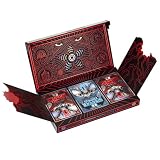
- WELCOME TO THE UPSIDE DOWN – Bring Hawkins energy to every shuffle with a Stranger Things playing card box set made for poker nights, blackjack, solitaire, magic practice, cardistry, party games, display, and gifting. A bold choice for fans who want cards with real story and atmosphere.
- THREE DECK COLLECTOR SET – This box set includes three themed playing card decks, including the blue holographic foil Upside Down Special Edition. It gives fans more than a single deck, making it stronger for display, collecting, gift baskets, game night, and fan collections.
- VHS-STYLE DISPLAY BOX – Housed in a nostalgic VHS-style box with red and holographic silver foil details and embossed accents, this set feels pulled straight from the world of Hawkins. It stands out on a shelf, desk, collector case, coffee table, or game room display.
- STRANGER THINGS ARTWORK – Featuring characters, moments, and supernatural atmosphere from the Stranger Things universe, this set brings more personality than ordinary playing cards. Great for fans of Hawkins, the Upside Down, Eleven, Demogorgon stories, and retro sci-fi horror.
- READY FOR PLAY, MAGIC & GIFTS – Use the decks for poker, rummy, blackjack, solitaire, beginner magic tricks, card flourishes, cardistry practice, family game night, travel entertainment, party games, collector shelves, birthdays, holidays, stocking stuffers, and fan gifts.
The Weight of the Final Chapter: How Ending a Cultural Phenomenon Raises the Bar for Critics
Final seasons are rarely judged on their own terms. For a show as culturally embedded as Stranger Things, Season 5 is evaluated as a culmination of nearly a decade of storytelling, fandom, and expectation. Critics are not just reviewing episodes; they are measuring whether the series earns its place in the television canon it helped shape.
Final Seasons Are Graded Differently
Earlier seasons of Stranger Things were allowed room for indulgence, experimentation, and even narrative detours because the promise of future payoff remained intact. By contrast, a final season has no such safety net. Every unresolved thread, repeated motif, or pacing issue reads as a missed opportunity rather than a temporary stumble.
This is where the series-low Rotten Tomatoes score gains context. Compared to Season 1’s near-universal acclaim or Season 4’s ambitious rebound, Season 5 enters a critical environment less interested in potential and more focused on precision. The bar is not just higher; it is narrower.
Expectation as a Critical Multiplier
The drop in scores does not necessarily signal a collapse in quality so much as an escalation in scrutiny. Critics who might have praised familiar beats in earlier seasons now question whether those choices justify their screen time in a finale. Comfort becomes complacency when innovation is expected, and emotional beats are weighed against whether they advance closure or simply revisit past highs.
This is particularly true for a show that defined the streaming blockbuster era. Stranger Things helped establish Netflix’s identity, which means its ending is implicitly compared not only to its own history, but to other prestige finales that followed in its wake.
Closure, Not Continuation, as the Measuring Stick
What separates Season 5 from its predecessors in critical reception is the shift from momentum to resolution. Mythology expansion, character arcs, and thematic payoff are no longer additive; they are definitive. When critics express frustration, it often stems from moments that feel like extensions of the series rather than conclusions to it.
In that light, the Rotten Tomatoes score reflects a conversation about legacy more than relevance. The question critics are asking is not whether Stranger Things is still entertaining, but whether it knows how to end, and endings have always been the most unforgiving chapter in television storytelling.
What Critics Are Praising Despite the Drop: Performances, Scale, and Netflix-Level Ambition
Even among mixed reviews, critics have been careful to separate disappointment in structural choices from admiration for the craft on display. Season 5 may be under heavier scrutiny, but few argue that it lacks effort, resources, or commitment. In many respects, it looks and feels like the most expensive and technically confident version of Stranger Things yet.
The disconnect, according to several reviews, is not about execution but about emphasis. Critics acknowledge that the series is still operating at a level few streaming shows can match, even if that ambition occasionally clashes with the need for narrative restraint in a final chapter.
Performances Anchoring an Overloaded Finale
One of the most consistent points of praise centers on the cast, particularly the core ensemble that has carried the series from childhood into adulthood. Critics highlight how the actors bring emotional credibility to scenes that might otherwise feel familiar or overextended. Performances are frequently described as grounded, sincere, and strong enough to sell moments that the writing sometimes struggles to justify.
Several reviews note that the emotional weight of Season 5 works best on a character-by-character level. Even skeptics of the season’s pacing concede that the cast remains the show’s greatest asset, providing continuity and heart in a story increasingly preoccupied with spectacle and mythology.
Rank #4
Scale That Reflects Netflix’s Blockbuster Identity
If Season 5 falters for some critics in narrative economy, it compensates with sheer scale. The production design, visual effects, and action staging are often cited as series highs, reinforcing Stranger Things as a defining example of Netflix’s blockbuster approach to television. The show still looks enormous, cinematic, and unconcerned with budgetary limits.
That scale, however, is also part of the critique. Some reviewers admire the ambition while questioning whether every large-scale sequence earns its runtime. Still, even detractors acknowledge that few shows attempt this level of spectacle on the small screen, especially while maintaining a recognizable aesthetic and tonal identity.
A Finale That Refuses to Play Small
What ultimately earns respect from critics, even those lukewarm on the season as a whole, is that Stranger Things does not retreat in its final outing. The series leans fully into its legacy, mythology, and emotional stakes rather than opting for a restrained or minimalist ending. That confidence is seen as both a strength and a risk.
Do these 3 things before closing this tab:
1Repair Windows errors before they cause bigger problems2Scan for outdated or missing drivers - takes under a minute3Clear out junk files and repair common Windows errorsFor some, the refusal to simplify is exactly what keeps Season 5 compelling despite its flaws. The ambition signals that the creators are still aiming high, even under the pressure of ending a cultural phenomenon. In a critical landscape shaped by disappointment with rushed or underwhelming finales, Stranger Things at least commits to finishing on its own terms.
Independent reader supportYour contribution helps us test, update, and keep practical guides available for everyone.Is This a Decline or a Correction? How Long-Running Hits Historically Fare in Their Final Seasons
When a series as dominant as Stranger Things posts its lowest Rotten Tomatoes score in its final season, the instinctive reaction is to read it as a downturn. But historically, long-running hits often experience a recalibration rather than a collapse when they reach the finish line. The critical lens narrows, patience thins, and what once felt novel is now judged against the show’s own legacy.
Season 5’s score, while lower than earlier seasons, still sits comfortably within the realm of “generally favorable.” What’s changed is not an abrupt drop in quality, but the context in which critics are evaluating it. After nearly a decade, Stranger Things is no longer graded as a breakout genre surprise, but as a cultural institution expected to justify every creative choice.
The Burden of Familiarity
Early seasons of hit shows benefit from discovery. Viewers and critics alike are more forgiving of uneven pacing or unresolved threads when the world and characters are still new. By a final season, familiarity becomes a double-edged sword, amplifying both affection and frustration.
For Stranger Things, long-standing habits like extended runtimes, mythological exposition, and ensemble sprawl feel heavier now than they did in earlier years. Critics aren’t necessarily saying these elements are poorly executed; they’re questioning whether they still feel necessary. That distinction matters when interpreting a series-low score.
Final Seasons Are Rarely the Highest-Rated
Television history offers few examples of finales that outperform a show’s peak seasons critically. Game of Thrones saw its scores plunge amid narrative backlash, while Lost and The Walking Dead faced declining reception as mythology overtook character clarity. Even acclaimed runs like The Americans or Better Call Saul ended with seasons praised more for craftsmanship than surprise.
The exceptions, such as Breaking Bad or Succession, are often cited precisely because they are so rare. In that context, Stranger Things landing slightly below its own average aligns more with industry norms than with failure.
A Shift in Expectations, Not Effort
What many reviews of Season 5 reflect is not creative exhaustion, but heightened scrutiny. The same ambition that once thrilled critics is now weighed against runtime discipline, narrative efficiency, and emotional payoff. Spectacle alone no longer earns goodwill; it has to justify its scale.
Best Value
This shift suggests a correction in expectations rather than a loss of creative intent. Stranger Things is being evaluated less as escapist entertainment and more as a legacy text, where every choice is measured against what the show represents in the Netflix era.
What the Score Actually Signals
A series-low Rotten Tomatoes score does not automatically translate to diminished audience impact or cultural relevance. Instead, it signals that Stranger Things has entered the phase where admiration coexists with critique. The show is no longer protected by novelty, but it is still respected for its ambition and craft.
In that light, Season 5’s reception reads less like a warning sign and more like a natural endpoint for a series that has spent years setting its own bar. The conversation has shifted from whether Stranger Things is good to whether it lived up to everything it promised to be.
What the Lower Score Means for Viewers, the Show’s Legacy, and Netflix’s Prestige Era
How Viewers Should Read the Score
For audiences, a series-low Rotten Tomatoes score is less a red flag than a recalibration tool. It suggests that Season 5 may feel heavier, more deliberate, and more structurally ambitious than earlier chapters, rather than immediately crowd-pleasing. Viewers expecting the breezy momentum of Season 1 or the shock-driven escalation of Season 4 may notice a tonal shift toward resolution and consequence.
That does not mean the season lacks spectacle or emotion. Instead, it asks viewers to meet the show where it now is, not where it once was. The lower score prepares audiences for a finale that prioritizes closure over surprise, and thematic payoff over viral moments.
The Long-Term Impact on Stranger Things’ Legacy
Historically, final-season reception rarely defines a show’s entire legacy unless the drop is dramatic or culturally contentious. Stranger Things’ dip exists within a body of work that already secured its place as one of the most influential genre series of the streaming era. Its characters, iconography, and revival of ’80s genre storytelling remain intact regardless of incremental score shifts.
If anything, the critical response underscores how high the bar had become. The show is now judged against its own best moments, not against competing series. In legacy terms, Stranger Things is unlikely to be remembered for a modest Rotten Tomatoes decline, but for how decisively it shaped Netflix’s original programming identity.
What It Says About Netflix’s Prestige Era
Season 5’s reception also reflects broader changes in how Netflix originals are evaluated. Early prestige hits benefited from novelty, scale, and first-mover advantage in the streaming wars. Today, critics are more exacting, especially with long-running properties that symbolize Netflix’s rise to dominance.
Stranger Things is no longer just a show; it is a benchmark. A lower score signals that Netflix’s flagship titles are now subject to the same critical rigor once reserved for HBO finales or AMC-era prestige dramas. That evolution speaks less to decline and more to maturation, both for the platform and its audience.
A Measured Ending, Not a Diminished One
Ultimately, the conversation around Season 5’s score reveals a series transitioning from phenomenon to finished text. The scrutiny is sharper because the stakes are higher, not because the foundation has weakened. Stranger Things is closing its story under the weight of its own success.
For viewers, that means entering the final season with adjusted expectations rather than lowered ones. The legacy of Stranger Things will be shaped by its cultural footprint and emotional resonance more than its final Rotten Tomatoes percentage. In the streaming era, that distinction may matter more than ever.
Quick Recap
Product prices and availability are accurate as of the date/time indicated and are subject to change. Any price and availability information displayed on Amazon at the time of purchase will apply.
Quick wins for a faster PC:
Scan for outdated or missing drivers - takes under a minuteDriver Scan →Clear out junk files and repair common Windows errorsFree Scan →Fix the driver behind crashes, sound loss and screen glitchesFind Drivers →
