Do these 3 things before closing this tab:
1Clear out junk files and repair common Windows errors2Fix the driver behind crashes, sound loss and screen glitches3Repair Windows errors before they cause bigger problemsThis Steve Silberman obituary honors the journalist and author who died at his San Francisco home on August 29, 2024, at age 66. His husband, Keith Karraker, confirmed the death. Silberman is remembered for NeuroTribes, his autism-history work, and Skeleton Key, his portrait of Grateful Dead culture.
Those subjects were not unrelated sides of his career. Silberman consistently wrote about communities, histories, and forms of knowledge that outsiders tended to simplify. His reporting made specialist worlds more accessible while preserving the people’s complexity, language, and claim to be heard on their own terms.


Key takeaways
- Steve Silberman died at his San Francisco home on August 29, 2024, at age 66; his husband, Keith Karraker, confirmed the death, and the cited obituary did not report a cause.
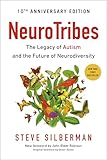
- NeuroTribes: The Legacy of Autism and the Future of Neurodiversity grew out of Silberman’s 2001 WIRED article “The Geek Syndrome.”
- NeuroTribes helped bring autism history, autistic self-advocacy, accommodation, and neurodiversity to a broad general readership without being a diagnostic or treatment manual.
- Silberman’s music writing included Skeleton Key: A Dictionary for Deadheads, co-written with David Shenk and focused on Grateful Dead language, rituals, folklore, and community.
- Silberman received a 2010 AAAS Kavli Science Journalism Award for magazine journalism, and NeuroTribes later won the Samuel Johnson Prize for Nonfiction and the California Book Award.
Why Steve Silberman’s obituary matters
Steve Silberman died at his San Francisco home on August 29, 2024, at age 66, leaving behind a body of work that connected technology journalism, autism history, disability advocacy, science writing, and music culture. His husband, Keith Karraker, confirmed the death; the cited obituary did not provide a cause. Silberman was the author of NeuroTribes and co-author of Skeleton Key, two books about communities that mainstream culture often misunderstood.
The most accurate tribute to Silberman is not that he wrote about autism in one phase and the Grateful Dead in another. He brought the same habits to both subjects: patient curiosity, historical depth, humane listening, and an ability to translate specialist worlds without stripping away their complexity. The Washington Post obituary published September 4, 2024, reported his death and placed his autism-history work at the center of his public legacy.
The Tool Desk
Outbyte Driver Updater FREEFix the driver behind crashes, sound loss and screen glitchesFind Drivers →Outbyte PC Repair FREERepair Windows errors before they cause bigger problemsFix Now →#1 Best Overall
What did Steve Silberman change through NeuroTribes?
NeuroTribes changed the terms of the mainstream autism conversation by presenting autism as a subject shaped by medical history, diagnostic systems, families, autistic people, institutions, and changing ideas about human difference. The book challenged simplistic stories about an “epidemic,” parental blame, or a single cure-oriented answer, and instead examined history, accommodation, self-advocacy, and neurodiversity.
Silberman did not invent neurodiversity or the autism-rights movement. Autistic-led activists and organizations had developed and advanced those ideas before NeuroTribes appeared. Silberman’s important contribution was helping explain and popularize neurodiversity for a much larger general audience. The Autistic Self Advocacy Network’s August 30, 2024 tribute described Silberman as a longtime friend of ASAN and the neurodiversity movement and credited his writing with making autism history accessible to people previously excluded from the conversation.
NeuroTribes is a history and public argument, not a clinical manual. The book discusses the contrasting legacies of Leo Kanner and Hans Asperger, changing definitions of autism, diagnosis rates, treatment histories, the rise of autistic self-advocacy, and the discredited claim that vaccines cause autism. The publisher’s description of NeuroTribes identifies the book as a New York Times bestseller and records its Samuel Johnson Prize for Nonfiction and California Book Award wins.
Rank #2
What NeuroTribes did—and did not—claim
| Silberman’s approach | What readers should not infer |
|---|---|
| Autism is explored through history, science, institutions, families, and autistic people. | Autistic people all share one experience or one set of support needs. |
| Neurodiversity is presented as a framework for understanding neurological difference. | Neurodiversity eliminates disability or removes the need for care and accommodation. |
| Medical and diagnostic narratives are examined critically. | NeuroTribes is a diagnostic guide or substitute for professional medical advice. |
| Autistic self-advocacy is included in the history. | Silberman single-handedly created the neurodiversity movement or autism-rights activism. |
How did “The Geek Syndrome” lead to NeuroTribes?
Silberman’s sustained public work on autism began with “The Geek Syndrome,” a December 2001 WIRED article about increasing autism diagnoses in Silicon Valley. The article examined the relationship among the technology industry, family experience, inherited traits, and emerging autism awareness. The original WIRED article, “The Geek Syndrome,” published December 1, 2001, is the clearest starting point for understanding the reporting path that eventually became NeuroTribes.
Crashes, No Sound, or Screen Glitches?
Random freezes, missing sound and display glitches usually trace back to one bad driver. Find and replace yours safely.Free scan · under a minutePC Slower Than It Used to Be?
A free scan shows the junk files, broken settings and background clutter dragging Windows down - then fixes them in one click.Free scan · Windows 10 & 11Silberman later explained that the project expanded beyond Silicon Valley and contemporary reporting into a much larger history of autism. In a 2015 WIRED interview about NeuroTribes, Silberman described the connection between his earlier article and the book’s broader investigation. The progression shows how his journalism worked: a contemporary story became an entry point into the historical forces and human experiences behind it.
Was Steve Silberman also a science journalist?
Yes. Silberman’s reputation did not rest only on the later success of NeuroTribes. He was a longtime contributor and editor associated with WIRED, and the American Association for the Advancement of Science records him as the magazine-category recipient of a 2010 AAAS Kavli Science Journalism Award. The AAAS award record published in 2011 documents that recognition.
Rank #3
His strength as a science writer was translation without oversimplification. Silberman could make research, medicine, diagnosis, and technology readable to people outside those fields while retaining the historical and ethical questions that made the subjects consequential.
What did Steve Silberman write about the Grateful Dead?
Silberman’s major music book was Skeleton Key: A Dictionary for Deadheads, co-written with David Shenk. Rather than treating the Grateful Dead as only a rock band, the book documented Deadhead vocabulary, stories, rituals, folklore, tape-trading traditions, humor, spiritual language, and community. The publisher’s page for Skeleton Key identifies Shenk and Silberman as co-authors.
The distinction between Silberman’s two major books matters: he was the sole author of NeuroTribes, while Skeleton Key was a collaboration with Shenk. The official Grateful Dead tribute to Silberman presents Skeleton Key as an important document of Deadhead culture and as a welcoming entry point for people trying to understand the Dead’s world.
That music writing was not an incidental hobby. Silberman’s attention to the Deadhead community reflected the same interest in belonging that shaped his autism writing. In both cases, he documented a culture’s language and internal logic rather than reducing the culture to an object of outsider fascination. His wider music work also included writing about David Crosby, part of the “double life” in science and music journalism described in obituary and tribute coverage. The Grateful Dead’s Dead Freaks Unite feature provides additional context for Silberman’s connection to Deadhead culture.
| Book | Author credit | Subject | Best starting point for |
|---|---|---|---|
| NeuroTribes: The Legacy of Autism and the Future of Neurodiversity | Steve Silberman | Autism history, diagnosis, treatment narratives, self-advocacy, and neurodiversity | Readers interested in Silberman’s central public legacy and science journalism |
| Skeleton Key: A Dictionary for Deadheads | David Shenk and Steve Silberman | Grateful Dead vocabulary, stories, rituals, folklore, and community | Readers interested in Silberman’s music writing and cultural documentation |
How did different communities remember Steve Silberman?
Silberman’s tributes reveal the breadth of his influence. The Autistic Self Advocacy Network emphasized his friendship with the organization and his role in making autism history available to people who had been left out of conventional accounts. The Grateful Dead’s official tribute emphasized his ability to make newcomers feel that they could enter and belong to Deadhead culture. These tributes came from different communities, but both recognized a writer who made unfamiliar worlds more intelligible without treating their members as curiosities.
The Atlantic’s September 10, 2024 tribute essay further reflects Silberman’s role in changing how autism was discussed in public. The combined record supports a measured conclusion: Silberman helped shift public understanding, but his work should be remembered as part of larger movements led and sustained by autistic people, advocates, researchers, families, musicians, and fans.
What work was unfinished when Silberman died?
Silberman was working on a book about cystic fibrosis when he died, according to the San Francisco Chronicle obituary published September 12, 2024. The project should be described as unfinished. The available research does not establish that the book was completed, scheduled for publication, or acquired for a later release, so any future publication remains unresolved unless an authoritative publisher, estate, or other source confirms it.
Read Steve Silberman’s work
Readers seeking the clearest introduction to Silberman should start with NeuroTribes: The Legacy of Autism and the Future of Neurodiversity, then turn to Skeleton Key: A Dictionary for Deadheads for the complementary music-and-community side of his career. Steve Silberman’s NeuroTribes is the most direct first choice for understanding the book that defined his autism-history legacy.
Frequently Asked Questions
When did Steve Silberman die, and what was the cause of death?
Steve Silberman died at his home in San Francisco on August 29, 2024, at age 66. His husband, Keith Karraker, confirmed the death, but the cited obituary did not provide a cause.
What books did Steve Silberman write?
Steve Silberman wrote NeuroTribes: The Legacy of Autism and the Future of Neurodiversity. He also co-wrote Skeleton Key: A Dictionary for Deadheads with David Shenk.
What is Steve Silberman’s NeuroTribes about?
NeuroTribes is a history and public argument about autism, including changing diagnoses, treatment narratives, autistic self-advocacy, and neurodiversity. It is not a diagnostic or treatment manual.
The Bottom Line
Steve Silberman’s legacy rests on a rare combination of rigorous reporting and generous attention to community. NeuroTribes helped general readers understand autism through history and neurodiversity, while Skeleton Key preserved the language and belonging of Deadhead culture. He did not create either movement, but he helped many more people find a way into conversations they had previously misunderstood.
Quick Recap
Product prices and availability are accurate as of the date/time indicated and are subject to change. Any price and availability information displayed on Amazon at the time of purchase will apply.