Spotify’s app code did point to lossless audio in June 2025, but it did not confirm a release date, price or new subscription tier. Spotify later announced lossless listening for eligible Premium users on September 10, 2025. The feature supports up to 24-bit/44.1 kHz FLAC, subject to market, device and connection availability.
What the Spotify app code revealed
On June 18, 2025, TechCrunch reported that Spotify app code contained the label “Lossless” and language describing it as the service’s best sound quality. The report said a Reddit user had surfaced additional references in a recent mobile-app version.
That was evidence that Spotify was developing or testing lossless-related functionality—not an announcement that subscribers could use it. Code strings can reveal a feature label or concept, but they do not establish when a feature will launch, which countries or devices will get it, what it will cost, or whether it will survive unchanged into release.
The report revived a question that had lingered since Spotify announced HiFi in 2021. Spotify described that planned service as CD-quality lossless audio, but it did not launch in 2021. The announcement is documented in Spotify’s February 2021 newsroom post.
Free tools Windows power users keep installed
One-click scans. No signup required.
#1 Best Overall
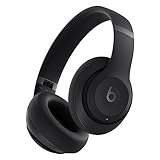
- INCREDIBLE SOUND: Custom acoustic platform delivers rich, balanced audio for music, calls and everyday listening.
- LOSSLESS AUDIO SUPPORT: USB-C lossless audio and sound profiles optimize music quality across devices and environments. Additional option to use the 3.5 mm cable for a standard analog experience.
- ACTIVE NOISE CANCELLING (ANC): block distractions at work, on flights or during your daily commute. Or use Transparency mode to let the sounds of your environment mix in with your music.
- SEAMLESS WIRELESS CONNECTIVITY: One-touch pairing with Apple & Android for easy switching across devices.
- SPATIAL AUDIO IMMERSION: Personalized dynamic head tracking, 360-degree sound for movies, music and immersive everyday listening.
What Spotify eventually launched
Spotify announced lossless listening for Premium on September 10, 2025, with a gradual rollout to more than 50 markets. The company presented it as a feature for eligible Premium users, not as a separately announced “HiFi” or lossless subscription tier. Spotify’s launch announcement specifies FLAC playback at up to 24-bit/44.1 kHz. The announcement was updated on October 6, 2025, to report availability in more than 50 markets.
Before launch, names such as “Music Pro” and “Supremium,” as well as paid add-on speculation, circulated in coverage of Spotify’s plans. Those rumors did not define the product Spotify ultimately announced. The code report could not establish the final business model; the official rollout placed lossless within eligible Premium access. For current eligibility details, consult Spotify’s lossless audio support page.
Rank #2

- INCREDIBLE SOUND: Custom acoustic platform delivers rich, balanced audio for music, calls and everyday listening.
- LOSSLESS AUDIO SUPPORT: USB-C lossless audio and sound profiles optimize music quality across devices and environments. Additional option to use the 3.5 mm cable for a standard analog experience.
- ACTIVE NOISE CANCELLING (ANC): block distractions at work, on flights or during your daily commute. Or use Transparency mode to let the sounds of your environment mix in with your music.
- SEAMLESS WIRELESS CONNECTIVITY: One-touch pairing with Apple & Android for easy switching across devices.
- SPATIAL AUDIO IMMERSION: Personalized dynamic head tracking, 360-degree sound for movies, music and immersive everyday listening.
What “lossless” means—and what Spotify’s specification does not mean
Lossless audio preserves the encoded audio data rather than discarding some of it to reduce file size. Spotify’s stated maximum is 24-bit/44.1 kHz FLAC. That is a maximum specification, not a promise that every track, device or session will play at that rate. The format also does not make a track louder, improve its original mastering or guarantee that a listener will hear a difference. Spotify says loudness normalization remains in effect.
“Lossless” and “hi-res” are not interchangeable labels across every service. Spotify’s ceiling is 44.1 kHz; some competitors advertise higher sample rates. A larger number does not by itself mean a better recording or master, and the audible result depends on the music and the complete playback chain.
Rank #3

- INCREDIBLE SOUND: Custom acoustic platform delivers rich, balanced audio for music, calls and everyday listening.
- LOSSLESS AUDIO SUPPORT: USB-C lossless audio and sound profiles optimize music quality across devices and environments. Additional option to use the 3.5 mm cable for a standard analog experience.
- ACTIVE NOISE CANCELLING (ANC): block distractions at work, on flights or during your daily commute. Or use Transparency mode to let the sounds of your environment mix in with your music.
- SEAMLESS WIRELESS CONNECTIVITY: One-touch pairing with Apple & Android for easy switching across devices.
- SPATIAL AUDIO IMMERSION: Personalized dynamic head tracking, 360-degree sound for movies, music and immersive everyday listening.
How to find the lossless setting
- Check your account and app. Sign in to an eligible Premium account in a market where the feature is available, and update Spotify if needed.
- Open audio quality settings. In the Spotify app, go to Settings and privacy, then Media Quality or the audio-quality section. Choose Lossless where the option is available. Exact labels and placement can vary by platform and app version.
- Check playback status. Start a track and look for a Lossless indicator. With Spotify Connect, open the connected-device interface and check its quality selector or file-quality card; see Spotify Connect’s lossless instructions.
- Allow for connection conditions. Spotify says network stability and available bandwidth can affect the quality actually delivered. Its lossless quality guidance covers connection and device limitations.
If the option is missing
- Your market or Premium plan may not be eligible.
- Your app may need an update.
- The playback device or Spotify Connect destination may not support lossless.
- A weak or unstable connection may prevent lossless playback or lead to a lower quality level.
Why the playback chain matters
A lossless file selected in Spotify does not guarantee lossless delivery through every link to your headphones or speakers. The app, network, connected device, operating system, output and listening equipment all affect the result. Spotify’s launch announcement said that additional device support, including Sonos and Amazon devices, would follow; check the current compatibility information rather than assuming every model is supported.
Bluetooth needs particular care. A lossless source file can be converted to a Bluetooth codec that is not lossless, depending on the phone, operating system, headphones or receiver, codec and supported Spotify path. Generic Bluetooth headphones therefore do not guarantee end-to-end lossless playback. A compatible wired connection or supported network playback path is a more dependable way to preserve the source quality.
Rank #4

- Hi-Res Audio & Titanium-Coated Drivers: Delivering 96kHz/24-bit Hi-Res audio through 40mm titanium-coated drivers, reproducing musical details with clarity across wired and wireless connections; Support LDAC/SBC codecs for preserving audio quality during wireless streaming
- Hybrid ANC & Multiple Modes: Advanced -49dB active noise cancellation with multiple ANC modes that adjust to your environment; Convenient physical buttons let you quickly switch between ANC levels, while the EDIFIER ConneX app offers additional customization with specialized modes for sport, office, and travel scenarios
- Spatial Sound & Volume Guard: Immerse yourself with dynamic spatial sound technology, while the EDIFIER ConneX App offers customized EQ presets for tailored listening; The volume guard feature helps maintain comfortable listening levels by letting you set a preferred maximum volume
- Multipoint Bluetooth & Simultaneous Play/Charge: Enjoy enhanced wireless stability with both Bluetooth V6.1 and USB-C wired connections; The stable wireless link supports simultaneous two-device pairing for seamless switching between calls and media, while the wired mode enables continuous playback with charging; Gaming Mode reduces latency for responsive audio
- Long Battery Life & Fast Charging: Engineered for endurance with up to 88 hours of continuous use (49hrs with ANC), supported by fast charging that delivers 15 hours of playback from just 15 minutes of charging
Lossless can also use more data and storage than compressed streaming or downloads. If mobile data, limited bandwidth or offline storage is a concern, choose a lower quality setting for those situations and use lossless where the connection and equipment justify it.
Will you hear a difference?
Lossless preserves more of the audio data in the source stream, but that technical difference is not automatically an audible one. The result depends on whether the track is available in lossless, the playback path, the speakers or headphones, the room and background noise, and the listener. A poor recording or master will not become a good one because it is streamed in FLAC.
Recommended Free Tools
Best Value
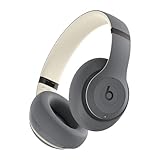
- INCREDIBLE SOUND: Custom acoustic platform delivers rich, balanced audio for music, calls and everyday listening.
- LOSSLESS AUDIO SUPPORT: USB-C lossless audio and sound profiles optimize music quality across devices and environments. Additional option to use the 3.5 mm cable for a standard analog experience.
- ACTIVE NOISE CANCELLING (ANC): block distractions at work, on flights or during your daily commute. Or use Transparency mode to let the sounds of your environment mix in with your music.
- SEAMLESS WIRELESS CONNECTIVITY: One-touch pairing with Apple & Android for easy switching across devices.
- SPATIAL AUDIO IMMERSION: Personalized dynamic head tracking, 360-degree sound for movies, music and immersive everyday listening.
- Use capable headphones or speakers and a playback path that can preserve the quality.
- Compare the same recording at matched loudness; a louder version can seem better even when the difference is only level.
- Judge the service by its whole experience—catalog, recommendations, device support and convenience—not just its maximum format specification.
How Spotify compares with other lossless services
The figures below are providers’ advertised format capabilities, not a guarantee that every track is available at the maximum. Plan features, device support and prices vary by country and can change; check the linked official pages for current local terms.
| Service | Advertised quality | Useful distinction | Official information |
|---|---|---|---|
| Spotify Premium | Up to 24-bit/44.1 kHz FLAC | Lossless is included for eligible Premium listeners; market, device and connection affect availability. | Spotify announcement |
| Apple Music | Lossless up to 48 kHz; Hi-Res Lossless from 48 kHz to 192 kHz | Apple lists lossless and Spatial Audio among its service features; device and setup still matter. | Apple Music |
| Amazon Music Unlimited | HD and Ultra HD; some tracks up to 24-bit/192 kHz | Prime membership may affect the effective cost; check current account-specific terms. | Amazon overview · Amazon FAQ |
| TIDAL | Plan-specific quality details on the current pricing page | TIDAL says updated pricing applies from the first billing date on or after August 3, 2026; check current plan terms. | TIDAL pricing · TIDAL price notice |
| Qobuz | Plan and catalog details on the subscription page | Check the U.S. subscription page for current plan and format details. | Qobuz U.S. subscriptions |
Spotify’s lossless addition closes an important gap for listeners who prefer its playlists, recommendations, social listening and Connect ecosystem. It does not make Spotify the automatic choice for someone seeking higher sample-rate playback, a hi-fi-focused interface or a specific device ecosystem. Apple Music may suit listeners who want lossless alongside Spatial Audio; Amazon Music Unlimited may appeal to Prime members; TIDAL or Qobuz may better fit listeners who prioritize hi-fi-oriented features and catalog presentation.
For U.S. subscribers, Spotify directs customers to its Premium plans page for current prices, and its January 2026 pricing announcement records a price update. Avoid relying on an old comparison’s price: plan, country, billing channel and offers can affect what a customer pays.
Quick Recap
Product prices and availability are accurate as of the date/time indicated and are subject to change. Any price and availability information displayed on Amazon at the time of purchase will apply.




