Season 2 didn’t just continue Severance; it quietly rewired what the series is capable of. What began as a claustrophobic workplace thriller expanded into something more volatile and emotionally dangerous, with the finale leaving viewers suspended between revelation and dread. The show’s central question — what does it mean to divide a life — suddenly felt less theoretical and far more irreversible.
By the time the final moments landed, Severance had shifted its axis. The story was no longer about whether Lumon’s experiment could be exposed, but what happens when exposure doesn’t bring freedom, only deeper entanglement. That distinction is crucial, because it reframes every tease the creators have made about Season 3 as a promise of escalation rather than resolution.

The Collapse of the Innie-Outie Illusion
Season 2 systematically dismantled the comforting notion that innies and outies could remain cleanly separated. Characters who once believed they were protecting themselves by staying ignorant were forced to confront the emotional cost of that denial. The cliffhangers made it clear that memory, identity, and agency are no longer contained within Lumon’s walls.
This erosion of boundaries suggests that Season 3 won’t simply explore rebellion, but consequence. The more the characters learn about themselves, the harder it becomes to choose which version deserves control. That tension sits at the heart of the show’s most unsettling final beats.
Do these 3 things before closing this tab:
1Repair Windows errors before they cause bigger problems2Fix the driver behind crashes, sound loss and screen glitches3Clear out junk files and repair common Windows errors#1 Best Overall
![Severance - Series 1 [Blu-ray] [Region A & B & C]](https://m.media-amazon.com/images/I/41H7RjkDq4L._SL160_.jpg)
- Drama, Blu-Ray
Lumon Revealed, but Not Defeated
While Season 2 pulled back the curtain on Lumon’s mythology and internal power structure, it stopped short of offering a clean villain reveal. Instead, the company emerged as something more insidious: a system that adapts, absorbs resistance, and reframes cruelty as purpose. The final episodes implied that knowing Lumon’s secrets may actually strengthen its grip.
This reframing is key to understanding why the cliffhangers felt so destabilizing. The enemy is no longer hidden, but confronting it doesn’t lead to clarity — it leads to moral compromise. That’s fertile ground for the twists the creator has teased, where victories may come at an unthinkable personal cost.
Relationships Pushed Past the Point of Safety
Perhaps the most haunting unresolved threads are emotional rather than plot-driven. Season 2 forced its characters into choices that permanently altered how they see one another, blurring love, loyalty, and manipulation. The final moments suggested that some bonds may not survive the truths uncovered, even if the characters themselves do.
Those fractured relationships are likely to be Season 3’s pressure points. When the creator hints at surprises ahead, it’s hard not to read that as a warning: the next chapter may not be about saving these characters, but about watching them decide who — if anyone — they’re willing to sacrifice.
Quick wins for a faster PC:
Scan for outdated or missing drivers - takes under a minuteDriver Scan →Clear out junk files and repair common Windows errorsFree Scan →Fix the driver behind crashes, sound loss and screen glitchesFind Drivers →Inside the Creator’s Tease: What Has Been Promised (and What’s Being Carefully Withheld)
In the wake of Season 2’s disorienting finale, creator Dan Erickson has been notably precise in how he talks about what comes next. Interviews and press appearances haven’t offered plot specifics, but they have sketched a clear philosophy for Season 3: escalation without simplification. The promise isn’t that answers are coming quickly, but that the questions themselves are about to get far more dangerous.
What’s striking is how often Erickson frames Season 3 as a reckoning rather than a continuation. The characters aren’t just reacting to Lumon anymore; they’re living with the consequences of having pushed back. That shift suggests a season less focused on discovery and more on fallout.
“We Know More Now” — and That Changes Everything
One of the most telling aspects of the creator’s tease is his insistence that the audience is no longer in the dark the way it once was. Season 3, he’s suggested, operates from a place where both viewers and characters understand the basic shape of the lie. The tension, then, comes from what people do with that knowledge — and what it costs them to act on it.
This implies a narrative pivot away from puzzle-box mystery toward ethical instability. When secrets are exposed, Severance argues, they don’t liberate — they complicate. Expect twists that don’t hinge on surprise reveals, but on watching characters make increasingly fraught decisions with their eyes wide open.
No Easy Villains, No Clean Revolutions
Erickson has also been careful to push back against the idea of Season 3 becoming a straightforward rebellion story. Lumon, by his own description, isn’t something that can simply be toppled once its sins are exposed. It’s a structure that thrives on participation, compliance, and the belief that harm can be justified if it’s orderly enough.
That framing hints that some of the biggest twists may involve alignment rather than opposition. Characters may find themselves cooperating with forces they despise, or rationalizing choices that mirror Lumon’s own logic. In a show obsessed with blurred moral lines, that kind of turn feels both inevitable and deeply unsettling.
The Inner Lives Will Get Louder — and Harder to Control
Perhaps the most carefully worded tease centers on identity itself. Erickson has hinted that the divide between innie and outie won’t simply collapse, but evolve into something more unstable. Instead of liberation, the merging of knowledge could produce internal conflict that’s even more psychologically violent.
This opens the door to twists that are intimate rather than explosive. A character’s worst enemy may no longer be the company, but another version of themselves with competing desires and priorities. Season 3 appears poised to explore what happens when autonomy doesn’t feel like freedom, but like an unbearable burden.
The Tool Desk
Outbyte Driver Updater FREEFix the driver behind crashes, sound loss and screen glitchesFind Drivers →Outbyte PC Repair FREERepair Windows errors before they cause bigger problemsFix Now →What He’s Not Saying Is the Loudest Clue
Notably absent from the creator’s teases are reassurances. There’s been no promise of catharsis, no suggestion that long-suffering characters will finally catch a break. Instead, Erickson tends to emphasize discomfort, instability, and the idea that some lines, once crossed, can’t be uncrossed.
Rank #2

- 【SUPPORT FULL HD 1080P VIDEO OUTPUT】Experience true high definition playback with native 1080p resolution. DpBlue 2D 1080P blu-ray player delivers crystal clear picture quality for Blu ray discs and standard DVDs, ensuring every scene looks sharp and vibrant.
- 【SUPPORT Dolby & dts】This blu-ray player built-in codecs handle both Dolby Digital and DTS streams, delivering true origin 5.1-channel surround sound without the need for external decoders.
- 【HDMI & COAXIAL DIGITAL AUDIO PORTS 】 HDMI provides high-bandwidth video + audio, while the COAXIAL output gives a reliable, low latency digital audio link for receivers that prefer a dedicated audio line.
- 【UNIVERSAL DISC COMPATIBILITY】Our blu-ray player supports to play BD,BD-R,BD-RE,DVD-R/RW,DVD+R/RW,DVD-Video,CD,CD-R/RW. Don't support 3D and 4K discs.
- 【MULTI-FUNCTIONAL HOME THEATER PLAYER】Support blu ray discs in region A/1 and DVDs. DP-2805 blu-ray disc player works as DVD player, VCD player,CD player, U disk files player and HDD player.
That silence feels intentional. Severance has always thrived on denying its audience the relief they expect, and Season 3 sounds positioned to double down on that philosophy. Whatever twists are coming, they’re unlikely to restore balance — only to expose how fragile it always was.
The Expanding World of Lumon: How Season 3 Could Push Beyond the Severed Floor
If Season 1 turned the severed floor into a pressure cooker and Season 2 cracked it open, Season 3 appears ready to widen the lens entirely. Dan Erickson has hinted that Lumon is far larger and more culturally embedded than what viewers have seen so far, suggesting the show may finally follow its questions out of the basement and into the world that allows the company to exist. That shift wouldn’t dilute Severance’s claustrophobia so much as recontextualize it, reframing the severed floor as just one node in a much broader system.
The idea that Lumon thrives on belief rather than secrecy implies a narrative expansion that’s philosophical as much as geographic. Season 3 could reveal how the company’s logic permeates legal frameworks, social norms, and even family dynamics beyond its walls. In doing so, the show would challenge the comforting notion that Lumon is an aberration, instead positioning it as an exaggerated reflection of structures viewers already recognize.
Free tools Windows power users keep installed
One-click scans. No signup required.
Lumon as a Public Institution, Not a Hidden Villain
One intriguing possibility raised by Erickson’s comments is that Lumon may no longer function as a shadowy antagonist operating in isolation. Season 3 could explore how openly the company operates, and how many people knowingly benefit from its practices without ever stepping onto a severed floor. That kind of reveal would align with the show’s recurring theme that ethical compromise often wears the mask of normalcy.
By expanding Lumon into a visible, even respected entity, the series could complicate the stakes for characters on the outside. Opposition becomes riskier when the institution you’re fighting is legally protected, culturally normalized, and economically indispensable. The horror shifts from what Lumon hides to what it doesn’t bother hiding at all.
New Spaces, Same Control
Pushing beyond the severed floor doesn’t mean abandoning Severance’s signature aesthetic of control and repetition. Erickson has suggested that new environments may carry the same oppressive logic, even if they look radically different. Whether that means other Lumon facilities, experimental programs, or adjacent industries, the implication is that severance is a mindset as much as a procedure.
That approach allows the show to evolve visually while preserving its thematic spine. Fresh locations could introduce new rules, hierarchies, and rituals, each revealing another variation on Lumon’s obsession with order. Instead of answers, these spaces may only raise more unsettling questions about how many versions of this system exist.
The Cost of Knowing the World Is Bigger
For the characters, discovering that Lumon extends far beyond what they imagined may be more destabilizing than liberating. Knowledge doesn’t automatically create leverage; in Severance, it often deepens paralysis. Season 3 seems poised to explore the emotional fallout of realizing that escape isn’t about leaving a room, but disentangling from an entire worldview.
That realization fits cleanly with the show’s ongoing interest in complicity. As the world of Lumon expands, so too does the uncomfortable possibility that there’s nowhere entirely outside of it. And in that kind of landscape, resistance doesn’t look like revolution so much as survival with your conscience intact.
Innie vs. Outie, Reconsidered: New Twists on Identity, Memory, and Control
If Season 1 established the innie/outie divide and Season 2 began to fracture it, Season 3 appears ready to challenge the concept altogether. Creator Dan Erickson has teased that the clean binary viewers once relied on is no longer sufficient to describe what severance actually does to a person. The implication is unsettling: identity at Lumon may be far more modular, unstable, and manipulable than anyone realized.
Rather than asking who the “real” self is, the show seems poised to ask whether that question still has meaning. Severance has always argued that identity is shaped by context and power. Season 3 may push that idea to its breaking point.
When Memory Stops Obeying the Rules
One of the most persistent teases surrounding the new season involves memory behaving in unexpected ways. Erickson has hinted that the boundaries governing what innies and outies can know or feel may begin to erode, not through rebellion, but through systemic failure. That erosion reframes memory not as a locked door, but as a pressure point Lumon may no longer fully control.
This opens the door to subtler, more dangerous consequences than simple information leakage. Emotional residue, instinctive recognition, or misplaced loyalty could bleed across divides, creating characters who act against their own understanding of themselves. In a show where routine is weaponized, even a flicker of remembered feeling becomes a threat.
Rank #3
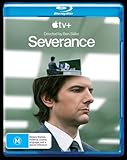
- Adam Scott, Patricia Arquette
Control Without the Procedure
Season 3 also seems interested in interrogating whether severance is the source of Lumon’s power, or merely its most visible expression. Erickson has suggested that the company’s methods of influence extend well beyond the chip, raising the possibility that innie-like compliance can be cultivated without surgery. That idea reframes severance as a prototype rather than an endpoint.
If Lumon can reproduce the psychological effects of severance in unsevered individuals, the moral terrain shifts dramatically. Control becomes cultural, not clinical. The most disturbing outcome wouldn’t be the loss of memory, but the realization that autonomy can be reshaped voluntarily, even enthusiastically.
What’s actually slowing this PC down?
Pick the symptom - the matching free tool is one click away.
The Horror of Choosing Your Own Cage
By complicating the innie/outie divide, Season 3 may also force characters to confront a more painful truth: that participation is not always coerced. Past seasons have shown how comfort, purpose, and structure can feel like relief in an overwhelming world. Erickson’s teases suggest the show will lean harder into that temptation.
In that light, severance stops being a sci-fi anomaly and starts resembling a mirror. The question isn’t just who Lumon controls, but who willingly accepts its logic. And as identity becomes more negotiable, the cost of choosing stability over selfhood may become the series’ most haunting twist yet.
Power Shifts and Corporate Secrets: Who Holds the Upper Hand Going Into Season 3?
Season 3 arrives with Lumon no longer feeling monolithic. Erickson’s teases point toward a company strained by internal contradictions, where authority is fragmented across departments, rituals, and competing interpretations of Kier’s doctrine. The result is a power structure that looks intact from the outside but is quietly at war with itself.
That instability matters because Severance has always framed power as performative. Control depends on belief, repetition, and the appearance of inevitability. If those illusions crack, even slightly, Lumon’s grip weakens in ways that no security checkpoint can fully repair.
Outdated Drivers Are Slowing You Down
One free scan finds every outdated or missing driver and matches the right update for your exact hardware.Free scan · exact hardware matchPC Slower Than It Used to Be?
A free scan shows the junk files, broken settings and background clutter dragging Windows down - then fixes them in one click.Free scan · Windows 10 & 11Lumon’s Cracks Are No Longer Invisible
Previous seasons treated Lumon’s hierarchy as opaque by design, but Season 3 hints suggest opacity may become a liability. As more employees brush against truths they weren’t meant to access, the company’s reliance on compartmentalization starts to backfire. Secrets don’t just leak; they collide.
Erickson has alluded to factions within Lumon that disagree on the future of severance itself. That raises the possibility that the company’s greatest threat isn’t rebellion from below, but schism from within. When leadership can’t agree on the mission, doctrine becomes negotiable, and doctrine is the spine of Lumon’s authority.
Employees as Unwitting Power Brokers
What’s changed heading into Season 3 is that workers now possess something more dangerous than information: leverage. Emotional continuity, partial awareness, and cross-boundary instincts turn individual employees into unpredictable variables. They don’t need to understand the full picture to disrupt it.
This reframes the innies not as prisoners, but as volatile assets. The more Lumon attempts to manage them through ritual and reward, the more it exposes its own dependence. Control becomes a negotiation, not a given, and negotiations can be lost.
Recommended Free Tools
The Board, the Myth, and the Vacuum of Authority
The Board’s looming presence has always suggested omniscience, but Erickson’s comments hint that this authority may be more ceremonial than strategic. If Lumon’s true power rests in myth-making rather than command, then any erosion of faith becomes existential. A god that requires constant explanation is already in trouble.
Season 3 appears poised to explore what happens when belief systems outlive their architects. As Kier’s legacy fractures into competing interpretations, the question of who truly leads Lumon becomes harder to answer. In that uncertainty, power doesn’t disappear; it migrates to whoever understands the system well enough to bend it.
Character Arcs Under Pressure: Mark, Helly, Irving, and Dylan at a Breaking Point
If authority at Lumon is destabilizing, the real fallout lands on the people forced to live inside its contradictions. Season 3 isn’t just escalating the mystery; it’s compressing the emotional arcs of its core characters until something has to give. According to creator Dan Erickson, the next chapter is less about revelation and more about consequence.
Rank #4
Each of the Macrodata Refinement team enters this season carrying knowledge they were never meant to hold. That awareness doesn’t empower them equally. Instead, it sharpens their existing fractures, pushing each character toward choices that feel inevitable and dangerous.
Mark: Identity Without a Safety Net
Mark’s arc has always hinged on avoidance, using severance as a way to cordon off grief rather than confront it. Season 3 threatens to remove that buffer entirely. Erickson has hinted that Mark will be forced to reconcile versions of himself that no longer stay neatly separated, emotionally or ethically.
What makes this especially volatile is that Mark isn’t chasing truth anymore; he’s reacting to it. As Lumon’s narrative collapses, so does his ability to remain passive. The question isn’t whether Mark will act, but whether he’ll recognize himself once he does.
Helly: From Symbol to Agent
Helly’s journey has always operated on two levels: personal rebellion and symbolic disruption. Season 3 appears ready to collapse that distinction. Erickson’s comments suggest Helly will no longer function as Lumon’s inadvertent mascot of defiance, but as someone forced to make choices that ripple beyond herself.
Her internal conflict is no longer about escape, but responsibility. When resistance becomes visible, it attracts expectations, and Helly may find that being a symbol is far more dangerous than being a prisoner. Power, once claimed, doesn’t come with instructions.
Irving: Faith, Memory, and the Cost of Certainty
Irving has always treated Lumon as a belief system, not just an employer. Season 3 challenges that faith with increasing brutality. As fragments of memory and suppressed knowledge press in, Irving’s devotion starts to look less like loyalty and more like fear of meaninglessness.
Erickson has teased that Irving’s arc will explore what happens when certainty collapses. If Lumon isn’t sacred, then what was he sacrificing for all this time? The show seems poised to turn Irving’s rigidity into a liability, both to himself and to anyone still clinging to the rules.
Dylan: Leverage, Anger, and the Unpredictable Variable
Dylan has quietly become one of Lumon’s most dangerous problems. He understands the system just enough to exploit it, and Season 3 appears eager to test how far that ingenuity can go. Erickson has alluded to Dylan operating with less supervision and more autonomy, a combination that rarely ends cleanly.
What sets Dylan apart is that his motivation isn’t ideological; it’s personal. That makes him volatile in ways Lumon can’t easily model or contain. When someone stops playing for meaning and starts playing to win, the rules tend to break first.
Free tools Windows power users keep installed
One-click scans. No signup required.
Themes Intensified: What the Teases Suggest About the Show’s Bigger Philosophical Questions
If Season 2 cracked the veneer of Lumon’s control, Season 3 looks poised to interrogate what’s left underneath. Dan Erickson’s teases consistently point away from puzzle-box revelations and toward something more unsettling: the emotional and ethical fallout of knowing the truth. The twists ahead aren’t just about what Lumon is doing, but what its employees are willing to become once denial is no longer an option.
Identity as a Moral Battleground
Severance has always treated identity as divisible, but Season 3 appears ready to ask whether it’s also accountable. Erickson has hinted that the innies and outies can no longer be narratively isolated, suggesting a collapse of moral outsourcing. When actions taken “at work” bleed into the self, the show begins questioning whether innocence was ever real, or merely convenient.
This reframing turns severance from a sci‑fi conceit into an ethical trap. If you create a version of yourself to suffer on your behalf, do you remain blameless? Season 3 seems determined to stop letting its characters, and its audience, dodge that question.
Freedom Versus Structure
Another recurring tease points to the dangers of liberation without direction. Erickson has described upcoming arcs as less about escape and more about aftermath, implying that freedom itself may prove destabilizing. Lumon’s structure, however oppressive, gave meaning through rules, rituals, and purpose.
The Tool Desk
Outbyte PC Repair FREERepair Windows errors before they cause bigger problemsFix Now →Outbyte Driver Updater FREEFix the driver behind crashes, sound loss and screen glitchesFind Drivers →Best Value

- Blu-ray & DVD playback - make the most of your HDTV: Blu-ray Disc playback delivers exceptional Full HD 1080p video performance Along with stunning high-definition sound. Lag Blu-ray players Also play DVDs, so there is no need to replace your old DVD collection. Not only that, DVD up-scaling delivers exceptional image quality with 1080p up scaling via HDMI
- Stunning Color and Detail: Support Dolby Vision and LONPOO exclusive technologies are applied to full high- precision processing to give natural textures and depth, maximizing color, clarity, and detail
- Highly intricate tones, such as those of a DTS Master studio quality sound source, are faithfully reproduced with natural depth and true-to-life atmosphere
- External playback through USB (64GB max.) and HDD (2TB max.) so you can enjoy Music, photos and camcorder video content archived on an external usb drive and hard disk drive
- Complete Your Home Theater: The LONPOO Blu-Ray Player provides you with a cinematic theater experience in the comfort of your own home
Without that framework, characters are forced to confront a terrifying ambiguity. What replaces control when it’s removed? Severance appears ready to explore the idea that autonomy, without values or community, can be just as paralyzing as captivity.
The Seduction of Systems
Season 3 also seems intent on examining why systems like Lumon endure even after their lies are exposed. Erickson’s comments suggest the show will dig deeper into complicity, especially among those who benefited from the structure. The question shifts from “Who built this?” to “Why did so many people choose to believe in it?”
This lens reframes Lumon less as a singular villain and more as a reflection of human desire for certainty. When meaning is prepackaged and suffering is abstracted, resistance becomes emotionally expensive. Severance isn’t just critiquing corporate power; it’s interrogating the comfort of surrendering judgment.
Memory, Pain, and the Price of Wholeness
Finally, Erickson has teased that remembering may not be the salvation viewers expect. Season 3 appears interested in the cost of reintegration, not just its mechanics. If memory restores wholeness, it also restores pain, guilt, and regret that severance was designed to erase.
Do these 3 things before closing this tab:
1Repair Windows errors before they cause bigger problems2Scan for outdated or missing drivers - takes under a minute3Clear out junk files and repair common Windows errorsIn that sense, the show’s biggest philosophical turn may be its bleakest. Healing isn’t framed as triumph, but as reckoning. Severance seems ready to ask whether being whole is inherently better, or simply more honest about how much damage has already been done.
What to Watch For: Key Clues, Fan Theories, and Narrative Landmines Heading Into Season 3
With Severance positioning Season 3 as a narrative pivot rather than a simple escalation, the smallest details may carry the heaviest weight. Creator Dan Erickson has emphasized that many answers will arrive obliquely, embedded in character behavior, institutional language, and seemingly mundane choices. Viewers should be prepared for twists that feel less like shocks and more like delayed detonations.
The Quiet Evolution of Lumon
One key clue lies in how Lumon responds to exposure. Erickson has hinted that the company’s future may be less about brute-force control and more about adaptation, suggesting a subtler, more insidious phase of corporate survival. Watch for rebranding, internal reforms, or rhetoric that reframes severance as a moral good rather than a necessary evil.
This would align with Severance’s long-running interest in how power survives scrutiny. Lumon doesn’t need to win outright if it can reassert relevance. Season 3 may reveal that the most dangerous systems are the ones that learn how to apologize without truly changing.
What’s actually slowing this PC down?
Pick the symptom - the matching free tool is one click away.
Innie and Outie Loyalties Crossing Lines
Fan theories have long speculated about alliances that defy the show’s internal logic, and Season 3 seems poised to test those boundaries. Erickson has suggested that innies and outies may no longer map cleanly onto hero and villain roles. The result could be uneasy cooperation, betrayal born of survival, or choices that benefit one self at the expense of the other.
These moments are likely to be framed quietly rather than dramatically. A single decision, made in fear or desperation, could redefine a character’s moral center. Viewers should pay close attention to whose interests are being served in any given scene, and who is paying the unseen cost.
The True Purpose of Severance Technology
Another narrative landmine involves the technology itself. While early seasons treated severance as a workplace tool gone wrong, Erickson’s teases imply a broader, more existential application. Season 3 may finally clarify whether Lumon’s endgame extends beyond productivity into something far more philosophical or even ideological.
If severance is revealed as a prototype rather than a finished product, it reframes everything that came before. The question then isn’t just why Lumon created it, but what kind of future it’s preparing people to accept. That revelation could retroactively darken even the show’s quietest moments.
Characters Who Think They’ve Won
Perhaps the most dangerous clue of all is the presence of apparent victories. Severance has consistently punished certainty, and Season 3 appears ready to continue that tradition. Characters who believe they’ve escaped, exposed the truth, or reclaimed autonomy may be standing on narrative trapdoors.
Erickson has warned that consequences will unfold unevenly, sometimes long after a choice feels resolved. Triumph, in this world, is often just delayed fallout. Viewers should be wary of catharsis that arrives too cleanly or too soon.
As Season 3 approaches, Severance feels less concerned with answering its mysteries than weaponizing them. The clues are there, but they demand patience, skepticism, and a willingness to question even the show’s most comforting assumptions. If earlier seasons asked what severance does to people, the next chapter seems ready to ask why we keep choosing it, even when we know better.
Quick Recap
Product prices and availability are accurate as of the date/time indicated and are subject to change. Any price and availability information displayed on Amazon at the time of purchase will apply.




