The Tool Desk
Outbyte PC Repair FREERepair Windows errors before they cause bigger problemsFix Now →Outbyte Driver Updater FREEScan for outdated or missing drivers - takes under a minuteDriver Scan →The question surrounding Scream 8 is not whether the franchise still has cultural relevance, but whether it can survive its own moment of upheaval. After Scream VI became the highest-grossing entry in the series, the brand appeared commercially stronger than it had been in decades. Yet behind the scenes, creative exits, public controversy, and shifting studio priorities abruptly put the future of Ghostface into question.
Despite that turbulence, Scream remains one of the rare legacy horror franchises that has successfully reinvented itself for a new generation without alienating its core audience. Paramount and Spyglass now find themselves at a crossroads familiar to long-running horror properties: capitalize on momentum, or risk letting silence erode relevance. Scream 8 exists because, financially and culturally, the franchise still works, even if its direction is currently unsettled.
The Franchise Is Too Valuable to Let Go Quietly
From a studio perspective, walking away after Scream VI would be an uncharacteristically cautious move. The rebooted era proved that the property could thrive without Wes Craven while speaking directly to modern fandom, online toxicity, and legacy trauma. Those themes, ironically, now mirror the real-world issues surrounding the series, making another sequel both risky and narratively tempting.
Executives are well aware that horror thrives on resilience. Franchises like Halloween and Evil Dead have weathered far worse disruptions and returned with renewed purpose. For Spyglass, abandoning Scream would mean leaving one of its most reliable theatrical brands dormant at a time when recognizable IP remains a key survival strategy.
Windows Errors? Fix Them Before They Spread
Repair common Windows errors and clear accumulated junk for a smoother, more stable PC - no reinstall needed.Free scan · no reinstallCrashes, No Sound, or Screen Glitches?
Random freezes, missing sound and display glitches usually trace back to one bad driver. Find and replace yours safely.Free scan · under a minute#1 Best Overall
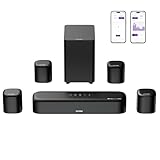
- 7.1ch Dolby Atmos Surround Sound System for TV: This 7.1ch sound bar features 3 main channels for crisp dialogue and 4 surround speakers. Power the rear right surround speaker to pair it wirelessly with sound bar. The setup delivers an immersive surround sound audio experience, making you feel fully engaged in the action. Note: Recommended for space of 108 to 270 ft².
- 4 Surround Speakers for Home Theater Sound System: The Aura A60 Pro soundbar for tv comes with 2 wired front surround speakers and 2 wired rear surround speakers, positioned to create a wide, room-filling soundstage. The rear speakers connect wirelessly with the soundbar, minimizing cable clutter and optimizing space efficiency.
- Dolby Atmos Delivers an Immersive 3D Soundscape: This 7.1ch dolby atmos soundbar enhances your listening experience with multidimensional audio that surrounds you from every direction, upgrading your home theater with powerful, dynamic sound that brings each scene to life.
- 5.25-inch Wired Subwoofer with BassMX Technology: The Aura A60 Pro sound bar comes with a 5.25" wired subwoofer powered by BassMX technology to boost low-frequency performance. An optimized magnetic structure and diaphragm produce deep, powerful bass. Enjoy enhanced low-end sound and experience the impact of every beat.
- Precision Audio Tuning Redefined: Customize your audio experience with the Ultimea App, designed for precise sound control. It provides 121 professionally tuned EQ presets across styles such as Bass, Pop, Classical, and Rock, along with 10-band control and 6 tailored EQ modes including Movie, Music, Voice, Sport, Game, and Night. Using the advanced “Customize” option, you can adjust audio details to suit your personal taste, ensuring every sound is tuned exactly how you prefer.
Controversy Didn’t Kill Momentum, It Complicated It
The departure of Melissa Barrera and Jenna Ortega’s subsequent exit placed the franchise in an uncomfortable spotlight, forcing a recalibration rather than a cancellation. While those changes fractured the planned story arc, they did not erase audience appetite for the series. In fact, fan discourse has only intensified, with speculation now as much about creative accountability as plot direction.
That scrutiny has slowed development but not erased intent. Multiple reports indicate that behind-the-scenes conversations about how to move forward never fully stopped, suggesting that Scream 8 is less a question of if and more a question of how, and with whom. The franchise is now tasked with rebuilding trust while still delivering the self-aware punch audiences expect.
A Narrative Reset May Be the Only Way Forward
Why Scream 8 is happening ultimately comes down to evolution. The series has always thrived by interrogating its own existence, and the current moment almost demands another meta pivot. Whether that means refocusing on legacy characters, introducing an entirely new ensemble, or structurally rethinking the Ghostface mythology, the franchise is poised for a reset that could redefine its next decade.
At this crossroads, Scream is once again doing what it does best: staring directly at the rules of sequel culture and deciding whether to break them or burn them down.
Free tools Windows power users keep installed
One-click scans. No signup required.
Official Status Check: Has ‘Scream 8’ Been Greenlit Yet?
The short answer is no, at least not officially. As of now, Spyglass Media Group has not announced a formal greenlight for Scream 8, nor has Paramount dated or budgeted an eighth entry. Publicly, the studio’s focus remains squarely on stabilizing the franchise with Scream 7, which is already positioned as a creative and reputational reset.
That said, the absence of an announcement does not equal disinterest. In modern studio terms, Scream 8 exists in a familiar limbo: discussed, modeled, and quietly contingency-planned, but not yet approved for forward motion.
Where Spyglass Officially Stands
Spyglass has been careful with its messaging following the franchise’s recent turbulence. Executives have repeatedly framed Scream as a long-term asset while avoiding any commitment beyond the next film. That restraint appears intentional, signaling that the studio wants to see how Scream 7 performs both commercially and culturally before locking in another sequel.
From a business standpoint, that caution makes sense. Scream is profitable but not bulletproof, and Spyglass now understands that creative decisions carry reputational consequences that can affect casting, marketing, and audience trust. A greenlight for Scream 8 likely depends less on box office alone and more on whether the franchise regains narrative stability.
Do these 3 things before closing this tab:
1Scan for outdated or missing drivers - takes under a minute2Repair Windows errors before they cause bigger problems3Fix the driver behind crashes, sound loss and screen glitchesBehind-the-Scenes Signals Suggest the Door Is Open
While no deal is inked, multiple industry insiders have noted that Scream 8 has been part of internal conversations rather than erased from the slate. This is consistent with how studios manage legacy horror IP: parallel development without public commitment. Story paths, character survivability, and even tonal direction are often mapped out two films ahead, especially for franchises built on serialized mythology.
Kevin Williamson’s return to the director’s chair for Scream 7 further supports that long-view strategy. Bringing back the franchise’s original architect is not a short-term play; it reads as groundwork for sustainability. If Scream 7 successfully re-centers the series, Scream 8 becomes a far easier sell internally.
Why Timing Matters More Than Ever
Another complicating factor is release strategy. Paramount has already dated Scream 7 for early 2026, meaning any Scream 8 would realistically land no earlier than 2027 or 2028. Studios are increasingly spacing horror sequels to avoid fatigue, especially for franchises that rely on mystery and audience engagement rather than spectacle alone.
In that sense, Scream 8 is not late, it is waiting its turn. The studio appears committed to letting the next chapter define the rules before deciding how aggressively to continue. For fans eager for confirmation, that patience can be frustrating, but it may ultimately be what keeps Ghostface alive rather than overexposed.
What’s actually slowing this PC down?
Pick the symptom - the matching free tool is one click away.
Creative Team in Flux: Directors, Writers, and Studio Strategy After the Shakeups
If Scream 8 happens, it will emerge from one of the most turbulent creative periods the franchise has faced since Wes Craven’s passing. The recent controversies didn’t just affect casting and public perception; they forced Spyglass and Paramount to reassess how much creative continuity the series could afford versus how much reinvention it needed. As a result, the people behind the camera are now just as central to Scream 8’s future as whoever ends up wearing the Ghostface mask.
Kevin Williamson’s Expanded Role Changes the Equation
Kevin Williamson stepping in to direct Scream 7 is the single most important creative development influencing a potential Scream 8. This marks the first time the franchise’s original writer has taken the director’s chair, and it signals a studio desire for authorial stability after years of handoffs. While no announcement ties Williamson to Scream 8 yet, insiders widely view his involvement as more than a one-film experiment.
If Scream 7 lands well, Williamson becomes the obvious creative anchor for the next chapter, either as director again or as a hands-on producer shaping story direction. Studios rarely bring back a legacy architect unless they’re thinking beyond a single installment. For Scream 8, that could mean a more tightly controlled mythology and fewer abrupt tonal pivots.
Rank #2

- Simplified 5.1ch Dolby Atmos Setup: Enjoy immersive 4D sound with real Dolby Atmos and 5.1-channel audio. Five built-in speakers, including two side-firing drivers, create wide surround without rear speakers. Precision DSP ensures <0.5 ms latency for smooth, theater-like sound. Setup takes less than 1 minute.
- Voice Clarity Enhancement: VoiceMX technology uses advanced DSP algorithms to isolate and enhance vocal frequencies in real time. Dialogue remains crisp and easy to follow by separating speech from background effects and music, even at low volumes or during intense scenes.
- 300W Output with 6-Driver System: Featuring five precision-tuned full-range drivers and a dedicated wired wooden subwoofer, the system delivers up to 300W of peak power for bold, room-filling sound. With a frequency response of 45 Hz–18 kHz and a maximum SPL of 99 dB, it reproduces everything from subtle nuances to explosive cinematic effects.
- 18 mm High-Excursion Driver: Powered by BassMX technology, the wired wooden subwoofer features a 18 mm high-excursion driver, a 5.3L tuned cabinet, and a high-density magnetic circuit. This design delivers deeper, tighter bass with greater air displacement and enhanced low-frequency performance—bringing more realism to every scene.
- HDMI eARC for True Dolby Atmos: HDMI eARC supports up to 37 Mbps of bandwidth, unlocking the full potential of lossless Dolby Atmos 5.1-channel audio. Compared to standard ARC, eARC delivers richer surround effects and greater detail. CEC integration allows the TV and soundbar to work together with unified control.
Where the Writers Stand After the Reboot Era
Guy Busick and James Vanderbilt, who wrote Scream (2022) and Scream VI, remain closely associated with the franchise’s modern voice. However, neither has been officially confirmed beyond Scream 7, and their long-term involvement appears fluid rather than guaranteed. That flexibility is intentional, giving the studio options depending on audience response to Williamson’s creative reset.
One credible scenario sees Busick and Vanderbilt continuing in some capacity, particularly if Scream 7 bridges legacy and new elements effectively. Another possibility is a partial handoff, with Williamson guiding story and theme while new writers tackle structure or character arcs. Either way, Spyglass seems less interested in rotating creatives quickly and more focused on restoring trust through consistency.
Directorial Stability Versus Fresh Vision
The exit of previous directors and the brief attachment of filmmakers who never made it to production exposed how vulnerable the franchise became during its transition period. For Scream 8, that makes stability a priority. Whether Williamson remains in the director’s seat or passes the torch, the studio is expected to lock in leadership earlier than it did on recent sequels.
That said, Spyglass has not ruled out bringing in a new filmmaker with a strong genre voice, provided they align with the franchise’s meta-aware DNA. The key difference now is oversight. Any future director would likely operate within a more tightly defined creative framework, reducing the risk of tonal drift or behind-the-scenes friction.
Spyglass and Paramount’s Long-Game Strategy
From a studio perspective, Scream 8 is less about speed and more about control. Spyglass has learned that horror franchises built on fan loyalty can be destabilized quickly by off-screen controversy or unclear messaging. As a result, creative approvals are reportedly more centralized, with franchise planning extending several films ahead even if public announcements lag behind.
Recommended Free Tools
This approach mirrors how studios handle other legacy horror properties, where long gaps and careful recalibration often prove healthier than annual releases. For Scream 8, that likely means a slower development process, deliberate creative hires, and a willingness to wait until Scream 7 definitively reestablishes the series’ footing before committing to the next team.
Cast Prospects: Who Could Return, Who’s Likely Out, and Why It Matters
Casting has always been the lifeblood of the Scream franchise, with character continuity carrying as much weight as the mystery itself. For Scream 8, the question is less about assembling a brand-new ensemble and more about determining which faces still anchor the series after years of narrative and off-screen turbulence. Every casting decision now signals where the franchise believes its future truly lies.
The Core Survivors and Their Uncertain Futures
Neve Campbell’s Sidney Prescott remains the franchise’s emotional spine, but her return beyond Scream 7 is far from guaranteed. While Campbell has expressed openness to returning if the role feels respectful and meaningful, her participation hinges on how Scream 7 positions Sidney within the larger mythology. If that film gives her a sense of narrative closure, Scream 8 may deliberately step back rather than risk diminishing her arc.
Courteney Cox’s Gale Weathers, however, feels more likely to persist in some form. Gale’s adaptability has allowed her to shift from lead to supporting presence without losing relevance, making her an ideal connective thread between eras. Even a reduced role would preserve continuity while allowing the franchise to spotlight newer characters.
Quick wins for a faster PC:
Scan for outdated or missing drivers - takes under a minuteDriver Scan →Clear out junk files and repair common Windows errorsFree Scan →The New Generation and Franchise Continuity
The fate of the newer cast members is closely tied to how Scream 7 performs both creatively and commercially. Characters introduced in the post-2022 era were clearly designed to carry the franchise forward, but Spyglass has learned that audience attachment cannot be assumed. If Scream 7 successfully stabilizes these characters as long-term leads, Scream 8 could double down rather than reboot yet again.
That said, the studio is expected to avoid overcorrection. Killing off or sidelining too many recent additions would risk repeating past mistakes, reinforcing the sense of instability that plagued the franchise after behind-the-scenes controversies. Expect a selective approach that preserves fan favorites while trimming narrative excess.
Who’s Likely Out and Why That’s Strategic
Some departures may be less about story and more about optics. Characters closely associated with contentious chapters of the franchise’s recent history are unlikely to be central going forward, even if their on-screen arcs remain unresolved. In that sense, casting decisions double as quiet course correction.
This strategy allows Scream 8 to acknowledge its past without being anchored to it. By gradually reshaping the ensemble rather than executing a hard reset, the franchise can evolve while maintaining the illusion of narrative inevitability.
Why Casting Choices Matter More Than Ever
Unlike earlier sequels, Scream 8 cannot rely solely on its brand name. Horror audiences are savvier, more online, and acutely aware of off-screen dynamics. Casting announcements will be scrutinized not just for star power, but for what they imply about creative direction and studio values.
In many ways, the cast of Scream 8 will function as a mission statement. Whether it leans legacy-heavy, youth-driven, or carefully balanced between the two will determine whether the franchise is seen as confidently moving forward or cautiously clinging to what once worked.
Rank #3

- Your purchase includes: 1 AV receiver, 5 speakers, 1 Sub-Woofer and Speaker wire.Waterproof : No
- Dimensions: AV Receiver – 17” W x 6” H x 12” D | Four Speakers (each) – 4” W x 6” H x 4” D | Center speaker – 10” W x 4” H x 4” D | Subwoofer – 11” W x 11” H x 13” D
- Technical specs: HDMI – 4 | Standby Power Consumption – ≤ 0.2 W | Frequency Response – 28Hz/25kHz
- Bluetooth for streaming all your favorite music and podcasts. No wireless functionality
- Easy setup with Yamaha YPAO room optimization and flexible speaker placement options, including virtual cinema front
The Ghostface Question: Potential Story Directions and Meta Angles
If Scream 8 happens, the biggest creative challenge won’t be casting or continuity. It will be answering a question the franchise itself has been building toward for years: what does Ghostface represent now, in an era where the rules of horror are constantly being rewritten in real time?
The post-2022 films already pushed the series into legacy sequel territory, interrogating fandom, ownership, and generational trauma. Scream 8 would almost certainly have to go further, shifting from commentary on franchises to commentary on franchise survival itself.
Can Ghostface Exist Without a “Core Four”?
One of the most persistent rumors among industry watchers is that Scream 8 may experiment with a fragmented or decentralized Ghostface identity. Rather than a single mastermind or tightly paired killers, the concept of Ghostface could become more symbolic, reflecting how outrage, obsession, and performative fandom spread online.
This wouldn’t necessarily mean abandoning the whodunit mechanics the series is known for. Instead, it could heighten them, forcing audiences to question whether Ghostface is a person, a movement, or a narrative trap the characters keep falling into.
Meta Commentary on Cancellation, Controversy, and Control
While nothing has been confirmed, it would be very on-brand for Scream 8 to fold real-world controversies into its subtext. The franchise has always metabolized cultural anxiety, and the modern entertainment landscape is defined by backlash cycles, online pile-ons, and corporate damage control.
A storyline centered on who gets “erased,” who gets protected, and who controls the narrative would align cleanly with recent events without directly dramatizing them. Expect implication over allegory, with Ghostface functioning as the ultimate avatar of weaponized discourse.
The Risk of Going Too Meta, Again
There is, however, a fine line the filmmakers will need to walk. One common criticism of later Scream entries is that the meta commentary sometimes overwhelms character and suspense. Scream 8 cannot afford to feel like a think piece first and a slasher second.
Insiders suggest the studio is aware of this risk, which may explain the reported emphasis on streamlining the cast and refocusing on clean, high-stakes horror set pieces. If Scream 8 leans meta, it will likely do so with more restraint than its immediate predecessors.
A Possible Structural Shake-Up
Another credible point of speculation is structural experimentation. Anthology-style framing, time jumps, or even a story that unfolds across multiple locations simultaneously have all been floated as ways to refresh the formula without abandoning it.
Such approaches would allow Scream 8 to comment on the fragmentation of modern horror audiences while still delivering the familiar rhythms fans expect. The goal wouldn’t be reinvention for its own sake, but controlled evolution that proves the mask still has something to say.
How Recent Controversies Reshaped the Sequel’s Future
The path to Scream 8 cannot be separated from the upheaval that hit the franchise after Scream VI. What was once positioned as a smooth continuation of the Carpenter-era storyline instead became a case study in how external controversy can derail even a reliable horror brand. The ripple effects are still shaping how, or even if, the next sequel moves forward.
The Fallout That Changed Everything
The most consequential turning point was Spyglass Media Group’s decision to part ways with Melissa Barrera in late 2023, followed shortly by Jenna Ortega’s exit from the franchise. While the studio cited scheduling conflicts in Ortega’s case, the timing made it impossible to ignore the larger context. Overnight, the planned narrative spine of the modern Scream era collapsed.
This was not just a casting problem, but a structural one. Scream VI ended with a clear sense of forward momentum, and losing both lead characters forced the studio to reconsider whether that story could, or should, continue at all. Any version of Scream 8 now exists downstream of that reset.
Creative Course Correction Behind the Scenes
The controversies also accelerated a creative reshuffling. Radio Silence, the directing duo behind Scream (2022) and Scream VI, stepped away from the next installment amid the turbulence. Kevin Williamson’s subsequent involvement in steering the franchise back toward its roots signaled a desire for stability and legacy credibility.
Do these 3 things before closing this tab:
1Scan for outdated or missing drivers - takes under a minute2Clear out junk files and repair common Windows errors3Fix the driver behind crashes, sound loss and screen glitchesFor Scream 8, this likely means a more tightly controlled creative environment. Insiders describe a studio that is less interested in expanding mythology and more focused on restoring audience trust through familiarity, coherence, and tonal discipline. Risk-taking hasn’t disappeared, but it appears more carefully gated.
Rank #4

- An all-in-one home theater package - The YHT-4970U comes with a Dolby Atmos AV Receiver (Yamaha RX300A), a 5.1 speaker package (two front channel speakers, a center channel speaker, two surround channel speakers, and a powered subwoofer), plus a subwoofer cable and speaker wire all in one box.
- Step into lifelike sonic worlds - Dolby Atmos and DTS Virtual:X for deeply dimensional, lifelike sound that draws you into every moment of your favorite entertainment, plus crystal-clear dialogue so you can hear every word.
- Stunning visual realism - Supports ultra-high definition 4K/120 and 8K/60 video, high-performance HDMI switching, advanced Dolby Vision and HDR10+ dynamic range technologies, HDMI eARC/ARC and next-gen gaming features like ALLM and VRR.
- Room Correction - Experience perfect sound in any room. An included setup microphone measures your room’s acoustics and speaker characteristics, allowing the receiver to automatically optimize sound performance.
- Easy streaming with Bluetooth Multipoint - Stream all your favorite music, podcasts and audiobooks wirelessly. Built-in Bluetooth Multipoint lets you pair two source devices and instantly switch between them.
The Neve Campbell Factor
Neve Campbell’s confirmed return for Scream 7 reframed the franchise’s immediate future and, by extension, Scream 8’s potential direction. Her absence from Scream VI was widely criticized, and bringing Sidney Prescott back has been interpreted as both a goodwill gesture and a strategic anchor.
If Scream 7 succeeds in re-centering the franchise around Sidney, it creates a clearer runway for a follow-up. Scream 8 could then function less as damage control and more as consolidation, building forward from a position of regained stability rather than reactionary course correction.
Studio Sensitivity and Narrative Caution
Another lasting impact of the controversy is a heightened awareness of optics. Spyglass and Paramount are reportedly approaching future installments with increased sensitivity to public perception, particularly in how themes of speech, violence, and moral judgment are framed. That awareness is expected to influence both marketing and storytelling.
Free tools Windows power users keep installed
One-click scans. No signup required.
For Scream 8, this may result in a sharper focus on classic slasher mechanics over overt commentary. The irony, of course, is that restraint itself becomes a form of commentary in a franchise built on provocation. The challenge will be finding a balance that feels intentional rather than cautious.
Release Timing and the Waiting Game
As of now, Scream 8 remains unannounced, with all eyes on how Scream 7 performs both critically and commercially. Industry consensus suggests that any greenlight would follow quickly if the franchise demonstrates renewed momentum. A late-2027 or 2028 release window is plausible, but entirely speculative.
What is clear is that Scream 8 will not be rushed. The controversies forced the studio to slow down, reassess, and reframe what the series is supposed to be in its second decade. Whether that patience pays off will determine if Ghostface still has another act left.
Independent reader supportYour contribution helps us test, update, and keep practical guides available for everyone.Release Window Speculation: When ‘Scream 8’ Could Realistically Arrive
With Scream 8 still unannounced, any discussion of release timing exists firmly in the realm of educated guesswork. However, the franchise’s recent release patterns, combined with current studio realities, offer a fairly narrow range of realistic possibilities. This is no longer a series operating on autopilot, and timing will matter as much as creative direction.
Recommended Free Tools
Learning From the Franchise’s Recent Rhythm
The modern Scream era moved quickly at first, with Scream (2022) and Scream VI arriving just 14 months apart. That pace was possible because the films shared creative momentum, overlapping development, and a relatively stable ensemble. The controversies and casting shakeups that followed effectively broke that rhythm.
Scream 7, now positioned as a recalibration rather than a routine sequel, is expected to take longer to develop and position carefully. That alone pushes any potential follow-up further down the calendar than fans may be used to.
Why a 2026 Release Is Unlikely
A 2026 arrival for Scream 8 would require an unusually fast greenlight, script development, and production turnaround. That scenario assumes Scream 7 is not only a box office success but also critically stabilizing enough for Paramount and Spyglass to immediately commit to another installment. Given the studio’s current caution, that feels improbable.
More importantly, rushing Scream 8 would undermine the very patience the franchise is attempting to demonstrate. After multiple public controversies, a rapid-fire sequel could read as commercially driven rather than creatively confident.
The Most Plausible Window: Late 2027 to 2028
Industry observers largely agree that late 2027 represents the earliest realistic target if Scream 8 is greenlit shortly after Scream 7’s release. That window allows time for audience response to settle, for narrative direction to be refined, and for key cast negotiations to be handled without pressure.
A 2028 release may be even more likely, especially if the studio opts to reposition Scream as a more event-driven franchise rather than an annual or biannual presence. That approach would align with broader horror trends, where spacing out sequels has helped preserve brand value.
Strategic Timing Over Franchise Habit
Historically, Scream films have favored early-year release dates, using the post-holiday window to strong advantage. That strategy could remain intact for Scream 8, particularly if Paramount wants to avoid crowded fall horror slates dominated by prestige and legacy IP.
Ultimately, Scream 8’s release date will be less about tradition and more about trust. Trust in audience goodwill, trust in creative stability, and trust that Ghostface still has something sharp to say when the knife comes back out.
What’s actually slowing this PC down?
Pick the symptom - the matching free tool is one click away.
Best Value

- 5.1.2ch Surround Sound System: A 5.1.2-channel system featuring up-firing speakers, surround sound, and a powerful subwoofer creates lifelike, multidimensional audio. Feel the Sky Around You—raindrops falling from above, helicopters circling overhead, thunder rumbling in all directions. Sound isn’t just around you, it engulfs you, as if the ceiling disappeared. This is Dolby Atmos: not just heard, but felt.
- Up-Firing Drivers with Neodymium Core: The up-firing channels use neodymium internal magnets and 18-core large voice coils to enhance height precision and vertical throw. This aerospace-grade configuration ensures better high-frequency dynamics, delivering focused and elevated sound images that unlock the true potential of Dolby Atmos.
- 360° SurroundX Audio: SurroundX technology combines two rear surround speakers and dual up-firing Atmos drivers to build a true 360° sound field. Powered by intelligent spatial algorithms, the system precisely positions audio around and above you—enhancing Dolby Atmos with a more natural, three-dimensional soundstage. Note: Not compatible with DTS.
- Lossless Audio Transmission: Unlock full Dolby Atmos performance with HDMI eARC, supporting up to 37Mbps bandwidth for lossless 5.1.2-channel audio. Compared to regular ARC, eARC delivers richer detail and better surround effects with no compression. With CEC, your TV and soundbar work as one—power, volume, and input sync automatically for effortless control.
- Advanced App Control: Customize every detail of your audio experience with the Ultimea App. Fine-tune your surround sound with 13-step level adjustment (-6 to +6), optimize with a 10-band graphic EQ, and choose from 121 preset sound settings. Enjoy seamless OTA updates that unlock new features and keep your system performing at its peak.
What ‘Scream 8’ Needs to Do to Survive — and Revive — the Franchise
If Scream 8 happens, it will arrive carrying more weight than any sequel since Wes Craven returned for Scream 4. This will not be a routine continuation but a referendum on whether the franchise still knows what it is, who it’s for, and how it fits into a modern horror landscape that has grown both smarter and more competitive.
Survival, in this case, means creative clarity. Revival requires something bolder.
Reclaim a Clear Creative Identity
One of Scream’s greatest strengths has always been its point of view. Each era of the franchise understood exactly what it was commenting on, whether that was sequel fatigue, remakes, or the “requel” phenomenon.
Scream 8 cannot afford to feel like it’s reacting defensively to controversy or box office pressure. It needs a confident thesis about modern horror, fandom, and media culture, not just another escalation of body count or mythology.
Quick wins for a faster PC:
Scan for outdated or missing drivers - takes under a minuteDriver Scan →Repair Windows errors before they cause bigger problemsFix Now →Fix the driver behind crashes, sound loss and screen glitchesFind Drivers →That also means resisting the temptation to overcorrect. A stripped-down approach can be effective, but only if it still feels purposeful rather than retreating to safety.
Stabilize the Cast — Even If It’s Smaller
Casting uncertainty has become the franchise’s most visible vulnerability. Whether through confirmed departures or unresolved negotiations, the lack of a clearly anchored ensemble makes long-term storytelling difficult.
Scream 8 doesn’t need every legacy character back, but it does need emotional continuity. That could come from committing fully to a new core group introduced in Scream 7, or by re-centering a single returning survivor whose arc feels genuinely unfinished.
What it cannot do is hedge its bets with half-returns and cameo-driven nostalgia. Audiences can sense when a franchise doesn’t know who its lead is.
PC Slower Than It Used to Be?
A free scan shows the junk files, broken settings and background clutter dragging Windows down - then fixes them in one click.Free scan · Windows 10 & 11Outdated Drivers Are Slowing You Down
One free scan finds every outdated or missing driver and matches the right update for your exact hardware.Free scan · exact hardware matchDecide What Ghostface Represents Now
Over time, Ghostface has shifted from slasher icon to symbol, a mask anyone can wear to make a point. That flexibility has kept the franchise relevant, but it risks dilution if the killers’ motivations feel interchangeable.
Scream 8 should ask a harder question: what does Ghostface mean in an era of performative outrage, algorithm-driven fame, and fractured fan communities? Leaning into that discomfort, rather than smoothing it over, could restore the edge that made earlier entries resonate.
The killer’s identity matters, but the why has always mattered more.
Choose Evolution Over Escalation
Bigger twists and higher body counts are no longer enough to distinguish a Scream sequel. Modern horror audiences have embraced films that experiment structurally and tonally, from elevated genre hybrids to subversive legacy sequels.
That doesn’t mean abandoning the meta-horror DNA. It means evolving it. Whether through narrative structure, perspective shifts, or even rethinking how the mystery unfolds, Scream 8 needs to surprise audiences who believe they already know the rules.
Playing the hits won’t revive the franchise. Rewriting the playbook might.
Earn the Right to Continue
Perhaps most importantly, Scream 8 has to justify its existence. Not as a contractual obligation or brand extension, but as a story that demands to be told.
If Scream 7 succeeds in stabilizing the series, Scream 8 should feel like a confident next chapter, not a rushed follow-up. If it falters, the smartest move may be patience rather than persistence.
The Scream franchise has always thrived on self-awareness. Its future depends on whether it can still look in the mirror, recognize what’s changed, and have the nerve to cut deeper instead of playing it safe.
Quick Recap
Product prices and availability are accurate as of the date/time indicated and are subject to change. Any price and availability information displayed on Amazon at the time of purchase will apply.