Quick wins for a faster PC:
Clear out junk files and repair common Windows errorsFree Scan →Scan for outdated or missing drivers - takes under a minuteDriver Scan →Repair Windows errors before they cause bigger problemsFix Now →Sangeet Sarita was a Vividh Bharati programme on All India Radio that introduced listeners to Hindustani classical music through short explanations, musicians’ demonstrations and familiar Hindi film songs. It is often described as a programme of roughly 50 years, but its precise launch date is uncertain: reporting places its beginnings in the mid-1970s rather than documenting a specific anniversary.
What was Sangeet Sarita?
Sangeet Sarita was part of Vividh Bharati, All India Radio’s entertainment service. Prasar Bharati lists it among Vividh Bharati’s popular programmes and names classical artists who appeared on it. The broadcaster’s page carries a “Daily At 7:30 am” listing, but the page is undated, so it does not establish the programme’s current broadcast time. Prasar Bharati’s Vividh Bharati page
| # | Preview | Product | Price | |
|---|---|---|---|---|
| 1 |

|
Masters of Indian Classical Music | $16.87 | Buy on Amazon |
| 2 |
|
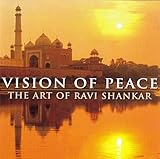
Vision Of Peace - The Art Of Ravi Shankar (2 CD) | $16.81 | Buy on Amazon |
| 3 |

|
Vol. 2-Masters of Indian Classical Music | $14.76 | Buy on Amazon |
| 4 |

|
Indian Classical Interactions | $18.80 | Buy on Amazon |
The programme’s defining idea was to make musical concepts audible and approachable, rather than leave them as unfamiliar terminology. A 2021 Scroll.in feature describes a capsule of about 15 minutes, combining concise commentary and conversations with musicians. A 2020 Scroll.in article describes a 250-episode programme explaining raags and taals, featuring demonstrations by practitioners and film songs based on the musical material. That count describes the programme covered in that article; it should not be read as the total number of episodes made over its lifetime. Scroll.in’s 2021 feature · Scroll.in’s 2020 article
How did it teach classical music?
Start with a musical idea, then let listeners hear it
In the earlier library-based format described by former producer Chhaya Ganguli, an episode could introduce a raga’s aaroh-avroh (ascending and descending notes), chalan (its characteristic movement), pakad (a distinctive note cluster) and thaat (its parent scale or family). A classical performance and a film song based on the raga could then give listeners contrasting examples. This account describes a format Ganguli recalled, not a rule followed by every episode.
#1 Best Overall
Connect classical examples to popular songs
One accessible route into listening was to identify the raga behind a film song and play it alongside a classical example. The comparison helped make a relationship between concert music and familiar popular music something a listener could hear, rather than simply read about. The film song was an entry point, not a substitute for the classical demonstration.
Use artists’ voices, stories and demonstrations
The programme also went beyond a glossary of musical terms. Its series explored instruments, gharanas (musical lineages), folk origins and film composers’ creative work. Episodes could put a performer’s knowledge and playing at the centre, giving the audience context as well as sound.
Who created and shaped the programme?
Scroll.in reports that radio veterans did not know the exact launch date, though the common belief was that the programme began in the mid-1970s. The feature credits its conception to Bhubaneswar Mishra, an Odia violinist who joined Vividh Bharati Mumbai as a producer in 1973. This supports a mid-1970s origin, not a precise founding year or a verifiable 50th-anniversary date.
Rank #2
After Mishra retired in 1985, Chhaya Ganguli took over. She broadened the programme from its library-based approach into themed presentations on musical traditions, instruments, folk roots and composers. Scroll.in says she produced it for 14 years before promotion, after which other producers continued its development. These details come from the retrospective account, rather than a complete production archive. Scroll.in’s account of the programme’s history
PC Slower Than It Used to Be?
A free scan shows the junk files, broken settings and background clutter dragging Windows down - then fixes them in one click.Free scan · Windows 10 & 11Crashes, No Sound, or Screen Glitches?
Random freezes, missing sound and display glitches usually trace back to one bad driver. Find and replace yours safely.Free scan · under a minuteWhat did its themed episodes cover?
- The santoor: Shiv Kumar Sharma explained the instrument and its musical and cultural connections.
- The Maihar school: A 22-episode series was presented by Aashish Khan.
- Tabla styles: Zakir Hussain presented a series on tabla baaj, or styles of tabla playing.
- Film-music journeys: “Meri Sangeet Yatra” featured R. D. Burman, Asha Bhosle and Gulzar.
- Film music’s development: A 26-episode series with Anil Biswas traced its evolution.
These examples show how the programme could move between musical instruction, performers’ experiences and the history of popular music. The 22- and 26-episode figures refer to the particular series described in Scroll.in’s feature, not to the show’s overall episode count.
Which musicians appeared on Sangeet Sarita?
Scroll.in’s feature discusses performers including Shiv Kumar Sharma, Girija Devi, Abdul Haleem Jafar Khan, Aashish Khan, Zakir Hussain, Amjad Ali Khan, N. Rajam and Ajoy Chakrabarty. Prasar Bharati separately lists artists including Girija Devi, Shiv Kumar Sharma, Hari Prasad Chaurasia, Jasraj, Rajan and Sajan Mishra, and Shubha Mudgal. The lists indicate the range of musicians associated with the programme; they are not necessarily complete. Prasar Bharati’s featured-artist listing
Independent reader supportYour contribution helps us test, update, and keep practical guides available for everyone.How popular was it, and what is known about its legacy?
Prasar Bharati’s 2008–09 Annual Report included Sangeet Sarita among Vividh Bharati’s ten popular programmes for that reporting period. The report is historical evidence of the programme’s standing then, not a current ranking, and it gives no audience figure specific to the show. Prasar Bharati Annual Report 2008–09
The 2021 Scroll.in feature recounts listeners arranging school or college routines around the morning broadcast and reports that the format was also presented on stage in Ahmedabad. These are reported memories and examples, not a representative audience survey or a measurement of educational impact.
That 2021 feature also said the programme then survived largely on reruns, reported that its morning slot had shifted from 7:30 to 6:30 am, and noted that AIR had released archival episodes on its YouTube channel. Those statements describe the situation reported in August 2021. Alongside them, Prasar Bharati’s page has an undated 7:30 am listing; neither source confirms the schedule in 2026 or whether the archived episodes remain available.
Rank #4
Why the format mattered
Sangeet Sarita made classical music approachable by giving listeners several ways in: a short explanation of a raga or taal, a musician’s demonstration, a story about an instrument or lineage, or a familiar film song that offered a point of comparison. Its format was brief rather than a sustained course in technique, but its range made room for both musical ideas and the people and traditions behind them.
Ganguli described the programme as “15-minute content for both lay listeners and specialists,” adding, “You could say it is fast food but it is very nutritious.” The remark captures the ambition of the format: to make concentrated listening useful without assuming that every listener already knew classical music’s vocabulary. Scroll.in, 17 August 2021
Quick Recap
Product prices and availability are accurate as of the date/time indicated and are subject to change. Any price and availability information displayed on Amazon at the time of purchase will apply.




