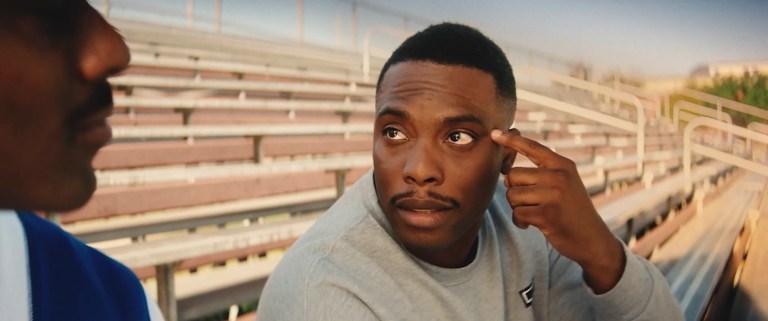
Returning to Jerusalem’s Lot has always carried a particular weight for horror fans, not just as another Stephen King setting but as one of his most carefully constructed slow-burn nightmares. The town is less a backdrop than a living organism, one that absorbs grief, secrecy, and moral rot until vampirism feels like an inevitability rather than a shock. Any new adaptation arrives with the expectation that it will capture that creeping sense of communal doom, not simply the fangs and blood that follow.
King’s 1975 novel remains a benchmark for small-town horror, blending classical vampire mythology with an almost sociological attention to how evil spreads when no one is paying close enough attention. Previous screen versions have leaned into atmosphere with varying degrees of success, but they have also revealed how difficult it is to translate the book’s scope, patience, and interiority to film. The promise of a modern adaptation lies in using contemporary cinematic tools to deepen the dread while honoring the novel’s methodical descent into darkness.
This latest Salem’s Lot understands that expectation and initially meets it on a tonal level, emphasizing mood, isolation, and the quiet menace of familiar places turning hostile. Yet from the outset, there is also a sense of narrative compression, a tightening of focus that hints at a smaller canvas than King originally painted. The question hovering over the film is not whether it respects the source material, but whether it can fully embody the breadth and accumulating terror that made Jerusalem’s Lot feel so devastating on the page.
Condensing King’s Sprawl: How the Film Reimagines (and Reduces) the Novel’s Scope
Stephen King’s Salem’s Lot unfolds like a map slowly filling in, introducing dozens of townspeople whose private fears and compromises collectively invite catastrophe. The film, by necessity, trades that breadth for a narrower throughline, prioritizing narrative momentum over accumulation. What’s lost in the process is not clarity but density, the feeling that evil is spreading laterally through an entire community rather than advancing along a single plot track.
Recommended Free Tools
#1 Best Overall

- Read Before You Buy — No Video Output: These adapters support charging and USB 2.0 data transfer, but cannot transmit video signals. Except for standard USB webcams (which use USB data only), they are not compatible with HDMI/DisplayPort cables, video-capable USB-C hubs, or docking stations with video output.
- Convert USB-A Ports to USB-C: Designed to connect USB-C earphones, cables, flash drives, card readers, and other USB-C accessories to standard USB-A ports. Plug-and-play with no drivers or software required.
- Aluminum Alloy Housing: Built with a sturdy aluminum alloy shell that aids in heat dissipation and protects against daily wear and scratches. Designed to maintain a stable and secure connection.
- Compact & Travel-Friendly: The ultra-compact design allows the adapter to stay plugged into your device without blocking adjacent ports or adding bulk, reducing wear and tear on your original USB ports.
- 12-Month Warranty: Backed by a 12-month manufacturer warranty for peace of mind. Designed to meet strict quality control standards for reliable everyday performance.
The result is an adaptation that feels intentionally streamlined, even respectful in its choices, yet unmistakably smaller in ambition. It captures the outline of King’s design while sanding down many of its rough, unsettling edges.
From Community Portrait to Central Players
Where the novel treats Jerusalem’s Lot as an ensemble organism, the film centers its attention on a reduced set of characters, most notably Ben Mears and the immediate circle drawn into the vampire crisis. This focus allows for stronger emotional continuity and more traditional character arcs, but it sidelines the novel’s most unsettling trick: making the town itself feel complicit.
Secondary figures who once embodied different moral failings or quiet vulnerabilities are either compressed into composites or removed entirely. Their absence makes the spread of vampirism feel more sudden and external, rather than the slow consequence of shared neglect and denial.
Time as the First Casualty
King’s greatest weapon in the novel is time, the weeks of mounting unease, half-noticed disappearances, and rationalizations that allow horror to take root unnoticed. The film accelerates this progression, using ominous imagery and score to suggest inevitability rather than earning it through duration. The dread arrives on schedule, but it doesn’t linger long enough to fully seep under the skin.
This compression isn’t careless, but it does reframe the story as a siege rather than a contagion. The sense that the town might have saved itself if it had paid attention sooner is replaced by the feeling that doom was always imminent.
Interior Horror Made External
Much of Salem’s Lot lives inside its characters, in guilt, grief, and the quiet ways people fail one another. Film can visualize these themes, but this adaptation often opts for externalized menace over internal decay. Shadows, windows, and nocturnal intrusions do heavy atmospheric lifting, sometimes at the expense of psychological texture.
Performances work hard to suggest inner turmoil, and there are moments where the weight of loss briefly breaks through. Still, without the novel’s layered interiority, those moments pass quickly, reinforcing the sense that this is a surface-level translation of deeper fears.
A Faithful Shape, If Not the Full Measure
What emerges is a version of Salem’s Lot that understands King’s architecture but builds on a reduced scale. The film respects the mythology, preserves key narrative beats, and captures flashes of the novel’s chilling mood. Yet by condensing the sprawl into something more manageable, it sacrifices the cumulative dread that made the book feel inescapable.
What’s actually slowing this PC down?
Pick the symptom - the matching free tool is one click away.
This is not a betrayal of the source so much as a recalibration, one that favors immediacy over immersion. For viewers unfamiliar with the novel, the story functions cleanly and efficiently, but for longtime readers, the missing weight of the town itself is impossible to ignore.
Atmosphere Over Epic Dread: The Film’s Strength in Mood, Shadows, and Slow-Burn Horror
Where the adaptation truly finds its footing is in atmosphere. The film understands that Salem’s Lot works best when fear creeps in sideways, through suggestion rather than spectacle. It trades the novel’s accumulating enormity for a more intimate, nocturnal unease, one that settles into corners and lingers just long enough to be felt.
Rank #2

- 5-in-1 USB-C Hub: Experience comprehensive connectivity featuring a Power Delivery input, two USB-A 2.0 ports, a USB-A 3.0 port, and an HDMI port. (Note: The USB-C power delivery input port is only for connecting an external wall charger to power your laptop and cannot power peripheral devices.)
- 90W Pass-Through Charging: Achieve optimal charging with 90W pass-through power to your laptop, supported by a total input of 100W, with the hub reserving 10W for operational efficiency. (Note: Wall charger not included.)
- Quick Data Transfers: Accelerate your productivity with rapid data transfers using a high-speed 5Gbps USB 3.0 port and two 480Mbps USB 2.0 ports.
- 4K HDMI Display: Enhance your visual experience with a hub capable of delivering 4K resolution at 30Hz in both mirror and extend modes. Please note that this hub is compatible with MacBook (macOS 12 and newer), Windows 10 and 11, ChromeOS, and laptops equipped with DP Alt Mode and Power Delivery. Note: This device is not compatible with Linux.
- What You Get: Anker USB-C Hub (5-in-1, 4K HDMI), welcome guide, 18-month warranty, and our friendly customer service.
This is a quieter kind of horror, rooted in absence and anticipation. Scenes often end a beat too late, allowing dread to breathe in the silence rather than punctuating it with shocks. The result is a film that may feel restrained, but rarely careless, about how it deploys fear.
Shadows, Windows, and the Grammar of Fear
Visually, the film leans heavily on negative space and obstruction. Doorways, stairwells, and second-story windows become recurring motifs, framing the idea that safety is always provisional. The camera often observes from a distance, as if the town itself is being watched, reinforcing a sense of quiet surveillance.
There is a deliberate patience to these compositions. Instead of rushing toward revelation, the film allows shadows to remain unresolved, trusting the audience to project what might be lurking just out of view. It’s a classic horror technique, but one executed with enough discipline to feel purposeful rather than nostalgic.
Sound Design and the Slow Burn of Inevitability
The soundscape does much of the heavy lifting, favoring low, sustained tones over intrusive stings. Wind, creaking wood, and distant echoes blur the line between natural ambience and something more malignant. Music rarely tells viewers when to be afraid; it simply signals that the night is listening.
This restraint reinforces the film’s slow-burn ambitions. Even when the narrative accelerates, the auditory design maintains a steady pulse, suggesting that the horror was always there, merely waiting to surface. It’s an effective way to preserve tension, even as the story moves faster than King’s original design.
Performances That Serve the Mood
The cast operates in service of this atmospheric approach. Performances are understated, sometimes to a fault, but well-matched to the film’s preference for implication over exposition. Fear is often registered in pauses and glances rather than dialogue, grounding the supernatural elements in recognizably human reactions.
These choices deepen individual scenes, even if they can’t fully compensate for the reduced scale of the narrative. The actors sell the moment-to-moment dread, making the town feel unsettled if not fully doomed. It’s here, in these smaller beats, that the film most convincingly channels the spirit of King’s work, even as it narrows its scope.
Performances in the Dark: Standout Cast Members and Character Work
If the film’s atmosphere does much of the narrative heavy lifting, the performances are what keep that atmosphere tethered to human stakes. The cast leans into restraint, often underplaying moments that other adaptations might heighten, which aligns with the film’s preference for unease over spectacle. This approach doesn’t always give the characters the depth King afforded them on the page, but it does preserve a sense of lived-in dread.
Lewis Pullman as Ben Mears
Lewis Pullman brings a quiet melancholy to Ben Mears, framing the character less as a traditional genre hero and more as a man already carrying ghosts. His performance is internal, defined by watchfulness and hesitation, as if Ben is constantly measuring the town against memories he’d rather not confront. While the script limits Ben’s broader emotional arc, Pullman’s subdued presence helps anchor the film’s reflective tone.
Pilou Asbæk and the Shape of Evil
Pilou Asbæk’s take on Kurt Barlow favors menace over myth, presenting the vampire as something cold, deliberate, and unsettlingly patient. He lacks the operatic grandeur some viewers might expect, but that choice fits the film’s scaled-down ambitions. Asbæk’s Barlow feels less like a conquering demon and more like a parasitic force, quietly reshaping the town rather than dramatically destroying it.
Rank #3

- Sleek 7-in-1 USB-C Hub: Features an HDMI port, two USB-A 3.0 ports, and a USB-C data port, each providing 5Gbps transfer speeds. It also includes a USB-C PD input port for charging up to 100W and dual SD and TF card slots, all in a compact design.
- Flawless 4K@60Hz Video with HDMI: Delivers exceptional clarity and smoothness with its 4K@60Hz HDMI port, making it ideal for high-definition presentations and entertainment. (Note: Only the HDMI port supports video projection; the USB-C port is for data transfer only.)
- Double Up on Efficiency: The two USB-A 3.0 ports and a USB-C port support a fast 5Gbps data rate, significantly boosting your transfer speeds and improving productivity.
- Fast and Reliable 85W Charging: Offers high-capacity, speedy charging for laptops up to 85W, so you spend less time tethered to an outlet and more time being productive.
- What You Get: Anker USB-C Hub (7-in-1), welcome guide, 18-month warranty, and our friendly customer service.
William Sadler’s Quiet Tragedy
William Sadler stands out as Father Callahan, delivering one of the film’s most emotionally textured performances. His portrayal emphasizes spiritual exhaustion and doubt, turning Callahan’s crisis of faith into a slow, painful unraveling. Even with reduced screen time, Sadler conveys the sense of a man losing a battle he barely understands, echoing one of King’s most enduring themes: evil as a test of belief.
Supporting Roles and a Shrinking Town
Actors like Alfre Woodard and John Benjamin Hickey add gravity to their roles, even as the script compresses their narrative importance. They suggest a broader community under threat, but the film rarely gives them room to fully embody Salem’s Lot as a living, interconnected place. The performances hint at the novel’s sprawling ensemble, yet they also underscore how much of that scope has been left in the shadows.
Vampirism as Metaphor: What Themes Survive the Translation—and Which Fade Away
Stephen King’s vampires were never just monsters in the night; they were reflections of quiet moral decay, communal denial, and the ease with which evil spreads when people look away. The film understands this on a surface level, framing vampirism less as a curse than a contagion that moves through Jerusalem’s Lot with unnerving patience. What it struggles with is scale, compressing a deeply social metaphor into something more intimate and, ultimately, more limited.
The Infection Beneath the Horror
The adaptation succeeds most when it treats vampirism as a slow erosion rather than a sudden invasion. Neighbors change before anyone fully notices, routines fracture, and the town’s unease grows in half-glimpsed moments rather than explosive set pieces. These sequences echo King’s idea that horror flourishes in familiar spaces, fed by complacency and disbelief.
Crashes, No Sound, or Screen Glitches?
Random freezes, missing sound and display glitches usually trace back to one bad driver. Find and replace yours safely.Free scan · under a minutePC Slower Than It Used to Be?
A free scan shows the junk files, broken settings and background clutter dragging Windows down - then fixes them in one click.Free scan · Windows 10 & 11What’s largely missing, however, is the novel’s methodical accumulation of dread across dozens of interconnected lives. King’s Salem’s Lot feels doomed because everyone contributes to its downfall, knowingly or not. The film narrows that focus, turning communal failure into background texture instead of a central thesis.
Faith, Fear, and Moral Weakness
Religious symbolism remains present, particularly through Father Callahan’s arc, but it arrives stripped of some of its philosophical weight. In the novel, faith is tested not just by supernatural evil, but by shame, hypocrisy, and isolation. The film gestures toward these ideas, yet often moves past them before they can fully resonate.
This is where the adaptation feels most cautious. Vampirism still challenges belief systems, but the discomfort of that challenge is softened, favoring emotional beats over theological or moral confrontation. The result is effective on a character level, but less unsettling in its implications.
Loss of Community as Horror
Perhaps the most significant thematic casualty is the novel’s portrait of a town collapsing from the inside out. King’s strength lies in showing how ordinary people, bound by shared history, collectively fail to act until it’s too late. The film implies this collapse rather than dramatizing it, offering glimpses of decay without fully immersing the audience in it.
The Tool Desk
Outbyte Driver Updater FREEFix the driver behind crashes, sound loss and screen glitchesFind Drivers →Outbyte PC Repair FREERepair Windows errors before they cause bigger problemsFix Now →By shrinking the scope, the adaptation trades sociological horror for a more personal one. Vampirism becomes a threat to individuals instead of a mirror held up to an entire community. That choice keeps the story focused and watchable, but it also explains why the film feels chilling in moments rather than devastating in totality.
Direction and Craft: Visual Style, Pacing, and the Limits of Its Television Roots
The film’s direction reflects a careful, often restrained hand, prioritizing atmosphere over shock. It understands that Salem’s Lot works best when unease seeps in gradually, and many of its strongest moments arrive through suggestion rather than spectacle. Fog-drenched streets, dim interiors, and nocturnal stillness give the town a quietly cursed quality that aligns with King’s vision, even when the film doesn’t fully inhabit it.
Rank #4

- Dual Converters, Infinite Potential:Includes 2× USB C male to USB A female adapters and 2× USB A male to USB C female adapters. Perfect for a wide range of uses—tablets with Bluetooth keyboards, expand USB ports on macbook, and more. Two different converters for all your daily needs
- Next-Level 10Gbps & 3A Charging: No more slow 480Mbps, this usb to usb c adapter has a transfer speed of up to 10Gbps, allowing you to do more transferring in less time. This usb adapter fits both USB A and USB C charger, supporting up to 3A fast charging
- Upgraded Exquisite Craftsmanship: With an aluminum alloy housing and metal connector, the usbc to usb adapter is extremely durable and sturdy. Rigorously tested to withstand more than 10,000 times of plugging and unplugging, ensuring long-lasting performance
- Broad Compatible: The usb c to usb adapter widely supports all USB C/ USB A devices like laptops, tablets, cellphones, car chargers, and phone chargers. Such as compatible with MacBook Pro/Air 2023/2022, Thunderbolt 4/3 Devices,Apple MagSafe Watch 9/8/7/SE/Ultra, iPad Pro 2022/2021, Samsung Galaxy S23/S20/S10, and iPhone 17/16/15 Pro. Plug and play
- Please Note: To reach 10Gbps speed, keep the cable under 3.3 ft. For USB A Male to USB C adapters, try flipping the USB C connector. USB C Male to USB A adapters support bidirectional 10Gbps transfer within 3.3 ft
There is a deliberate plainness to the visual style that cuts both ways. On one hand, the muted palette and functional compositions ground the horror in recognizable, lived-in spaces. On the other, the film rarely pushes its imagery into the kind of indelible, nightmare-making territory that distinguishes King’s most powerful adaptations.
A Television Eye on a Cinematic Story
Much of this restraint feels tied to the project’s television DNA. Scenes are staged clearly and efficiently, with an emphasis on coverage and continuity rather than bold visual authorship. The direction favors readability over risk, which makes the film accessible but also limits how deeply it can unsettle.
Do these 3 things before closing this tab:
1Fix the driver behind crashes, sound loss and screen glitches2Clear out junk files and repair common Windows errors3Scan for outdated or missing drivers - takes under a minuteThis approach works well for character interactions and quiet tension, especially in early passages where dread accumulates through absence and implication. But when the story demands escalation, the craft hesitates. Set pieces arrive without the visual aggression or sustained intensity that might have elevated them beyond familiarity.
Pacing: Atmosphere Over Accumulation
The pacing reflects a similar caution. The film takes its time establishing mood, but it compresses narrative development that once unfolded across many lives and perspectives. As a result, the horror spikes intermittently instead of compounding, creating effective moments that never quite coalesce into overwhelming inevitability.
There is a sense that the film is always moving toward the next beat rather than lingering in discomfort. King’s novel thrives on repetition, routine, and the slow normalization of evil; the film, by contrast, keeps things moving, sometimes at the expense of that suffocating familiarity.
Craft That Serves, But Rarely Challenges
Technically, the filmmaking is solid and professional. Sound design, lighting, and score work together to maintain a steady undercurrent of dread, and the performances benefit from an unobtrusive directorial approach. Nothing feels careless, but little feels daring.
Free tools Windows power users keep installed
One-click scans. No signup required.
Ultimately, the direction and craft support a version of Salem’s Lot that is effective within its chosen boundaries. It captures the mood of encroaching darkness and the loneliness of characters facing the unexplainable, yet it rarely stretches beyond its comfort zone. Like much of the adaptation, the craftsmanship is competent and occasionally chilling, but it reflects a story scaled down to fit familiar frameworks rather than one allowed to sprawl, fester, and consume.
Independent reader supportYour contribution helps us test, update, and keep practical guides available for everyone.What’s Missing: Why This Salem’s Lot Feels Smaller Than King’s Vision
Stephen King’s Salem’s Lot has always been less about a single monster than about a community quietly surrendering to rot. The novel’s power comes from its sprawl, its sense that something ancient and predatory is infiltrating every corner of ordinary life. This adaptation captures the chill of individual encounters but struggles to convey the broader corrosion that made King’s story feel inescapable.
The result is a film that feels intimate when it should feel expansive, focused when it should feel overwhelming. The horror is present, often effective, but it arrives in isolation rather than as part of a growing, collective nightmare.
A Town That Never Fully Comes Alive
In the novel, Jerusalem’s Lot is practically a character unto itself, rendered through shifting viewpoints, routines, and social textures. Neighbors notice small changes, dismiss them, then slowly realize something is wrong, and that dawning awareness is where much of the dread is born. The film gestures toward this idea but never fully commits to it.
Quick wins for a faster PC:
Scan for outdated or missing drivers - takes under a minuteDriver Scan →Clear out junk files and repair common Windows errorsFree Scan →Fix the driver behind crashes, sound loss and screen glitchesFind Drivers →Best Value

- 5-in-1 Connectivity: Equipped with a 4K HDMI port, a 5 Gbps USB-C data port, two 5 Gbps USB-A ports, and a USB C 100W PD-IN port. Note: The USB C 100W PD-IN port supports only charging and does not support data transfer devices such as headphones or speakers.
- Powerful Pass-Through Charging: Supports up to 85W pass-through charging so you can power up your laptop while you use the hub. Note: Pass-through charging requires a charger (not included). Note: To achieve full power for iPad, we recommend using a 45W wall charger.
- Transfer Files in Seconds: Move files to and from your laptop at speeds of up to 5 Gbps via the USB-C and USB-A data ports. Note: The USB C 5Gbps Data port does not support video output.
- HD Display: Connect to the HDMI port to stream or mirror content to an external monitor in resolutions of up to 4K@30Hz. Note: The USB-C ports do not support video output.
- What You Get: Anker 332 USB-C Hub (5-in-1), welcome guide, our worry-free 18-month warranty, and friendly customer service.
We meet the town, but we don’t quite inhabit it. Secondary characters appear briefly and vanish before they can register as losses, making the spread of evil feel contained rather than contagious. Without a stronger sense of communal unraveling, the vampire threat feels targeted instead of systemic.
Simplified Themes, Reduced Resonance
King’s Salem’s Lot is steeped in themes of denial, moral complacency, and the ease with which people look away when confronted with uncomfortable truths. Evil doesn’t just arrive; it’s allowed to settle. The film acknowledges these ideas but streamlines them, favoring plot momentum over thematic accumulation.
What’s lost is the novel’s bleak insight into how quickly normalcy reasserts itself, even as horror takes root. The adaptation frames the conflict more clearly around heroes and monsters, which makes for clean storytelling but softens the story’s most unsettling implications about collective responsibility.
Horror Without the Slow Poison
On a moment-to-moment level, the film delivers effective scares and a consistent sense of unease. Individual sequences are staged with care, and the vampire imagery retains its unsettling edge. Yet the horror rarely lingers long enough to feel transformative.
The Tool Desk
Outbyte Driver Updater FREEFix the driver behind crashes, sound loss and screen glitchesFind Drivers →Outbyte PC Repair FREERepair Windows errors before they cause bigger problemsFix Now →King’s vision operates like a slow poison, seeping in through repetition and familiarity until the reader realizes the town is already lost. This Salem’s Lot opts for a sharper, more controlled rhythm, which keeps it engaging but prevents the dread from fully metastasizing. The fear stays sharp, but it never quite spreads.
A Contained Adaptation of an Expansive Story
Ultimately, what’s missing is ambition of scale rather than competence of execution. The film understands the mechanics of Salem’s Lot, its atmosphere, its iconic moments, and its central menace. What it doesn’t fully embrace is the story’s appetite for messiness, for narrative breadth, and for the uncomfortable sense that evil can become mundane.
This adaptation offers a well-crafted, accessible entry point into King’s world, but it feels like a chapter rather than the whole chronicle. By choosing restraint over sprawl, it delivers a chilling experience that honors the surface of the novel while leaving much of its deeper, more corrosive power unexplored.
Final Verdict: A Respectful, Chilling Adaptation That Never Fully Spreads Its Wings
An Earnest Translation, Not a Definitive One
As an adaptation, Salem’s Lot is careful, reverent, and often effective on its own terms. It captures the novel’s gothic mood, delivers several memorable horror beats, and benefits from performances that treat King’s material with seriousness rather than irony. There’s a clear affection for the source, and that respect shows in how the film handles its central mythos and atmosphere.
At the same time, reverence becomes a limiting factor. The film is more interested in preserving recognizable moments than interrogating what makes Salem’s Lot endure as one of King’s most unsettling works. It tells the story competently, but rarely pushes it into territory that feels newly dangerous or revelatory.
Dread in the Details, Not the Design
Where the film succeeds most is in its immediate texture. The shadows are heavy, the town feels isolated, and the vampire imagery still carries a primal chill. In isolated scenes, the movie understands how to make the familiar feel threatening again, leaning into silence, framing, and implication rather than excess.
But dread, in King’s novel, is cumulative. It grows through repetition, through the slow realization that the town is complicit in its own undoing. By streamlining characters and compressing timelines, the film trades that accumulating terror for forward momentum, resulting in a horror experience that unsettles without truly overwhelming.
A Solid Watch That Stops Short of Greatness
For longtime fans, this Salem’s Lot will likely feel like a well-made echo of something larger and more corrosive. It honors the story’s surface elements but never fully engages with its bleak worldview, where evil thrives not because it is powerful, but because it is tolerated. The adaptation prefers clarity over ambiguity, control over sprawl.
As a result, the film lands as a respectable, chilling adaptation rather than a defining one. It’s a compelling reminder of why Salem’s Lot remains such a potent story, even if it doesn’t fully capture the novel’s suffocating sense of inevitability. For horror fans and King readers alike, it’s worth visiting, just not quite the place where the darkness is allowed to take over completely.
Quick Recap
Product prices and availability are accurate as of the date/time indicated and are subject to change. Any price and availability information displayed on Amazon at the time of purchase will apply.